Football, war, escape: Adelaide journalist’s first-hand account of Iranian soccer team controversy
Samira Shirmardi was the first Iranian female journalist allowed to attend a World Cup. The now Adelaide-based reporter was in contact with the Iranian women’s football team after its controversial appearance in Australia that led to some players winning asylum.
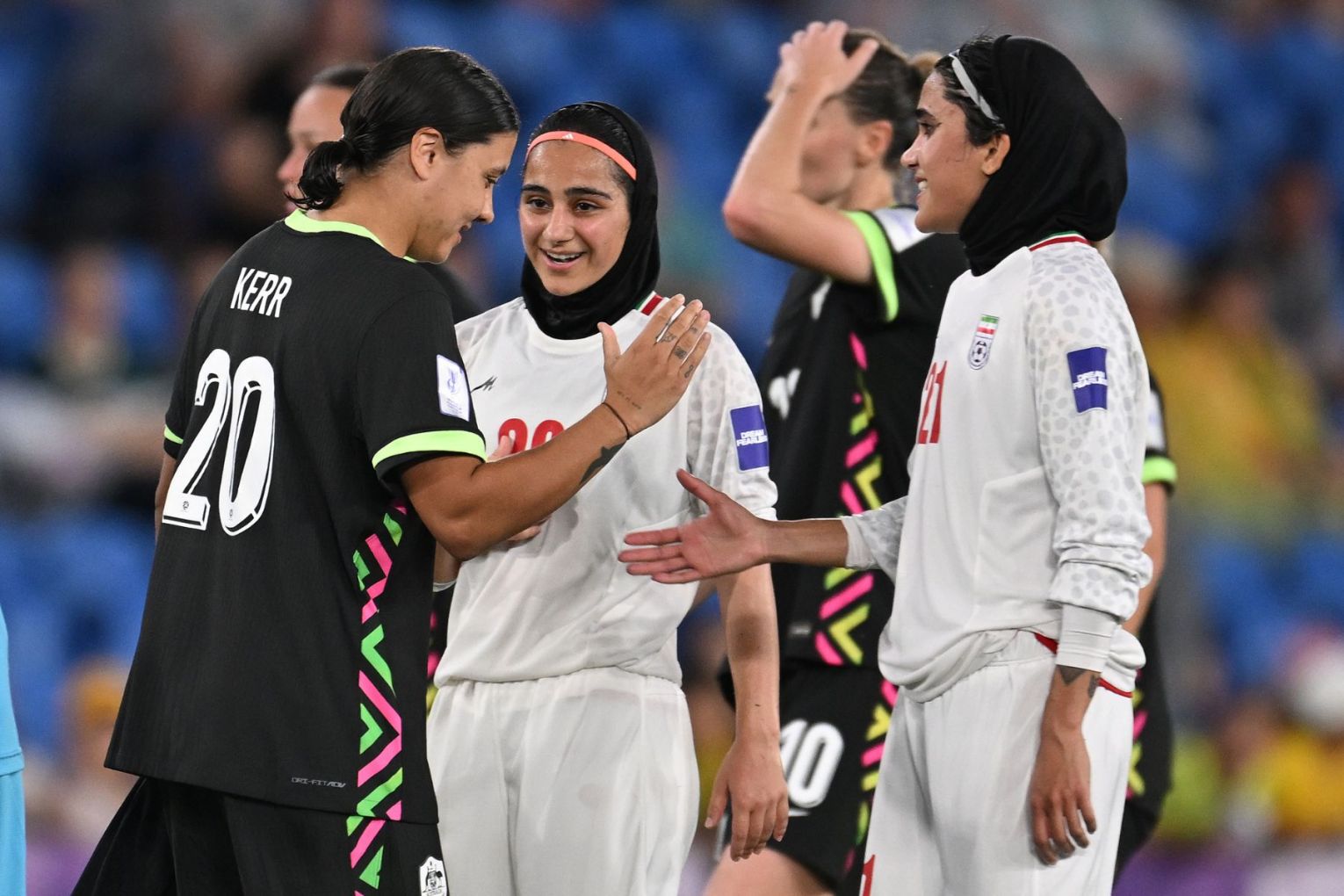
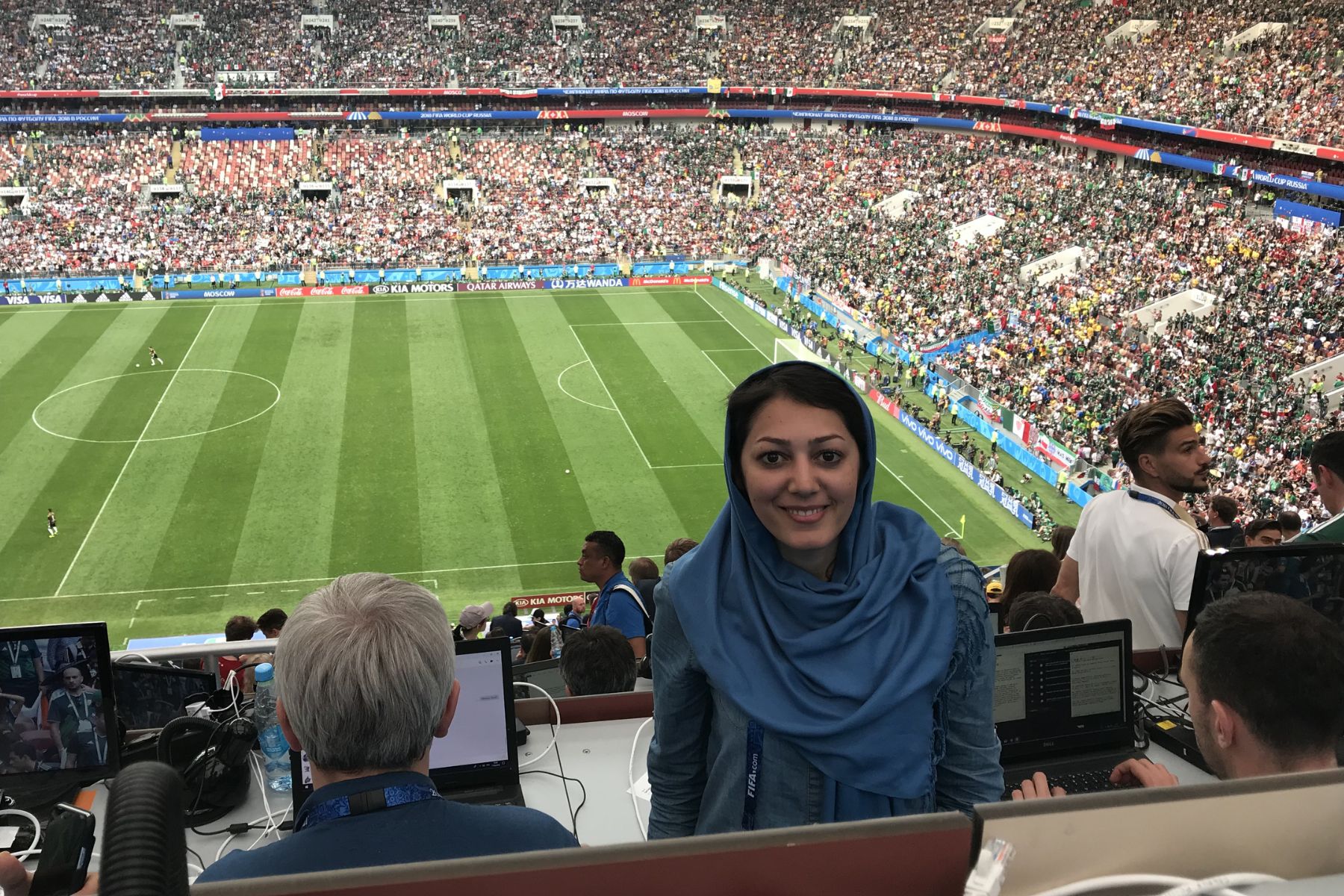
As intense discussions emerged over some Iranian women’s football team members seeking asylum in Australia, Adelaide-based journalist Samira Shirmardi said she was in contact with players.
Shirmardi was the first Iranian female journalist allowed to attend a World Cup in Russia in 2018 but moved to Australia more than two years ago.
As controversy erupted over Iran’s first match of the AFC Women’s Asian Cup against South Korea in the Gold Coast where players did not sing the Islamic Republic’s national anthem— Shirmardi said it led to numerous threats from a presenter on Iran’s state television and others in Iran.
During the second and third matches against Australia and the Philippines, Shirmardi claims players were forced to perform a military salute and loudly sing the Islamic Republic’s anthem.
Iranian expatriates in Queensland gathered outside the national team’s hotel, asking them to stay.
When five players from Iran’s women’s national football team managed to separate from the team convoy and presented themselves to the police it led to increased threats.
Shirmardi said a photograph emerged of Zahra Ghanbari, the captain of Iran’s women’s football team, along with Fatemeh Pasandideh, Zahra Sarbani, Mona Hamoudi, and Atefeh Ramezani, smiling and without mandatory hijab next to Tony Burke, Australia’s Minister for Home Affairs and Immigration.
This, Shirmardi said, encouraged other players to also try to escape.
“I spoke with the players who were still at the hotel after this happened. They were very frightened,” Shirmardi said.
You might like

“Their phones had been taken away, and they were threatened that the players who had fled would soon be brought back. They were also told that the authorities had the addresses of the families of the separated players and would ruin them.
“This terrified them. After that, even at night their room doors had to remain open by force and they were checked constantly.”
The departure of the five players led the Iranian team convoy to consider leaving Australia — though to an unknown destination.
“Even though the travel plan was unclear, the morning after the five players separated, the remaining players were suddenly told that we were leaving. But they did not say where or when. They were only asked to pack their belongings and go to the airport.”
The women’s football team convoy headed to Gold Coast Airport amid gatherings of Iranian expatriates from Queensland. Iranians blocked the national team bus and even lay on the ground to stop it from moving, but eventually the team left for the airport.
Shortly after arriving at the airport, news came that two more team members had separated.
“Mahdeseh Zolfi and Zahra Meshkinkar, members of the team’s logistics staff, also decided to remain in Australia. They joined the five separated players.
“This time, news emerged that Golnoush Khosravi and Afsaneh Chatrnor were also planning to leave. However, the situation had changed. Security became stricter, and photos even showed that Afsaneh’s hand was being held while boarding the bus.”
The team arrived in Sydney in order to travel from there to Malaysia.
“A large number of Iranians went to Sydney Airport and watched every moment as the players got off the plane and boarded the bus, ” Shirmardi said.
“At one point, one of the players flashed the light of her phone, which worried the Iranians because they thought the players might need help. They spoke with the police to try to prevent the players from leaving and also delivered a message from Golnoush’s mother. Golnoush’s mother had said: tell my daughter to stay and not come.
Stay informed, daily
“During that time, I spoke with Golnoush, Afsaneh, and even Marzieh Jafari, the team’s head coach. Golnoush and Afsaneh did not want to stay.
“Golnoush could not leave because she had no one but her mother and could not leave her alone. Afsaneh initially wanted to stay but soon regretted it. She said my heart would not allow me to separate because I could not bear being away from my family.”
Marzieh Jafari, the head coach of the women’s team, who was very exhausted, told Shirmardi that she could not talk and that she was extremely tired.
Soon after, the team travelled to Kuala Lumpur, where more Iranians gathered at Kuala Lumpur Airport to try to prevent them from returning to Iran.
“I did not think anyone would go to the airport in Kuala Lumpur, but many Iranians had gone there and were shouting: ‘Afsaneh, your mother said stay!’ Afsaneh replied immediately: ‘I know, but I have no plan to stay.’”
The team returned to a hotel in Kuala Lumpur and stayed there for two weeks before returning to Iran, but the controversies in Australia continued.
Mehdi Taj, the head of the Islamic Republic Football Federation, said in an interview that Australia had taken the women’s national team players hostage.
“It is really surprising to me that he said that. If it was a hostage situation, why didn’t all of them stay, and why were those who stayed so happy?” Shirmardi said.
“Also, Mahdeseh Zolfi, who quickly regretted staying in Australia, was supposed to soon rejoin the team convoy in Malaysia. So bringing up the idea of hostage-taking is strange and frankly laughable.”
After what happened to Iran’s women’s football team, concerns about the men’s national team increased. They were scheduled to participate in the World Cup in the United States.
“Mehdi Taj apparently became anxious that this time the players of the men’s national team might seek asylum. That is why he raised this issue,” Shirmardi said.
After that, Ahmad Donyamali, the Minister of Sport and Youth of the Islamic Republic, announced that under these conditions, they would prefer not to participate in the World Cup being held in the ‘aggressor country,’ the United States.
“This statement drew interesting reactions. Some Iranians believe that because the Islamic Republic might fall by that time, they made such a decision in advance so that afterwards a team called ‘Iran’—not the Islamic Republic of Iran—would not participate in the competitions.”
Despite all these events, controversies and threats regarding Iran’s women’s football team continue. The prosecutor of the Islamic Republic announced that it would be better for the players to return in order to ease their families’ concerns.
“This message sounded like a threat. Perhaps that is why Mahdeseh Zolfi quickly regretted her decision, because she thought something might happen to her family because of these statements. Meanwhile, Taj and Donyamali described the players who did not seek asylum as heroes,” Shirmardi said.
But Shirmardi thinks that despite these threats, players who sought asylum were unlikely to regret their decision.
She listed supportive statements from Australian Minister for Foreign Affairs Penny Wong, Minister Tony Burke, Prime Minister Anthony Albanese, a US Democratic senator and others. Billionaire Clive Palmer announced in an interview that he would give money to the asylum-seeking players to help them start their lives in Australia and called on other wealthy individuals to join this donation.
As war rages in the Middle East, every week, Samira Shirmardi joins a community of Iranians in front of Parliament House in North Terrace to show their support for the people of her country.
Shirmardi worked as a reporter for Iranian publications, including Iran Varzeshi and Gol, for almost 20 years, covering football and wrestling. She now lives in South Australia.
Want to see more stories from InDaily SA in your Google search results?
- Click here to set InDaily SA as a preferred source.
- Tick the box next to "InDaily SA". That's it.