Built to outlast its founders: How EGM Partners is planning for the long game
Ten years after launching on Pirie Street, EGM Partners is expanding its partnership model, investing in future leaders and building what its founders hope will become a lasting South Australian institution.
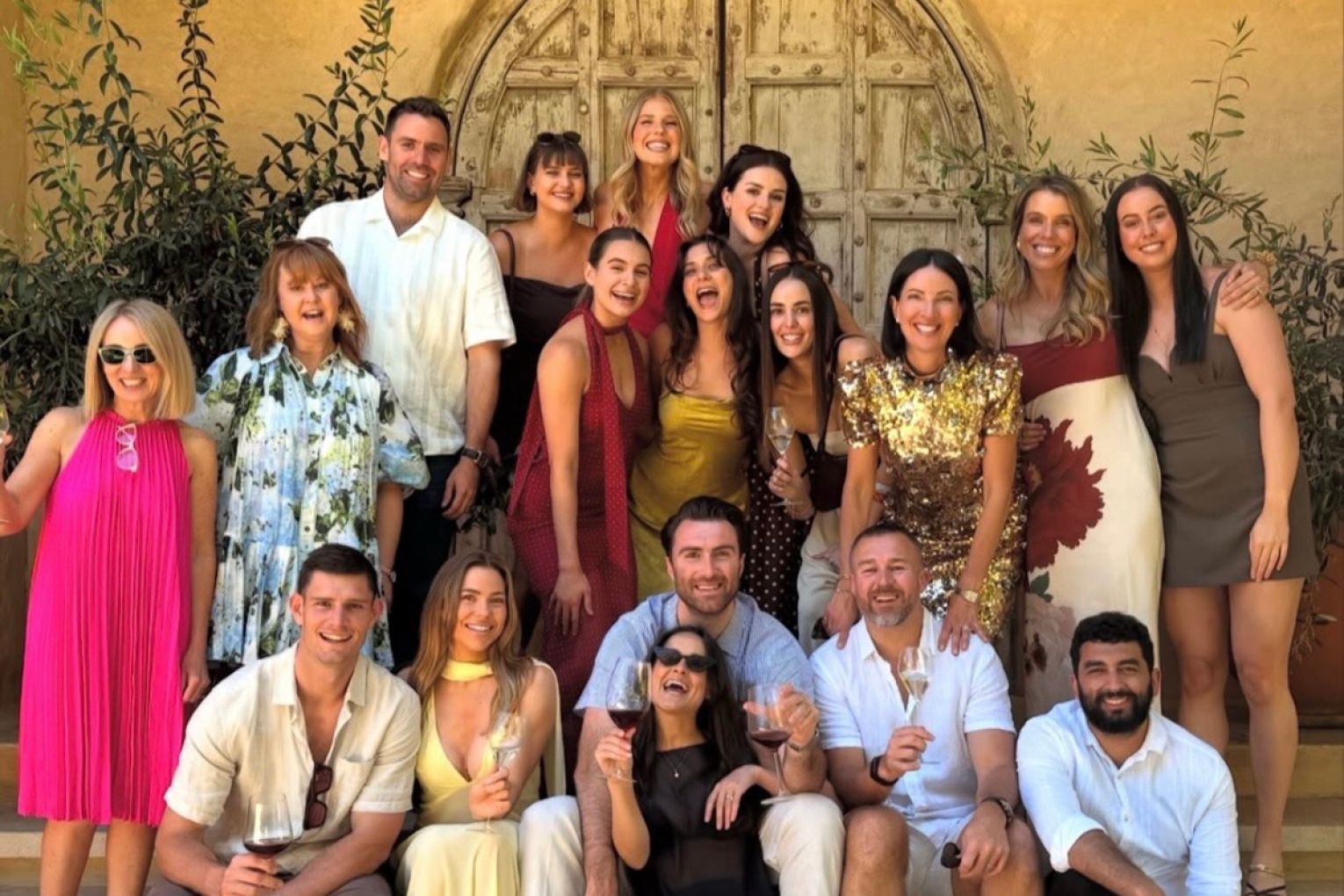
Every founder-led professional services firm eventually arrives at the same question: what happens to this place when we’re no longer running it?
Most never properly answer it.
Some sell to a multinational and watch the brand disappear into a global letterhead. Others retire and quietly close the doors, with client relationships dispersing across competitors. More commonly, founders hold on too long, ambitious staff tire of waiting for opportunity and the business slowly hollows out one resignation at a time.
The fourth path – building something that genuinely transitions beyond its founders – is far rarer. And it rarely happens by accident.
South Australian executive search and recruitment firm EGM Partners is now confronting that question head-on as it marks a decade in business. Over the past 12 months, the firm has promoted three long-standing staff members to partner, expanded its leadership structure and begun establishing an advisory board – all deliberate moves aimed at building a business designed to outlast its founders.
“We’ve never been interested in playing a finite game,” co-founder Mark Johnson says. “Finite games are about winning the quarter, hitting the number, selling the firm. Infinite games are about staying in. About being here for the long game and making sure the firm is stronger 10 years from now than it is today.
“That’s the only game worth playing in executive search, because the work itself is generational. You’re not placing a CEO for next quarter – you’re placing them for the next decade of an organisation.”
That long-term mindset is particularly important in professional services, where businesses are often built around individual relationships and reputations. Clients frequently hire a specific partner rather than the broader organisation, making succession difficult when founders eventually step away.
You might like

“The harder response is to build a firm where the founders aren’t the firm any more,” Mark says. “Where the relationships, the standards and the client trust are distributed across enough people that no single departure breaks anything.”
Founded in 2016 by Mark and Yasmine Johnson, in a modest Pirie Street office, EGM was built on the belief that South Australia needed an executive search firm designed to remain locally owned and deeply connected to the state’s industries and leadership ecosystem.
A decade later, the firm has grown to a team of 22 spanning EGM Recruitment Services, EGM Executive Search and leadership development initiative The Catalyst Project.
This year, the business promoted Amber Bowden, Liam McBean and Paula Turbill to partner, joining the founders in a five-partner leadership structure. Importantly, none were recruited laterally from competitors. All were developed internally, with tenures ranging from five to nine years.
“Promoting Amber, Liam and Paula wasn’t a reward – it was the plan,” Yasmine says.
“Succession in a firm like ours doesn’t happen at the end. It happens all the way through. You build people to become connected and invested. Then, over time, you give them the room to lead, and one day you look up and realise the firm doesn’t depend on you any more.
“That’s the goal. That’s what good succession looks like.”
Yasmine says the partnership model gives the new leaders genuine ownership and accountability over the future of the business, while reinforcing the company’s core values of being “invested, connected and ambitious”.
“It’s handing over responsibility and giving them ownership to run it as if it’s their business,” she says. “They’re more invested and connected, and it gives them the ambition and accountability to really push the legacy forward.
“It is really about building that next generation and leaving a legacy. Internally, we talk a lot about our brand being sustainable and leaving something behind.”
The model also creates more diversity in leadership and decision-making, she says, moving the firm beyond a structure centred solely around its founders.
“It’s not just Mark and I any more. We need diversity of thinking and leadership, and that’s what they bring.”
The promotions also send a message internally about career progression and long-term opportunity within the business – something Yasmine believes is increasingly rare in the recruitment industry.
“Recruitment can be a revolving door industry, but people don’t really move on from us,” she says. “We develop people, they move up, they progress. Seeing that succession happen is inspiring for staff and exciting for them. It’s also a retention strategy.”
That continuity benefits clients as well, with long-standing relationships maintained over years rather than constantly changing hands.
For the Johnsons, the conversation around succession also extends beyond EGM itself and into South Australia’s broader economic future.
“South Australia is at an inflection point,” Mark says. “Defence is scaling up, the space sector is commercialising, Whyalla’s future is being rewritten, and we’ve got an ageing generation of CEOs across almost every industry.
“The next 10 to 15 years will decide whether South Australia exports its talent interstate and overseas, or whether we actually develop and retain the next generation of leaders here.”
That, he argues, is why locally owned executive search firms still matter.
“A firm that’s genuinely connected to South Australia – that’s part of the same ecosystem and actually cares about the people and industries here – brings something different,” he says.
“We’re not reading about these sectors from interstate. We live in them.”
For the founders, succession planning ultimately comes back to one idea: building something capable of enduring beyond the people who started it.
“The infinite game in South Australia is about who’s still standing here in 20 years, still backing the state, still developing the next generation,” Yasmine says.
“We didn’t build EGM to sell it. We built it to outlast us and hand it on.”
Want to see more stories from InDaily SA in your Google search results?
- Click here to set InDaily SA as a preferred source.
- Tick the box next to "InDaily SA". That's it.