‘Decade to recover’: Seafood industry still grounded over algal bloom
Despite South Australia’s harmful algal bloom appearing to have settled, more than a hundred fishing operators in the state’s seafood industry are still grounded.
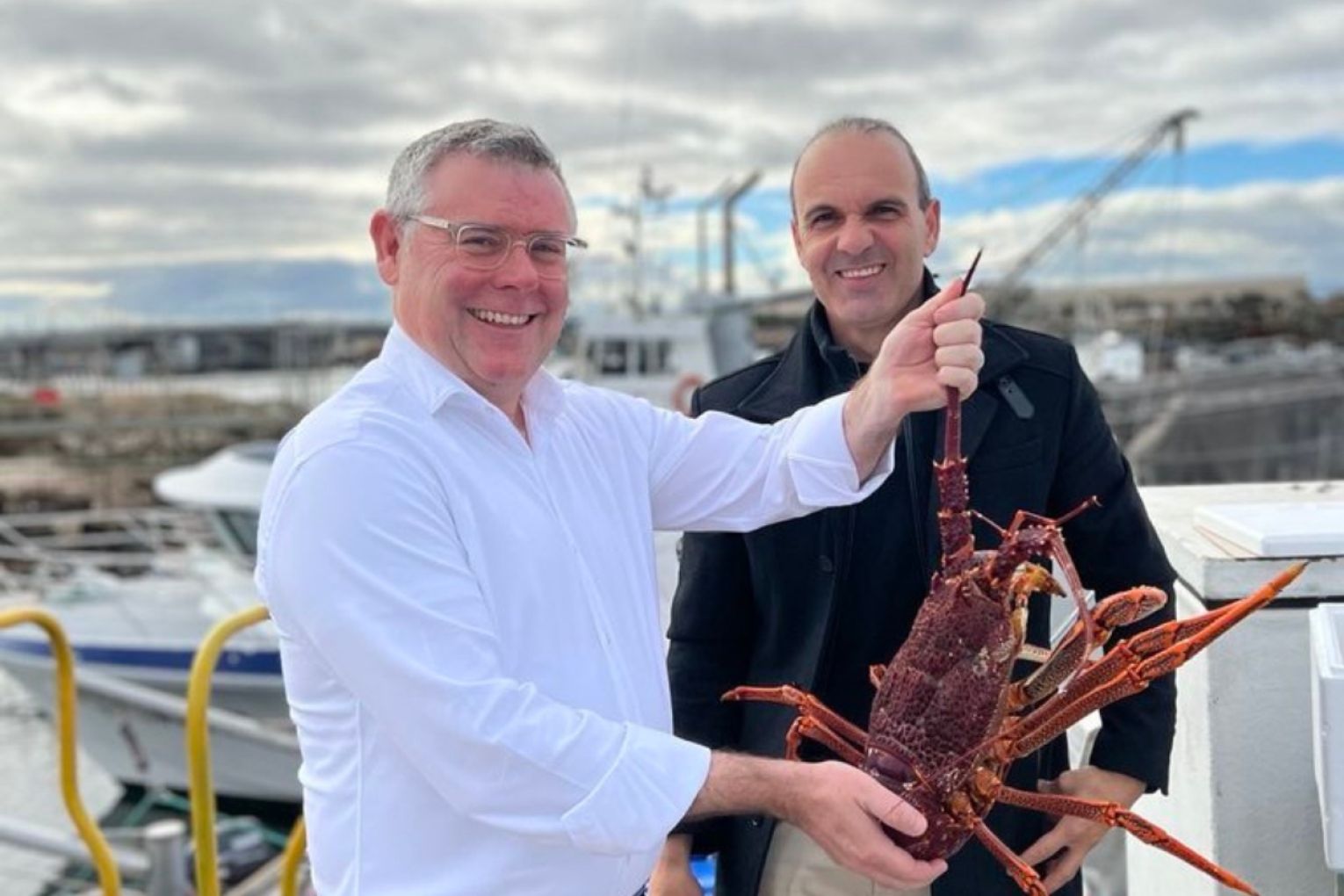
South Australia’s seafood industry faces financial devastation and will take at least a decade to recover from the debilitating algal bloom, Kyri Toumazos, executive director of industry peak body Seafood Industry South Australia, said.
“Without a reoccurrence of an algal bloom outbreak, what we are predicting as an industry is the journey ahead to go back to normality or pre-algal bloom impact; we are looking at least a decade,” he said.
Toumazos, who owns Southern Sea Eagles near Port Adelaide that deals in lobsters and gummy sharks, said the financial devastation had already reached tens of millions of dollars, with Gulf St Vincent, Investigator Strait, Kangaroo Island and Spencer Gulf still experiencing ongoing algal bloom impacts.
He said the Marine Scalefish Fishery, which focuses on calamari, whiting, garfish and other inshore species, was having “enormous” ongoing challenges and that “we are nowhere near the time to start commercial activity”.
Toumazos said fish stocks around Gulf St Vincent were “extremely poor”, but news was more positive for the blue crab and prawn fisheries.
He said more than 100 marine scale fishers across coastal communities were not able to go fishing.
It was not just the economic impact, but also the emotional toll that was of concern to Toumazos.
You might like
“It’s also a way of life for people … so we are now seeing the mental burden that it has on people as well,” he said.
Toumazos was happy with government support, saying Seafood Industry South Australia was formulating a structural adjustment with the government for impacted fisheries, to be completed in June.
But he said consumer confidence was still an issue despite campaigns stating that seafood was safe to eat were effective.
Meanwhile, the tourism industry was feeling the compounding impact of the algal bloom, the fuel crisis and recent fires.
Holly Wyatt, who is regional tourism manager at Fleurieu Peninsula Tourism, said that “current visitation trends are being influenced more by perception and cost-of-living pressures than what’s actually on offer”.
“Locals are ready to welcome visitors to enjoy their Mediterranean lifestyle and charm,” she said.
EcoProTem principal ecologist Faith Coleman said there were still small counts of Karenia at Moonta and Port Hughes, saying the counts did not reach the same level as other areas in the past.
Coleman recently ran for the upper house and made headlines last year after controversial claims about algal bloom investigations in a government committee.
Stay informed, daily
She said despite lower Karenia counts, there had still been “quite a bit” of ecological damage, but no reports of human health impacts.
“We did see a number of dead stingrays, there’s a lot of loss of sponges and those sorts of things,” she said.
“So, that’s still there – incredibly low numbers, and I’m hoping that the damage done will have been the damage done and it will pass.”
However, Coleman said there was an increase in dinoflagellate blooms at this time of year.
“I’ve seen a few oyster places and things shut down for other species of dinoflagellates that cause problems, and we had that really interesting thing that all of the tuna got killed by a few weeks ago, which is a strange mixture between a diatom and a dinoflagellate,” she said.
Asked if the harmful algal bloom would return, Coleman said that “there is always a chance”.
“The likelihood of another bloom is quite high until we start addressing those issues around ocean acidification and CO2 increase and changes in currents,” she said.
According to latest government testing results, on the week beginning April 12, 21 metropolitan onshore sites recorded zero or low levels of Karenia – the species causing SA’s current harmful algal bloom.
Port Hughes Jetty recorded about 660 cells of Karenia per litre, while Moonta recorded 35 cells per litre.
New Environment Minister Emily Bourke will host an algal bloom drop-in session at Moonta tonight, where she will share an update on latest testing results and shellfish reef restorations on the Yorke Peninsula.
Want to see more stories from InDaily SA in your Google search results?
- Click here to set InDaily SA as a preferred source.
- Tick the box next to "InDaily SA". That's it.