Golden results as mining giant hits record in outback SA
Mines in the state’s far north are delivering their owner record results as reports emerge that the federal government tapped BHP for help in securing urgent diesel supplies.
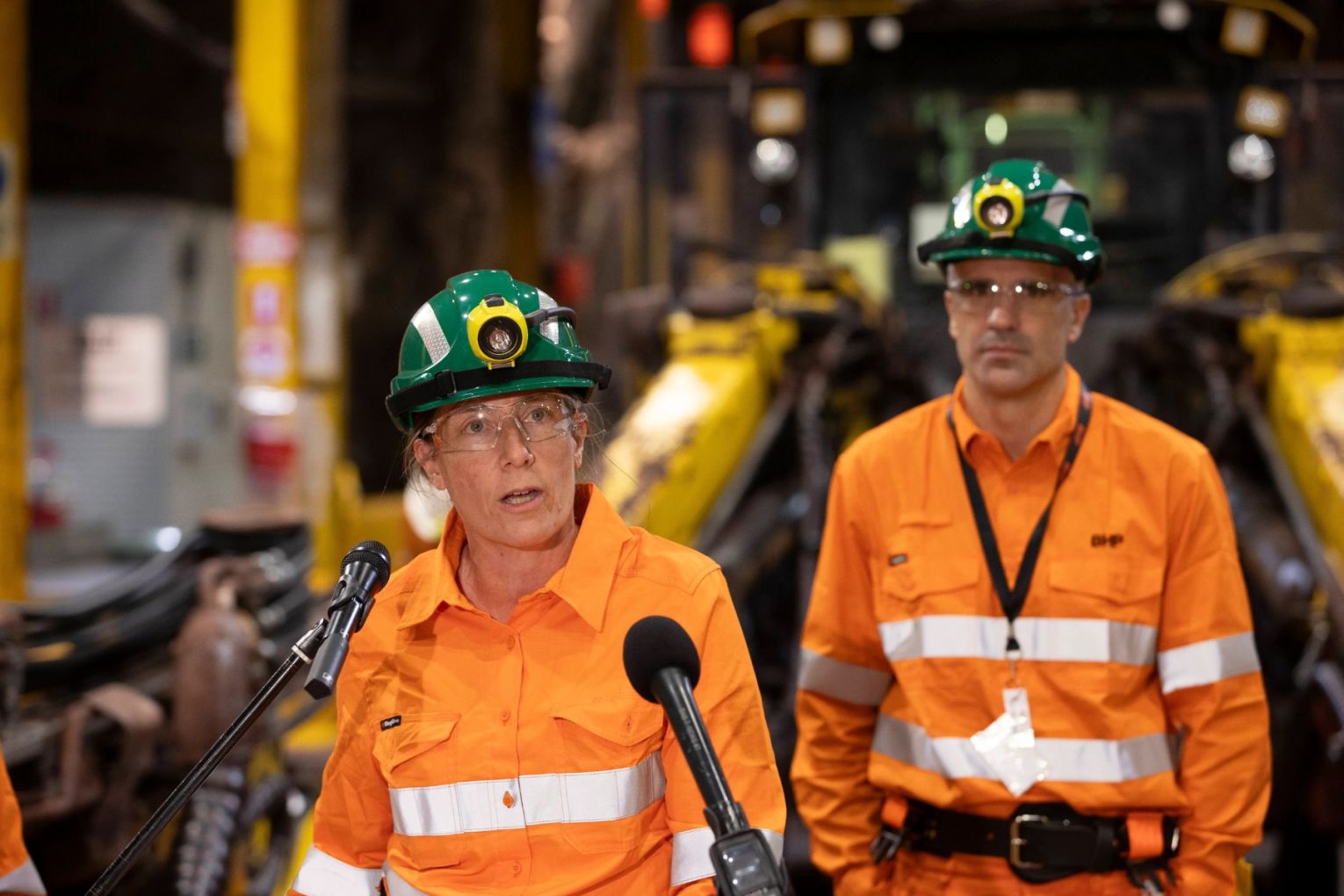
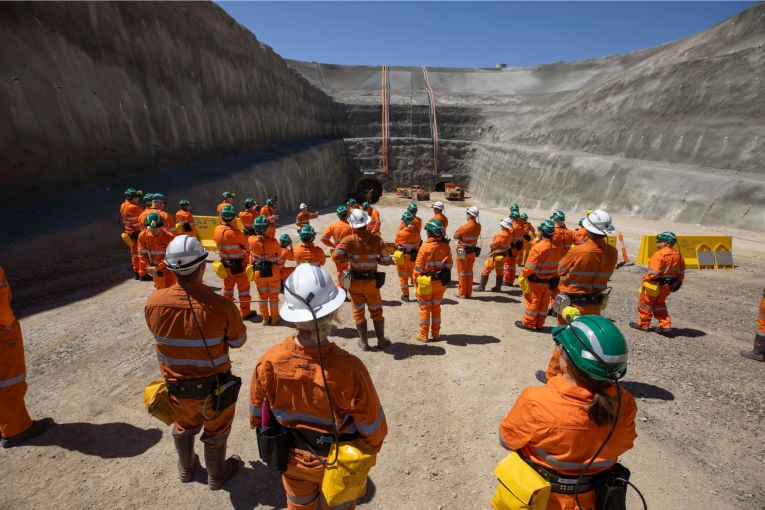
A record was broken at South Australia’s Olympic Dam mine in the third quarter of the financial year, with mine owner BHP today reporting record material mined, ore milled and concentrate smelted over the period.
And it achieved record gold production at the far north site near Roxby Downs, the centrepiece of the company’s global copper business, which is the largest in the world.
It comes alongside reports BHP has been enlisted by the federal government to provide advice on securing urgent diesel supplies for Australia.
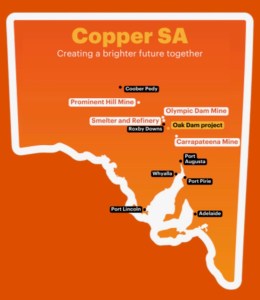
In the third quarter, 82.8kt of copper was produced at the company’s South Australian mines, where it digs up copper, gold and other minerals. BHP is the largest producer of copper globally and currently employs around 8,000 South Australians.
Material mined at Carrapateena – purchased by BHP from Oz Minerals in 2023 – increased by 11 per cent.
And the company expects to achieve its 2026 target of 310-340kt by the end of June.
| Sponsored |
You might like


Earlier this year, the company delivered a supersized dividend of around $1 a share after breaking multiple earnings and production records against a backdrop of strong metals prices.
SA copper earnings hit nearly $2 billion in the first half of the financial year, and it made a net profit of $US5.6 billion ($A7.9 billion) in the six months to December 2025 as revenues soared 11 per cent to $US27.9 billion ($A39.4 billion).
Overall copper production in SA is up three per cent on the same time last year, while global copper production is at 1461kt in the year to date (down 3 per cent).
CEO Mike Henry, who is stepping down from the top job at the end of the financial year, said the results “reflect the consistency of our operations and the strength of our high-margin diversified portfolio in an evolving operating environment”.
“Our centralised procurement capability and our low-cost operations have positioned us advantageously in the face of industry-wide pressure on the cost of energy and consumables as a result of the conflict in the Middle East.”
Last year, BHP announced it was spending hundreds of millions of dollars on its Olympic Dam mine, creating new jobs and boosting production at the state’s massive copper precinct.
Stay informed, daily
Building a new access tunnel, a more extensive underground train network with six new trains and the installation of an oxygen plant were at the centre of global mining giant BHP’s $840 million investment in its Olympic Dam mining operations. It hoped the expansion project would boost its copper base from 1.7 million tonnes to 2.5 million tonnes each year.
BHP called on for diesel supply advice
BHP’s results come as reports emerge the company was enlisted by the federal government to provide advice on delivering urgent diesel supplies for Australia.
The Australian reported the company made an offer to the Prime Minister to provide a team of experts to ensure the country avoided supply shocks after the closure of the Strait of Hormuz.
It is understood the company did not procure diesel for the government, but it – alongside Rio Tinto – helped the government navigate the market.
Prime Minister Anthony Albanese this morning said the government was “working with every partner that we can”.
“We’re working with the private sector in particular and BHP, of course, Australia’s largest user of diesel,” the Prime Minister said.
“They, through their own mechanisms and history, of course, have a great deal of capacity to deal in the international markets, which is what they do in the normal course of events. And they are being helpful, as are other areas of the private sector as well.
“This is truly a Team Australia moment, to put it that way, where we want the private sector, governments, all of us, to work together to make a positive difference. And BHP certainly are doing that.”
A BHP spokesperson said: “We support the coordinated national approach being led by the Prime Minister through National Cabinet”.
“Our Australian operations continue to receive scheduled deliveries of fuel. We continue to monitor the situation and are taking steps to appropriately mitigate the risk of any supply chain impacts,” she said.
“Our focus is on operating responsibly and safely, avoiding any additional pressure on the broader system, and supporting the communities and supply chains that depend on our sector.”
Want to see more stories from InDaily SA in your Google search results?
- Click here to set InDaily SA as a preferred source.
- Tick the box next to "InDaily SA". That's it.