Excise tax reform calls to keep craft brewers prancing
An Adelaide Hills-based craft brewer says significant reform to how the industry is taxed is needed, or independent businesses will be crushed.
If you look at the side of a can of Prancing Pony Brewery’s Hazy Pale Ale, you’ll see a list of ingredients.
One can – like all beers – is made up of water, grain, hops and yeast.
But the most expensive ‘ingredient’ involved in making a can of Hazy Pale Ale? Excise tax.
It’s the highest cost per can of beer for independent brewers like Prancing Pony, at Totness near Mt Barker, and it’s pushing craft breweries to the edge.
With costs rising across the board for ingredients, packaging and labour, combined with the ongoing cost-of-living crisis and changing consumer preferences, a perfect storm is brewing.
Prancing Pony recently underwent a process to restructure debts owed to the taxman, following years of problems almost entirely out of the business’ control: a bushfire followed immediately by COVID and then the cost-of-living crisis.
Excise tax – a duty paid on alcohol manufactured in Australia – is yet another problem for smaller SA brewers.
Unlike larger brewers which dominate the in-venue kegs space thanks to long-term deals struck with venue operators, brands like Prancing Pony rely mostly on packaged beer sales.
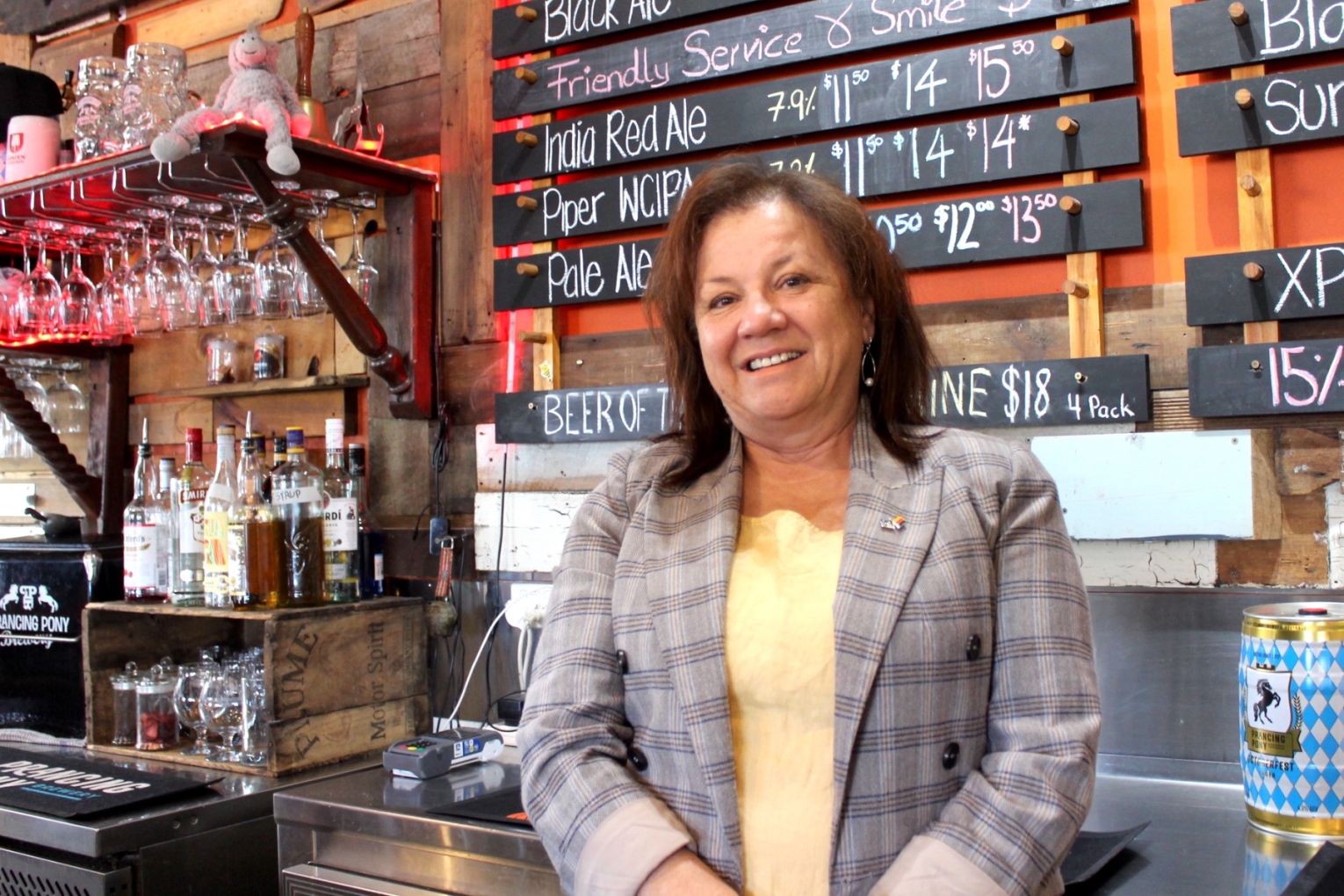
“Small business pays a proportionally higher excise per litre of beer produced because we’re pushed into the packaged space,” Prancing Pony co-founder Corinna Steeb explained to InDaily.
“Our excise has gone up since we’ve been brewing beer. It’s gone up every year twice, except for one period when they halted it during COVID. It’s gone up and up and up. There’s no valid reason why excise needs to go up; it will not stop people from drinking.
“Excise is a crazy tax that we have. If you put it into a carton of beer, 11 cans are just for the taxman and then GST on top of that.”
Brewing beer at the scale Prancing Pony does is more labour intensive too, Steeb said, noting the company employs six times more people per litre of beer produced than larger competitors.
You might like


“They have the money to automate everything,” she said.
“In a small brewery, it’s pretty much manual. We have a highly sophisticated brew house – it’s still semi-automated – but we pack by hand, we keg by hand; there’s much more local employment.
“Plus most of the craft breweries have an associated taproom right next to it like we do, so you’ve got that hospitality element where we give many kids their first jobs.”
Reform of alcohol laws that make doing business time-consuming is on the top of Steeb’s wishlist. She said tax law needed to differentiate between small and large producers of beer.
“It can’t be one glove fits all. It just can’t be. We’re locked out of taps so we pay proportionately more on excise per litre produced. So we’re screwed,” she said.
“32 to 42 per cent of our input cost is excise, and it’s ridiculous when you think about it. Water is the highest proportion in beer by volume and is by far the cheapest. A non-beer product – excise – is the highest cost of the beer, followed by labour, then packaging then logistics.”
It’s driving certain segments of the market away from craft beer as they can’t justify spending more on expensive niche beers when larger competitors sell at a lower price point.
At the same time, Prancing Pony’s approach to craft beer and its successful restaurant that’s attached to the brewery is safeguarding the brand, Steeb said.
“Our hospitality venue is up, I think because of the way we’ve changed promoting and seeing ourselves,” she said.
“I think craft beer has most probably overextended itself with what it wanted to be, to the point of perhaps even alienating the customers that they thought they attracted by bringing out new beers all the time and by bringing out crazy beers that may look a bit scary to the average consumer.
“We haven’t followed that trend at all because we see ourselves as a local business that happens to make beer. We were never really there to just attract a trendy hipster kind of audience that lyrically waxes on about hops varieties. We thought, right from the start, we wanted to have a broad audience. We’ve probably safeguarded our taproom by just being a local hangout.”
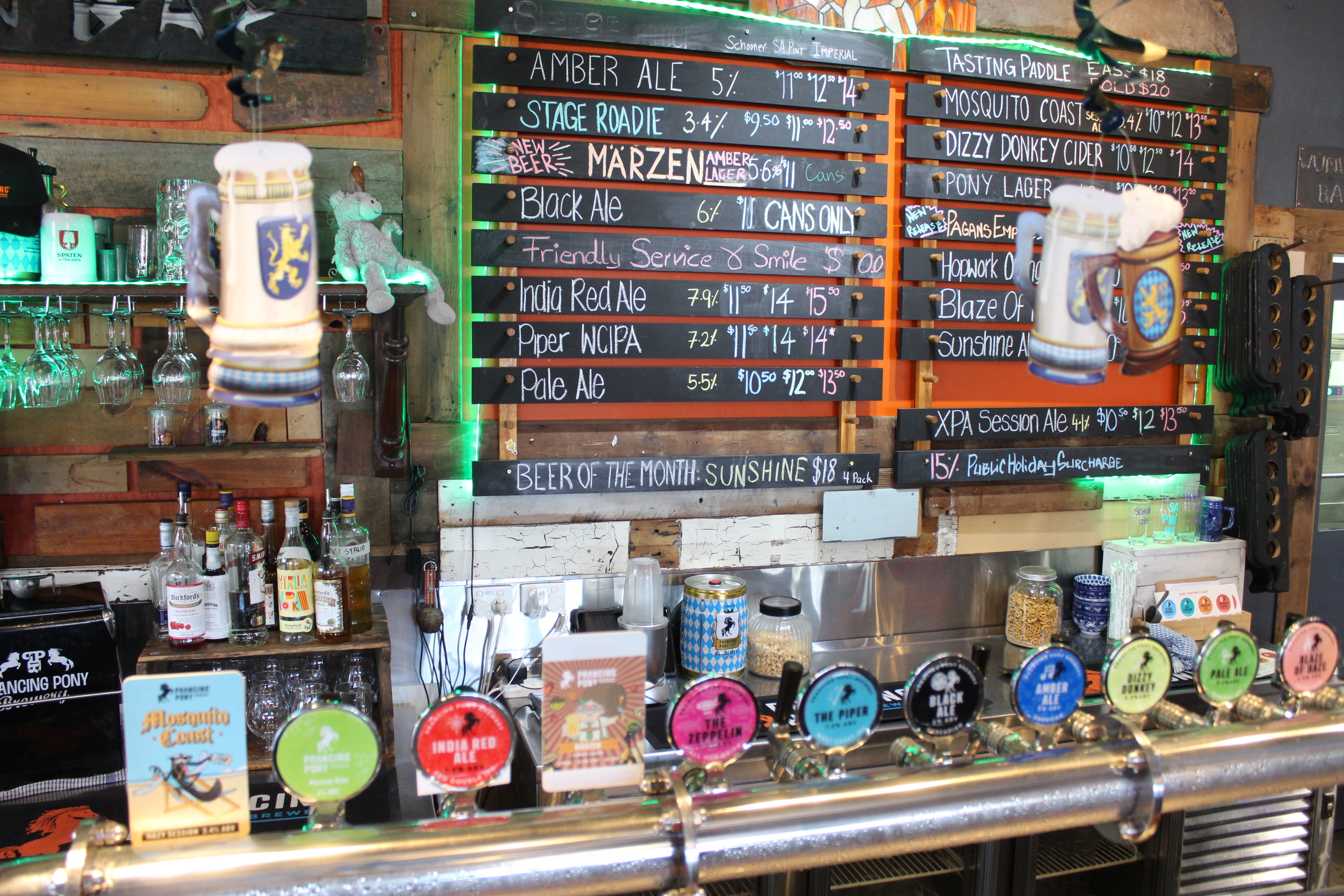
Prancing Pony’s perfect storm
In September, Prancing Pony – like many of other businesses in Australia – appointed a restructuring practitioner in hopes a plan to restructure debts with the ATO could be struck.
That was successful a month-and-a-half later but was symptomatic of years of woes faced by craft breweries like Prancing Pony, and some unique to companies based in the Adelaide Hills.
Steeb reflected on how the company got to this point in an interview with InDaily, noting it “probably started just prior to COVID”.
“I remember the day like it was yesterday, because it was a crazy day,” she said.
“It was the 19th of December 2019, and we had the brew shed full of people celebrating the end of the year. And I remember we had a group of lads in the beer garden and we could see the smoke coming in and we were really worried.
Stay informed, daily
“At one point, I had to make a decision to cut off the party and tell people to leave for their own safety. Literally an hour later the whole brewery was in smoke and we had no power anymore. Over the next couple of days we were here just monitoring how close it would get.”
The Cudlee Creek bushfire tore through a swathe of the Adelaide Hills, destroying vineyards and homes.
“We lost beer in the process that was in the fermenter which couldn’t be cooled. We lost about $18,000 worth of food because we were preparing for the coming days. It was covered by insurance but we didn’t get that insurance money back until about August or September the year after,” she said.
“We did a bit of takeaway after that in January but people were scared to come up to the Hills because of the bushfire. So what should have been a fantastic season for us turned into a really shitty season.”
Then, of course, came COVID and the closures of hospitality businesses.
“We were just devastated,” she said.
“We had 300 kegs here and we had to make a decision: what do we do with this beer? Are we going to put it down the drain? Are we going to keep it and sell old beer to people when COVID allows us to open again? We decided against the second option because we didn’t want to be a brewery that has old beer out there.”
A third choice was to distil the alcohol in the beer and make hand sanitiser which was sold to local hospitals and schools, but the process meant applying for an “expensive” distilling licence.
“And then I made the decision I would have to let everybody go, because there’s only so much sanitiser you can make and by that stage, there was almost an oversupply.
“And then two days later JobKeeper was announced so I brought everybody back. It was a crazy system because nobody asked us if it was actually useful but we decided to get everybody back because recruiting people after all of this had finished was a harder task.”
The next whack in the face was the sudden spike in logistics costs which made exporting beer expensive. An exodus of staff out of hospitality was another issue for the sector broadly, and there was no new talent coming through into the industry.
“However, I’m very optimistic and once everybody showed signs of going out again we decided we would do a pop-up bar on Rundle Street,” Steeb said.
“We had committed to the place for six months at a massive expense for us, but that’s when the second wave hit. We had ended up with some days we made next to nothing because the government informed people not to go into the city.
“This period obviously cost us very dearly and just made a real negative impact on the business.”
Fast forward to 2023 and rising interest rates and supply costs became the biggest problems for small businesses.
“And then come earlier this year where we still haven’t recovered from a slowing of the economy and interest rates going up and people not going out so much and overall beer production and beer sales being down. It comes to a point where you think: am I going to close this business?” she said.
“In our case, we were eligible to do a small business restructure.”
Beer is forever
Steeb is defiantly optimistic though, and with the restructuring plan in place she’s going to “sail with the waves and fly in the wind”.
“I’ve seen bad times in the economy. I’ve seen 18 per cent interest rates. I’ve seen an after-war generation in Germany where I grew up. I’ve seen a wall come down in Germany that nobody ever thought would come down. I’ve experienced God knows how many different wars on TV,” she said.
“Things come and go around, and beer has been around for 10,000 years, probably more. I don’t think it will go away. It will still be made from grain, water, hops and yeast and it’s still going to be one of the most sociable drinks that you can have.
“And we’re going to be there. You’ve got to sail with the waves and fly in the wind and see what people want.”
Want to see more stories from InDaily SA in your Google search results?
- Click here to set InDaily SA as a preferred source.
- Tick the box next to "InDaily SA". That's it.