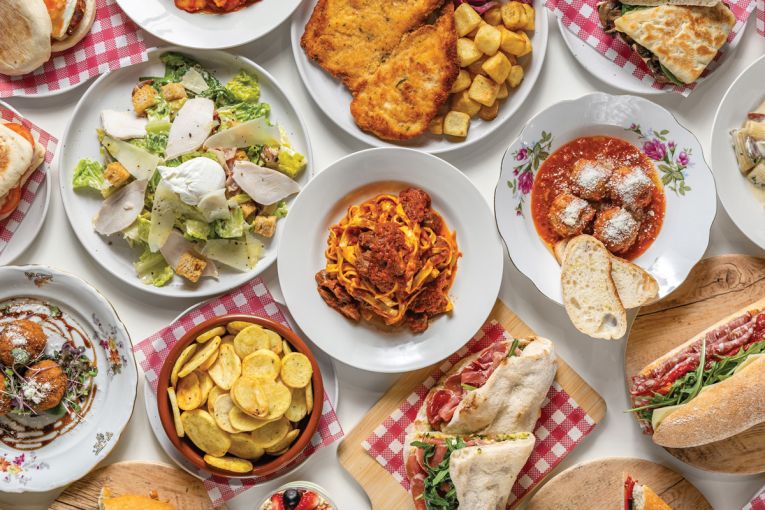
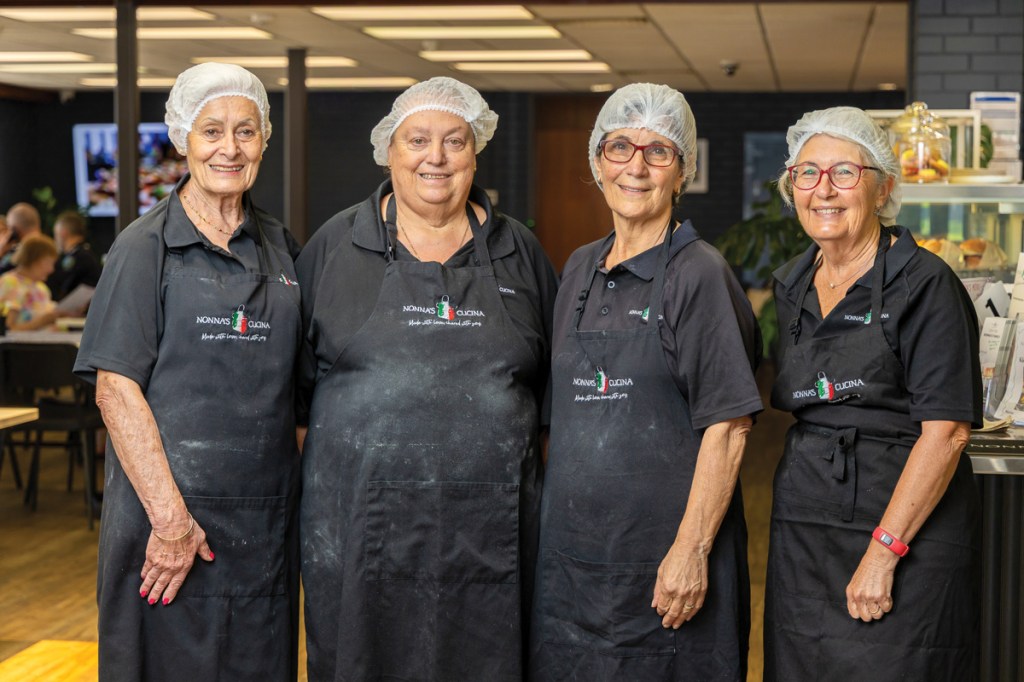
The team behind meal service Nonna’s Cucina pour their love not only into their food, but into the community.
Stefan Dimasi discovered his love for cooking through his nonnas. Making homemade gnocchi, tomato sauce and fresh pasta. Picking their own olives and making their own wine and Italian sausage.
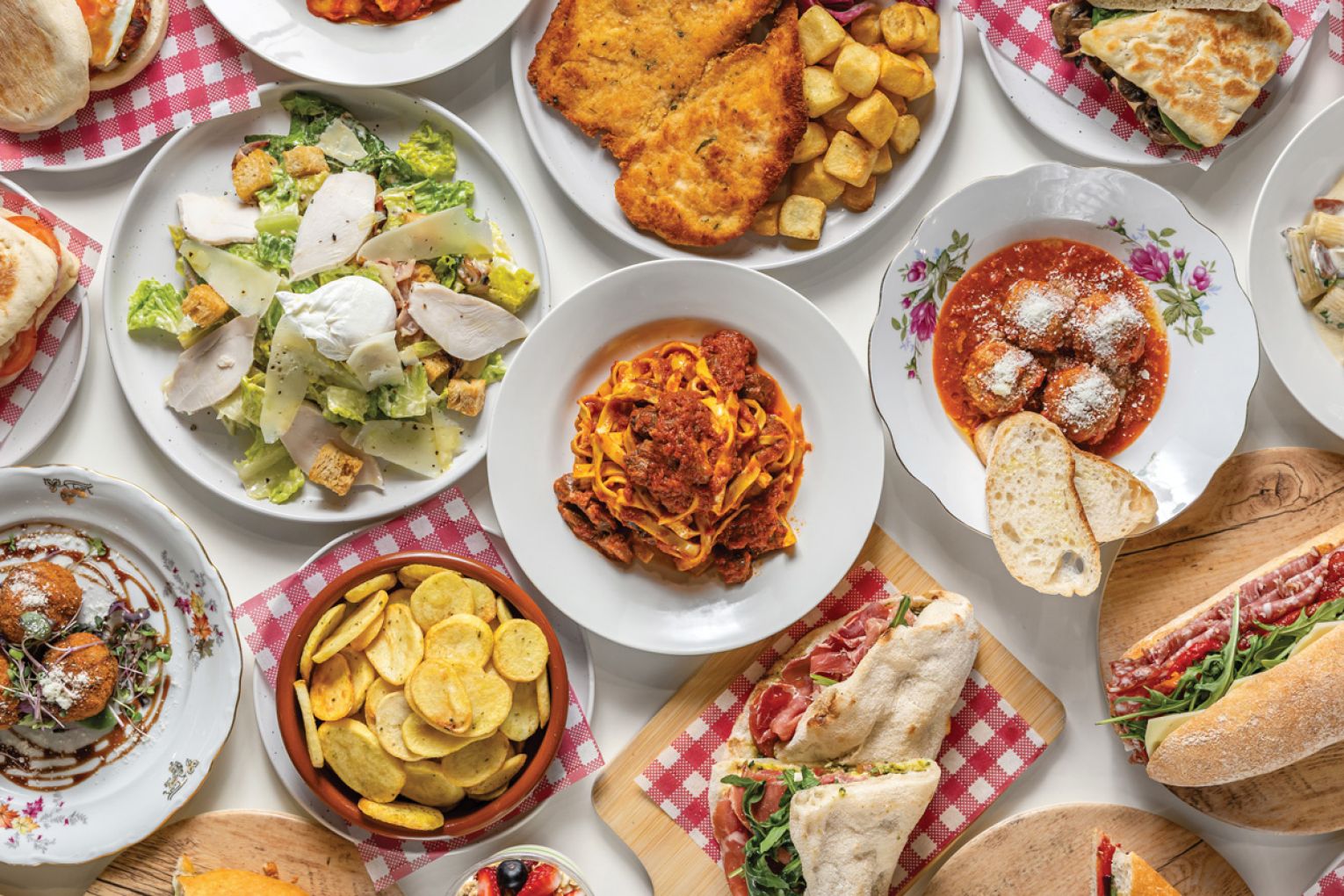
The executive chef of meal service for the elderly, Nonna’s Cucina, has carried those Italian flavours and traditions with him ever since. Even though he now makes more than 500 hot meals a day, he pours the authenticity of the cuisine into every serving.
When Stefan started at Nonna’s Cucina almost 10 years ago, he realised it was more than a meal service for the elderly – he had entered a community.
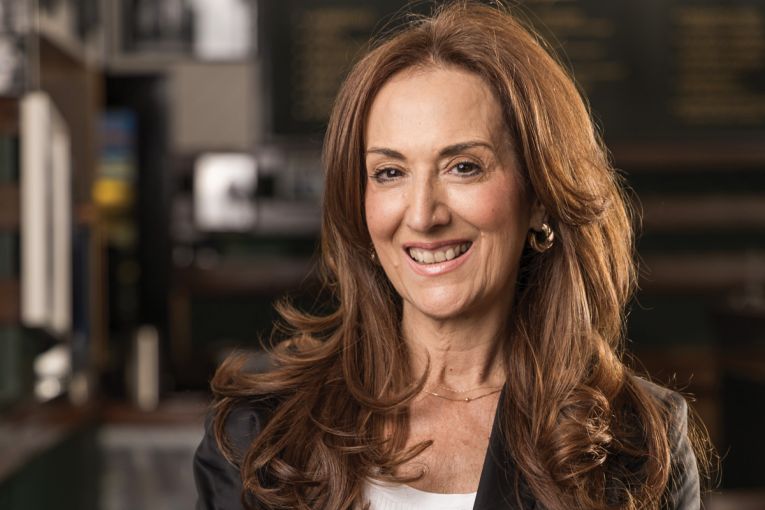
The service was started in 1999 by Italian immigrants Franca Antonello and Silvio Iaderola, with Polish immigrant Gosia Skalban, who wanted to bridge the gap between mainstream services and multicultural communities. But speaking to SALIFE, Franca says the connections it formed exceeded her vision.
Franca grew up in Croydon after her family migrated from Udine in Italy’s north-eastern Friuli region in the 1950s when she was just seven years old.
Even then, she knew multicultural communities had needs to be met.
“I was aware of what the people needed because of the needs of my mum and dad in those years, and also the neighbours that we had close to us – mainly Italian, Greek and Polish at that time in the Croydon area,” she says.
“I was always very conscious of what the Italians needed – mainly with my mum’s friends.
“I had to do a lot of interpreting at 15 years old, take them to medical appointments and that sort of thing … there were no bilingual services available.”
You might like
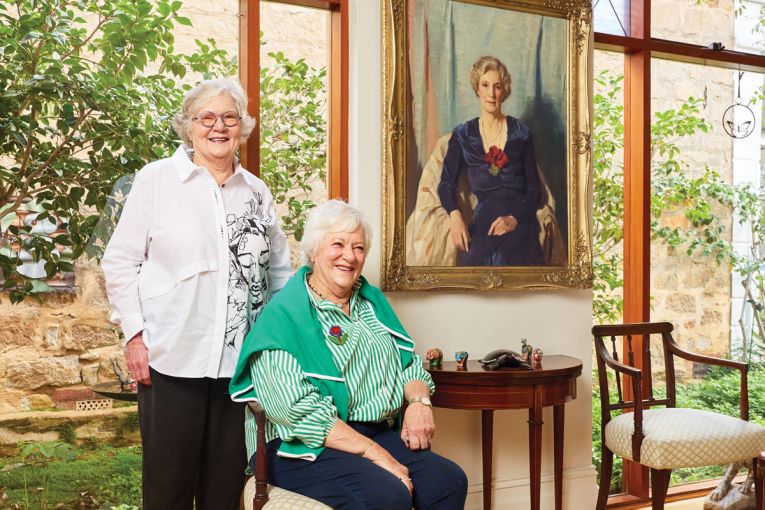
This sparked Franca’s passion for social justice, access and equity, and what followed was a lifetime career working with multicultural communities.
Through her role at what is now UnitingSA, the group came up with the idea of culturally-targeted meal services.
Its first iteration was PISA – an abbreviation of Pasti Italiani e Servizi per Anziani, or Italian Meals and Services for the Aged – and later rebranded in 2019 to avoid confusion with the Italian city.
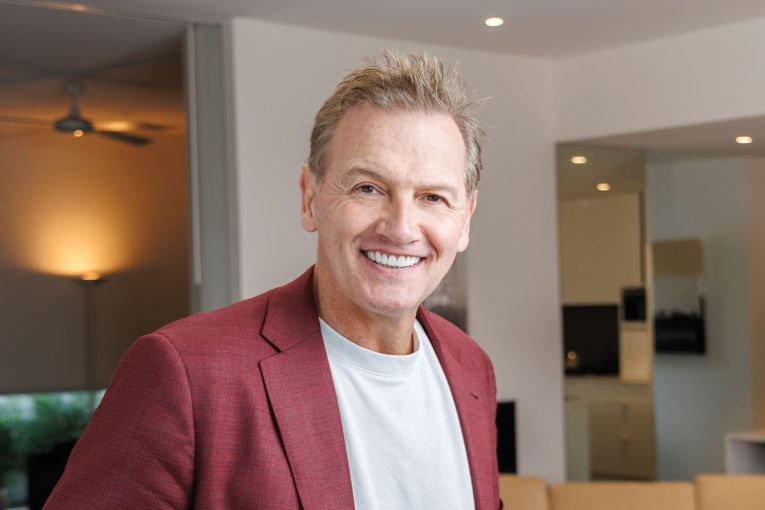
The rebrand marked the start of a rapid period of growth, according to Nonna’s Cucina CEO Marco Staltari.
“It got everyone to notice who we were,” Marco says.
Marco has since implemented their staple ‘Grandma’s menu’, offering meals that aren’t Italian, which now operates alongside their original traditional Italian ‘Nonna’s menu’.
Clients can choose which menu they prefer and move between them. Marco was also the driving force behind the organisation’s 2024 move from its previous home at Royal Park.
The new site at Holden Hill is more than four times the size of its previous home. The move was not only prompted by the need for a larger space to keep up with increased demand, but to open a cafe.
“Back when we were at Royal Park, we were thinking that we needed to do something like having a frontage – pretty much something that people can come in and enjoy our food and get more involved with Nonna’s,” Marco says.
“We only ever thought to do something small, and even now, we didn’t even expect it to be as busy as it’s getting these days.
“It’s completely gone off the Richter scale, which is good because any profits [from the cafe] go back into our meal service.”
Since the rebrand, Nonna’s Cucina has increased from up to 80 daily meal deliveries to around 700. The cafe, which has now been open for 18 months, serves more than 100 customers daily.
Chef Stefan has been in the food industry for 20 years, the majority of that spent at Enzo’s Ristorante, which closed its doors in 2024, where he eventually fell in love with mass production cooking through his role as chef at Enzo’s at Home.
Subscribe for updates
“When you start making big batches of things, it starts to become an art and you’ve got to really concentrate on flavours and the quality of things,” he says.
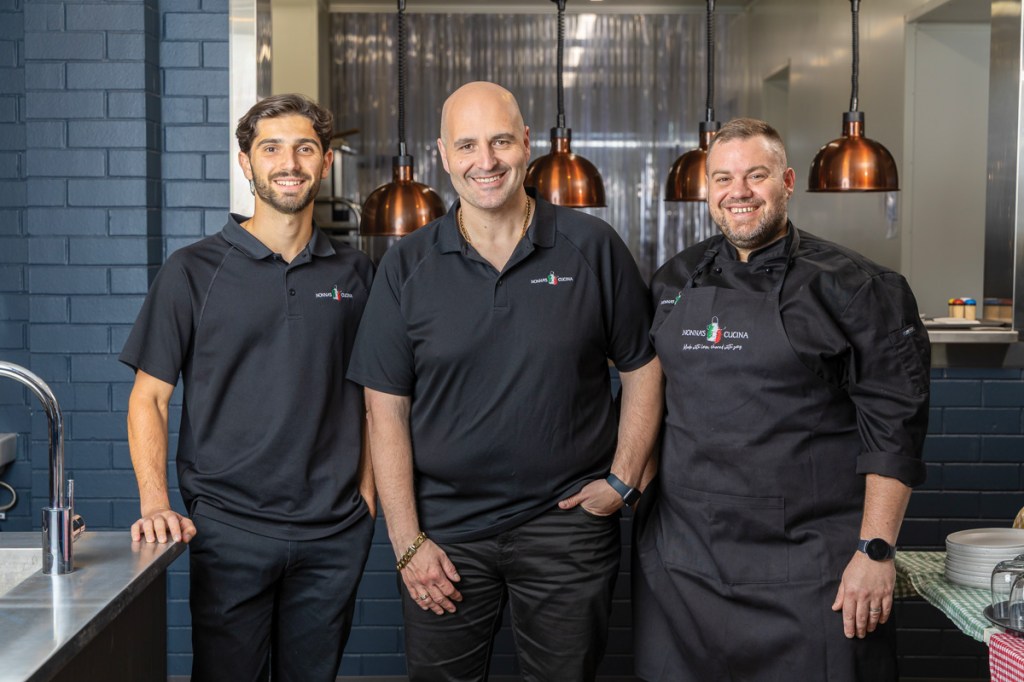
It is not only Stefan, Marco, and general manager Dario Fabretto who dedicate time and effort to grow Nonna’s Cucina. Marco says the more than 100 volunteers are the backbone of the organisation.
“Our volunteers go above and beyond, they care about the clients,” Marco says.
“Not only do they deliver the meal, but they do a welfare check.
“Some of our clients don’t get to see anyone else all day, except for our volunteers delivering that meal.”
The volunteers aren’t just out on the road. They are in the kitchen when they can be, pouring their love and knowledge of Italian traditions into Nonna’s Cucina.
When Stefan left Enzo’s he enlisted Nancy Colarco, also working at Enzo’s at the time, to move with him.
Having grown up on a farm in Gawler after her family moved from Sicily when she was four, Nancy says her parents never had a lot of time for cooking. But she found a love for making biscuits, something that she was able to carry over to Nonna’s Cucina.
Looking for ways to grow the organisation, Stefan enlisted Nonna Nancy to make biscuits to sell. Eventually, one thing led to another and a whole team of nonnas were meeting weekly.
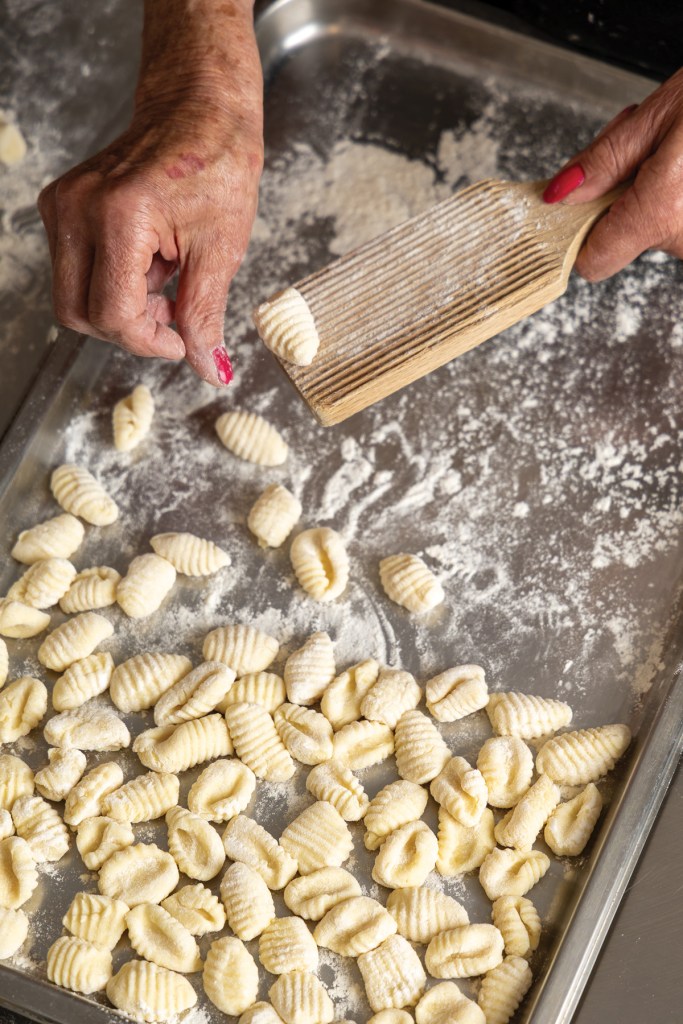
Almost 10 years later, Nancy is keeping the tradition alive. Every Thursday she and a team of nonnas make biscuits and homemade gnocchi, which are then sold to the public. Nancy also helps to fill the cafe’s cabinet with sweets: cheesecakes, biscuits, cannoli, continental sponge and other new recipes she feels inspired to try.
“I feel very at home there, we are just one big family,” Nancy says.
“When I walk in there, I just want to stay for as long as I can because everyone’s so friendly.”
Even though Marco is always looking at ways to grow Nonna’s Cucina, he says he doesn’t want to rush things and he doesn’t want to forget where they came from.
“I think it’s very important to remember who got you to where you are today,” he says.
It isn’t just the cuisine that is authentically Italian, it’s in the culture and the spirit that perfectly reflects the organisation’s motto: made with love, shared with joy.
“It’s all about being together as a group, as a family – making those meals as a family.
“Everyone’s just smiling, everyone’s just loving what they’re doing, no pressure, and the food tastes so much better.”
This article first appeared in the July 2026 issue of SALIFE magazine.
Want to see more stories from InDaily SA in your Google search results?
- Click here to set InDaily SA as a preferred source.
- Tick the box next to "InDaily SA". That's it.