Do SA’s cultural policies live up to Don Dunstan’s vision?
Flinders University academics Tully Barnett and Justin O’Connor ask whether a ‘Dunstan tax’ might invite leaders to dig deeper.
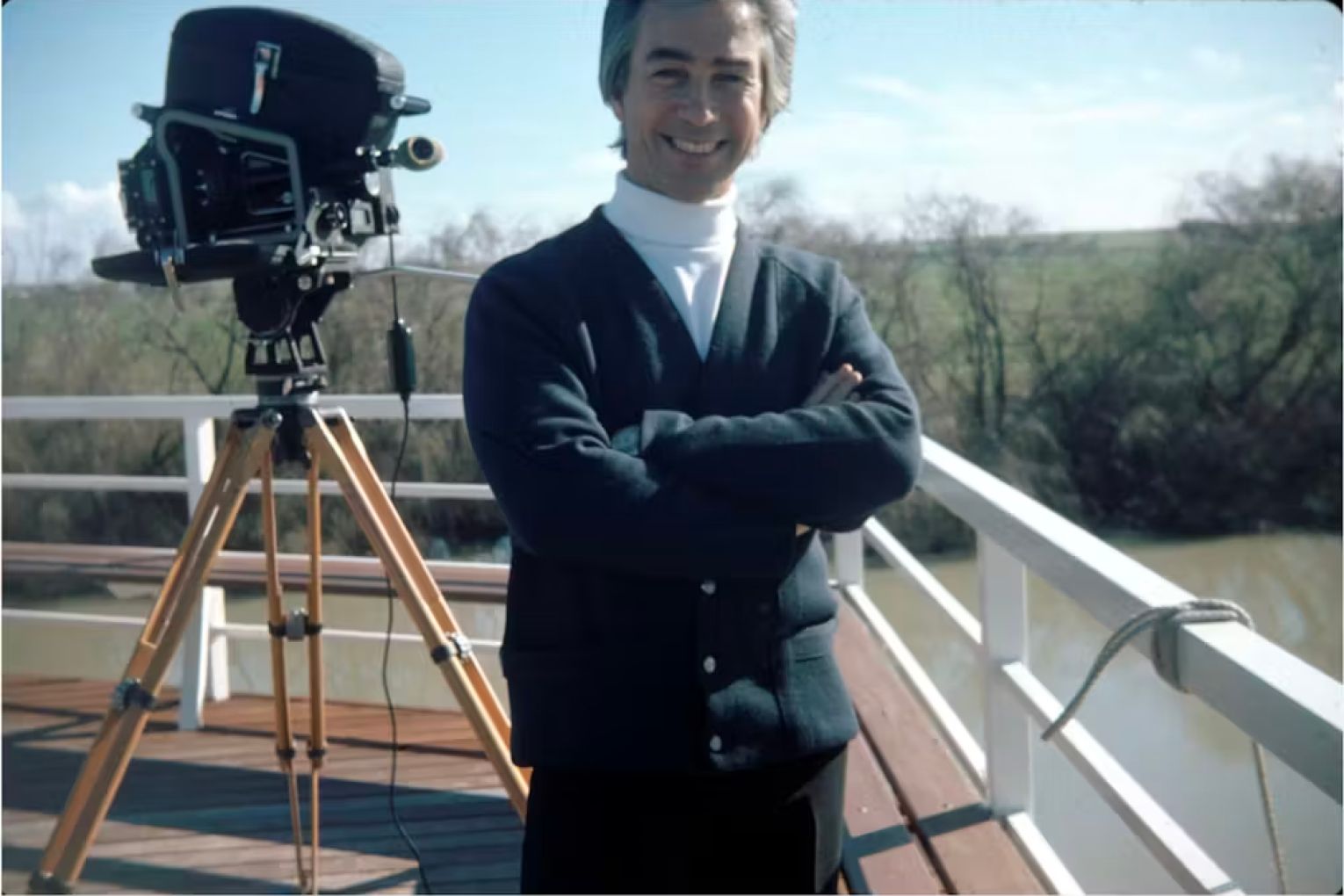
The centenary of Don Dunstan’s birth this month is marked by a full range of celebrations and commemorations for this visionary and transformative politician. His impact could be felt across the nation, the state and the city, through the Dunstan Decade’s broad and progressive legislative agenda – from Aboriginal land rights and reconciliation, to decriminalisation of homosexuality, promotion of social justice and multiculturalism, as well as urban development and ending the six o’clock swill by reforming pub opening hours.
His vision was especially powerful in the field of arts and culture, wrenching a genteel Anglophile city into a cultural hotspot with national and international resonance. Don built much of South Australia’s hard and soft cultural infrastructure, not just the statutory body model much emulated elsewhere, as seen in the Adelaide Festival Centre, the South Australian Film Corporation, but other unique organisations such as JamFactory. We need to examine this legacy in a more nuanced way.
But we also need to ask where that cultural policy vision is today. An audience member at a recent cultural event provocatively suggested that any politician trading rhetorically on Don Dunstan’s legacy should be required to put new money into the arts budget: the Don Dunstan tax. Think what could be done with that pot! However, instead of a flourishing cultural sector the envy of the nation, we have one that is faltering and demoralised. We don’t need to rehearse here the litany of budget cuts, cancelled festivals, on-hold museums, the continued decline of cultural employment in the state, the nibbling away at the common land, or the collapse of the live music scene.
The very idea of a “visionary and transformative politician” seems from another age.

The language is still there. The state’s Arts Bill introduced by Assistant Arts Minister Sarah Andrews this month maintains a commitment to artistic freedom, an important value for a government to express. It enshrines the value of arts and culture in legislation, and seeks to provide for continuity of government commitment to arts and culture. The state’s cultural policy A Place to Create is a ten-year policy that speaks to concerns about artists’ livelihoods, equitable access to arts and culture, the infrastructures that underpin making and experiencing arts and culture, First Nations leadership and climate action beyond a short-term approach.
However, the gap between the rhetoric and the lived experience of the arts and culture sector is starkly evidenced as arts and cultural spaces close, and cultural workers simply give up and leave the state – or the profession. We are a City of Music with a decreasing number of live venues. We are the Festival State with declining cultural festivals and rising gastronomy ones. Our tourism ads celebrate Adelaide as a cultural destination while the spaces, workers, and organisations that produce that culture struggle. What is left of arts and culture is required to hit ticketing, ‘bed nights’ and collateral spending targets demonstrating ‘return on investment’.
All this forgets how, in Don’s vision, culture was intended to transform our collective lives together, and to speak to the world on that basis. It entailed far more than ‘events management’.
It seems the problem is far more than staging some kind of “Waiting for Don” remake. The historical moment in which such a radical politician could take centre stage, and drive through a reimagination of the state via culture, now seems like a foreign country. It speaks to the long years of ‘economic rationalism’ in which only financial metrics count, hollowing out other narratives of progress and flourishing.
But there are new pressures on the legitimacy of cultural funding, such as the rise of One Nation. We are seeing its impacts on federal immigration policy, but across Australia there is a flexing away from art and culture as the concern only of the ‘metro elite’. Real Australians apparently want sport. That this is directly contradicted by the facts seems not to have any effect on politicians suddenly worried about their majorities.
Stay informed, daily
When Don first got into power, in 1967, the state had cultural potential visible to those in the know, but certainly not to those outside. As Premier, Don took that potential and used it to create a viable political narrative carrying the state with him. South Australia has that potential now, but to rebuild the infrastructures and institutional platforms, to make a career in culture viable again – both financially and artistically – will take long-term commitment and investment.
But above all it will take the rebirth of a cultural imagination, a compact between artists, community and politicians, in which culture is valued as an essential part of citizenship. So whenever politicians invoke the name Don Dunstan, it not just that they should put some money in the arts funding swear box, but try to remember how and why he launched that radical vision.
Creative People, Products and Places Research Centre and the Don Dunstan Foundation will present the panel ‘What Would Don Do?’ at the Hawke Building, Adelaide University, City West, on Wednesday September 30.
Associate Professor Tully Barnett is Deputy Director of Creative People, Products and Places Research Centre (CP3) at Adelaide University. Professor Justin O’Connor is Associate Director at CP3 and author of Culture is Not an Industry.
Want to see more stories from InDaily SA in your Google search results?
- Click here to set InDaily SA as a preferred source.
- Tick the box next to "InDaily SA". That's it.