A grant buys Whyalla and Pirie time. Power at cost buys them a future
A new policy adopted at Labor’s National Conference addresses the one input both Whyalla and Pirie will need: cheap electricity, writes McKell Institute executive director SA/NT Hannah MacLeod.
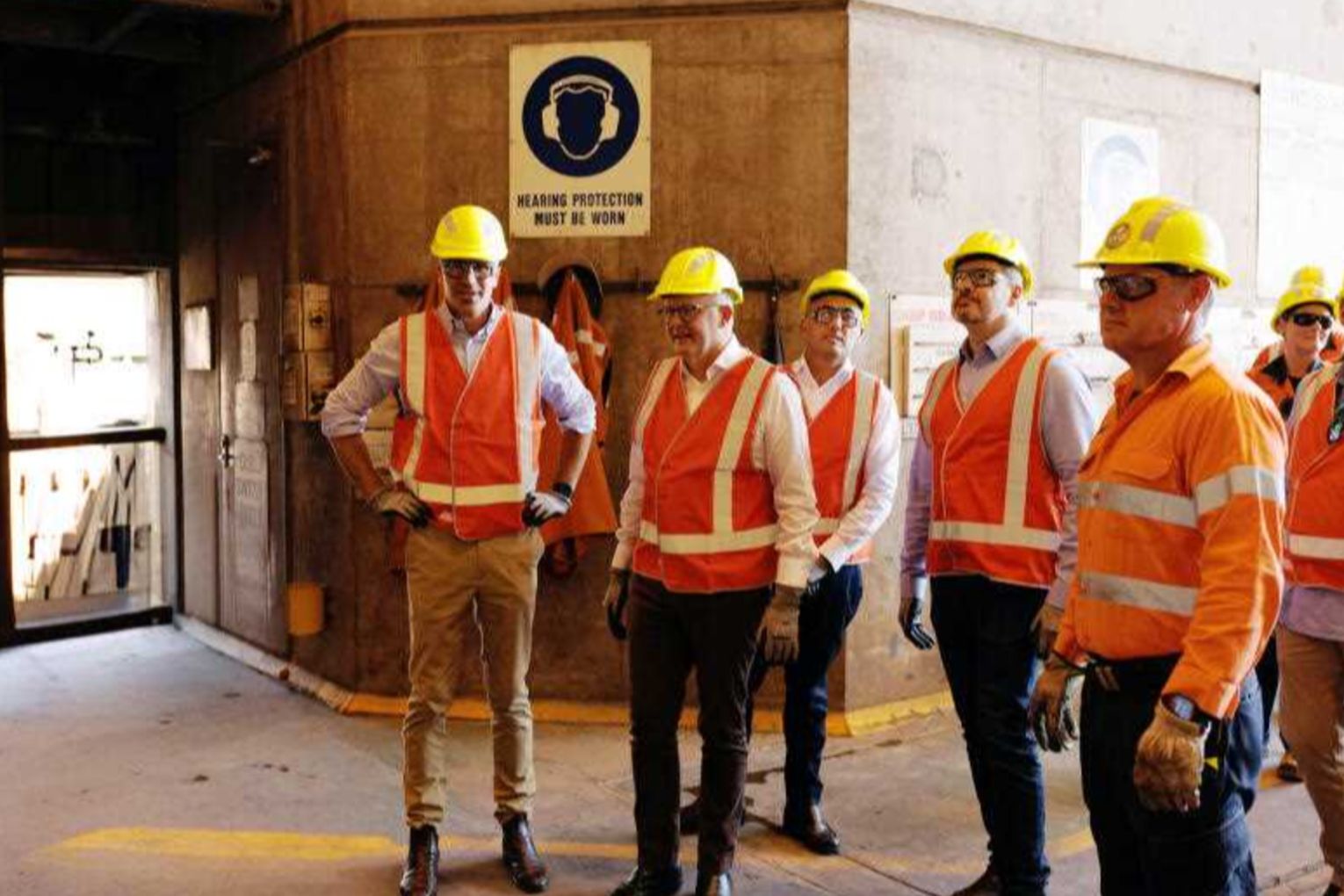
Late last week, men in blue suits, women in red dresses and a healthy crowd of protesters converged on the Adelaide Convention Centre for the ALP’s National Conference, the event where the party sets the platform that guides Labor’s decisions.
And with Federal Labor holding a thumping majority right now, those decisions have a real shot at becoming government policy.
Buried under the coverage of the Premier’s holiday tan was something that matters to South Australians: a lifeline for two of our most fragile industrial sites — power at cost for the Whyalla Steelworks and Port Pirie Smelter.
You may have read about the billions poured into Whyalla and Port Pirie and thought the government was throwing bad money after good.

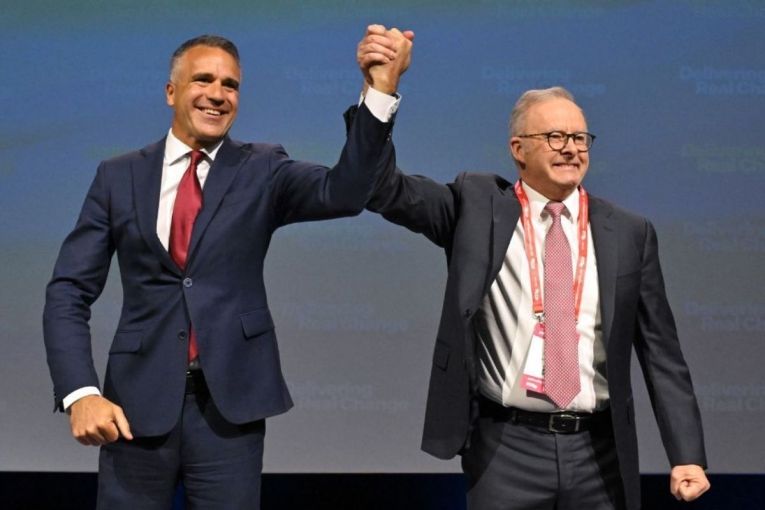
The reality is every single Australian benefits from keeping the Steelworks and the Smelter running and transitioning them into the next era of Australian manufacturing. Whyalla makes the steel that goes into our rail lines, roads and naval shipbuilding program. Port Pirie helps keep Australia among the world’s largest exporters of refined zinc and lead, turning raw resources into the metal inputs that manufacturing and defence need.
Heavy industry supports over 200,000 direct and indirect jobs nationally, most of them in regional communities like these. Once these industries are lost, they don’t come back. At facilities like those in Whyalla and Pirie, every direct job supports up to five more across the local economy, which is why a closure in the Upper Spencer Gulf isn’t contained to the Upper Spencer Gulf.
At conference, Sovereign Power was adopted into the Labor Party’s National platform: a proposal by the McKell Institute and the ETU that would see government build and own renewable generation and sell electricity to heavy industry at cost.
Whyalla’s collapse was a story of mismanagement; Port Pirie’s is a story of economics. One needed rescuing from its owner, the other is being crushed by a global collapse in smelting margins. Both are expensive to keep alive.
Sovereign Power won’t fix bad management, and it won’t rewrite a collapsed global market on its own. But it does address the one input both Whyalla and Pirie will need regardless: electricity cheap enough to make them competitive again.
Stay informed, daily
Less than half the renewable generation entities feeding the national grid are Australian-owned. At least 41 per cent are foreign-owned or controlled. Foreign investors are expected to supply more than 70 per cent of the capital needed to hit Australia’s renewables targets — which includes investment from state-owned entities in China, Malaysia, Saudi Arabia, Qatar and Thailand.
Sovereign Power turns that model on its head. It borrows at the Commonwealth’s cost of capital, not a private developer’s, and carries no shareholders demanding a return. Modelling behind the plan puts industrial power at around $66 per megawatt hour — roughly 44 per cent cheaper than a private contract. It would put Australia alongside Canada, Iceland, Norway and New Zealand, which already run state-owned or partially state-owned schemes supplying cheap power to domestic industry.
Maintaining sovereign industrial capability is not about competing with every producer in the world. It’s about ensuring Australia can still stand on its own feet when global markets falter. Government support has been a much-needed band-aid. Cheap, reliable power is a big part of the cure for a stronger industrial Australia and greater sovereign capacity. Without cheap, long-term power, sites like these risk needing continuous government intervention just to survive.
Among the speeches, the meetings and the fundraisers at ALP conference came a defining moment for Whyalla and Port Pirie. Now it’s up to the Commonwealth to translate party platform into government action. Because no government, no matter how popular or how well it manages the economy, has an endless supply of band-aids in its first aid drawer.
Hannah MacLeod is the Executive Director, SA/NT McKell Institute: an independent, progressive think tank dedicated to providing practical and innovative solutions to contemporary policy challenges
Want to see more stories from InDaily SA in your Google search results?
- Click here to set InDaily SA as a preferred source.
- Tick the box next to "InDaily SA". That's it.