Former Liberal staffer lifts lid on new party king’s subjects
“Five people in a function room above a pub assigning positions to one another.” Former Liberal staffer reveals who the SA party’s new leader will rule.
I’ve spent a long time around party politics.
Longer than I’d like to admit – and much longer than any normal person should.
Long enough to know exactly how late you can arrive at a Saturday morning meeting, hungover, and still make the vote.
Long enough to know which two older party stalwarts can’t be in the same car on the way to a preselection, or that the quality of the chicken sandwiches at a fundraiser is directly proportional to how safe the seat is.
And long enough to have genuine, deeply held opinions on how a factional ticket should be formatted.
If that sentence means nothing to you, you’ve probably made better choices than I have.
Earning your stripes inside a political party takes years. Most of them spent talking to the same people – people who already vote your way.
Increasingly, I think that’s a problem.
This week, one party seems poised to install Alex Antic as Party President. Another has watched Jacinta Allan resign the leadership after mounting internal pressure.
At first glance, those stories have nothing to do with one another.
Different parties. Different states. Different houses. Different lengths of service.
You might like

But they’re products of the same system.
It’s what happens when political parties become exceptionally good at recognising success inside the institution, and increasingly uncertain how to obtain success outside it.
Branch meetings. Factional loyalty. Staffer jobs. Turning up, being seen and waiting to be noticed – weekly for some, daily for others.
In Australia’s established political parties, getting anywhere near Parliament – upper house or lower – generally requires a kind of complete immersion in a party’s internal world that inevitably crowds out meaningful connection to almost anything else.
It doesn’t matter whether you’ve spent decades in the machine, like Allan, or a fraction of that, like Antic. The system rewards the same instincts.
For a long time, that didn’t matter so much.
Party members were simply doing what plenty of other Australians were doing – showing up. To church. To Rotary. To volunteer organisations. To sporting clubs.
But our communities have changed.
Fewer people build their lives around institutions than they once did.
Political parties didn’t really change with them.
Instead, their recruitment pool gradually narrowed, drawing from the same shrinking circles of people still willing to dedicate evenings and weekends to organisational life.
Local branch meetings slowly became what they often are today: five people in a function room above a pub assigning positions to one another.
That’s the room Antic is about to be crowned king of.
It’s also the room Allan spent decades learning to read instead of the state.
Somewhere along the way, Australia’s major political parties began confusing legitimacy inside the party with legitimacy outside it.
The skills required to survive the machine are real skills.
Stay informed, daily
Counting numbers in a preselection.
Managing factions.
Negotiating conference motions.
Building influence over years.
They’re not, however, necessarily the same skills required to connect with an electorate that has fundamentally changed.
It helps explain one of the recent mysteries of modern Australian politics: why parties seem genuinely blindsided by defeats or pressures that voters saw coming months earlier.
It explains why some continue to celebrate internal victories while their primary vote quietly erodes.
It also helps explain why independents, One Nation and smaller parties increasingly look like preferred alternatives.
That isn’t necessarily because they’re better candidates.
One Nation’s candidates, in particular, are often under-vetted, under-prepared and, in some cases, unsuited to public office.
But perhaps institutional inertia has become a bigger electoral liability than the major parties realise.
Perhaps they’re responding to candidates whose political legitimacy comes from perceived authenticity rather than party structures
This week, in the same breath as calling Antic a “vote-losing machine”, RedBridge pollster Tony Barry described Premier Peter Malinauskas as a “generational political talent”.
By every measure, our Premier should be a product of the same system.
Union secretary. Factional operator. Lifelong Labor figure.
Yet he has retained an ability to step outside the internal conversation and speak to people who’ve never attended a branch meeting in their lives.
That isn’t proof the machine works.
If anything, Malinauskas is evidence of how unusual it has become to emerge from that pipeline without becoming defined by it.
It feels as though elements of our major parties have become extraordinarily connected to themselves.
The systems they’ve built to identify, reward and promote talent haven’t evolved as quickly as the electorate has.
Election after election, Australians have told them they want something different.
Too often, our major parties are still selecting leaders in function rooms above pubs for an electorate that left those rooms years ago.
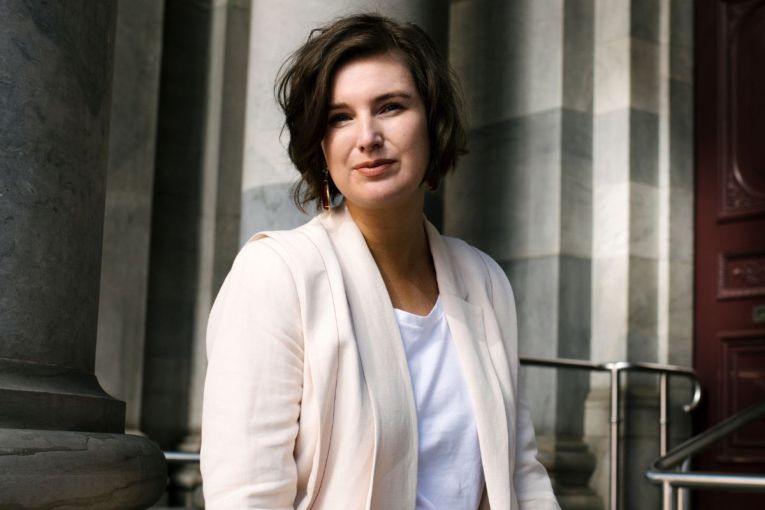
Chelsey Potter is a former Liberal Party staff member for Simon Birmingham (former Finance Minister). She nominated to be the candidate for Bragg with the vote won by Jack Batt. Potter was part of an SA Liberal Party task force aiming to recruit more women into the party.
Want to see more stories from InDaily SA in your Google search results?
- Click here to set InDaily SA as a preferred source.
- Tick the box next to "InDaily SA". That's it.