Why state government debt matters to struggling households
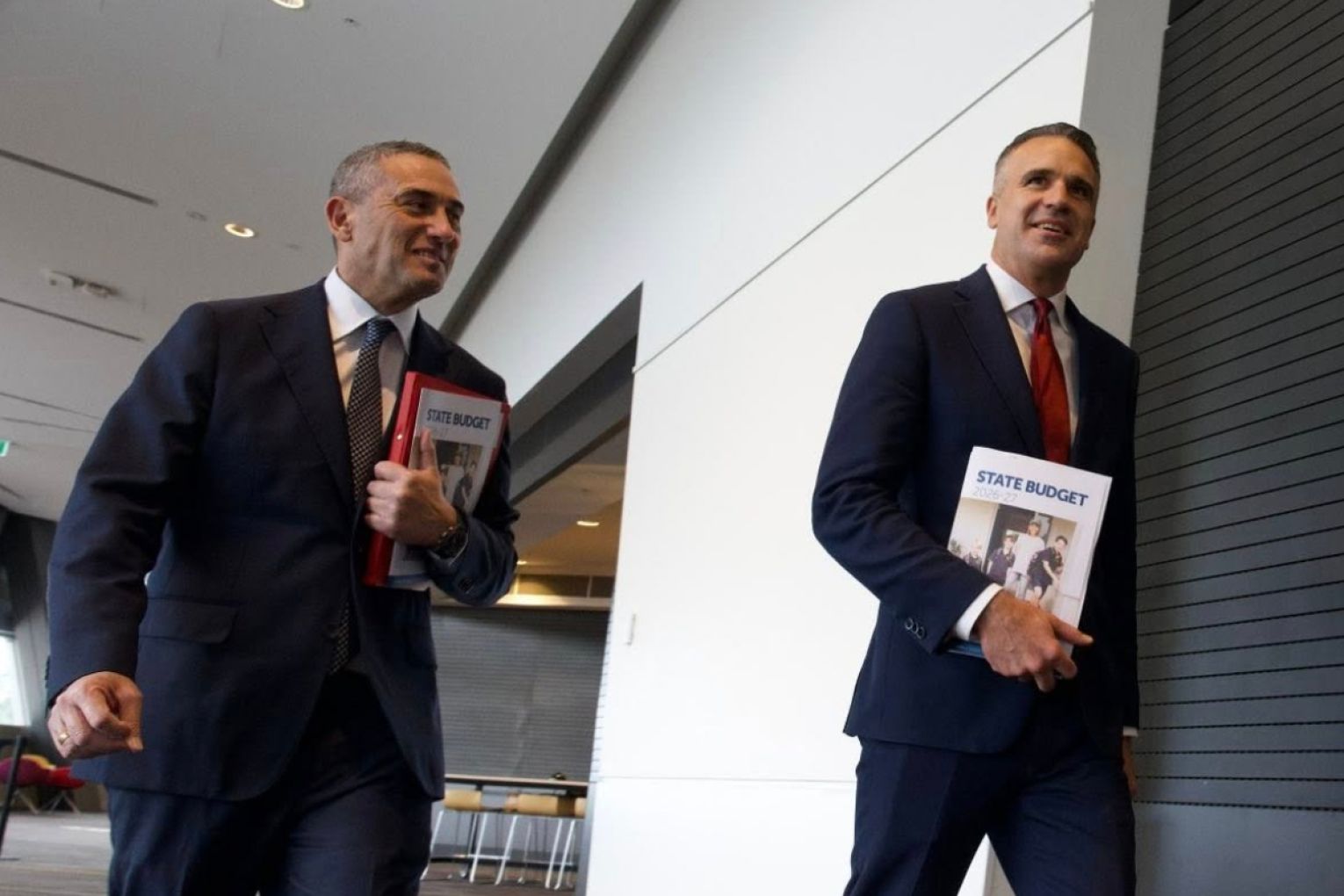
While the government wants its most recent budget to be in our rearview mirror, objects in that mirror are closer than they appear and can’t really be left behind.
One such object is the interest owed on state debt.
For the last two years, government interest expenses have been higher than the total funding of the Department of Human Services (DHS) – the government agency charged with providing services to the state’s most vulnerable and disadvantaged people. In 2026-27, government interest payments are forecast to be $1.9 billion, triple the budget of the Department of Human Services – or more than the budgets of the Departments of Human Services and Child Protection combined.
That is a big concern for an under-funded social services sector, but the picture is bigger than that with total interest expenses now accounting for nearly 6 per cent of general government expenditure – increasing to 8 per cent in 2029-30.
For that reason, those who rely on government services – which is all of us in one form or another – have reason to be concerned about rising state debt, which, coupled with higher interest rates, is driving the increase in interest payments. But we need to be clear about what the concern with debt is – particularly when the debt arises from key infrastructure projects like the completion of the North-South road corridor through Adelaide and the new Women’s and Children’s Hospital.


The real concern about state debt is not about government overspending on services or lacking restraint, because the budget is in surplus. It is not about credit ratings or viability concerns, because there is no question that the South Australian government can and will meet its repayments (we are not about to go bankrupt). And it is not about leaving a debt for future generations to pay, because lack of adequate infrastructure is also a deficit for future generations who would need to find money to build it.
But it is about the ability of the government to fund services right now because of the burden of interest rate payments.
Basic opportunity cost economics suggests that any part of revenue required to pay interest is simply not available to pay for other government services that are needed. And this has a direct impact on those needing services and government support, but it also has broader distributional impacts.
While all of us use state-funded roads, and at times schools and hospitals, government services are particularly important for those on low incomes or in vulnerable situations who are likely to use more services and supports, and who, by definition, have fewer other options for services.
But the equity impacts are about more than just access to services. As the famous French political economist, Thomas Piketty points out, governments have a choice as to whether to borrow (and pay interest) or to tax to get the money they require. The former benefits those wealthy enough to have cash to lend, the latter benefits those who rely on the government-funded services.
In this context, SACOSS is alarmed by the Treasurer’s suggestion that “it is easier not to spend money than it is to raise revenue.” This may be true in political terms, but it has clear consequences for equality and the ability of government to provide vital services.
Stay informed, daily
SACOSS continues to believe that while the achievement of operational surpluses in the budget is good, and that many concerns about government debt are exaggerated or not relevant, the government and community need to address the inadequacy of the revenue base to pay down debt and provide vital services.
This is about being real about who can and can’t afford various government fees and charges and not giving freebies to those who can pay, but also providing discounts for those who are struggling. It is about getting a fairer deal for SA from the national GST distribution where the principles of equalised shares has been eroded in recent years. And it is about raising taxes where they are needed.
None of these are easy or politically popular, but the alternative is to have interest rates eating into the budget and to see services cut at a time of a growing need.
Catherine Earl is the Chief Executive Officer or the South Australian Council of Social Service.
Want to see more stories from InDaily SA in your Google search results?
- Click here to set InDaily SA as a preferred source.
- Tick the box next to "InDaily SA". That's it.