Ordinary Australians are rising up to save our trees and park lands
Protestors arrested trying to save trees and park lands from Queensland to SA in recent weeks have science on their side as they “risk so much”, Sarah Bekessy argues on World Environment Day.
In recent weeks, Australians reaching from far north Queensland to the south in Adelaide have been arrested and forcibly removed from protests in defence of nature in their cities.
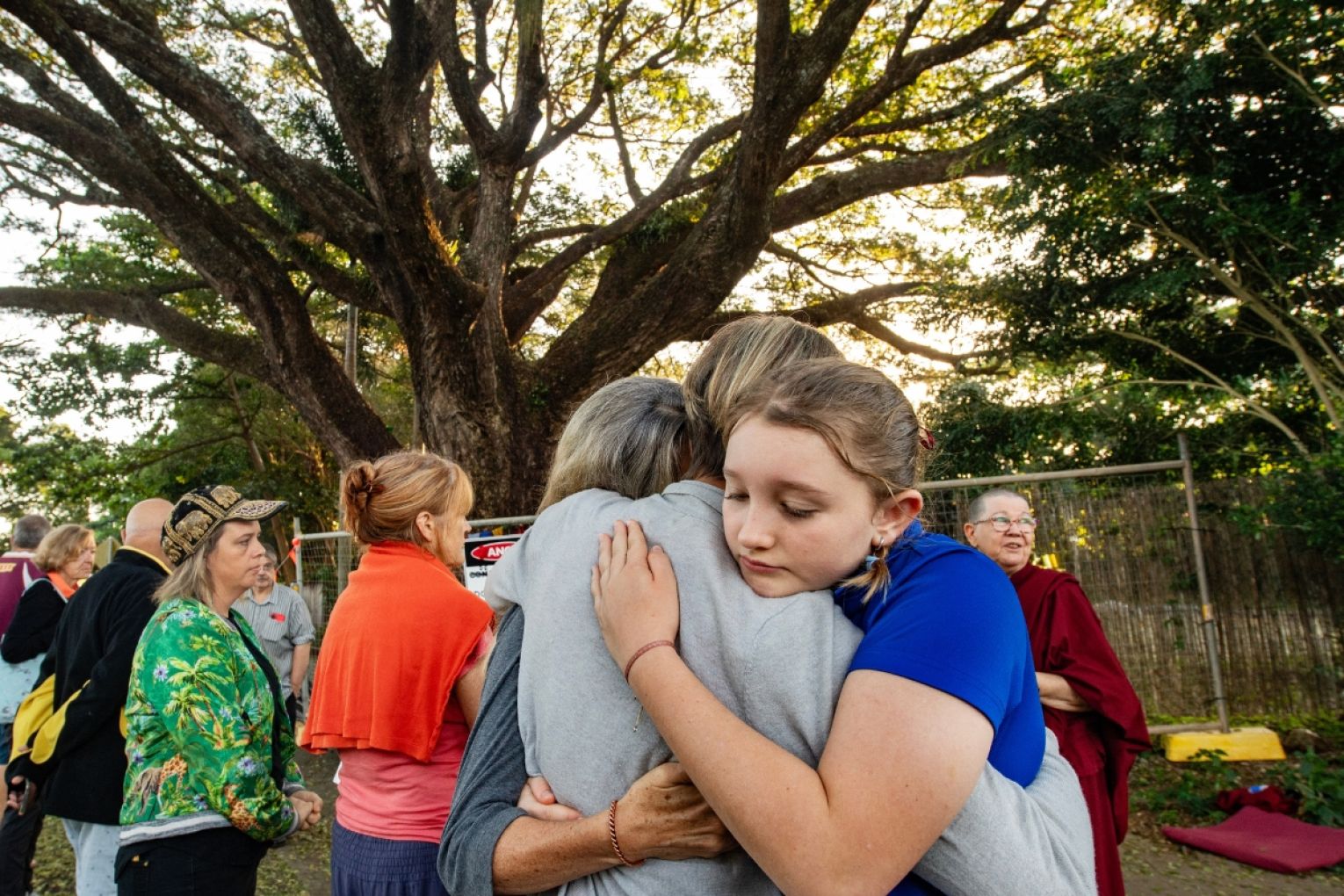
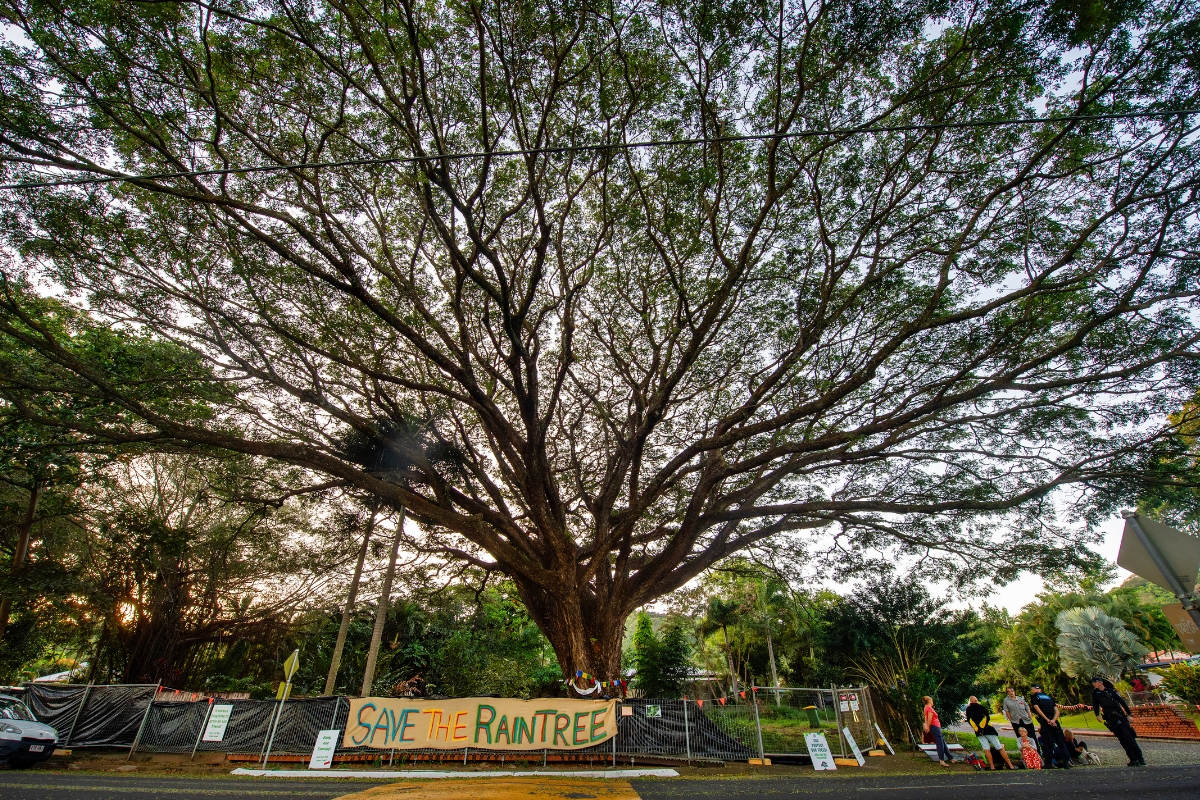
In Cairns, tearful primary school children chanting “save our tree” watched members of their community carried off by police as crews with chainsaws moved in to take down an 80-year-old giant whose enormous canopy shaded their school and both sides of a major road.
The tree, which straddled public and private land, was felled to make way for an investment property. Soon enough, a swimming pool will sit in the earth where the tree stood for almost a century, providing cooling shade, filtering the air, returning moisture to the atmosphere and offering wildlife a place to exist.
In Brisbane, protesters were handcuffed and arrested while trying to prevent cultural and environmental harms from a 63,000-seat stadium for the so-called “nature positive” 2032 Olympics at Victoria Park. On the other side of the city there were also tense scenes, as locals fought the destruction of 600 trees in important koala habitat so a private school could expand its sporting facilities.
In Adelaide, an elderly protester was arrested and thousands rallied outside South Australia’s parliament over a state government move to remove hundreds of mature urban trees for a golf course redevelopment.
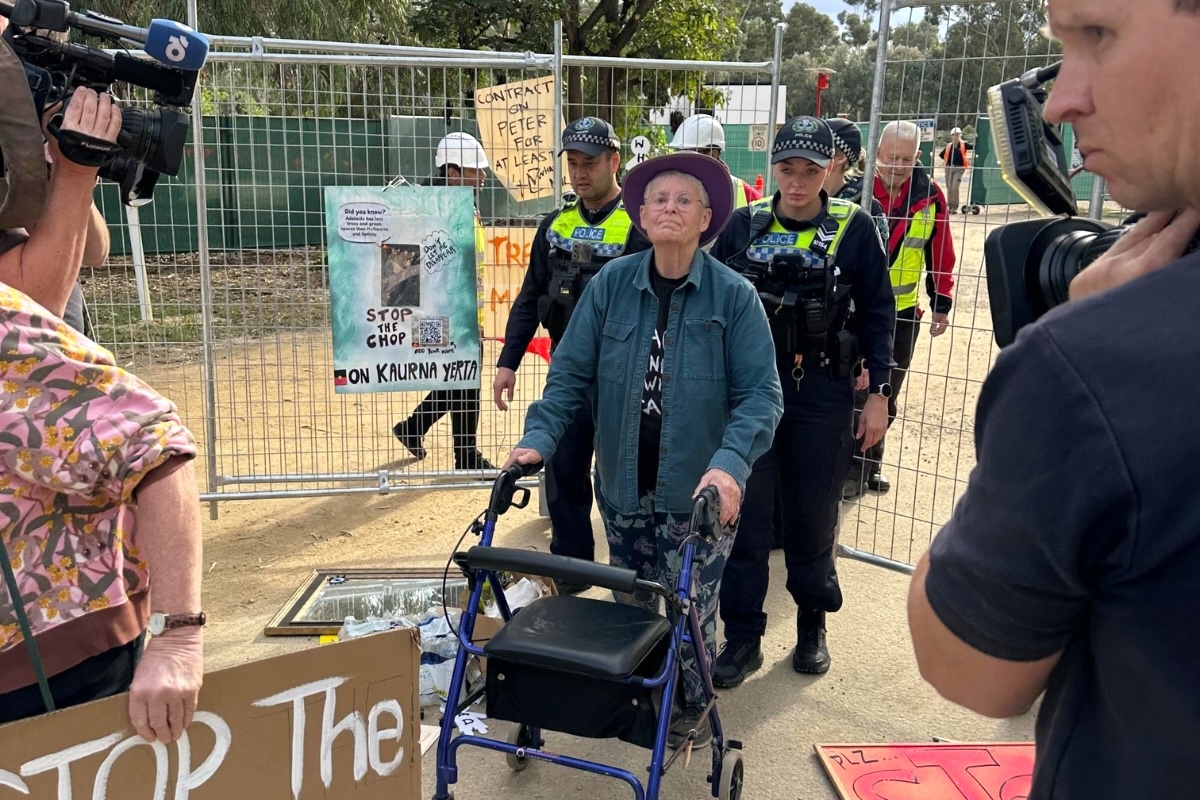
As we mark World Environment Day, these scenes should make us stop and ask why so many ordinary Australians are willing to risk so much in defence of a tree, a park or a patch of bush?
You might like


The answer lies in something our planning systems are still struggling to fully embrace: nature in cities is not a luxury. It is essential infrastructure for human health, wellbeing and survival in the face of climate change.
Nature-rich neighbourhoods deliver extraordinary benefits to our lives.
If you live in a street with more trees and biodiversity, the science shows you are less likely to experience poor mental health, heart disease, diabetes and some cancers.
Children who grow up around more nature have improved cognitive development and lower rates of behavioural problems. Urban nature cools suburbs during heatwaves, reduces flood impacts, improves air quality and creates habitat for wildlife that would otherwise disappear from our cities altogether.
But these benefits are not evenly distributed.
In many Australian cities, wealthier suburbs have significantly more tree canopy and access to green space than lower-income areas. As climate change drives more extreme heat, the consequences of this inequality will become increasingly obvious, and increasingly dangerous for some.
Nature in cities is also deeply tied to culture, identity and connection to Country.
The Victoria Park protests in Brisbane and Possum Park protest in Adelaide remind us that cities are not separate from nature or culture. They are Country too. Urban landscapes can contain places of profound ecological, cultural and spiritual significance.
Stay informed, daily
Most Australian councils now acknowledge these benefits. Across the country, local governments have urban forest strategies, biodiversity plans and canopy targets. Yet despite large-scale tree planting programs, we are still losing nature in our cities faster than we are restoring it.
The reason is simple: big old trees and intact ecosystems cannot simply be replaced overnight.
A newly planted sapling does not provide the cooling, habitat or carbon storage of a mature tree for decades. Tree hollows used by birds and mammals can take hundreds of years to form. Native grasslands, wetlands and woodlands are intricate living systems built over centuries.
Yet Australian cities continue expanding into the last remnants of urban nature.
Melbourne’s growth corridors are sprawling into the critically endangered volcanic plains grasslands, despite only about one per cent remaining.
Sydney continues clearing critically endangered Cumberland Plain woodland for massive developments including Bradfield City Centre. Brisbane and Ipswich are expanding into some of the last remaining habitat for koalas and gliders. Perth is clearing Banksia woodlands – part of a globally significant biodiversity hotspot – at a rate of hundreds of hectares each year.
The people who are engaging in the protests we’ve seen in recent days get it and perhaps that’s why these actions have resonated so strongly.
People are exhausted by the idea that every patch of urban nature is expendable. They are tired of seeing “green” promises made while the steady destruction continues.
World Environment Day is a reminder that nature is not something “out there” beyond our cities. It is the tree outside a classroom window, the wetland beside a suburb, the grassland at the edge of town and the park where communities gather.
The Australians being arrested in defence of these things are not just defending nature for nature’s sake. They are fighting for healthier, fairer and more liveable cities for us all.
Sarah Bekessy is a professor of Sustainability, Urban Planning at the University of Melbourne. She is also a lead councillor with the Biodiversity Council.
Sarah researches how to achieve positive outcomes for nature through good design, planning and policies.
Sarah Bekessy | Nature Media Centre
Want to see more stories from InDaily SA in your Google search results?
- Click here to set InDaily SA as a preferred source.
- Tick the box next to "InDaily SA". That's it.