Letters to the Editor on an Adelaide Hills town at a crossroads
This week, InDaily readers share their two cents on an Adelaide Hills town at a crossroads and SA’s state election.
Responding to ‘A nightmare’: The picturesque Adelaide Hills pioneer town at a crossroads
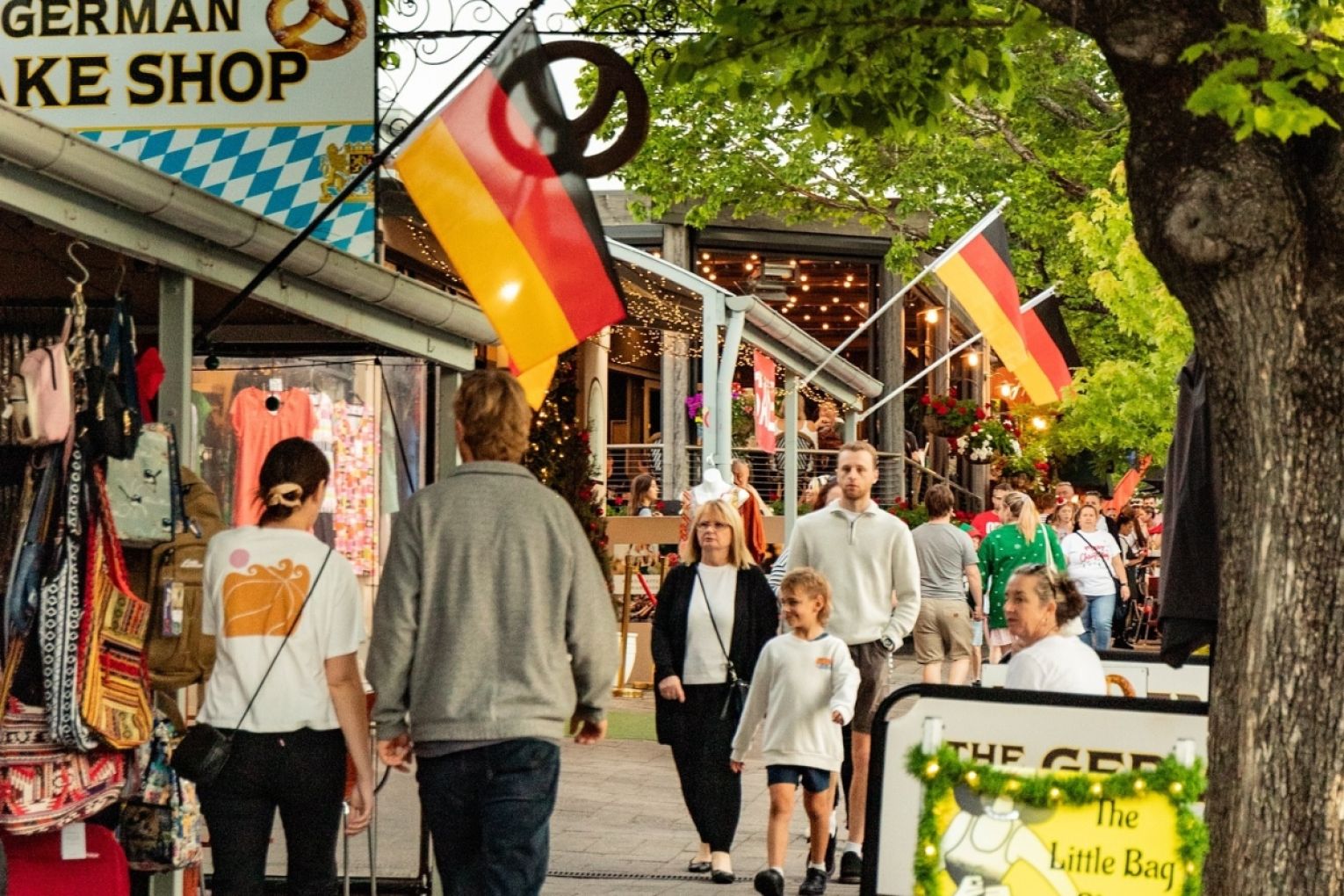
The fact that the removal of large trucks and a new interchange at Verdun is underway diminishes the message Ms Howe is trying to make.
I would fully support the notion that a solution or solutions need to be found to help with the issues. However, the responsibility for parking is not on the State Government. That should be a town or council responsibility. At the same time, would someone driving into Hahndorf want to see the streets empty or the town looking too quiet? There needs to be a balance, of course.
Another factor is the access for local residents. Those who avoid the town during tourist season and school holidays because they know they aren’t able to find parking or the products or services they need because of the focus on tourists.
Not an easy answer! – Bob Sibson
As a day tour operator of 25 years in and around Adelaide, we now consciously avoid both Hahndorf and Glenelg due to the appalling lack of parking, drop off and pick up zones, major traffic congestion and lack of public toilet facilities. – Jeff Easley
What do you mean by sometime in the future?
This is already happening. We live in Adelaide and drive through the area once or twice a month. We often avoid Hahndorf completely, especially on weekends, and we have been unsuccessful in finding a car park a few times when we intended to stop there, even midweek, so we just gave up.
150 per cent support the call for our government to invest in the needs of this lovely town. – Anna Mycko
Responding to ‘This is a declaration that things are not good’: One Nation surge to fell Libs
Regarding the article on One Nation’s election result thus far, I sincerely believe that a poorly performing Liberal Party in opposition will always be a better and safer option than having One Nation in the role. I am yet to read of one policy, let alone a swathe of others required, to be an effective opposition party to keep the Labor Party accountable. All we hear from One Nation is complaints without any reasonable solutions. Oh, and let’s not forget to blame migrants for all of Australia’s woes!
You might like

Congratulations Mali and team. Well done, Ashton, on a difficult job undertaken with dignity and grace. – Maria Russo
Responding to Prosecco deal a fizzer in historic EU trade agreement
A simple solution to the product naming issue could be to “Australianise” the existing names to give the products an Australian identity on the shelf, while retaining product familiarity. Prosecco to Prosecca. Feta to Feto. Gouda to Goudo: “Goudo is betta than Gouda”.
Kinda like Sharon is Shazza, same thing, but Australian. – Roger Heel
Responding to ‘Can’t fly to feta’: SA cheesemaker slams European trade deal
I read these types of articles, and it seems there’s a reasonable chance the negotiators may not have put Australia in the best position. It’s hard to see this being a true win-win deal if Australia hasn’t gone in strongly promoting the benefits to Europe as part of the negotiations.
That said, there’s also an opportunity in situations like this. If certain names are off the table, then we should back our own industry and create something new. If it were up to me, I’d be producing something like “Prosecka” as a uniquely Australian wine, made from Australian grapes and marketed as our own, and the same approach could apply to products like “Fetta” or “Southern Fetta” instead of feta. – Nathan Tichý
Responding to Make-up artist in mix for orange wave and Labor legacy picks win seats
Australia, we have a problem – and not even Houston can fix it!
Saturday’s election showed once again the ignorance of the electorate of our system of government in Australia.
The Liberals are out of touch, the Greens are effectively anti-everything and believe their own compost, Labor seems to have a reasonable grip locally at least, and One Nation has played on voter ignorance.
One candidate said:
“One Nation will crack down on Medicare fraud and implement reforms to better remunerate GPs so they can bulk-bill”.
“One Nation also wants to ensure taxpayer-supported medical students are required, upon graduating, to fulfil their regional work obligations much sooner so we get more doctors in country areas.”
Mate, these, like immigration, are federal issues!
This was a state election.
Stay informed, daily
I understand that voters may be upset with Albo and Co, but slamming candidates in a state election, who can’t change these issues, is simply out of touch with reality!
We need to bring back/strengthen a decent program of civics in schools, especially via social media, and stop government cost shifting, which has led to misunderstandings on who does what, so that voters can maybe then appreciate the difference between the governments and who is responsible for issues and solutions. – Pete Neal
Responding to ‘I’ve been homeless and slept rough’: Adelaide renter’s warning on One Nation
Refreshing to read incisive political analysis from someone who knows hardship.
Duncan Bainbridge makes several valid points, and his authentic street wisdom puts to shame some of those who make a living from journalism.
His questioning of the value of the untested One Nation is fair, though the party deserves points for positive disruption of the status quo. Generations of politicians have failed to meaningfully tackle the housing crisis, despite hundreds of empty promises.
What has happened to the Housing Trust? Information as to its current state is vague. How many tenants wreck their dwellings and are shifted to undamaged accommodation? How many tenants earn way beyond a figure considered fair and acceptable to those who are needy and decent? How many HT properties have been sold? How many new properties are built annually?
Does anyone in government truly care, any more than they do about another casualty of sly social snobbery, public transport? The Malinauskas team blatantly misled voters in 2022 over “fixing” the ambulance ramping problems. No minister appears to strive to come up with creative solutions. And “so the needle returns to the start of the song and nothing ever happens”, as the Del Amitri hit goes. – Robbie Brechin
Responding to Mining industry calls for rapid mining act changes after Labor win
It is always interesting to note how the mining and gas industries always bemoan how we will suffer if they don’t get their own way. We need as much farmland as possible so we have food on our plates. We can’t eat iron ore, petrol or gas!
They need to be taxed more, incentivised less by the taxpayer, and have retail prices capped!
They need to learn to play by a rulebook that is not their own. – Ted Jaeger
Responding to ‘Highly traumatic’: Game digs in on One Nation split
This was the strangest election in SA that I can remember in my 58 years as a registered voter.
Not one candidate in my electorate door-knocked or contacted me in any way, except for the Liberal candidate, who advised his status by email 16 days before election day and then got terminated by his party.
The only pamphlet received in my letterbox was a generic one with no candidates’ names from Family First.
I did not see any election-type material or candidates in my local shopping centres.
When I wrote to my Labor member, who is a minister, asking where he is appearing in public during the election campaign, I received his automated response that he is always available and holds regular street corner meetings – but not one was scheduled during the election campaign, and none have been held this year.
I can only assume that because this is a tightly held Labor seat (God only knows why), no other party thought it worthwhile to make an appearance except on the ballot paper and decided it was not cost-effective to even announce their candidates.
The Labor “no donations” restrictions ensured minimum spending by the other parties. At the same time, the government used taxpayer funds to advertise its “We Are Building” ads, which blind Freddy could see were extolling the Labor Government.
I’m not sure how any candidate expects to have people vote for them if nobody knows who they are or knows anything about them pre-election day. – Graham Tench
Responding to Adelaide’s car reliance weakness amid fuel shortage fears
It seems incongruous that an article that begins by highlighting Adelaide’s car-dependency then ends by presenting EVs as a solution. Adelaide requires a massive cultural shift away from private transport use, and EVs are not the answer. Car ownership is still considered a rite of passage for young people, as it was in the 1970s. While cycling and walking should undoubtedly be encouraged, cities around the world have shown that the most effective way to get people out of their cars is the provision of reliable light rail. The Edmonton LRT in Canada, for example, runs underground in the CBD. If Adelaide is to effectively reduce traffic congestion, which in turn encourages cycling and walking, mass transit is the only option. It will be expensive, and there will be significant opposition from the vocal car lobby, but it’s the only way to move Adelaide into the 21st century. – Matt Campbell
Want to see more stories from InDaily SA in your Google search results?
- Click here to set InDaily SA as a preferred source.
- Tick the box next to "InDaily SA". That's it.