‘Strengthen Adelaide’s civic heart’: Planning Minister disputes Festival Tower Two claims
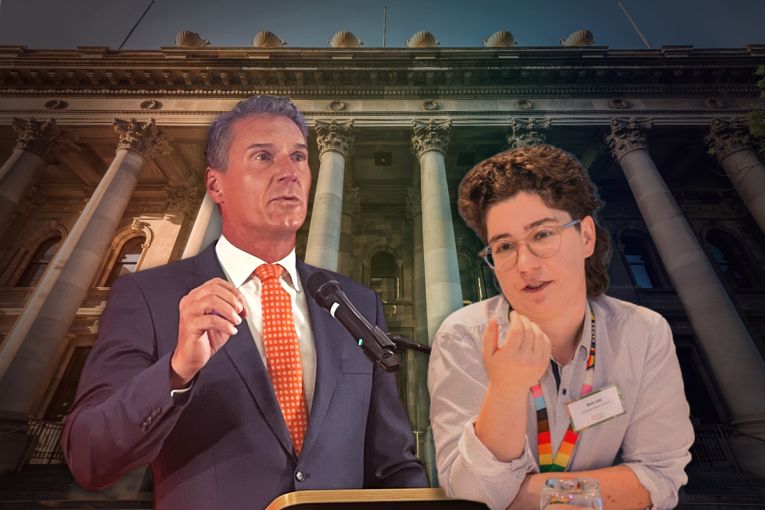
In response to Elizabeth Vines thoughts on Festival Tower Two yesterday, Planning Minister Nick Champion says the new building will “strengthen Adelaide’s civic heart” and that claims over a $1 a year payment are false.
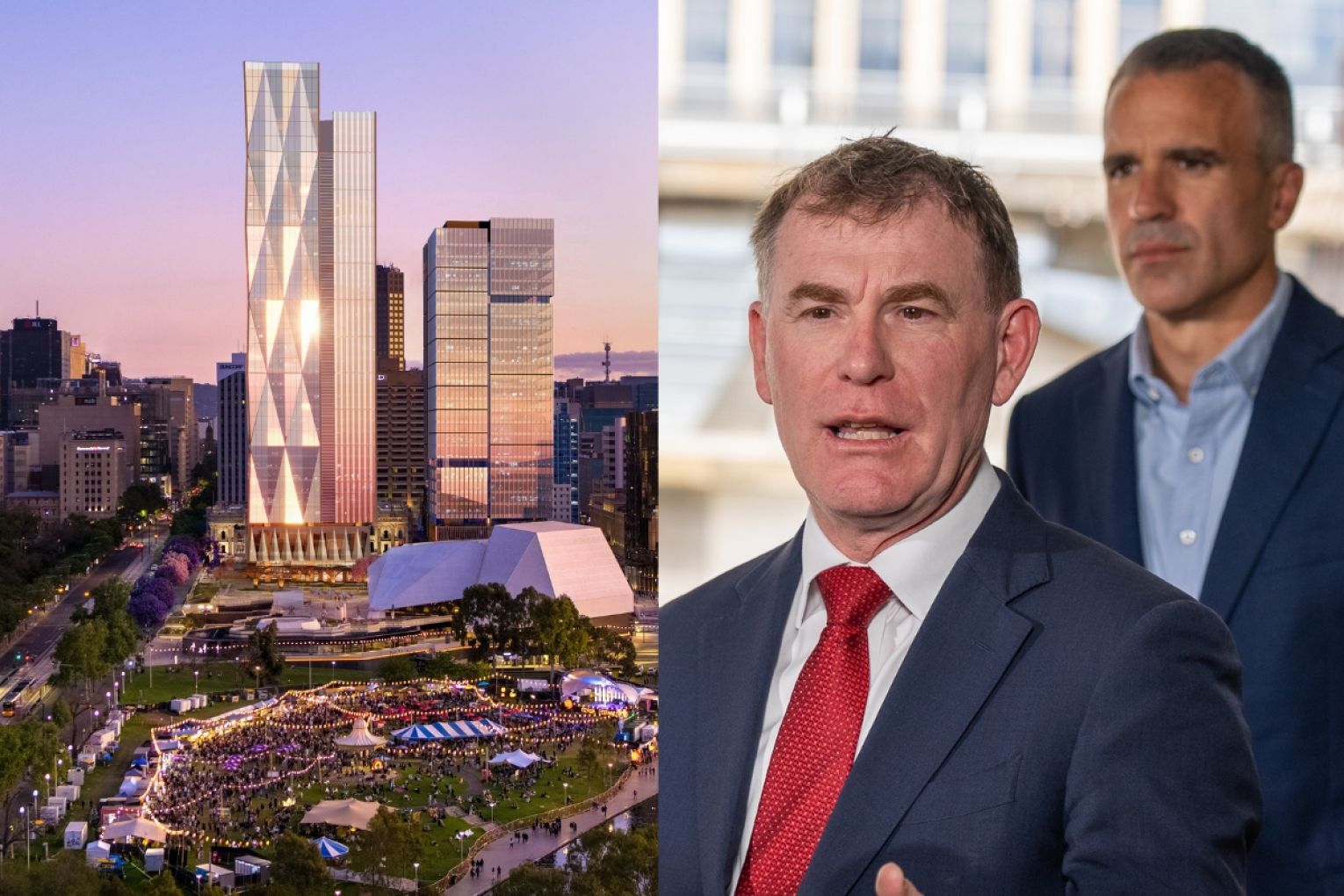
Adelaide has always been a city that balances heritage with progress. From Colonel Light’s visionary plan to the thriving cultural boulevard of North Terrace, the city’s story has never been one of standing still. It has been one of thoughtful evolution.
Colonel Light’s plan for Adelaide included, within the Park Lands, a hospital, a school, a market, a storehouse and a cemetery. Light was a military surveyor, who had an eye for a geography of Adelaide with a vision to have the Park Lands fully utilised by residents of the city and its surrounding suburbs (like Southwark, where he lived).
The debate surrounding Festival Tower Two has been framed by some as a choice between protecting Adelaide’s character and pursuing economic growth. That is a false choice. The proposed tower represents an opportunity to strengthen Adelaide’s civic heart, support thousands of jobs, and deliver world-class, sustainable infrastructure that positions our city for the future.
People are entitled to hold an opinion on architecture, heritage and height.
However, people should not repeat falsehoods to bolster their argument. This is particularly true in the middle of an election campaign.
There are some facts that need to be cleared up in this debate.
Firstly – the idea that the government was only paid $1 a year for 100 years is false. There is a $1 placeholder on a lease which is publicly available – this is completely typical. There is also a separate Development Agreement containing the full scope of the deal – which is worth tens of millions of dollars’ worth of payments made to the state.
Secondly – the idea that Festival Tower Two is progressing before it has planning approval is also false. South Australia’s independent planning body has given this development approval to proceed. There are some reserved matters – it is not unusual that developments are approved with reserved matters that can be resolved throughout the construction process.
You might like

Thirdly – public consultation for the code amendment was conducted between September 12, 2024, and concluded on October 24, 2024 – a period of six weeks. Seventy six community members and community representative groups made submissions. The code amendment was initiated on April 9, 2024, and was approved January 9, 2025 – a nine-month process. There was nothing rushed or abnormal about this process.
Festival Tower Two, like so many controversial buildings in Adelaide, will come to be loved by South Australians. Let’s not forget the controversy over the re-development of the Adelaide Oval. I am sure many of its most strident opponents enjoy watching the footy, cricket or live music at one of the world’s most iconic venues.
Similarly, I am sure many opponents of Festival Tower Two will one day stop at restaurants and cafes after seeing a play at the Festival Theatre.
The tower represents a significant economic boost for South Australia. Construction alone will support thousands of jobs across engineering, trades, architecture, and professional services. At a time when cities across the world are competing for investment, turning away a major private development in the heart of the CBD would send precisely the wrong signal.
Adelaide cannot afford to signal that it is closed to investment. Instead, we must demonstrate that our city is open for business, innovation and growth.
Beyond construction, the tower will deliver something Adelaide urgently needs. Premium, environmentally sustainable office space designed for the modern economy. Much of Adelaide’s existing office stock is ageing and increasingly unsuitable for global companies seeking high-quality workplaces.
Businesses today demand buildings that meet the highest environmental standards, offer advanced technology infrastructure, and provide modern work environments capable of attracting top talent.
Festival Tower Two will deliver exactly that. Designed as a six-star NABERS Energy rating and a five-star Green Star rating, it will be among the most environmentally advanced commercial towers in Australia. That means lower emissions, greater energy efficiency, and a workplace designed around sustainability and wellbeing.
Cities that attract the industries of the future must offer the workplaces of the future. High-quality office space is not simply about desks and floorspace, it is about attracting investment, growing high-value industries, and creating jobs.
Critics often point to office vacancy rates as evidence that Adelaide does not need new commercial buildings. But vacancy statistics do not tell the full story. Much of the vacant stock consists of older, outdated buildings that modern tenants no longer want.
Stay informed, daily
Across Australia and globally, we are seeing a “flight to quality.” Businesses are moving out of older offices and into new, sustainable, premium-grade buildings that offer better amenities, better environmental performance, and better workspaces.
Adelaide is increasingly positioning itself as a hub for defence, space, advanced manufacturing and high-tech industries. These sectors demand premium commercial space. If Adelaide does not build it, those companies will simply establish themselves elsewhere.
Festival Tower Two represents precisely that kind of building.
The Riverbank precinct – a celebrated legacy of the Bannon Government – has already undergone a transformative redevelopment that has revitalised the area and created a vibrant cultural and commercial destination linking North Terrace to the River Torrens.
The addition of Festival Tower Two is part of that broader vision, one that brings more workers, more activity, and more life into the heart of the city.
Rather than diminishing the civic heart, increased activity strengthens it.
Importantly, development and heritage preservation are not mutually exclusive. Major cities across the world have demonstrated how cities can grow while respecting their past.
London offers a powerful example of how modern architecture can successfully coexist with centuries of history. In recent decades the city has embraced contemporary buildings alongside its historic landmarks, creating a skyline that reflects both its heritage and its future.
Developments such as the The Shard, The Gherkin and The Leadenhall Building have been carefully integrated within a city defined by icons such as St Paul’s Cathedral and the Tower of London. Rather than detracting from London’s historic character, these buildings have added a new architectural layer that celebrates innovation while respecting the city’s past.
Importantly, many of these once-controversial projects have gone on to receive overwhelmingly positive public and international responses. Buildings like The Shard and The Gherkin have become globally recognised symbols of modern London.
What initially sparked debate is now widely viewed as a successful example of how historic cities can grow thoughtfully, demonstrating that bold, contemporary architecture can complement heritage.
The Festival Centre itself was once a bold and controversial project and never a part of Light’s Vision. Today, it is one of South Australia’s most beloved cultural institutions.
Cities that thrive are those that are willing to invest in the future while respecting their history.
Festival Tower Two does not erase our heritage, it enhances it and helps us to fulfil Colonel Light’s vision for Adelaide.
It will send a statement that Adelaide is a modern, forward-looking capital city, one that honours its heritage while building boldly for the decades ahead.
Nick Champion is Labor’s Planning Minister, Housing and Urban Development Minister and Housing Infrastructure Minister.
Want to see more stories from InDaily SA in your Google search results?
- Click here to set InDaily SA as a preferred source.
- Tick the box next to "InDaily SA". That's it.