The one hard constraint on SA’s generational economic opportunity
For the first time in generations, SA has a long, predictable 20-to-30-year runway of industrial investment, writes McKell Institute executive director SA/NT Hannah MacLeod. But there’s one hard constraint.
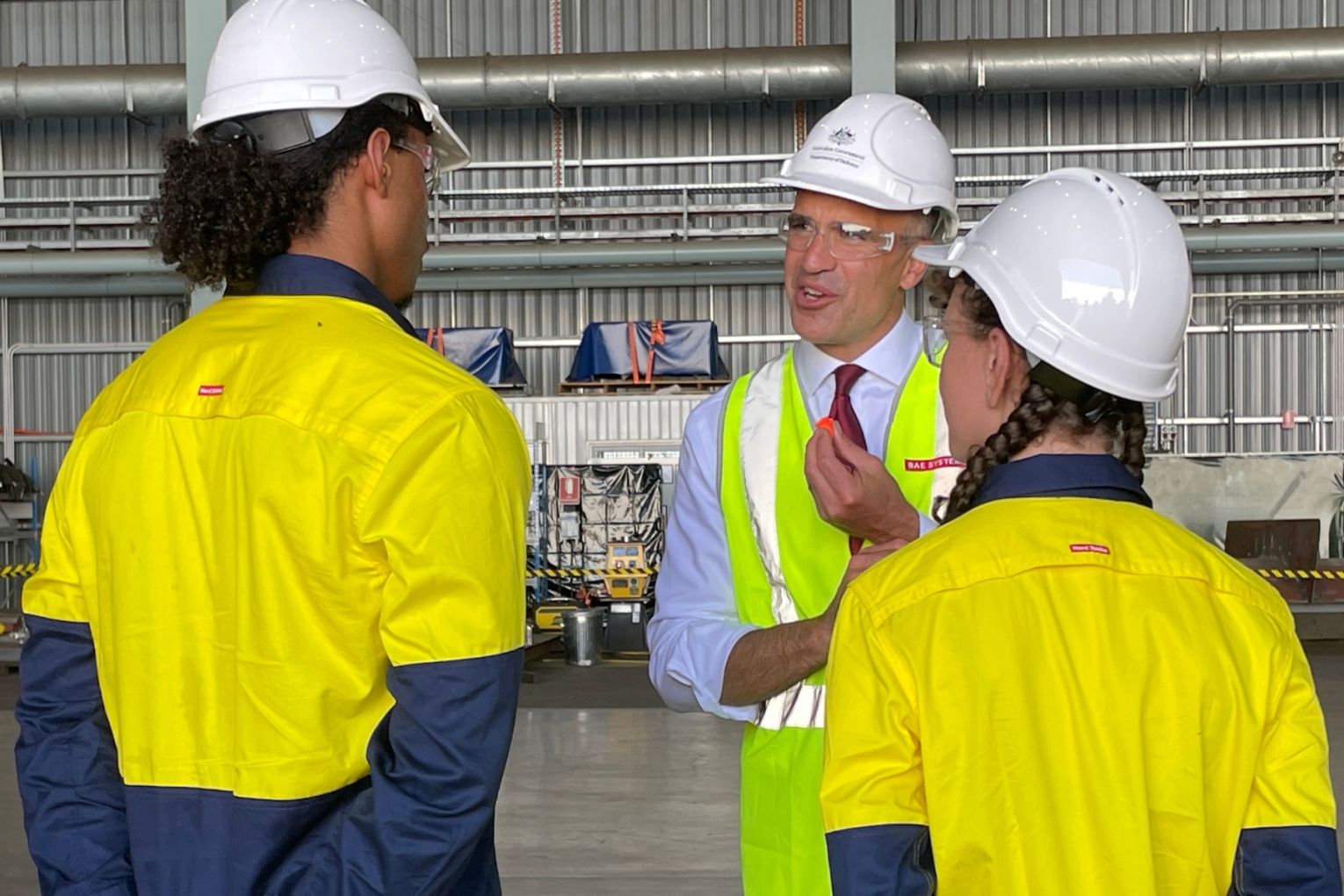
The $30 billion commitment to submarine construction under the AUKUS contract confirms South Australia is entering the largest economic transformation since the post-war manufacturing boom.
Billions are flowing into Osborne. Thousands of construction jobs will be required in the immediate term. Over the coming decades, submarine design, build and sustainment will demand an industrial workforce the likes of which many of us have never seen. Add the Torrens to Darlington completion, the new Women’s and Children’s Hospital, and the broader defence and infrastructure pipeline and the scale becomes immense.
For the first time in generations, South Australia has a long, predictable 20-to-30-year runway of industrial investment. That kind of horizon is rare. It creates certainty for business. It attracts capital. It reshapes the state’s economic identity.
But there is one hard constraint: we do not yet have the workforce.
Government is rightly investing in technical colleges, apprenticeship incentives, and fee-free TAFE for the jobs needed now.
You might like


Yet, the workforce of 2035 is still on playgrounds and riding bikes. They are kids whose futures will be shaped by the support we give them today. This is where the real opportunity lies.
South Australia has communities where high unemployment has persisted across generations. In parts of Adelaide’s north, workforce detachment is not an exception, it’s the norm. In Davoren Park unemployment exceeds 16 per cent, in Elizabeth South it approaches 25 per cent, far greater than Greater Adelaide’s average of about 4 per cent.
Children in these areas are more likely to miss school, fall behind academically, and leave school without the skills they need to be active participants in the workforce. By focusing on these kids now, we can use this pivotal moment to break intergenerational cycles of unemployment and uplift these communities.
Three-year-old preschool is a great start. But a transformation of this scale demands more. Targeted attendance strategies, school lunch programs, and high-quality after-school and holiday programs in high-unemployment communities are just a few of the policies that could set children on a path to stable employment to build the workforce we need.
Stay informed, daily
Attendance programs make sure children get to school and help teachers intervene early when students are falling behind. School lunch programs do more than feed empty stomachs; they foster belonging, improve concentration, and allow children to engage fully in learning. High-quality after-school and holiday programs provide structured, safe environments during the hours when children are most at risk of disengaging, while also enabling parents to participate more fully in the workforce.
Too often, these programs are seen as optional extras for those who can afford them, when, in fact, they are essential workforce infrastructure.
Chifley’s post-war nation-building steered Australia’s manufacturing boom, creating skilled workforces and a buoyant middle class. Industrial expansion and a push for full employment, through initiatives including the Snowy Mountains Scheme and mass public housing construction, were deliberate, government-driven policy choices that strengthened both workforce capacity and social mobility.
South Australia now has a similar opportunity before it. The AUKUS era could extend prosperity to those communities still left behind, but only if we are deliberate.
If we are willing to invest billions in ships and shipyards, we must be equally serious about investing in the children who will build them.
This infrastructure transformation is not simply an economic strategy. It is a generational obligation. We must not squander it.
Hannah MacLeod is the Executive Director, SA/NT McKell Institute: an independent, progressive think tank dedicated to providing practical and innovative solutions to contemporary policy challenges
Want to see more stories from InDaily SA in your Google search results?
- Click here to set InDaily SA as a preferred source.
- Tick the box next to "InDaily SA". That's it.