Why Australia’s next defence advantage may lie beneath the waves
Flinders University researchers are developing autonomous underwater technology and exploring how humans can work alongside AI to help Australia protect its vast maritime territory.
Australia’s next defence advantage may not come from building bigger ships or deploying more personnel, but from developing technology that allows fewer people to achieve more.
With one of the world’s largest maritime territories to protect, Australia faces a significant challenge in monitoring its waters, safeguarding critical infrastructure and responding to potential threats.
Autonomous underwater vehicles could help meet that challenge, operating for extended periods with limited human intervention and working together to cover larger areas.
At Flinders University, researchers are developing the technology and investigating how people can work effectively alongside increasingly autonomous systems.
Their work reflects a growing focus on what defence experts call asymmetric advantage: finding smarter ways to achieve strategic outcomes without relying solely on greater numbers or resources.
A vast area to protect
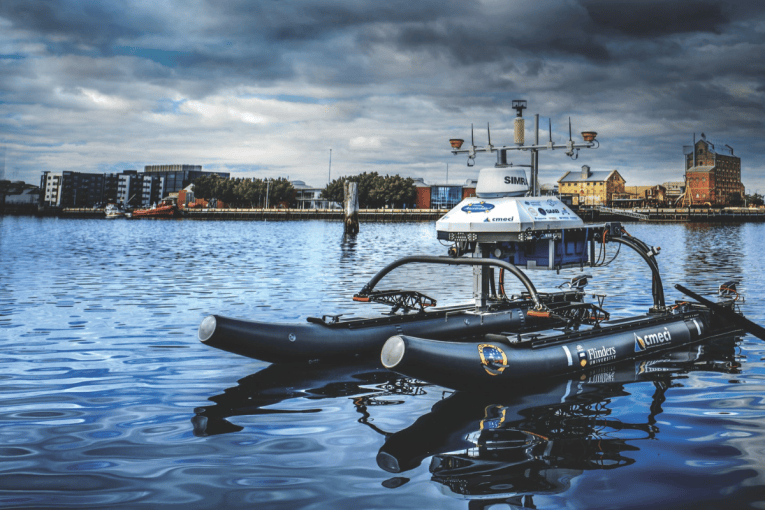
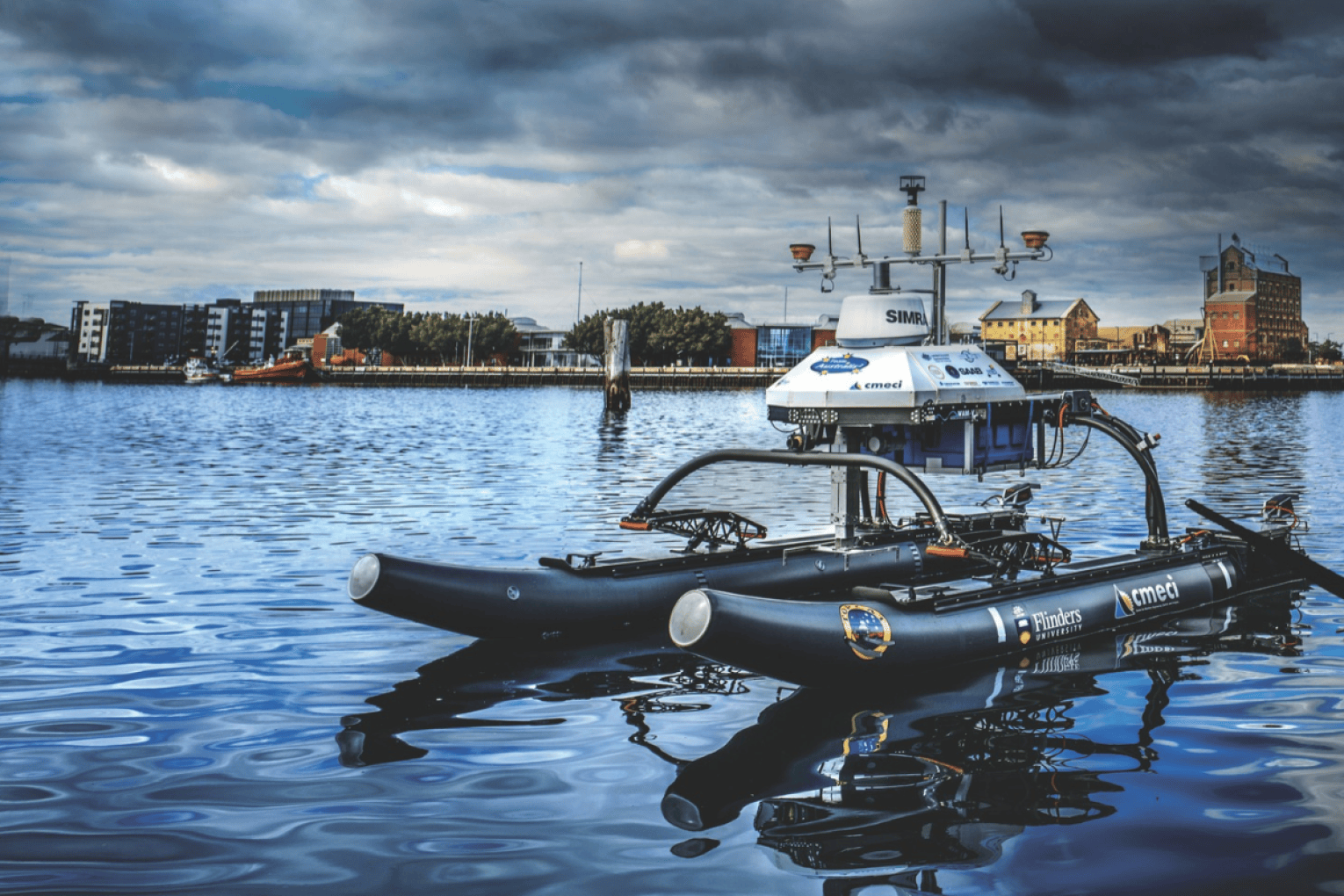
Professor Karl Sammut, director of Flinders University’s Centre for Defence Engineering Research and Training, researches autonomous marine vehicles, including uncrewed underwater vehicles (UUVs) and uncrewed surface vessels (USVs).
These systems could help Australia monitor its maritime territory more efficiently, from valuable marine resources to the communication cables that carry much of the country’s international data.
“Australia has the third largest EEZ (Exclusive Economic Zone) in the world,” Professor Sammut says.
“These waters are rich in mineral, oil and gas resources as well as fish habitats and biodiversity.
“Monitoring such an enormous expanse using conventional vessels would be both impossible and unaffordable, even if we had sufficient numbers of defence personnel.”
You might like


Undersea communication cables are another priority, with physical attacks on critical infrastructure an increasing concern for national security.
Autonomous vehicles could provide a more flexible and cost-effective way to monitor these areas, reducing the need to send crewed vessels into potentially dangerous environments.
The advantage comes from deploying multiple vehicles that can share information, coordinate their activities and operate with less direct supervision.
“By enhancing the vehicles’ autonomy, situation awareness and ability to collaborate to detect, track and localise surface and undersea threats at scale, the burden on the human operator is reduced allowing small numbers of operators to manage large numbers of uncrewed vehicles,” Professor Sammut says.
In practical terms, one operator could oversee several vehicles rather than controlling each one individually, extending the reach of a relatively small team.
Staying underwater for longer
Operating underwater presents its own challenges. GPS does not work beneath the surface, communication is limited and vehicles have finite battery life.
The CDERT research team at Flinders University is exploring how autonomous vehicles can navigate more accurately, share information and work together to complete missions.
The team is also researching underwater docking and recharging, which could allow vehicles to remain submerged for much longer.
“Most vehicles are able to operate anywhere between 12 and 36 hrs,” he says.
Currently, vehicles often need to be recovered by a ship so their batteries can be recharged and their stored data downloaded. This can interrupt monitoring and reveal the presence of an operation.
If the vehicles could be recharged underwater, they could continue their work without needing to return to the surface.
“An underwater docking station will allow the vehicles to remain underwater indefinitely as long as the docking station has enough energy to recharge them. This is called ‘persistence’ and enables a vehicle to remain on-station continuously surveying without being seen by adversary forces.”
The technology could support ongoing surveillance and mine detection, as well as intelligence-gathering missions where sending people or crewed platforms would carry greater risks.
Professor Sammut sees an opportunity for Australia to develop its own expertise in this field, with local research and industry playing a role in building the next generation of underwater systems.
“The development of resident UUVs that can remain submerged and undetected for extensive periods, using static or mobile docking stations to achieve persistent acoustic monitoring of surface/subsurface threats is an area that Australia can make a distinctive contribution towards,” he says.
Why people still matter
While autonomous systems could take on more tasks, their effectiveness will depend on how well people can supervise them and respond when something goes wrong.
That is the focus of Associate Professor Dirk Van Rooy, deputy director (academic), business and policy at Flinders University’s Factory of the Future, whose research focuses on how humans and AI work together in complex operational environments.
He currently leads two Defence-funded research programs in Europe, investigating human interaction with autonomous maritime systems and operational readiness. Working with maritime partners, his research combines full-mission ship-bridge simulation with operational data to examine how people respond to automation, uncertainty, workload and fatigue.
For Associate Professor Van Rooy, the challenge is not simply giving operators more information, but ensuring they can make sense of it when decisions matter.
“More information does not necessarily produce better decisions,” he says.
An autonomous system might process large amounts of data, but its recommendations are only useful if the person overseeing it understands what is happening and can judge when intervention is needed.
“I think of the human and autonomous system as a joint operational system. Effective teaming means the operator understands what the system is doing, maintains situational awareness, recognises its limitations and can intervene effectively when necessary.”
This becomes particularly important when one person is responsible for monitoring multiple systems. Operators must be able to recognise when a vehicle is struggling, understand why a situation has changed and take control when required.
Associate Professor Van Rooy’s research also challenges the assumption that more detailed explanations from AI will always improve decisions. Under pressure, too much information can add to the demands on an operator rather than help them.
“The operational question is therefore not simply whether AI can explain itself, but whether the right explanation reaches the operator at the right time and improves the performance of the human–autonomous system,” he says.
Associate Professor Van Rooy says testing must go beyond proving that the technology works to demonstrate that people can use it effectively in realistic conditions.
“Technological advantage only becomes operational advantage if people can supervise, understand and recover increasingly autonomous systems under demanding conditions.”
Building Australia’s capability
Together, the two research streams address different but connected challenges: developing autonomous systems that can operate more independently, and ensuring the people overseeing them can make sound decisions.
For Australia, the potential benefits include more persistent monitoring, greater coverage of remote waters and reduced reliance on crewed platforms for some tasks.
Turning that potential into capability will require continued research, investment in skilled workers and collaboration between universities, industry and defence partners.
Associate Professor Van Rooy says Australia can learn from developments overseas while recognising its own strategic circumstances.
“I think there is considerable value in connecting those lessons with Australian research and operations – while also recognising that Australia’s geography, operational requirements and strategic circumstances create quite different challenges,” he says.
For South Australia, Flinders University’s work contributes to an emerging area of defence innovation with implications for both national security and the development of sovereign technology.
The goal is not simply to replace existing platforms with autonomous alternatives. It is to combine technology and human expertise in ways that allow Australia to monitor more, respond more effectively and make better use of its resources.
Want to see more stories from InDaily SA in your Google search results?
- Click here to set InDaily SA as a preferred source.
- Tick the box next to "InDaily SA". That's it.