Anti-AUKUS march sets off from Port Augusta… and it’s a long one
A group of activists are on a month-long walk to Adelaide protesting the nuclear submarine construction program at Osborne.
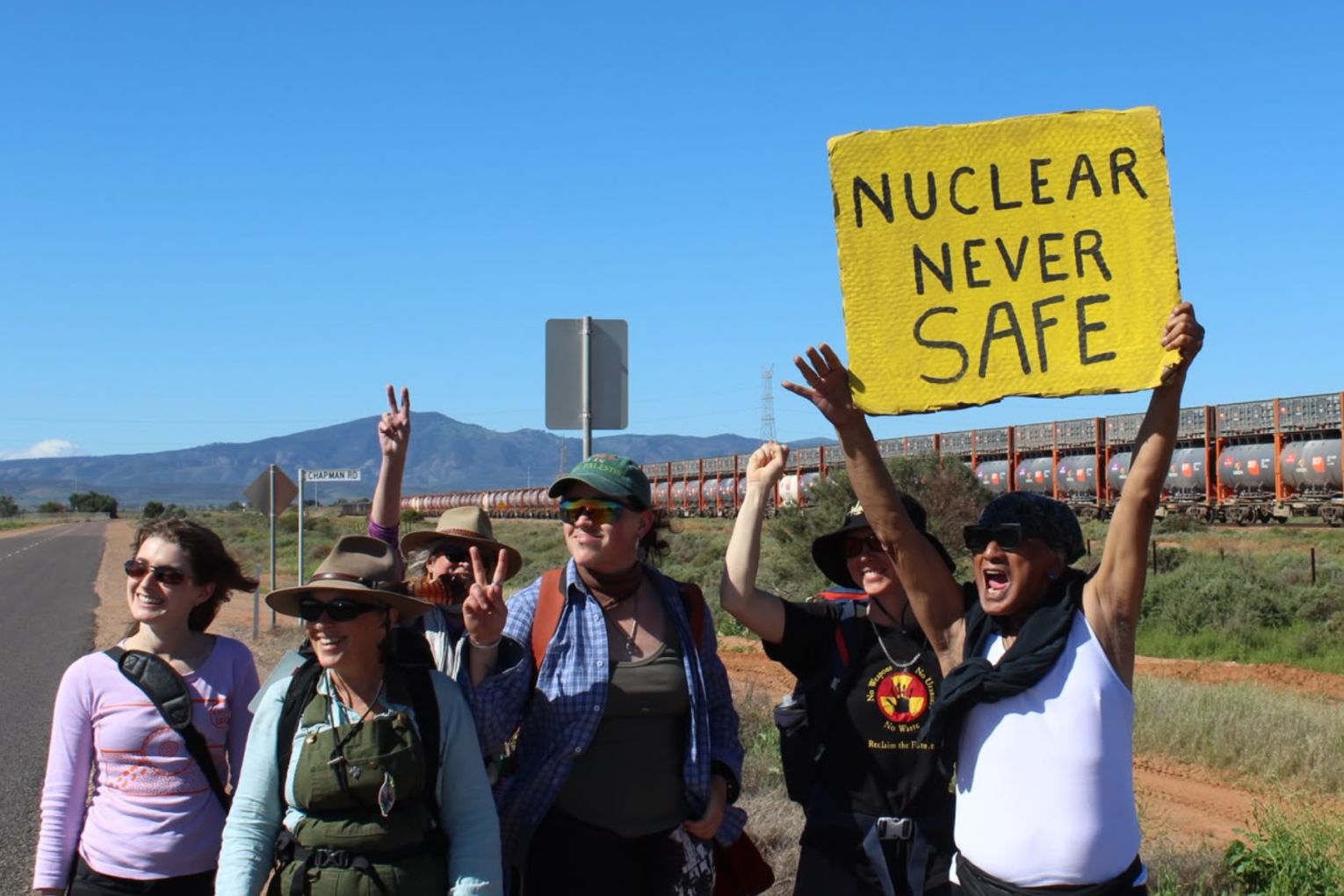
A group of activists from around the country ranging in age from 20 to 72, are on a long walk to Adelaide protesting over the nuclear submarine construction program that is set to transform South Australia’s advanced manufacturing base.
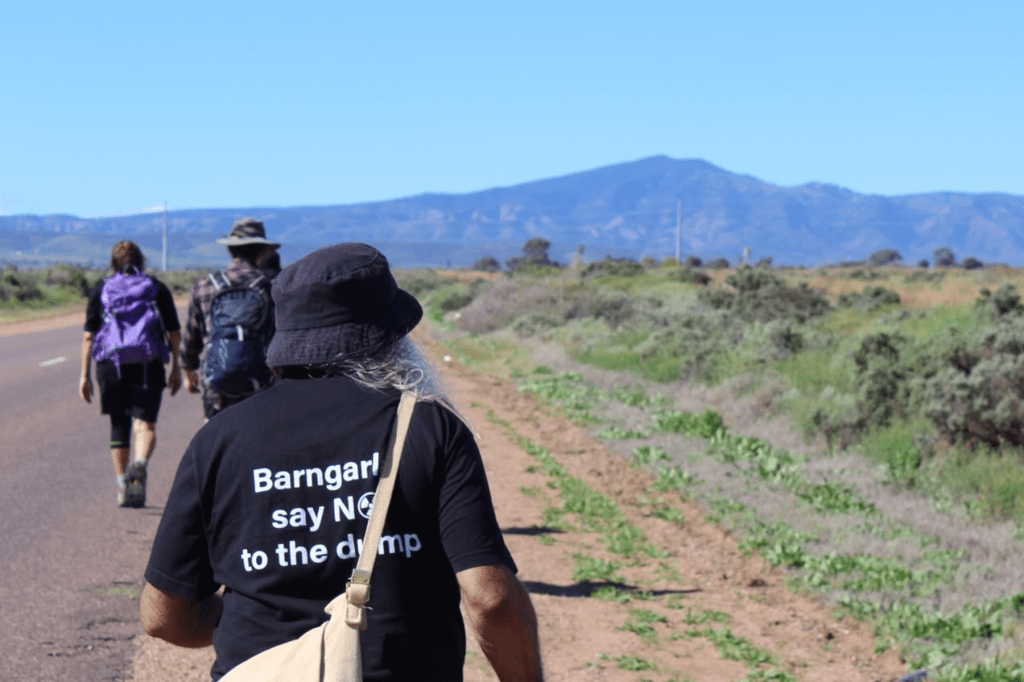
The self-proclaimed ‘Peace Walkers’ – including First Nations people – are undertaking a mammoth journey on foot from Port Augusta to Port Adelaide to draw attention to the AUKUS defence pact.
They are expected to complete the 400-plus km walk in a month, supported by a convoy and funds raised in advance by an anti-nuclear group called Beyond Uranium Canberra. Other groups involved include Friends of the Earth, the Medical Association for Prevention of War and the Port Adelaide Community Opposing AUKUS.
The group will be camping along the way and staying at caravan parks, and has supplies and first-aid gear to make the journey safe.
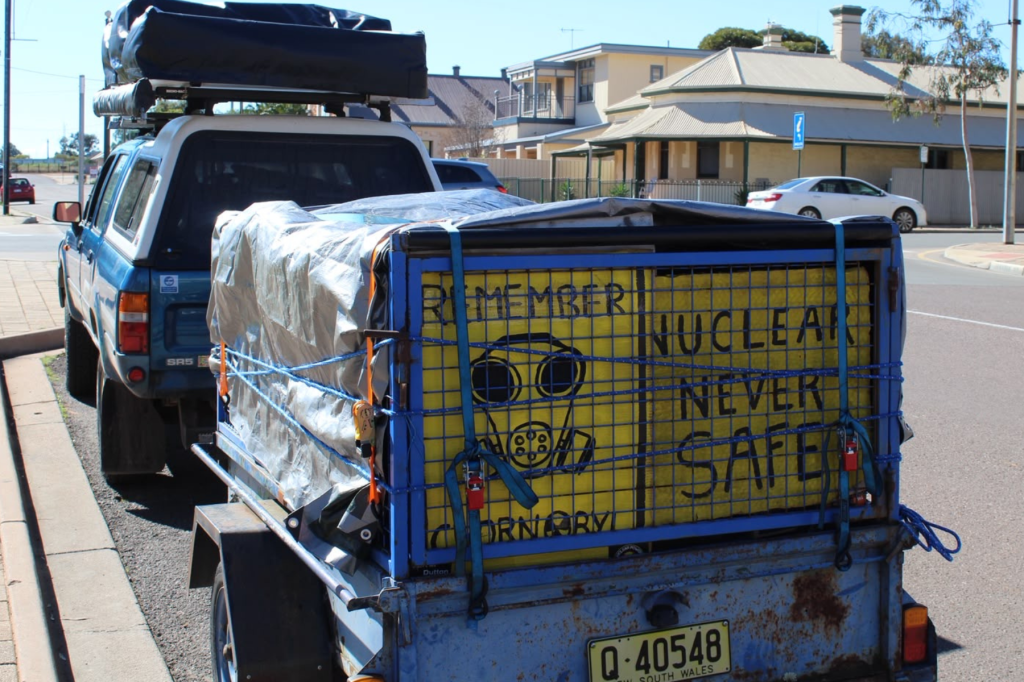
A similar march was completed in 2024, when a group walked from Port Kembla in New South Wales to Canberra.
AUKUS – a trilateral military pact between Australia, the United Kingdom and the United States – is set to transform SA, with a large part of the $368 billion project expected to be spent in Adelaide, where nuclear submarines – based on US technology – would be constructed.
Speaking to InDaily, organiser Reed O’Loughlin said there were currently 14 in the cohort but he expected that number to grow as the convoy headed south.
You might like

The group hoped to arrive in Port Adelaide on September 20, to coincide with a national day of action against AUKUS.
“We’re in really high spirits,” O’Loughlin told InDaily while on the road.
“Our bodies are warming up and we’re feeling pretty good. We’ve got beautiful weather and the ranges are really beautiful – we’ve had a beautiful view all day.”
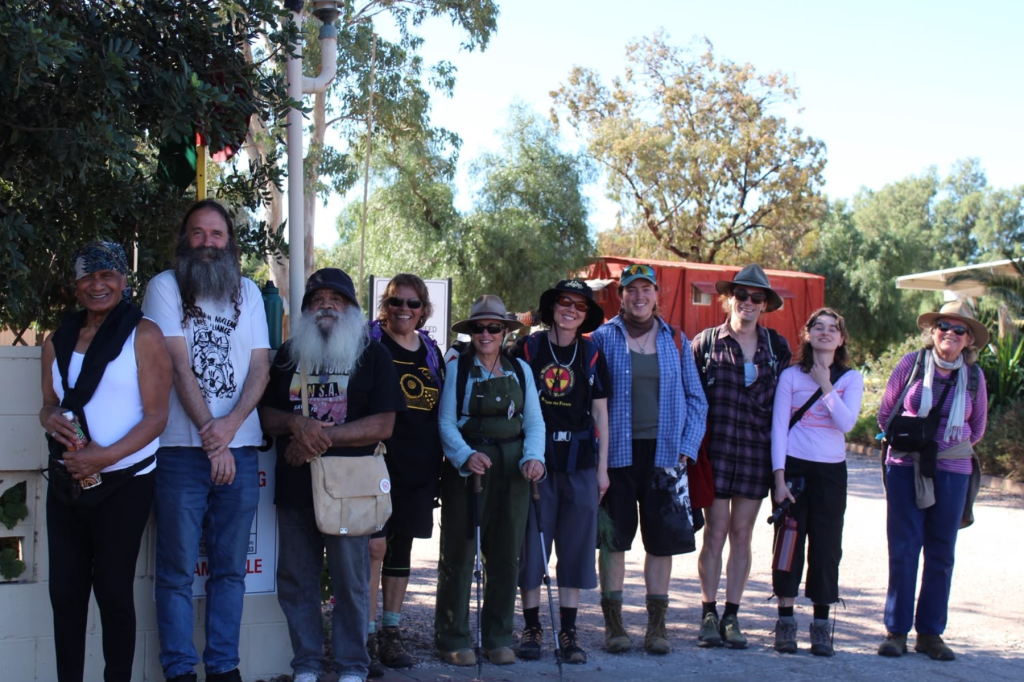
The collective of walkers, who hail from all corners of Australia, are an “anti-nuclear, anti-war movement”, said O’Loughlin, who took part in the 2024 ‘Peace March’ to Canberra.
“Entrenching militarisation in lockstep with the US is a real concern for us,” he said.
“And opening the gates for nuclear facilities for high-level nuclear waste via highly enriched uranium, which Australia has never had before, which can be used to make nuclear weapons.”
He was also concerned about plans for nuclear waste disposal, saying “nuclear waste is a forever problem”.
The construction of South Australia’s Osborne facility was expected to create a massive 10,000 jobs in South Australia, with 1100 people already working on the project.
But the mammoth spend planned for AUKUS was also of concern to the group: “We’re in a cost of living crisis and people are having a hard time paying for their food, paying for their fuel, paying for their housing”, O’Loughlin said.
Stay informed, daily
Barrngarla Elder Uncle Harry Dare, a participant in the ‘Peace Walk’, wanted to “make the public aware of the damage that can happen with nuclear energy, with nuclear waste dumps”.
“AUKUS will bring nuclear-powered machinery into Australian waters, making Australia a target. We don’t want that. We want a nuclear-free Australia,” he said.
The shipbuilding site at Osborne will host the $30 billion submarine construction program, Premier Peter Malinauskas previously calling it a “massive economic opportunity”.
It would be focused around the industrial areas along the east and north coasts of the Lefevre Peninsula, the North Arm of the Port River, Torrens Island and Gillman.
Just last week, the SA and federal governments announced that $100 million of transport infrastructure upgrades had commenced to accommodate the increased activity at Osborne.
This included upgrades to roads, bike access, footpaths, new LED road lighting, line marking and drainage.
“The Lefevre Peninsula precinct is undergoing rapid change as Australia undertakes one of the largest defence infrastructure and workforce programs in its history to deliver nuclear-powered submarines under AUKUS,” SA Infrastructure and Transport Minister Joe Szakacs said.
“South Australia is at the centre of this effort, with more than $30 billion in projected investment at Osborne over the coming decades.”
Doubts have been raised about Australia buying three nuclear submarines from the US before locally built vessels are brought online – the United States has now said all three subs to be sold to Australia would be second-hand rather than a mix of new and used US vessels.
The first submarines were expected to be built in Adelaide by the end of this decade, but the country faces a critical window to receive the second-hand US subs as the 1980s-designed Collins-class vessels are soon to be retired.
The protest march comes after an independent inquiry into the defence project docked in Adelaide last month.
Headed by former Labor politician and now-Lead Commissioner of the ‘AUKUS Public Inquiry’, Peter Garrett, the inquiry is gathering perspectives on the trilateral defence pact.
In Adelaide, the inquiry heard from self-described ‘transparency warrior’ Rex Patrick who raised concerns about the risk associated with the project as well as transparency warnings over the government’s plan for nuclear waste disposal.
Former South Australian Liberal MP Christopher Pyne also gave evidence, saying the uplift in defence capability would be imperative “if we find ourselves on our own in the worst case scenario”.
He described AUKUS as “unstoppable” and said it would deliver a permanent boost for defence spending, an upgrade to Australia’s bases and facilities, an investment in STEM and trade skills, and would be a permanent change to Australia’s national security.
Want to see more stories from InDaily SA in your Google search results?
- Click here to set InDaily SA as a preferred source.
- Tick the box next to "InDaily SA". That's it.