Matthew Flinders and his penchant for a nice cuppa tea
“I rose with a little head ache but that did not prevent me from despatching a large round and a half of toast, and a plate of ham, with my four cups of tea.”
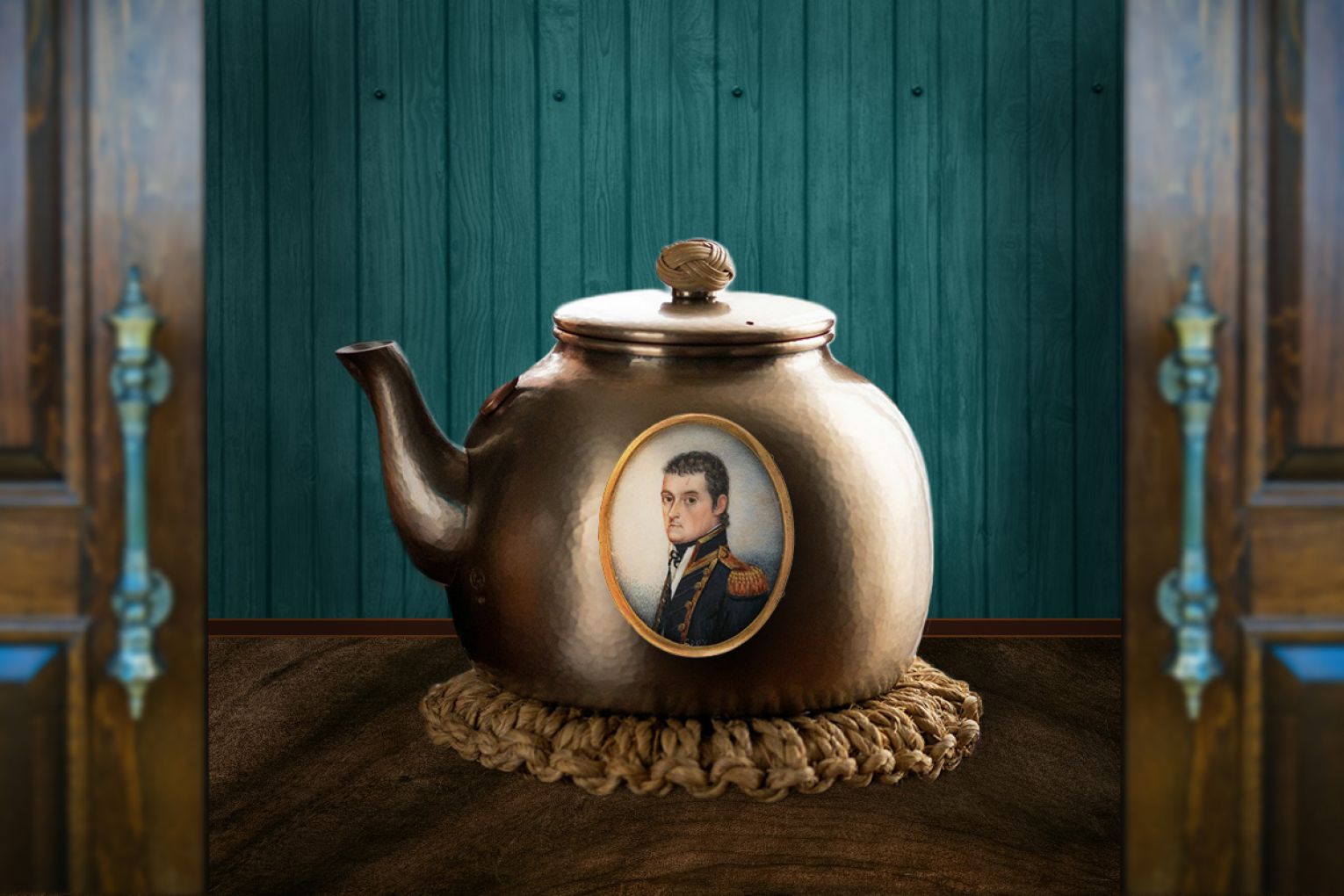
When Matthew Flinders took command of the Investigator at Sheerness in January 1801, there was little on board but ‘some iron and shingle ballast’. He sprang into action. They would need more than that for the lengthy voyage to Terra Australis they were about to undertake.
He wrote in the ship’s log: “I immediately made application to the Navy Board to order the proper officers of the yard to furnish us with such proportions of stores, without reference to the usual mode of fitting ships of war, as I should judge expedient for the service upon which we expected to go.”
Over the ensuing months, he often mentions taking on board various provisions for the voyage. Although it is not specified, this would definitely have included plenty of tea.
Tea had overtaken coffee as a popular beverage in the middle of the eighteenth century and by Flinders’ time it was, largely thanks to the East India Company, the favoured beverage in England. I doubt whether the company on board the Investigator had the luxury of milk with their tea – powdered milk was not produced commercially until later in the nineteenth century, and being at sea for months at a stretch, it was unlikely that they would have had access to a supply of fresh milk. They are likely to have had supplies of sugar, however.
In December 1803, after the circumnavigation of the Australian continent and various other dramatic incidents, Flinders was detained on Mauritius (then known as Île de France) by the French governor, on the pretext that he was a spy. At first, he was kept under close guard in the capital (in those republican times called ‘Port North-West’, now once again Port Louis). But there were some compensations for being ashore: as he noted in his private journal on 18 August 1805: “Used plenty of milk in my tea, and made a good breakfast.”
Shortly after this excellent breakfast, he was allowed to move to an estate in the countryside where he had a bit more freedom. In his journal entry of 30 August 1805, he describes his daily activities:
"At present my time is spent nearly thus. At 6½ or 7 o’clock, I rise and walk to the stream behind the house and bathe, and by the time I have shaved and dressed it is eight o’clock. I drink tea and coffee, and eat eggs and bread-and-butter in no small quantity, sometimes with radishes and salad."
You might like


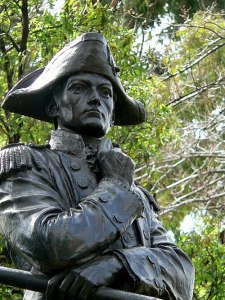
Surrounded as he was by coffee plantations on Mauritius, it was probably inevitable that he would drink some coffee, but tea seems to have won out. He often describes his social life over the ensuing years, drinking tea with the surrounding French settler families, as well as playing music, hiking up and down mountains, and sometimes even dancing. In his spare time, he was learning French, writing accounts of his voyage and scientific papers, and reading everything he could lay his hands on.
Finally allowed to head home to England in 1810, he was reunited with his wife, Ann, and he set to work on composing his epic Voyage to Terra Australis. The beneficial effects of tea are not mentioned again for some time, but when writing to his wife from the Fountain Inn, Sheerness, he recounts what he had for breakfast on April 20, 1812.
It had taken him nearly twelve hours to travel from his home in central London to Sheerness, on the north coast of Kent, where he was undertaking experiments on the effects of a ship’s iron on the compass readings. During this trip, by coach and by passage boat, there was no tea: at Chatham, he boarded the boat “after taking a glass of grog, and a thick piece of bread and butter: there being no time for tea”.
When he arrived at Sheerness, it was nearly midnight.
"It was too late to get any thing but cold beef, after which and a glass of porter, I retired to a bed, which was tolerable, and the room decent. My rest was indifferent, and I rose with a little head ache but that did not prevent me from despatching a large round and a half of toast, and a plate of ham, with my four cups of tea; and I was then perfectly well."
His health was good at this time. He often mentions how energetic he was feeling, and his journal shows what an active and busy life he was leading in London. It was not until February 1814 that he sought medical help for something that had been troubling him on and off for years, but was now getting worse.
Sadly, it was the beginning of the end for Matthew. Despite being the son of a medical man and having access to the latest scientific literature, he and his doctors could find no solution to his worsening condition, and many of the remedies they tried would have exacerbated his condition by introducing infection. He continued to make entries in his private journal, charting the course of his illness and how he was treating it:
Stay informed, daily
Wednesday, May 18, 1814: “Fine: wind still E[aster]ly. Having had tea early in the morning, breakfasted on coffee and rose an hour afterwards, but not without uneasiness. Drank a pint of Seltzer water and my tea and barley water with gum arabic as usual. Passed the day tolerably tranquil, but suffered in the evening and had a restless night.”
Thursday, May 19: “I had tea made again at five in the morning, which kept off the acrimony of the urine but did not remove the pain. Mr Nicol called about advertising the voyage, and Mr Arrowsmith about the charts. Examining the corrections to the general chart.”
A few weeks later, he was wondering whether he had been overdoing the tea.
Wednesday, June 15: “Warm after thunder showers. Had coffee for breakfast, thinking my strength may have been diminished by too much tea. Rose at eleven, with more pain in the left side than yesterday, and feeling very weak.”
He doesn’t often mention tea after this, but according to Ann’s sister, Isabella Tyler, it was still very much part of the routine. She arrived on 28 June to help nurse him and describes in her Memoir what she found:
“He was not in the room when I arrived, but soon entered. Could that be he? – wrapped in a long flannel gown, with grey hair, & sunken cheeks – he said but little – his pleasant cheerful manner was gone – he laid down on the sofa. After resting awhile in that position he would sit up, have a cup of tea, & sit again & write till wearied. He would lie down again then rise, take tea & write, & so on. He was correcting the proofs – ‘The Voyage’ was completed. He felt that he was dying – but he said nothing.”
Tea was an indispensable comfort, but it could not save him. Flinders’ last journal entry was on Sunday, July 10: “Did not rise before two being I think, weaker than before.”
He died on July 19, 1814.
Want to see more stories from InDaily SA in your Google search results?
- Click here to set InDaily SA as a preferred source.
- Tick the box next to "InDaily SA". That's it.