SA bird flu fears rise as new suspect case emerges
A suspected case of bird flu has been detected on the Yorke Peninsula, as a leading conservation group warns “more needs to be done” to protect wildlife.
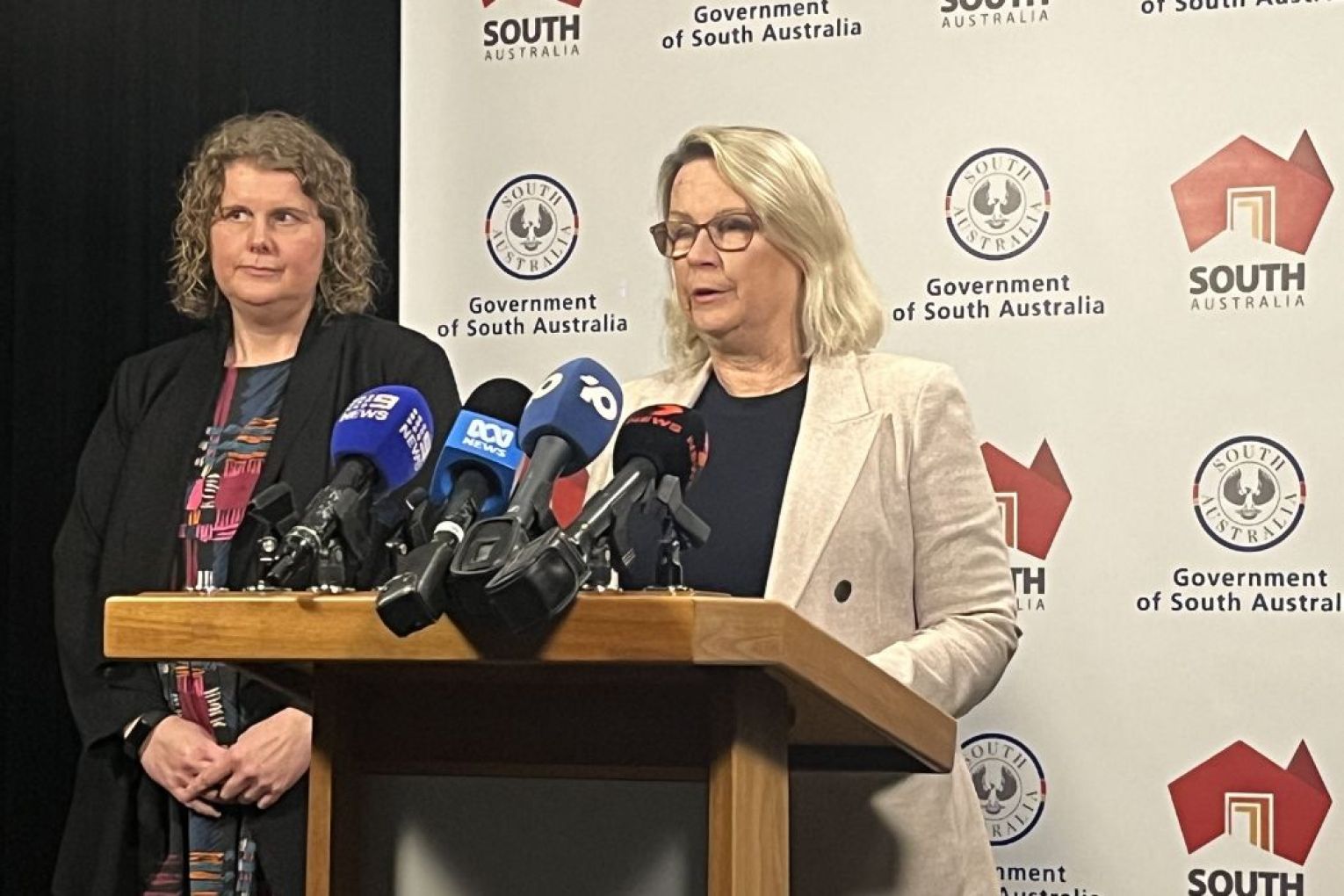
A “suspect” case of H5 bird flu has been detected in a migratory seabird at Hardwicke Bay on the Yorke Peninsula, the state government announced today.
The bird discovery was reported to the Emergency Animal Disease Hotline and collected and sampled by PIRSA, Primary Industries Minister Clare Scriven announced at a press update today.
This returned a ‘suspect detection’, with the sample then sent to the CSIRO’s Australian Centre for Disease Preparedness in Geelong, she said.
If it is a confirmed positive result, it would be the second detection of H5 bird flu in South Australia, Premier Peter Malinauskas announcing in June a southern giant petrel had tested positive.
PIRSA chief veterinary officer Skye Fruean said the testing results would hopefully become evident in the next 24 to 48 hours.
“We have undergone testing here at our lab, which is normal protocol, and there’s quite low levels of virus, which is why we are not considering it a confirmed case at this point,” Fruean said.
You might like


“We’re confident that we’re dealing with an infection of bird flu. We just don’t know if it’s the H5 bird flu that we’re really concerned about.”
Fruean said PIRSA had received more than 1000 reports of sick or dead birds since the first detection of the H5 bird flu.
“Not that many of them have been of such concern to us that we felt the need to go out and collect samples, and we’ve got a very low threshold to our level of concern,” she said.
“If we’ve got any inkling that it might be bird flu, we’ll test if we can, so there’s been somewhere around 50 or 60 tests.”
In total, there have been six positive cases of H5 bird flu in Australia, including four in Western Australia, one in New South Wales, and one in South Australia.
The state government said the deadly strain of bird flu was yet to be detected in commercial poultry stocks, captive birds or any other birds in South Australia.
Stay informed, daily
Since January 1, 2026, more than 900 samples from birds have been tested in SA.
Scriven said today that it was “disappointing that South Australia has a suspect case, however it was always a possibility”.
“The surveillance we are undertaking is critical to get a broader understanding of where these birds are being seen, and I thank the public for reporting sick or dead birds to us,” Scriven said.
“Every report is reviewed and if there is any suspicion of H5 bird flu we send teams out to collect the birds for testing.”
South Australians have been encouraged to report any dead or sick birds or wildlife showing signs of bird flu.
But she said that it was imperative to avoid contact with any sick or dead birds.
South Australians can report sick or dead birds to the Emergency Animal Disease Hotline on 1800 675 888.
The news comes as the national Biodiversity Council called for more “to be done now to help protect wildlife”.
It called on the Federal Government to invest an additional $200 million over two years to strengthen the resilience of at-risk wildlife, improve monitoring, gas-track development of management and mitigation plans, and share all relevant response strategies.
“There is a lot of uncertainty about how this will play out in Australia because most of our marsupials and monotremes are not found anywhere else in the world,” said Biodiversity Council member Euan Ritchie, a professor in wildlife ecology and conservation at Deakin University.
“But with confirmed cases so far limited to migratory birds, there’s still a window for the government to do more to limit hits to our most threatened species and ecosystems, our communities and our most exposed industries, including agriculture and tourism.”
Want to see more stories from InDaily SA in your Google search results?
- Click here to set InDaily SA as a preferred source.
- Tick the box next to "InDaily SA". That's it.