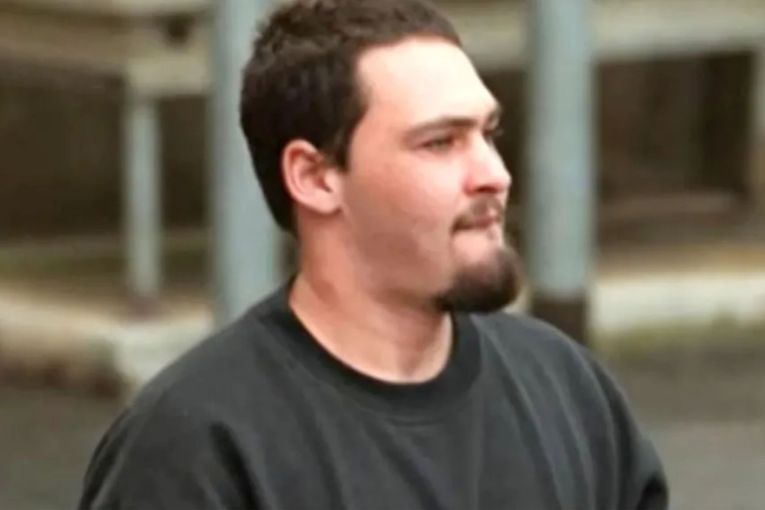
Millions spent by parties on 2026 State Election
Campaign spending in the 2026 State Election reveals Labor did not anticipate the One Nation factor, according to a Flinders University academic, who says the SA Liberals went into the election thinking “this is going to be a normal election and not an extinction-level event”. Find out which party spent the most.
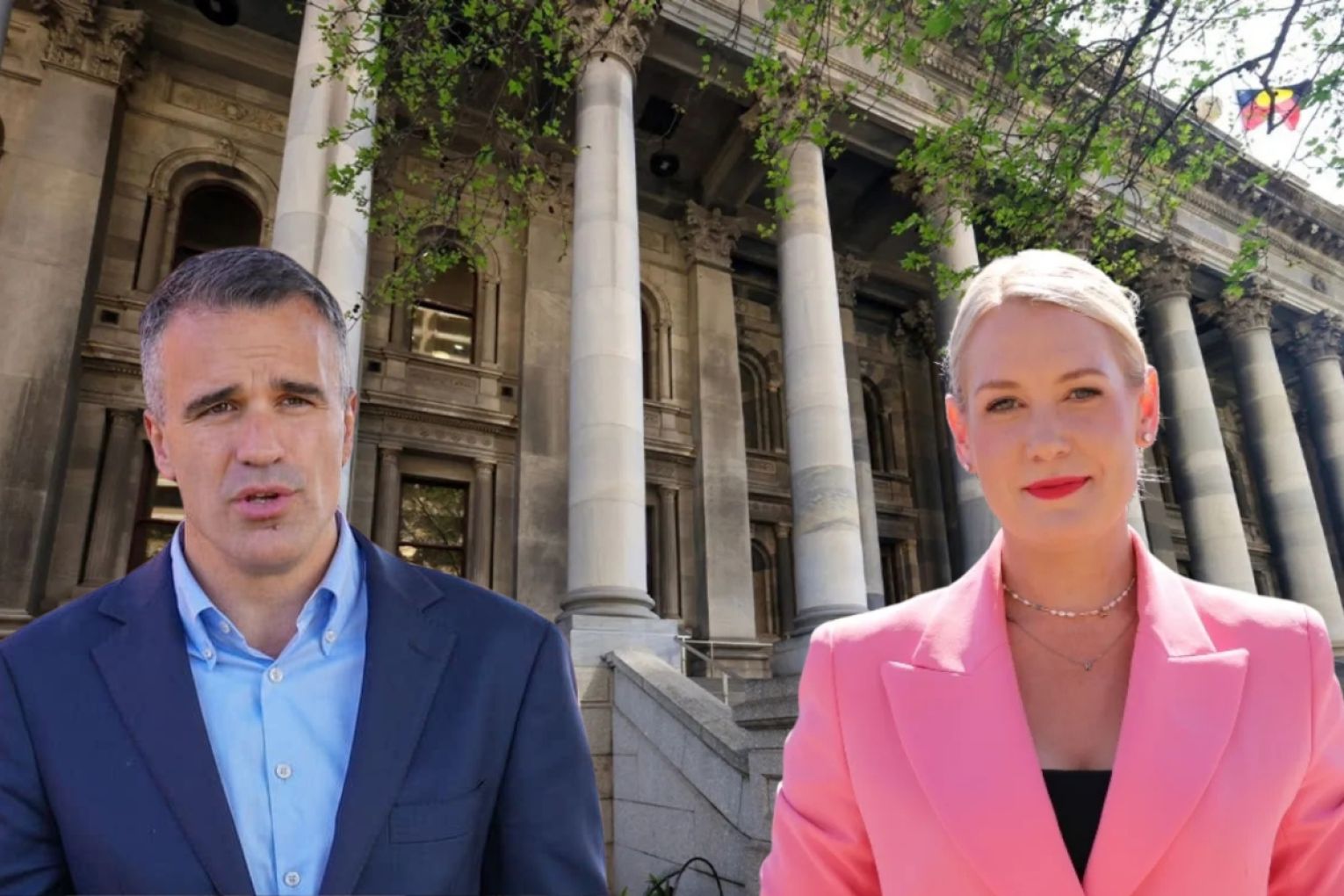
SA Labor topped spending on campaigning for lower house seats in the 2026 State Election, documents lodged with the South Australian Electoral Commission reveal, while the SA Liberals came in at a close second.
According to the Capped Expenditure Period Return, lodged by Labor state director Aemon Bourke, the party spent just over $4 million on the 2026 State Election.
The Electoral Commission of South Australia said the returns show the amount a candidate or political party spent during the capped expenditure period, which ran from July 1 to April 20, 2026.
The returns also include any political expenditure from before July 1 that was used during the capped expenditure period.
Flinders University Associate Lecturer in Public Policy Josh Sunman said that despite there being an overall cap on how much parties can spend across the campaign, there was flexibility in how much they spent on individual seats.
Sunman said the money was spent on flyers, direct mail, automated messaging and social media.
He said the returns showed which seats Labor was targeting, including Hammond, Ngadjuri, Carlton and Morialta.
“The Labor funding in particular denotes where they saw first and foremost that they could win seats off the Liberal Party – that was where they targeted really hard,” he said.
“They didn’t put so much money into defending seats that they already had, which is what you would see a government normally do.”
For example, Labor’s Ngadjuri candidate Tony Piccolo had the most spent on his campaign, totalling to $73,310.51, while just $2,196.26 was spent on Labor’s candidate for Flinders, Ben Anchor.
You might like

Other seats targeted by Labor included Hammond, where $67,757.49 was spent on Labor’s candidate Simone Bailey. The seat was won by One Nation’s Robert Roylance with 12,887 votes on a two-party basis compared to Bailey’s 10,593 votes.
A total of $67,614.33 was spent on Labor’s successful campaign in Hartley, which saw American-born candidate Jenn Roberts defeat the former Liberal Leader Vincent Tarzia with 12,276 to 10,489 votes on a two-party preferred basis.
In the beachside seat of Colton, $65,562.68 was spent on Aria Bolkus’ successful campaign, while $64,913.48 was spent on electing Alice Rolls in Unley – the first time Labor has held the seat since 1993.
Meanwhile, $57,585.94 was spent on Marisa Bell in Heysen, where she lost to Deputy Liberal Leader Josh Teague with 13,236 votes compared to Teague’s 13,479 votes on a two-party preferred basis.
Sunman said one thing that stood out from the returns was that Labor did not anticipate the One Nation factor.
“There’s no sense in any of the Labor returns that they started to pivot money towards defending from One Nation,” he said.
“I think Labor, facing One Nation, will have to distribute its spending differently in future campaigns.”
On the other side of politics, the SA Liberals spent a total of $3,738,917.93 on the 2026 State Election campaign, according to the party’s Capped Expenditure Period Return lodged by state director Alex Hyde.
Among the seats the Liberals targeted were Morialta, where $93,398 was spent on CFS volunteer Scott Kennedy, who lost to Labor’s Matthew Marozzi on a two-party preferred basis with 9803 votes compared to Marozzi’s 13,878.
A total of $84,871.96 was spent by Rebekah Rosser in MacKillop, who lost to One Nation’s Jason Virgo with 11,732 votes compared to Virgo’s 12,115 votes.
While in Colton, $82,350 was spent on Bec Sutton, who lost to Bolkus with 9902 votes compared to 14,930 votes on a two-party preferred basis. The seat had previously been held by former Paralympian Matt Cowdrey for the Liberals since 2018.
In party leader Ashton Hurn’s seat of Schubert, $79,107.53 was spent, while $71,079.73 was spent on Adrian Pederick’s unsuccessful re-election campaign in Hammond, having lost to One Nation’s Roylance.
The Liberals spent $71,371.79 on Bradley Orr’s campaign in Kavel, which was won by independent candidate Matt Schultz, while $70,968.16 was spent on the re-election of deputy Liberal Leader Josh Teague and $61,486 on Frank Pangallo’s failed campaign in Waite.
Sunman said the Liberals put money towards seats traditionally considered marginal, such as Elder, as well as seats the party was worried it would lose.
Stay informed, daily
“So, in the Liberal campaign … perhaps they started off campaigning as if this is going to be a normal election and not an extinction-level event,” he said.
Sunman said the Liberal Party’s high spending also reflected the impact of the political donations ban, with each candidate or party now receiving $5.50 of taxpayer funds per vote.
“There’s a sense that the more votes you gained at this election, the more you have to spend at the next election,” he said.
“For the Liberal Party, they’re really facing a tight situation where they’re not going to have much to spend at all.”
Sunman said both Labor and the Liberals spent more in seats where they had retiring incumbents and the new candidate needed to be introduced to the electorate, as reflected in the Liberals’ large spend in Morialta.
One Nation, which achieved 256,022 first preference lower house votes at the State Election, spent $498.771.39 on its campaign, according to documents lodged by state president Carlos Quaremba.
Targeted seats included King, where the party spent $14,407.24 for its candidate David Kerrison, while $12,273.21 was spent on Brandon Turton in Stuart and $12,122.77 on Peter Rentoulis in Taylor.
Chantelle Thomas had $10,123.67 spent on her successful campaign in Narungga, where she defeated Liberal candidate Tania Stock on a razor-thin margin, with 12,073 votes over Stock’s 12,015.
A total of $7572.47 was spent on Jason Virgo’s successful MacKillop campaign, while $4980.91 was spent on the election of David Patton in Ngadjuri and $4500.91 on Hammond member Robert Roylance.
Sunman said that One Nation’s spending patterns, with funding spread fairly equally, showed the party was targeting upper house seats, with lower house seats being secondary.
“They were going for that upper house vote, and maybe they were a bit surprised by how well they did in the end,” he said, adding that it shows “money isn’t everything” in elections.
Meanwhile, the SA Greens spent $1,090,321.07 on its election campaign, which saw former Adelaide Hills councillor Melanie Selwood win a seat in the upper house.
The Greens directed most of its campaign funding to Heysen candidate Genevieve Dawson-Scott, with $19,908.89 spent on her campaign, which received 5858 first preference votes, while just $50.30 was spent on the party’s Giles candidate Alex Taylor.
“The Greens targeted one seat, and that was higher; that’s where all of their money went,” Sunman said.
Meanwhile, Family First Party spent an impressive $720,998.63 but failed to elect a single candidate, while $504,190.26 was spent on Connie Bonaros’ unsuccessful re-election campaign for SA-Best.
Former Liberal Leader David Speirs, who was convicted earlier this year of supplying cocaine to two people, dished out $33,827.28 on his bid to be re-elected in Black.
Want to see more stories from InDaily SA in your Google search results?
- Click here to set InDaily SA as a preferred source.
- Tick the box next to "InDaily SA". That's it.