‘Bloody big roo’: SA defence leader left bleeding after altercation
One of SA’s top defence industry leaders and a well-known scientist tell how they were left with significant injuries after altercations with kangaroos.
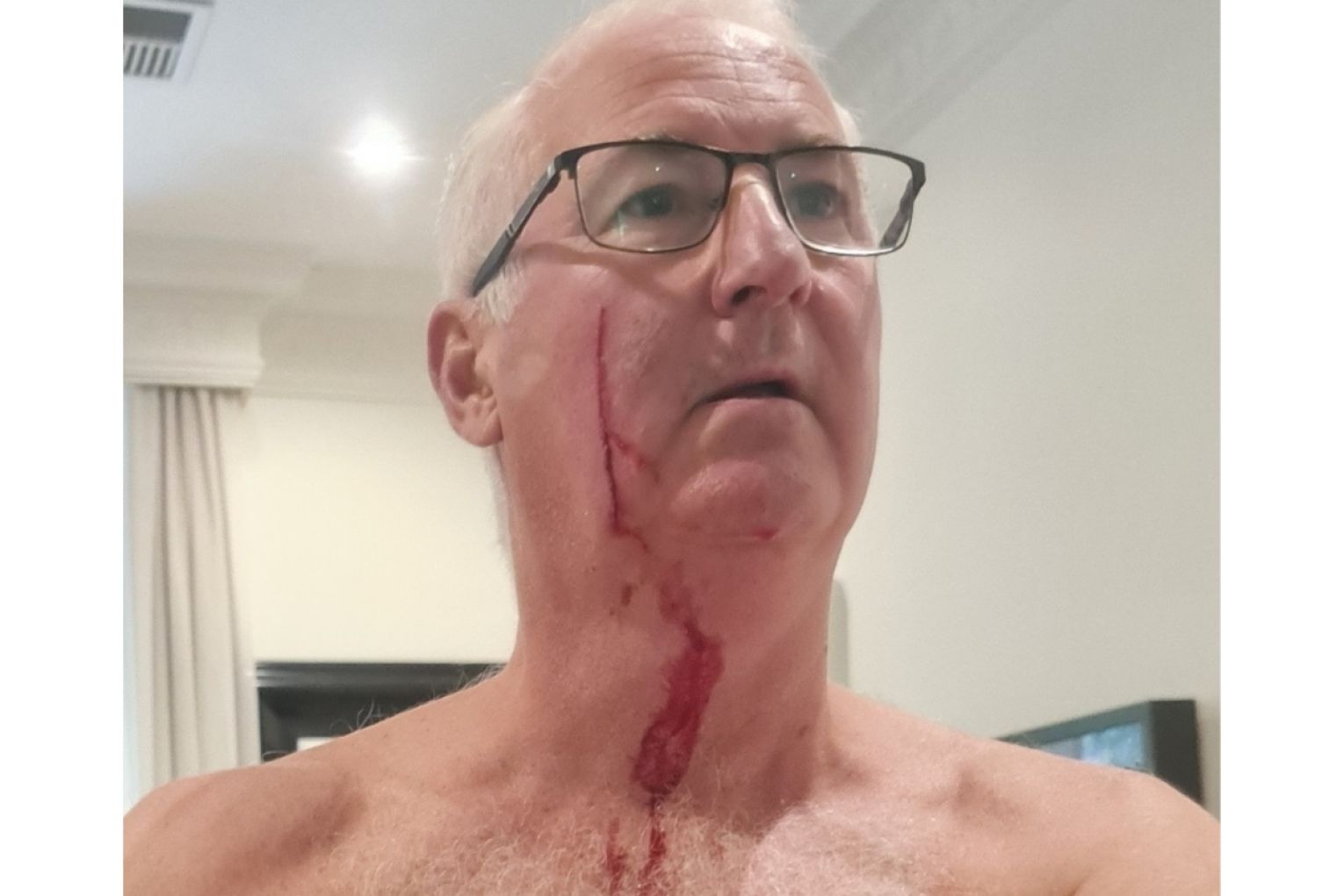
Jim Whalley, co-founder of one of the largest Australian owned and operated Defence and Security companies Nova Systems, found himself face to face with a western grey kangaroo at his Adelaide Hills property in February.
The former Royal Australian Air Force fighter pilot and the state’s first Chief Entrepreneur issued a warning as he shared details of being on the way to a business lunch when the kangaroo made its way onto his property.
“There was a big grey kangaroo in the backyard, which is no major deal, and I usually would have driven past. But sadly, one of our dogs Billie comes bolting out behind me as I’m closing the garage and goes straight for the kangaroo,” Whalley said.
“I get out screaming at the dog to get away, but it doesn’t do anything. Finally, I just punched the kangaroo twice in the head then the kangaroo stands up, and I’m looking up thinking that’s a big bloody roo.
“Then it goes forward and puts out one of his legs and just scrapes me down the side of the face, so I start pissing blood everywhere.”
The western grey kangaroo is the most common kangaroo species found in Adelaide, with males reaching heights of up to 2.2 metres and weighing upwards of 50 kilograms.
You might like

Whalley said his daughter’s boyfriend, who was visiting from France, heard the commotion and came running to his assistance
“He’s come out barefooted, naked from the waist up, and so it was his first encounter as a Frenchman with a kangaroo,” he said.
“Clearly, in French primary school, they teach you the kangaroo’s box, so he’s adopted a boxing stance with the roo. I said to just stay away, I don’t need a disembowelled Frenchman on my front lawn.”
The encounter left Whalley with a large gash on the side of his face, with the scar only recently subsiding.
“I think the small sacrifice of my face is not too much in comparison to what the issue would’ve been had the dog been disembowelled — I wouldn’t have been forgiven,” Whalley said.
“I think in future, what I’ve just said to the family, if it happens again to get an object to try and hit the roo with.
Stay informed, daily
“They’re not as soft and fluffy as we think and it could have been much worse.”
Another well-known South Australian has her own story about being wary around kangaroos.
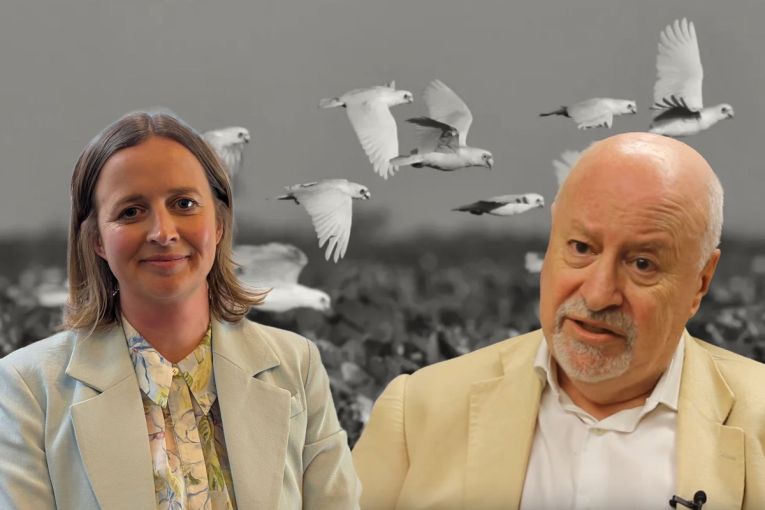
Research scientist Monica Oliphant, who is well-known in schools for delivering The Oliphant Science Awards in honour of her father-in-law Sir Mark Oliphant and as a former Senior South Australian of the Year, was left with significant injuries after her dogs were involved in an altercation with a kangaroo few years ago.
Oliphant was walking her two dogs in the parklands across from Flinders University in Bedford Park when she encountered a “two-metre” western grey kangaroo.
“It was quite big, and I could see the poor thing was very scared. I reached out to drag one of my dogs away, and he must have either punched or jumped at me, because the next thing I knew I was knocked out,” Oliphant said.
“I got six broken ribs, I compressed discs, a fractured vertebra, and I was out cold.”
She said she still suffers from back pain years after the incident and has urged others to steer clear of kangaroo-populated areas when walking dogs.
“Just keep away from the wildlife because they’re being provoked, and they do need an area to be able to feel safe in,” Oliphant said.
A recent post on a Riverland forum telling how, in another incident, a man’s dog was drowned by a kangaroo in Lake Bonney, prompting a warning from the Environment and Water Department.
A department spokesperson was unable to confirm if there had been an increase in attacks, and issued a warning to remain wary when around wild animals.
“It’s important to maintain a safe distance when you’re observing wildlife. Getting too close or touching can cause the animal unnecessary stress or even provoke defensive behaviours, which can be dangerous for both you and the creature,” the spokesperson said.
“Although many people enjoy seeing native wildlife, sometimes interactions can cause unwanted impacts on people and the environment in both urban and rural areas.”
Want to see more stories from InDaily SA in your Google search results?
- Click here to set InDaily SA as a preferred source.
- Tick the box next to "InDaily SA". That's it.