SA regional towns part of national extreme weather project
Businesses and locals across SA’s regions are joining a national project focused on the impacts of flood, drought and other extreme weather events.
South Australian towns are taking part in a national project fostering preparedness, resilience, and community connection in regional areas facing extreme weather events.
Orroroo, Berri and Loxton, and Angaston are included in the nine regional Australian towns chosen to participate in the Equip Project, a five-year research endeavour led by a team of mental health researchers from several universities, including Adelaide University.
A year into the project, researchers are working to address a mental health gap in disaster relief efforts, as events referred to as once-in-a lifetime droughts or floods now occur more frequently. Most recently the Riverland was faced with the devastating consequences of River Murray flooding.
Associate Professor Warren Bartik of the University of New England said: “These events are happening so frequently, there’s just multiple experiences of these things. And so, we know there’s this cumulative effect of trauma on people that makes people less able to respond.”
“Sometimes there might be a sense of, well, this is going to happen again and I’m not coping, or I’m just going to forget about it now and hope it doesn’t happen again.”
Rather than physical preparations for a natural disaster, Equip was looking at ways to support regions in building mental preparations.
As chief investigator, Associate Professor Suzie Cosh of Adelaide University said the research was about trying to “get everyone, individually and as a community, as strong and mentally fit as sort of possible, so that you can be in the best position to be prepared for these things and be able to manage through them.”
“Obviously, every rural community is completely different and has its own context and strengths and experiences. In the Riverland, it’s a bit more of we know what’s coming,” says Cosh, referring to the difference in River Murray flood effects between South Australia and New South Wales.
“We know in six months there’s going to be a massive influx of water, the river level is going to rise, so we need to be preparing now. It’s that longer term, sort of ongoing event.”
Stay informed, daily
Participating towns are actively collaborating with the project through local advisory groups who can offer important insights into how events affect the local community.
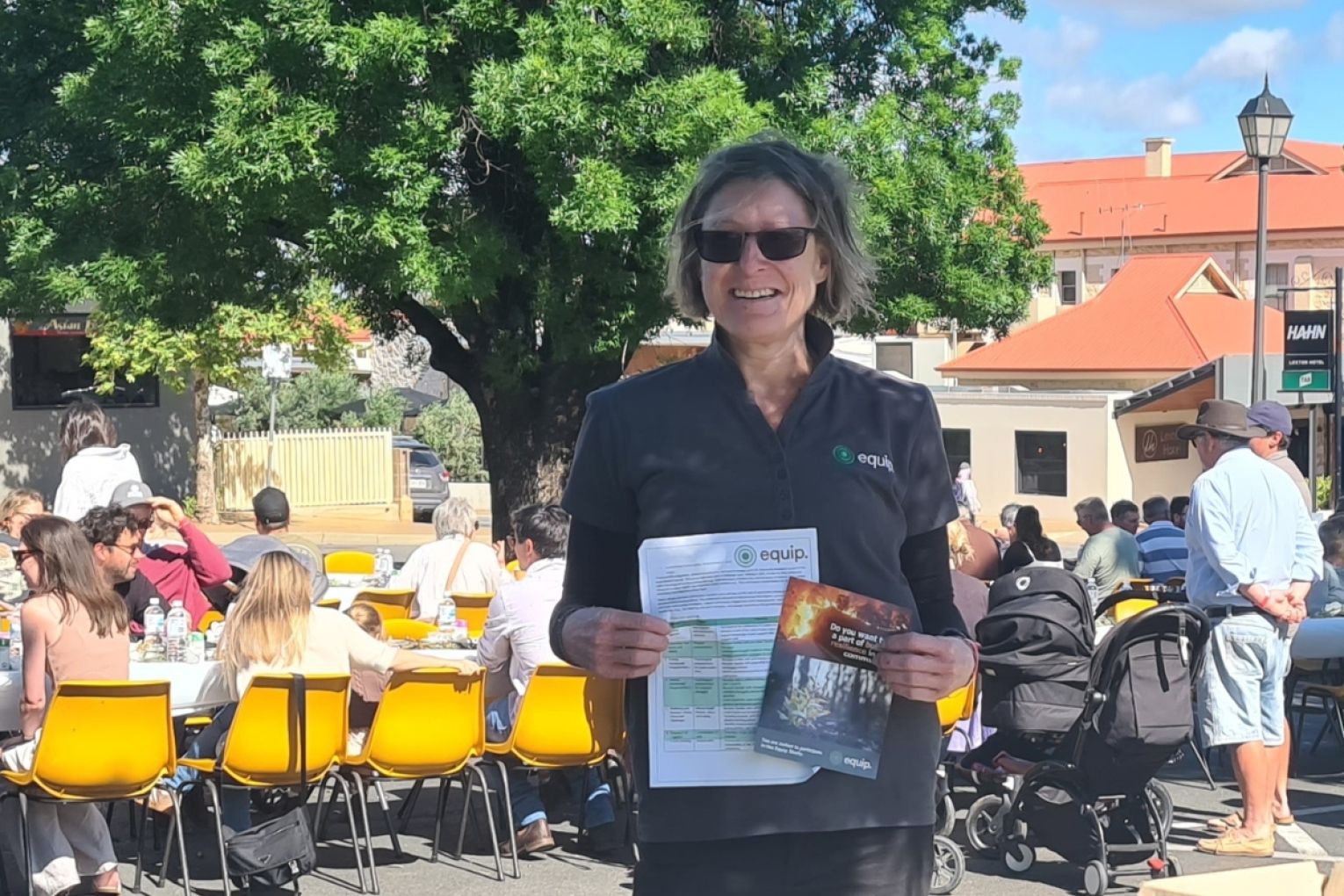
Dedicated Community Connectors like Christine Webster in the Riverland act as liaisons between groups and researchers. She says the local response to the project has been strong, with a wide range of people and industries represented on the advisory group for the Berri and Loxton area.
Equip also sponsors community events and workshops to increase social connection and teach important skills around mental health support, trauma and stress responses, and developing strong community connections.
Over the weekend, Equip Project organised a range of free community events in Berri and Loxton.
“It’s partly just for us to get to know the community, the community get to know us, but also just to bring the community together and kind of have some of that connection as well,” Cosh said.
Want to see more stories from InDaily SA in your Google search results?
- Click here to set InDaily SA as a preferred source.
- Tick the box next to "InDaily SA". That's it.