The Stats Guy: The demographic case for halving income tax
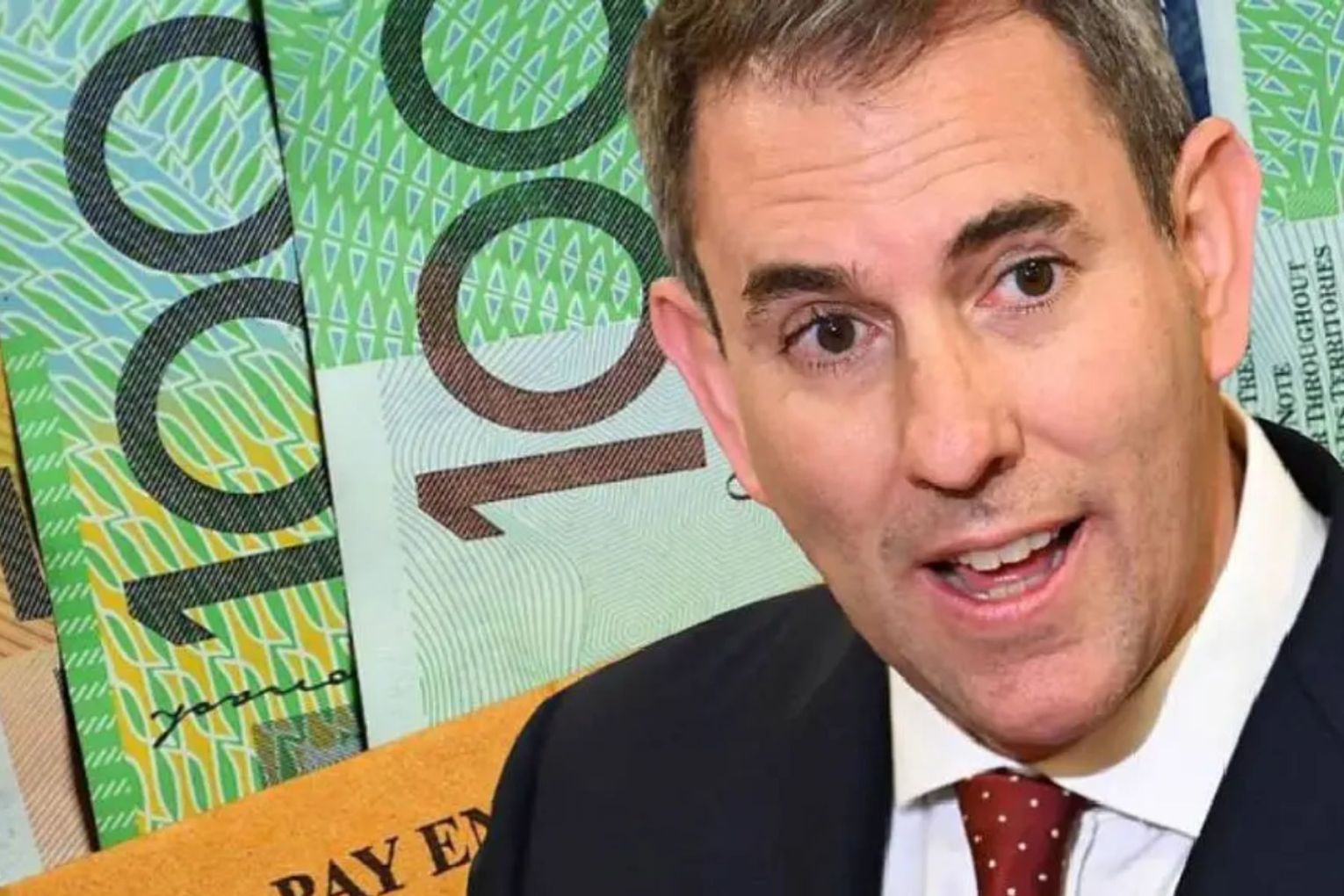
Imagine being treasurer on budget night.
Every colleague arrives with a worthy cause and an open palm. Defence wants submarines. Health wants hospitals. Aged care wants staff. Infrastructure wants concrete. Education wants teachers. Housing wants subsidies.
The regions want roads. The cities want rail. The arts want saving. Industry wants incentives. Backbenchers want local vanity projects. Ministers want legacy programs with their names on it.
Everyone wants something, provided the treasurer pays for it. The treasurer’s job seems simple but brutal to me – say yes rarely, say no often and somehow find lots of money.
For decades, the easiest place to find money was the Australian worker’s payslip. In the last budget, just over half of all federal tax revenue came from personal income tax. It is reliable, hard to avoid and politically familiar.
But it is also where the system is starting to creak.
Wealthy government that feels poor
Australia is a rich country, and its government is rich too.
The Commonwealth owns assets worth roughly a trillion dollars. Roads, rail, defence equipment, schools, hospitals, land, plus some financial assets like the Future Fund, the student loan book and stakes in companies such as NBN Co.
Yet every budget feels tight. Every dollar is fought over.
How can we be rich and poor at the same time?
Because most of what the government owns is illiquid and low-yielding. This means the government has valuable assets that don’t generate much cash.
You might like

A highway does not send a cheque to Treasury, but only indirectly helps the economy through improved connectivity. A public hospital does not generate cash, but only makes people healthy. Even the most valuable assets are designed to deliver services, not cash.
I would argue our government’s greatest asset is not even on the balance sheet. It is its legal right to tax 28 million Australians (and the businesses they operate) and regulate a continent that is packed with resources.
And so, our treasurers (be they Liberal or Labor) keep coming back to the same place to finance their budgets: Our wages.
We sold the cash machines
It was not always like this. A while ago governments owned banks, airlines and telecommunications companies.
Qantas, Telstra, and Commonwealth Bank were all public assets. They generated income. They paid dividends. They helped fund the state.
Then came the great privatisation wave of the 1990s and early 2000s, when governments sold the cash machines and kept the responsibilities.
It made sense to the people in charge at the time. Markets would run these businesses more efficiently. Sale proceeds helped clean up public finances, treasurers could boast of low or no debt.
But the long-term consequence is easy to miss. We replaced dividend income with tax income.
Today the treasurer inherits a system that relies on income tax to finance all the things the government must pay for.
The demographic squeeze
This might have worked fine in a younger Australia, but demographics are shifting.
The share of working-age Australians is shrinking relative to retirees (demographers and economists talk about the dependency ratio in this context) while spending pressures rise in an ageing country.
That creates a structural squeeze – fewer workers, more spending, the same reliance on income tax.
There is only one way that equation still balances if nothing else changes – the average worker must pay more taxes.
Some of that happens quietly through bracket creep. Wages rise with inflation, tax brackets do not keep up and average tax rates drift higher. It is the most effective tax increase because it’s kind of invisible.
But over time it compounds and raises a deeper question – are we taxing the right things?
Taxing the payslip, ignoring the balance sheet
Stay informed, daily
Australia’s tax system does something odd. It taxes income from work heavily and consistently. But it taxes wealth and assets more lightly and more unevenly.
That matters because the richest Australians increasingly derive their economic power from assets, not wages. Property, shares, trusts, businesses. These are harder to tax cleanly and are often taxed more favourably.
A nurse’s overtime is taxed right away. The capital gain on a property is discounted and deferred.
The PAYG system is airtight. The world of trusts and asset structures is more flexible.
While the income tax system remains progressive in absolute terms, wealth isn’t taxed in a progressive way. Currently in Australia, we tax effort (i.e. work) more precisely than we tax wealth (i.e. the passive ownership of assets) – this runs counter to our Australian values of rewarding hard work.
Tax reform we keep postponing
This is where tax reform comes in. A dry term for a very real problem.
Back in 2010, the Henry Tax Review laid out a blueprint for a more coherent system. It argued for concentrating taxes on four broad bases – personal income, business income, consumption, and economic rents from land and resources.
It pushed for fewer, simpler taxes. A broader consumption base. More efficient land taxation. Better capture of resource rents. And a system that would hold up as Australia continues to age (i.e worsens the dependency ratio).
Sixteen years later, the Henry recommendations are cobwebbed in some Canberra cupboard. My interpretation of the Henry logic is pretty simple – let’s tax things that can’t be moved or hidden. Land can’t move. Natural resources can’t move.
Work, on the other hand, is under pressure. Taxing it ever more heavily is the path of least resistance, not the path of good policy – I view any treasurer who isn’t actively lowering income tax as shortsighted.
As an aside, as long as the budget relies on income tax, it is ridiculous to suggest lowering our migration intake. Any politician calling for fewer migrants must tell us about their deep systemic tax reform in the same breath.
If I were treasurer
So, if I were treasurer, I would not abolish income tax, but I would aim to lower the structural dependence on it.
I’d broaden the consumption base, reform property taxation so that we tax land more efficiently and transactions less, and I would capture a bigger (i.e. fairer) share of resource rents when global prices surge.
You could say that I’d tax the balance sheet a bit more and our payslips a bit less.
This is not about punishing wealth, it is about aligning the tax system with where economic capacity actually sits. It is about creating a middle class again.
The political reality
Of course, none of this is easy. And, of course, this humble column won’t lead to broad structural reform.
Every tax has a constituency that benefits from the status quo. Every reform creates visible losers. That is why tax reform is always discussed and rarely delivered.
Reform requires a government willing to take short-term political pain for long-term structural gain. It requires confidence that voters will accept the logic, even if they do not like the details.
Australia may be closer to that window than it has been for some time as Labor appears very likely to win the next election thanks to the Liberal Party’s identity crisis.
Now is probably the best political opportunity for a structural tax reform since the Henry Tax Review.
Until we fix the tax system, the treasurer will keep reaching for the same lever on budget night: the Australian worker’s payslip.
Simon Kuestenmacher is a co-founder of The Demographics Group. His columns, media commentary and public speaking focus on current socio-demographic trends and how these impact Australia. His podcast, Demographics Decoded, explores the world through the demographic lens. Follow Simon on Twitter (X), Facebook, or LinkedIn.
Want to see more stories from InDaily SA in your Google search results?
- Click here to set InDaily SA as a preferred source.
- Tick the box next to "InDaily SA". That's it.