‘More vocal, more visible’: New uni VC on honouring First Nations’ history
More scholarships for disadvantaged students are on the cards at Adelaide University as its new Vice-Chancellor responds to a video of One Nation’s state leader mocking Aboriginal signage on campus.
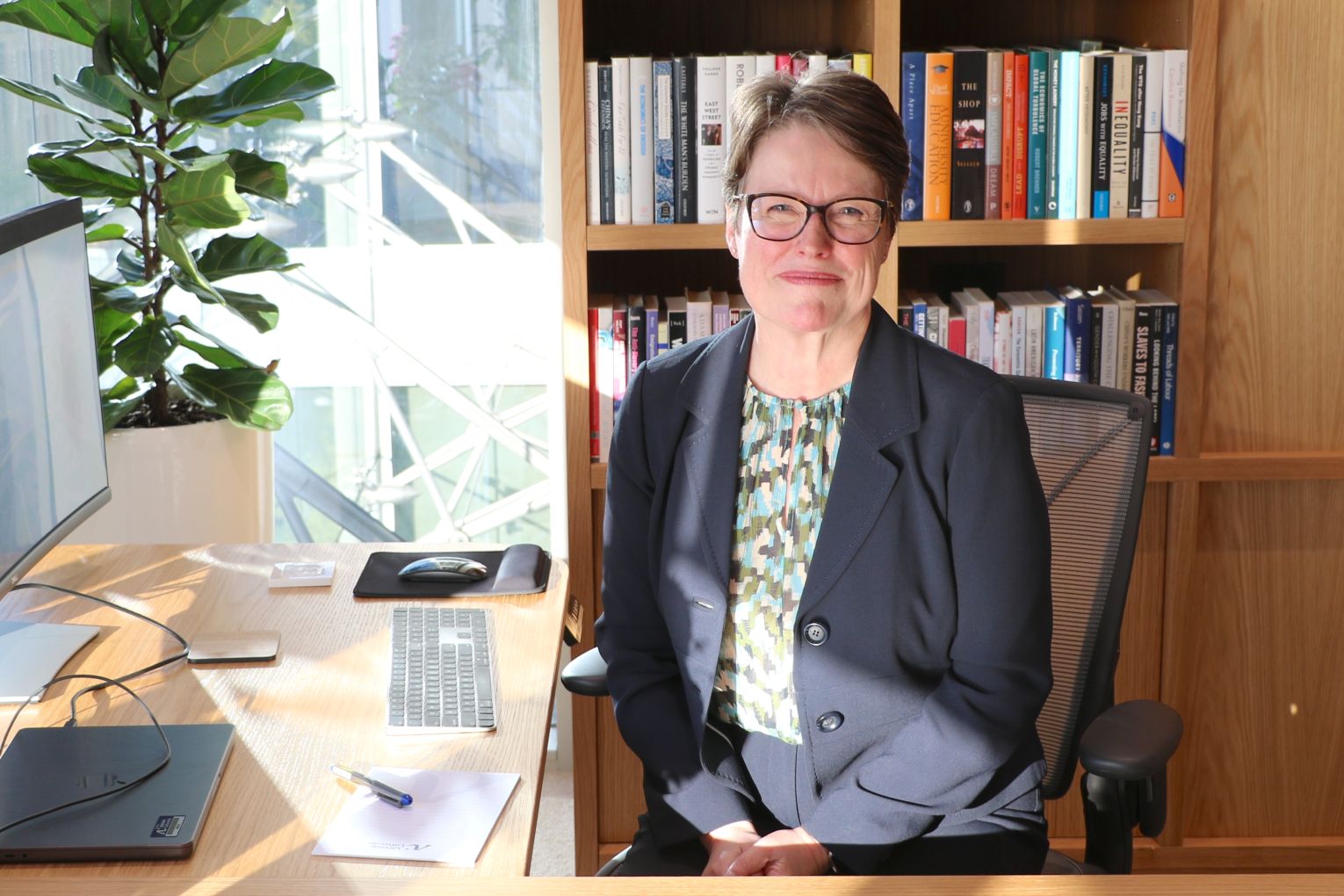
Adelaide University’s inaugural Vice-Chancellor and President Professor Nicola Phillips has rejected a video by South Australia’s One Nation leader Cory Bernardi criticising Aboriginal signage at the university, saying that honouring First Nations history and knowledge would be core to the new institution.
“I would hope that everything about this university, at its inception, would indicate that that is not a view that we share or that we accept,” she said in an exclusive interview with InDaily.
“Our intention is to be more vocal and visible in the work that we want to do with First Nations community, with Aboriginal knowledge in our curriculum, around how we honour culture and language.”
This included the recent appointment of Indigenous footballer Adam Goodes as the university’s First Nations Ambassador, as well as giving the university a Kaurna name.
The small sign Bernardi focused on was a Kaurna greeting, “Niina Marni“, meaning “hello, how are you?”
Adelaide University officially opened in January 2026 following a prolonged and at times bumpy merger between the universities of Adelaide and South Australia.
You might like
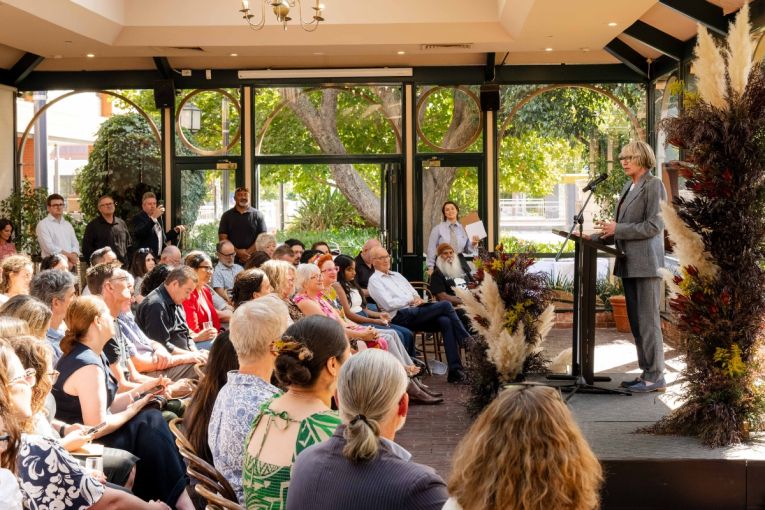
Phillips, who is originally from the UK but becomes an Australian citizen next week, began the role of VC in June 2025 after receiving a call from the executive search firm handling the appointment.
Since then, she has been thinking, preparing and planning for the new university.
And with 11,000 staff and 60,000 students, there has been a lot of planning happening, with Phillips saying the merger has been a “monumental achievement” but that “there’s still a lot of work to do”.
She said it provided a rare opportunity with hopes the “powerhouse university” will be “a driver of the economic future of the state”.
“It is the closest thing you get to an opportunity to design and build a university from the ground up … and to be able to imagine and to create our university here, Adelaide University, in a way that makes real the idea that this university is a driving force for the future of South Australia,” she said.
This included educating students for all sectors of the economy, attracting the best and brightest minds and establishing industry partnerships, such as a recently announced agreement with tech powerhouse Cisco.
Stay informed, daily
Phillips, whose academic background as a social scientist and political economist was focused on inequality, also strongly believes that equity and excellence must be at the heart of the new institution.
She said scholarships for disadvantaged communities would be taken “up to the next level”, while support networks would be put in place for these cohorts.
“There’s no point in seeing the numbers of people who gain admission to the university going up, which would be a really good thing, if then, people are dropping out again by the end of the first year because the environment that they find here is unsuitable for them,” she said.
“We’ve got some work to do to make sure that people, prospective students, their families, their networks, are able to believe that universities are a place where they can go and they want to go.”
Other priorities of Adelaide University would be maintaining high academic standards – Phillips wanting to debunk the belief that excellence in research and high-quality teaching were mutually exclusive.
“I want us to be really clear that for our university, excellence in teaching and learning and excellence in research go hand in hand together and they’re equally valued,” she said.
Phillips also wanted to dispel the idea that the scale of Adelaide University would lead to worse outcomes for students and faculty.
She also hoped to ramp up activity at regional campuses in Roseworthy, Whyalla and Mount Gambier, including through the expanded use of technology, “to make sure that the experience of our students studying at our regional campuses is equivalent to all of the opportunities that students studying in our city campuses have”.
Phillips acknowledged there have been some hiccups with students enrolling earlier this year, but was adamant that the university is now on top of it.
“If you think about the scale of what we’ve done here, we have an organisation now where everything is new, side to side, bottom to top,” she said.
“So, forming in that way, obviously, that can be an exhilarating process, it can be an unsettling process, it can be a frustrating process, it can be one that people find very stressful.
“I wouldn’t for a second underestimate how challenging it has been, but as I go around the university … there’s a good level of optimism and determination.”
Want to see more stories from InDaily SA in your Google search results?
- Click here to set InDaily SA as a preferred source.
- Tick the box next to "InDaily SA". That's it.