‘A lesson for us all’: Farewell to one of SA’s great achievers
University co-founder, former Adelaide Festival Centre chair, Menzies Health Institute founder – with deep connections to Port Adelaide Football Club. A touching tribute to a man bound by a philosophy of ‘helping others’.
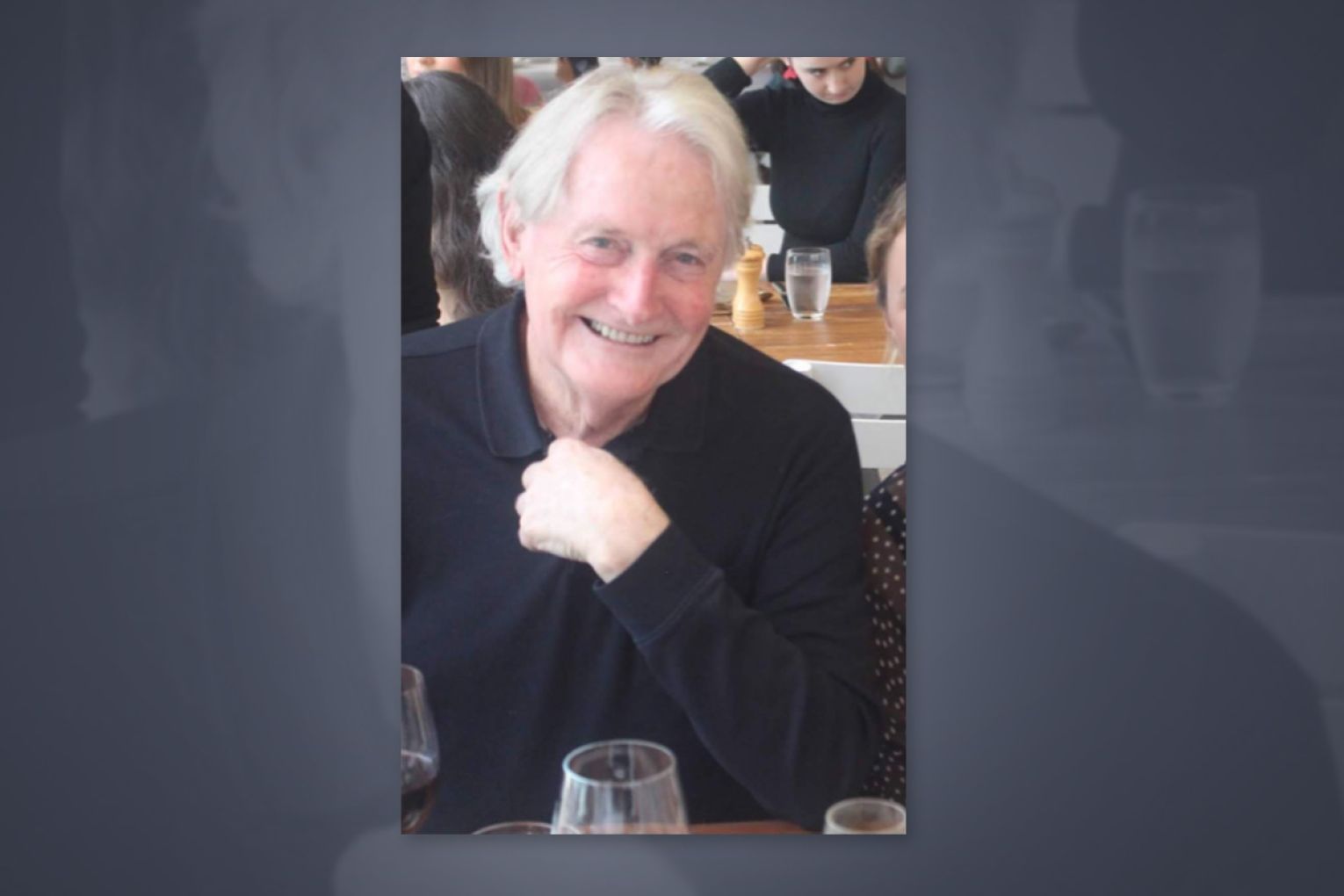
It was something of a shock to discover Richard Ryan was 85-years-old. But there it was, on the cover of the Mass booklet handed to all attendees at his funeral liturgy at St Laurence’s church in North Adelaide, on Wednesday, April 15.
The accompanying photo – recent – shows a relatively youthful looking Richard dressed in black, his long hair not as thick as it used to be but deeply impressive for any man over 60. He looks very much the urbane, chic man of old Adelaide but as with many things Richard, the reality did not always match the first impression.
Richard, who died earlier this month was curiously low profile but was, without question, one of South Australia’s great achievers.
The presence of former State Governor Hieu Van Le and Port Adelaide Football Club’s chief exec Matthew Richardson at St Laurence’s was indicative of just a very small part of Richard’s life.
Outside the church afterwards, there was talk of seemingly rafts of students Richard had sponsored through their studies, students he wouldn’t always have known, but that didn’t seem to have prevented him digging deep into his pockets time and again.
Determination wins every time was his mantra, Richard’s son Tim told the St Laurence gatherers. He worked hard and worked a lot said Tim but it was the impact of his work that mattered most.
Richard Ryan, AO, whose family was helped by Legacy Australia when his father died as a result of his service in World War Two, lived his life by achieving enormously and eclectically and then paying back.
You might like
His CV wasn’t overly touched upon inside St Laurence’s but is almost beyond compare. The headlines – co-founding Charles Darwin University where he was the inaugural Chancellor, co-founding the Menzies Health institute, Darwin casino catalyst, chair of the Adelaide Festival Centre and Adelaide Festival Corporation and a director of Port Adelaide FC – barely scratch the surface.
He helped change the face of the Northern Territory (chairing the NT Tourist Commission he helped drag it into the twentieth century) and was a fighter and fundraiser all his life for better lives for indigenous Australians.
His thoughts on frontier Australia can be found in his autobiography Northern Territory Reflections (Wakefield Press) which, with some irony, came out just a few weeks ago. The ASX listed industrial giant Henry Walker, which took on the NT’s first ever indigenous director during Richard’s tenure as chief executive, was his pride and joy.
Richard was an accountant and helped map out modern day Darwin post Cyclone Tracey (he narrowly evaded death when a girder came flying through his wall and he jumped on top of his children to protect them). He made money but that was peripheral to his philosophy of helping others that came from personal circumstance and upbringing.
After his father died, Richard’s uncle Ron shone heavily in his life. Ron had his own story to tell – a soldier in Papua New Guinea in WW2 he was searching for injured comrades when he came across a Japanese patrol. To avoid detection he laid the body of a heavily injured solider over him and when the bayonet landed, it missed Ron though not his protector.
Ron was determined to pay back his good fortune and spent his life helping indigenous people in the Northern Territory, an outlook Richard adopted in full. He was chair of the Bridging the Gap Foundation to aid indigenous students and never appeared remotely idle.
He wasn’t an easy man to compliment, self effacement a consistent natural defence, a trait emphasised by Tim in his eulogy.
“Yes, I’m perfect,” Richard would laugh when told how well he was doing, Tim said.
Stay informed, daily
He was not perfect, of course, and told me of the time as a young accountant when he asked what his partnership prospects were looking like at the (large) firm that employed him.
None, with a surname like Ryan he was told, his Catholic upbringing (he spent four years at Rostrevor College) a permanent bar.
“I left and spent years pinching clients from them,” he told me.
A chair of the National Heart Foundation, he wasn’t overly religious he said but donated for years to the Catholic Church in Adelaide (where he knew I work, but never told me of his generosity).
Cancer took him in the end – as with compliments he avoided talking about it studiously – and when I met him for coffee a month before he passed away, he took longer than it should to walk to his car. I knew he was ill but this was the first time I noticed it. He hid things well when he wanted.
The 180-strong congregation discovered that Richard had taken up marathon running just before his 60th birthday and had completed five of the big ones, including London, Paris and New York. “I’m off to London,” he’d tell pals, the purpose thrown in later, if at all.
When the time came for the pallbearers to accompany his coffin out of the church, the six men listed turned out not to be strapping ruckmen but, Tim aside, those of a similar vintage to Richard. Loyalty and friendships over many years clearly counted.
On the back page of the funeral booklet is an anonymous, but well known, poem.
“Feel no guilt in laughter, he’d know how much you care,” is the opening salvo. Which was Richard to a tee. A hard worker and a benefactor undoubtedly but someone who didn’t find it hard at all to laugh at the world or himself.
It is a lesson for us all.
Richard Ryan, born January 1, 1941, and died April 5, 2026, is survived by his wife of almost 60 years, Trish, children Tim, Katherine and Tiki, 11 grandchildren and one great-grandchild.
This tribute was written by Richard Evans, a friend and the Editor of Southern Cross.
Want to see more stories from InDaily SA in your Google search results?
- Click here to set InDaily SA as a preferred source.
- Tick the box next to "InDaily SA". That's it.