PM jetting out to secure fuel supplies as US blockades Strait of Hormuz
Donald Trump says the US navy will begin a blockade of ships after peace talks with Iran failed as the Australian Prime Minister heads to urgent fuel supply meetings with the Sultan of Brunei and Malaysia’s PM.
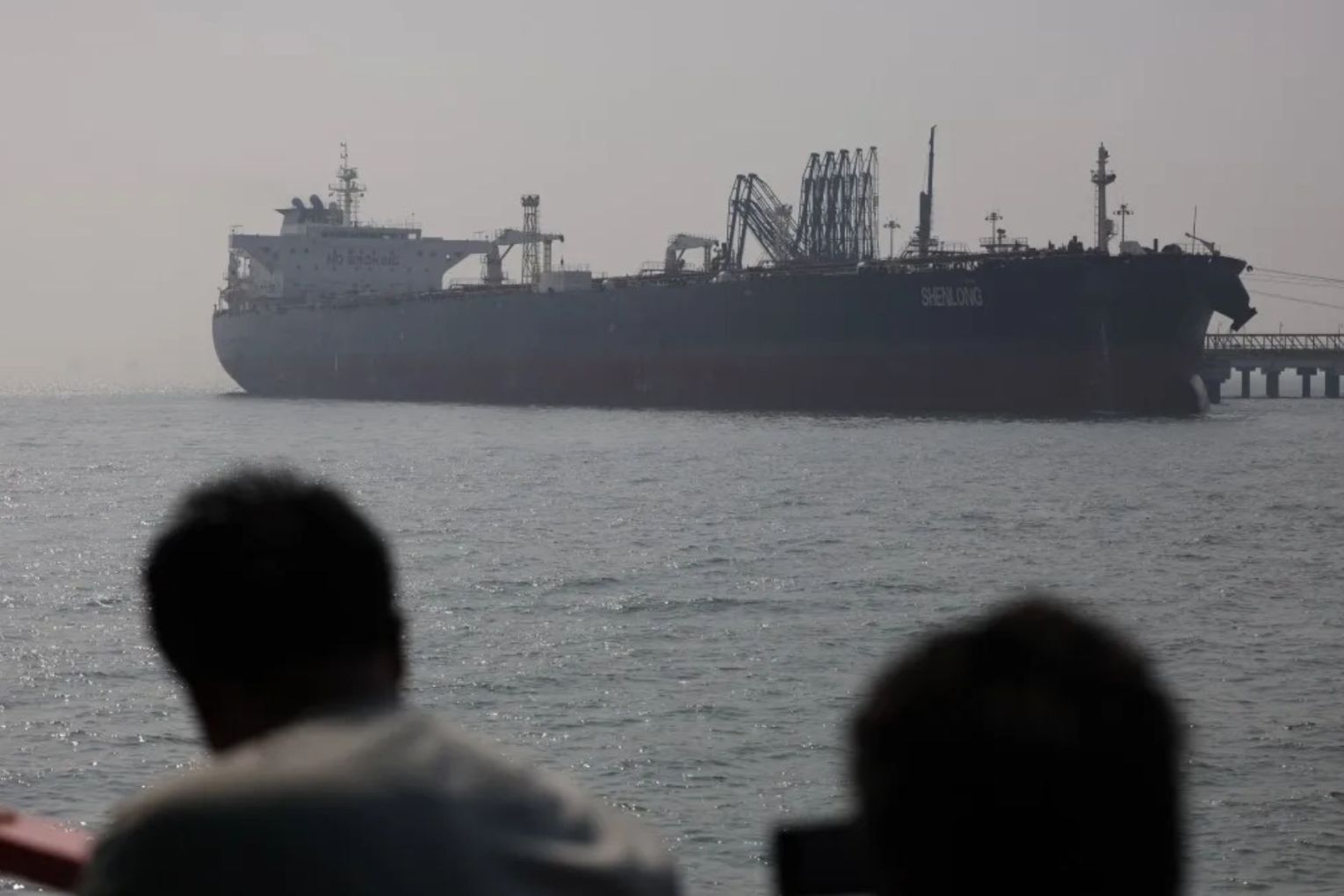
President Donald Trump says the US navy will immediately begin a blockade of ships entering or leaving the Strait of Hormuz, after US-Iran ceasefire talks in Pakistan ended without an agreement.
US Central Command announced it will blockade all Iranian ports beginning Monday at 10am ET (midnight AEST) and the military division said the blockade will be “enforced impartially against vessels of all nations”.
It said it would still allow ships travelling between non-Iranian ports to transit the Strait of Hormuz.
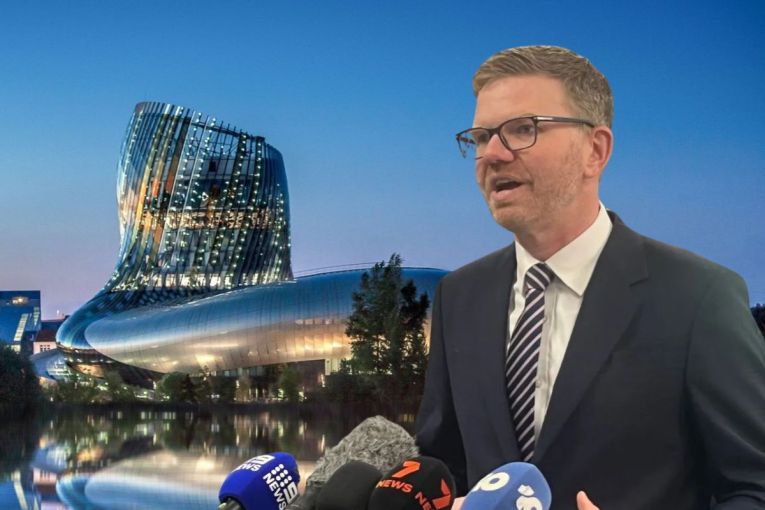
The latest announcement from Trump comes as Australian Prime Minister Anthony Albanese prepares to travel to Brunei and Malaysia from Tuesday to Friday where he will meet with the Sultan of Brunei and Malaysian Prime Minister Anwar Ibrahim.
“We’ve had an agreement from Singapore that that two-way trade will continue to flow between Australia and Singapore, Singapore provides about 25 per cent of our refined fuel, we provide about 32 per cent of LNG needs for Singapore,” Albanese said.
“Brunei is an important partner as well, they provide about nine per cent of our diesel. They’re also a major supplier of fertiliser, which is an issue as well, of course, as a result of this conflict. And Malaysia is the third-biggest supplier of fuel to Australia.
“The investment, frankly, that we have made in building up our relationships with ASEAN countries over the last four years, this is why you engage with partners in our region. And one of the themes of this is that people recognise that we’ve got to work together at this difficult time.”
You might like
A US blockade could further rattle global energy markets. “It’s going to be all or none, and that’s the way it is,” Trump told Fox News.
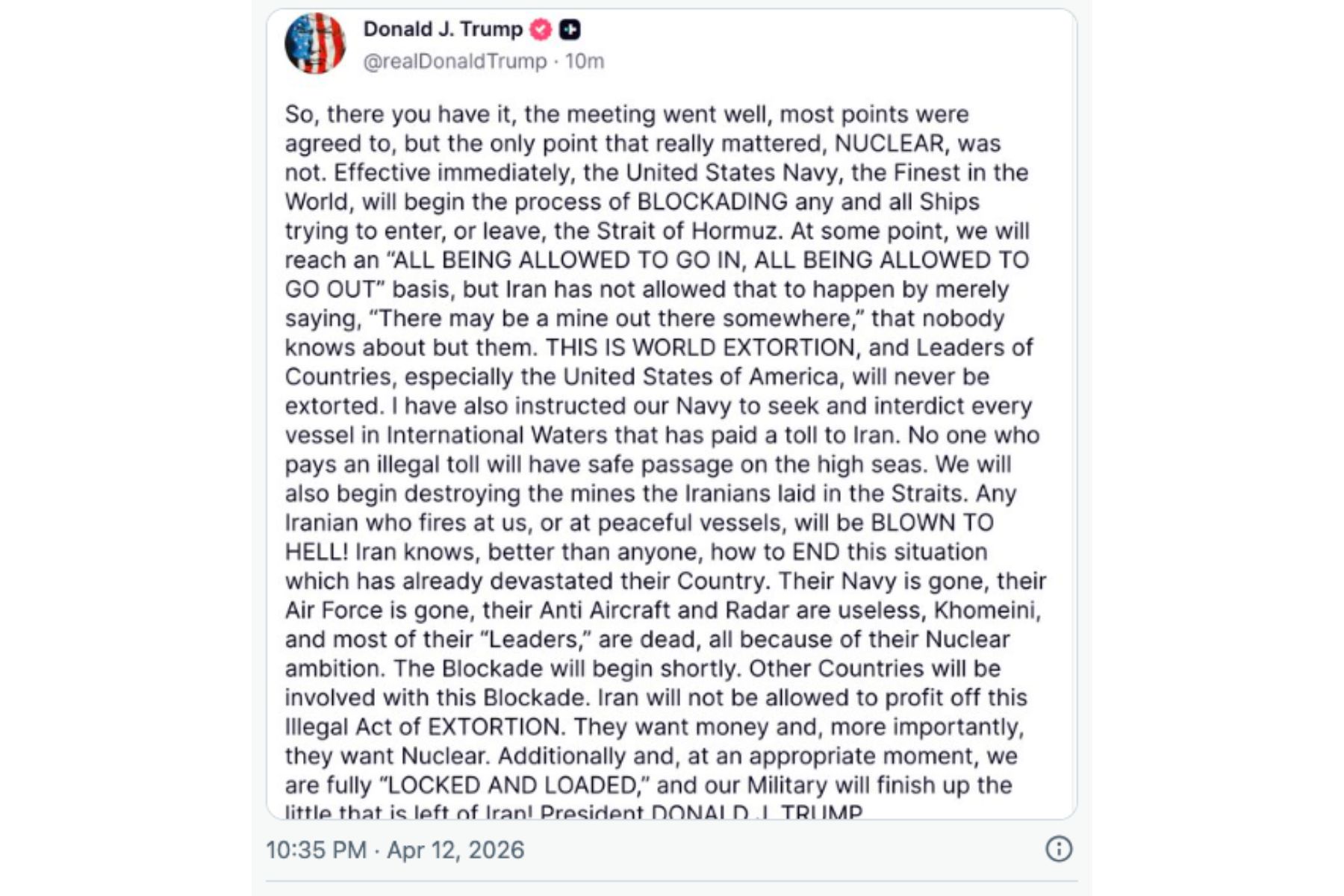
Trump said on social media he told the navy to “seek and interdict every vessel in International Waters that has paid a toll to Iran”.
“No one who pays an illegal toll will have safe passage on the high seas,” he wrote.
Trump said other nations would be involved but did not name them, Albanese today saying Australian had not been asked to help.
“We haven’t been asked to help, what we have done is continue to provide support. I’ve extended the period of service of our Wedgetail aircraft in the Middle East that’s providing defensive support, particularly to the UAE and to Gulf countries that aren’t participants in the war, but have been victims of it as a result of Iran’s unprovoked attacks,” he said.
“And of course, there are many Australian citizens, of course, particularly in the UAE, in Dubai and Abu Dhabi, around about 20,000.”
Freedom of peaceful navigation is a basic principle of international maritime trade.
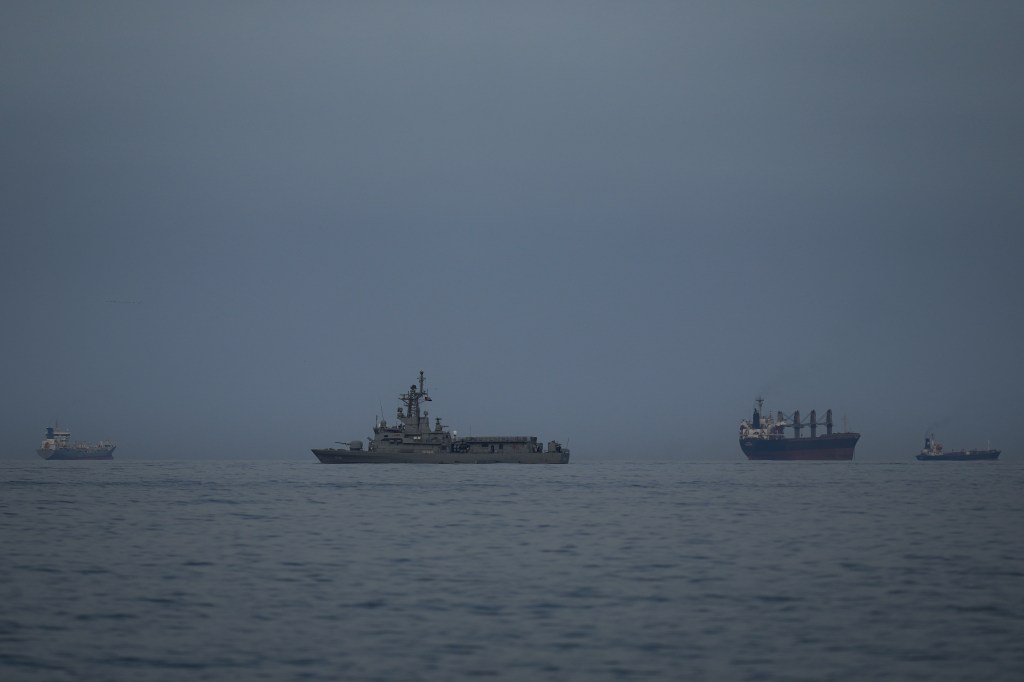
Iran’s Revolutionary Guard later said the strait remained under Iran’s “full control” and was open for non-military vessels, but military ones would get a “forceful response”, two semi-official Iranian news agencies reported.
During the 21-hour US-Iran talks, the US military said two destroyers had transited the strait ahead of mine-clearing work, a first since the war began. Iran denied it.
Trump’s plan to use the navy to block the strait is unrealistic and he will have to concede on some issues with Iran, said Andreas Krieg, a senior lecturer in security studies at King’s College London.
“There isn’t any tool in the toolbox in terms of the military lever that he could use to get his way,” Krieg said.
Stay informed, daily
Trump said Tehran’s nuclear ambitions were at the core of the talks’ failure. In comments to Fox News, he again threatened to strike civilian infrastructure.
Parliament speaker Mohammad Bagher Qalibaf, who led Iran’s side, addressed Trump in a new statement on his return to Iran: “If you fight, we will fight.”
Trump said on Sunday the price of oil and petrol may remain high through November’s midterm elections, a rare acknowledgement of the potential political fallout from the war.
A few hours after Trump’s comments, Qalibaf took to social media to post a map of Washington-area gasoline prices.
“Enjoy the current pump figures. With the so-called ‘blockade’, Soon you’ll be nostalgic for $4–$5 gas,” he wrote.
The face-to-face talks that ended on Sunday were the highest-level negotiations between the longtime rivals since the 1979 Islamic Revolution.
Neither indicated what will happen after the ceasefire expires on April 22.
“We need to see an affirmative commitment that they will not seek a nuclear weapon,” said US Vice President JD Vance, leading the American side.
Iranian negotiators could not agree to all US “red lines”, said a US official who spoke on condition of anonymity because they were not authorised to describe positions on the record.
These included Iran never obtaining a nuclear weapon, ending uranium enrichment, dismantling major enrichment facilities and allowing retrieval of its highly enriched uranium, along with opening the Strait of Hormuz and ending funding for Hamas, Hezbollah and Houthi rebels.
Iranian officials said talks fell apart over two or three key issues, blaming what they called US overreach.
Pakistani Foreign Minister Ishaq Dar said his country will try to facilitate a new dialogue in the coming days.
The European Union urged further diplomatic efforts.
The Kremlin said Russian President Vladimir Putin “emphasised his readiness” to help bring about a diplomatic settlement in a call with Iran’s president.
The fighting has killed at least 3000 people in Iran, 2055 in Lebanon, 23 in Israel and more than a dozen in Gulf Arab states, and damaged infrastructure in half a dozen countries.
-with Reuters
Want to see more stories from InDaily SA in your Google search results?
- Click here to set InDaily SA as a preferred source.
- Tick the box next to "InDaily SA". That's it.