Australia mulls military help for Iran-besieged allies
The nation’s foreign minister has confirmed requests for military aid are being considered by Australia.
Source: CNN
Australia could provide military aid to help protect allies in the Middle East against Iranian strikes amid a wave of fiery drone attacks across the Gulf.
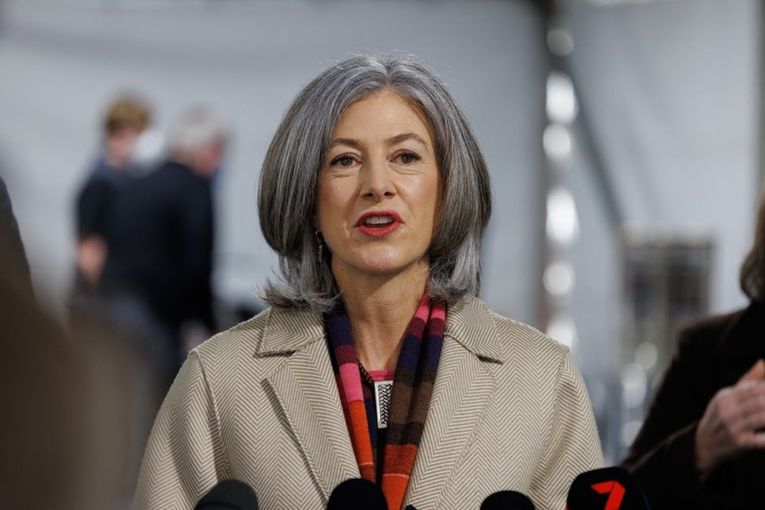
Foreign Minister Penny Wong has confirmed the government is weighing up whether to answer requests for help countries hit in Iranian retaliatory actions.
But she has ruled out any Australian troops being involved in offensive operations during the US-Israeli attacks on the Islamic regime.
“Many countries which are non-participants have been attacked by Iran through this,” Wong told ABC’s Insiders program on Sunday.
“You would anticipate, as a consequence, that we have been asked for assistance, and we will work through that carefully.”
“We are not participating in offensive actions against Iran and we’ve made clear we would not participate in any ground-troop deployment into Iran.”
On Sunday (local time), a suspected Iranian drone hit a high-rise government tower in Kuwait — the Public Institution for Social Security — which burst into flames.
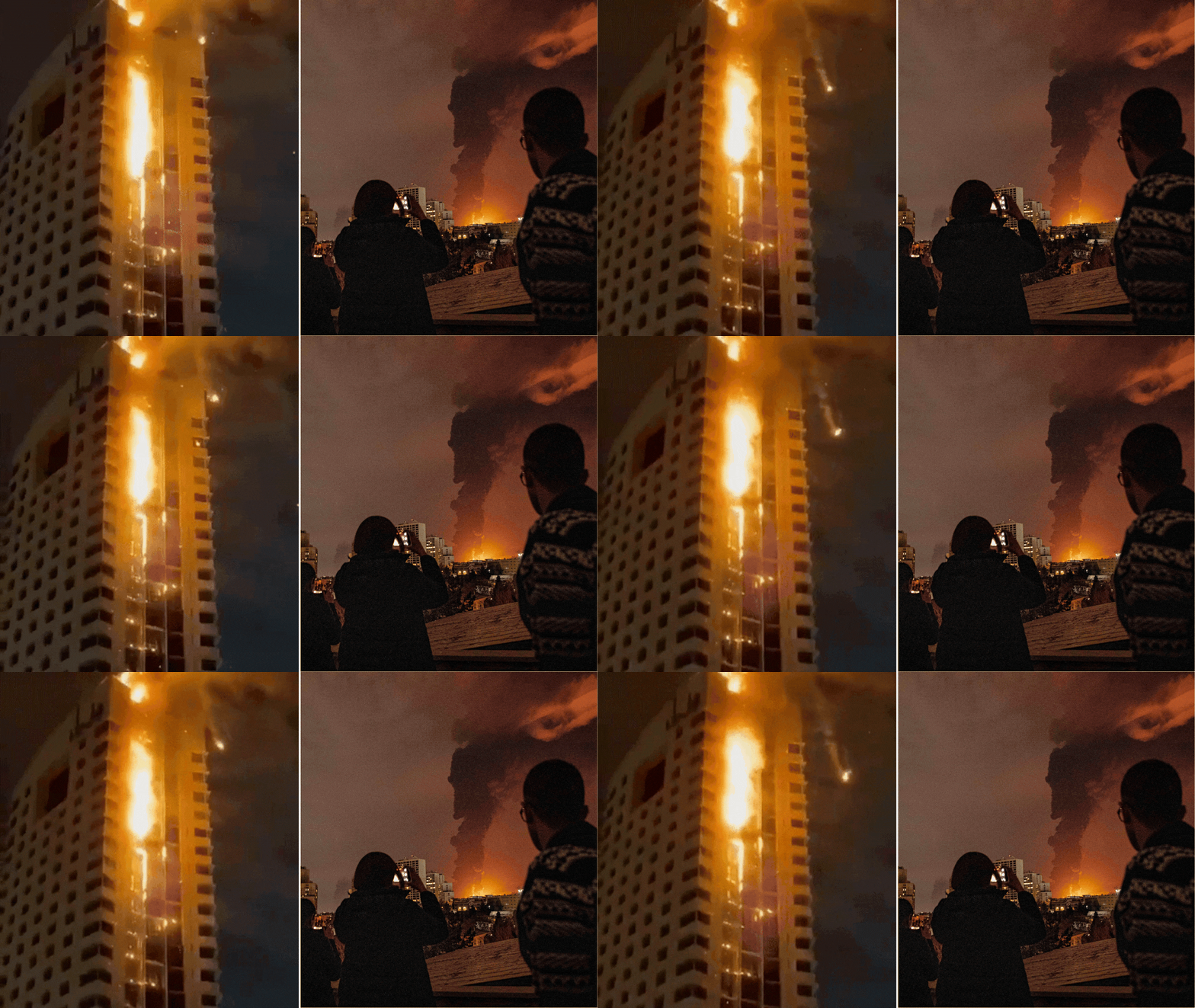
A government building in Kuwait (left) and an oil depot in Iran.
You might like


It comes as oil depots in Iran were hit for the first time, sparking fireballs and sending thick black smoke into the skies in apocalyptic scenes that turned day into night.
There were reports of the acrid black smoke causing acid rain and leading to public health warnings to wear masks and stay indoors.
Four oil storage facilities and an oil production transfer centre were hit , according to the Fars news agency reported.
The governments of Saudi Arabia, Kuwait, the United Arab Emirates and Bahrain reported Iranian drone attacks in their countries on Saturday and early Sunday.
Saudi Arabia has told Tehran continued Iranian attacks on the kingdom and its energy sector could push Riyadh to respond in kind.
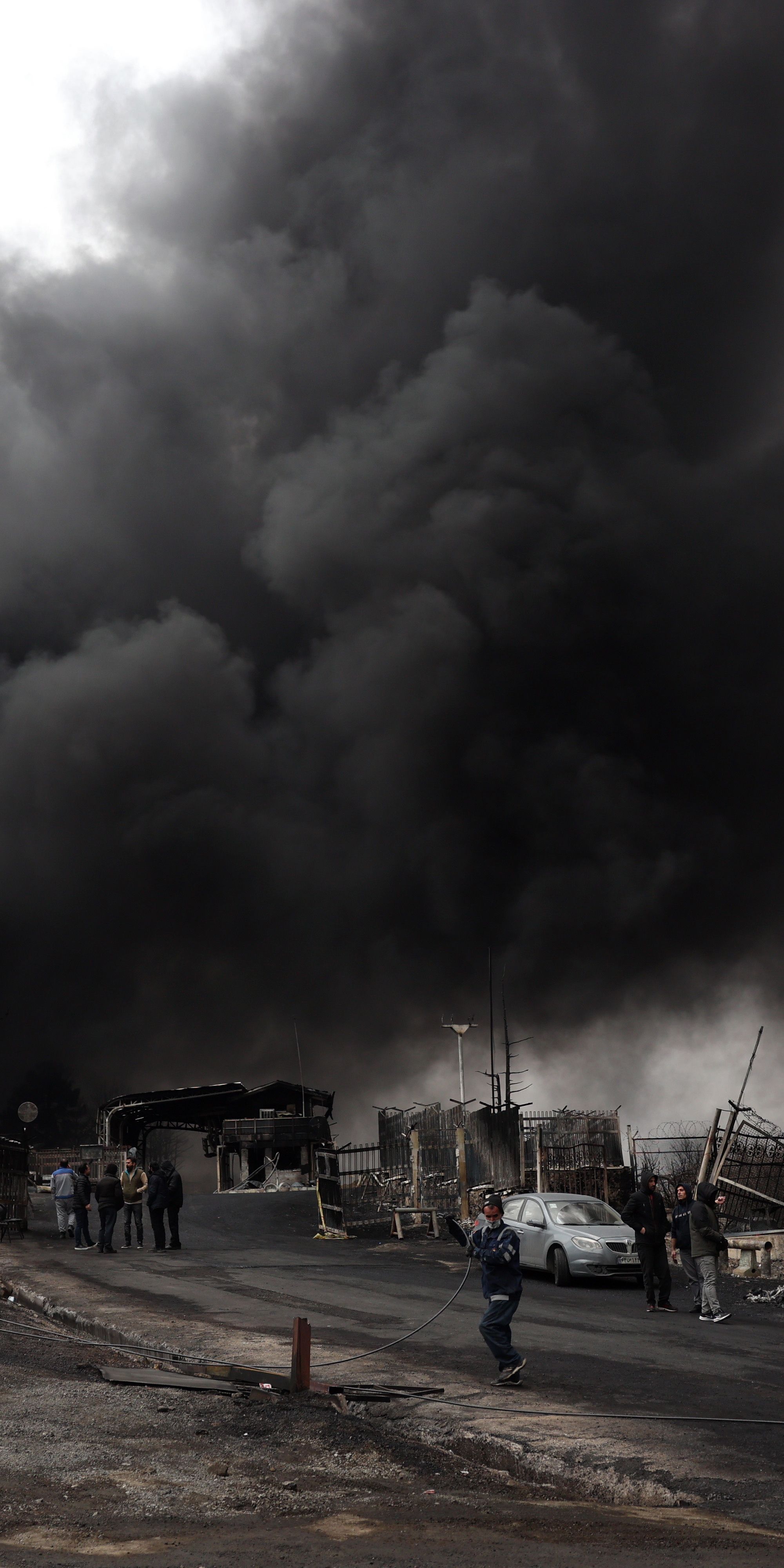
Thick black smoke rises from the Shahran Oil Refinery in Tehran. Photo: AAP
In an apparent attempt to cool anger across the Gulf, Iran’s president apologised to neighbouring states for its attacks on US facilities in those countries on Saturday.
He dismissed Trump’s demand for the Islamic Republic’s unconditional surrender as “a dream”, but said its temporary leadership council had agreed to suspend attacks on nearby states unless strikes on Iran originated from their territory.
Pezeshkian’s comments caused a political stir in Iran, prompting his office to reiterate Iran’s military would respond firmly to attacks from US bases.
Wong said Australia’s military aid could help provide protection against Iranian drone and missile attacks.
Stay informed, daily
“We have been asked and we will consider … if a decision is made, I’m sure that we will be transparent with the Australian people,” she said.
“This is not Iraq and we are not the Howard government. We are not asking Australians to accept men and women being deployed into a ground war.”
The foreign minister added any regime change in Iran should be directed by its citizens, putting her at odds with recent statements from US President Donald Trump, who said he should be involved in choosing the country’s leader.
“I think we all know that for there to be a sustainable change of regime, it has to be something that the people of that nation back and seek,” Senator Wong said.
Another 151 Australians arrived in Melbourne on a flight from Dubai on Sunday afternoon, one of three due to land in Australia during the day after UAE airspace was briefly closed due to renewed missile strikes.
One of those flights, to arrive in Perth about 5pm local time with 93 Australians on board, was previously cancelled.
As of Sunday morning, more than 1500 Australians had arrived home from Dubai.
Australians have also been bussed out of the Qatari capital Doha, the base for Virgin Australia’s partner Qatar Airways, to Saudi Arabia’s capital Riyadh.
Three buses carrying 92 citizens, permanent residents and their families have departed.
Assistant Foreign Minister Matt Thistlethwaite said commercial flights were still the best way for Australians to leave the region.
But he admitted the cost of some flights might be a factor in people not being able to return as some planes departed with large numbers of empty seats.
About 115,000 Australians were in the Middle East when the US and Israel launched strikes on Iran.
Australian Travel Industry Association chief executive Dean Long said flights leaving with empty seats should not be a concern.
“The good news is there’s not a huge number of people that we should consider stuck in the transit hub,” he told AAP.
“The people that are primarily in the Middle East now are choosing to be in the Middle East because that’s where they live.”
-with AAP
Want to see more stories from InDaily SA in your Google search results?
- Click here to set InDaily SA as a preferred source.
- Tick the box next to "InDaily SA". That's it.