US and Israel clash with Iran at emergency UN meeting
The US and Iran have traded fierce barbs at a UN Security Council session, as military strikes in the Middle East fuel fears of a broader regional war.
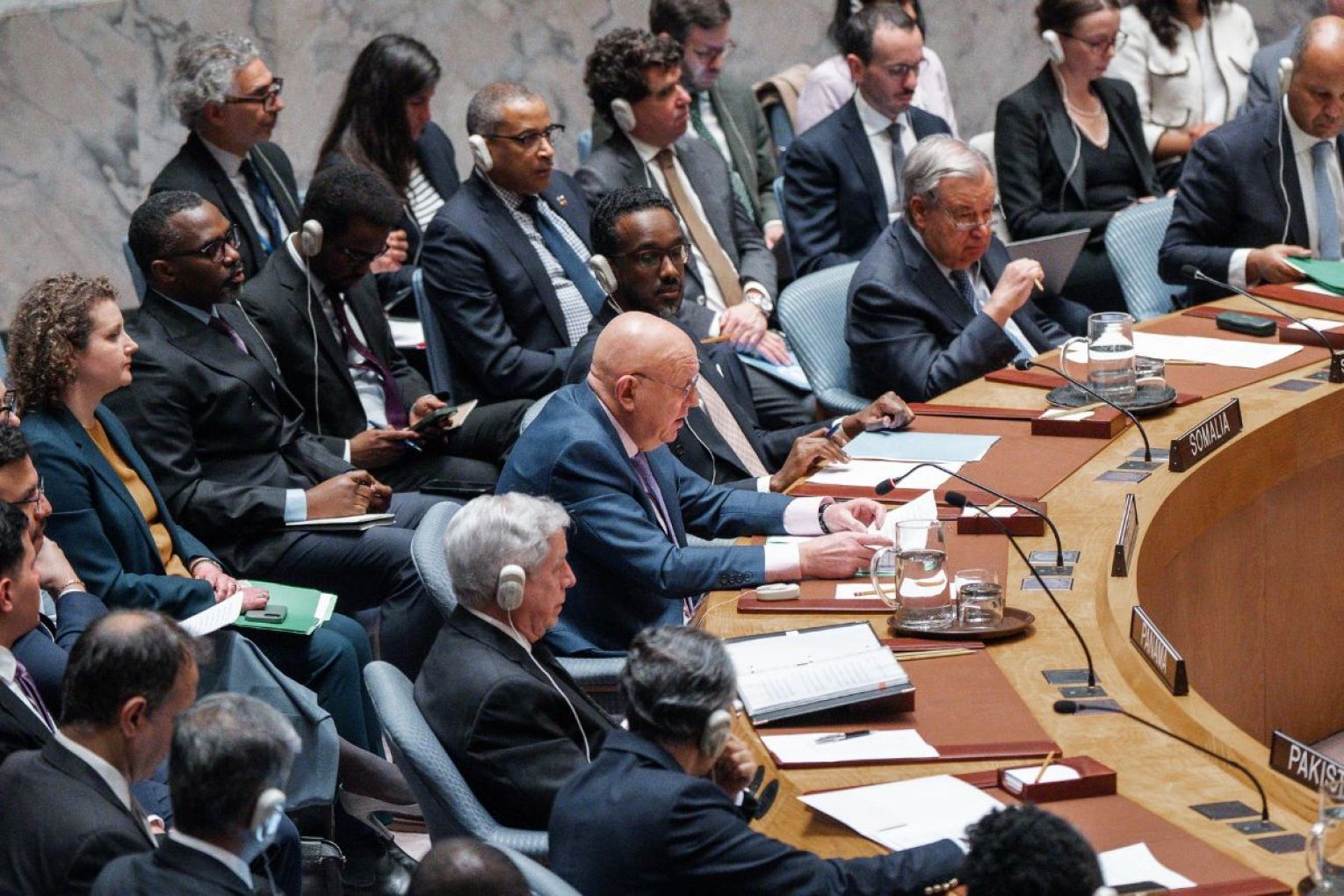
The United States and Israel have clashed with Iran at an emergency meeting of the UN Security Council, where the UN chief and many countries urged a halt to the attacks and a return to negotiations to prevent the conflict escalating.
Secretary-General António Guterres told the council on Saturday everything must be done to prevent an escalation.
“The alternative,” he warned, “is a potential wider conflict with grave consequences for civilians and regional stability.”
Guterres said the US and Israeli airstrikes violated international law, including the UN Charter.
He also condemned Iran’s retaliatory attacks for violating the sovereignty and territorial integrity of Bahrain, Iraq, Jordan, Kuwait, Qatar, Saudi Arabia and the United Arab Emirates.
The US ambassador to the United Nations, Mike Waltz, insisted the US military action was lawful.
You might like

“Iran cannot have a nuclear weapon,” he told the council.
“That principle is not a matter of politics. It’s a matter of global security. And to that end, the United States is taking lawful actions.”
Israel’s UN Ambassador Danny Danon defended the airstrikes as necessary to stop an existential threat.
“We are stopping extremism before it becomes unstoppable,” he said.
“We will ensure that no radical regime armed with nuclear weapons and ballistic missiles can threaten our people or the entire world.”
Amir Saeid Iravani, Iranian ambassador to the UN, told the council that the airstrikes have killed and injured hundreds of Iranian civilians, which he called a war crime and a crime against humanity.
Stay informed, daily
He blasted the UN and the Security Council for not heeding Tehran’s warnings about the “warmongering statements” by the US in recent weeks and urged the council to act now.
“The issue before the council is straightforward: whether any member state may, including a permanent member of this council, through the use of force, coercion or aggression, determine the political future or system of another state or impose control over its affairs,” Iravani said.
During his speech, the Iranian diplomat did not mention or comment on President Donald Trump’s statement that Supreme Leader Ayatollah Ali Khamenei was killed in the strikes.
Iranian authorities have since confirmed his death, but did not comment on the cause.
The assassination of the second leader of the Islamic Republic, who had no designated successor, raised the prospects of a protracted conflict given Iranian threats of retaliation.
In a rare exchange, the US and Iranian ambassadors exchanged warnings and direct rebuffs toward the end of the emergency session as military aggression between their countries risked spilling into a regional war.
After Waltz responded to Iranian claims that the US had violated international law, Iravani asked to speak again to issue a warning: “I advise to the representative of the United States to be polite. It will be better for yourself and the country you represent”.
Waltz responded immediately.
“This representative sits here, in this body, representing a regime that has killed tens of thousands of its own people, and imprisoned many more, simply for wanting freedom from your entire tyranny,” he said.
In a joint statement, the leaders of Britain and France – both veto-wielding members of the council – along with Germany’s chancellor called for a resumption of US-Iranian talks on Tehran’s nuclear program.
The three countries, part of the 2015 nuclear deal with Iran, have led efforts to reach a negotiated solution. Trump pulled the US out of the deal in 2018.
The three European leaders strongly condemned Iranian airstrikes in the region – not the US-Israeli airstrikes – and urged Iran’s leaders to seek a negotiated solution, saying: “Ultimately, the Iranian people must be allowed to determine their future.”
Want to see more stories from InDaily SA in your Google search results?
- Click here to set InDaily SA as a preferred source.
- Tick the box next to "InDaily SA". That's it.