Dyslexia stigma challenged in new SA school roll out
A project promoting inclusive teaching practices for students with learning difficulties like dyslexia is now being expanded across South Australian government schools.
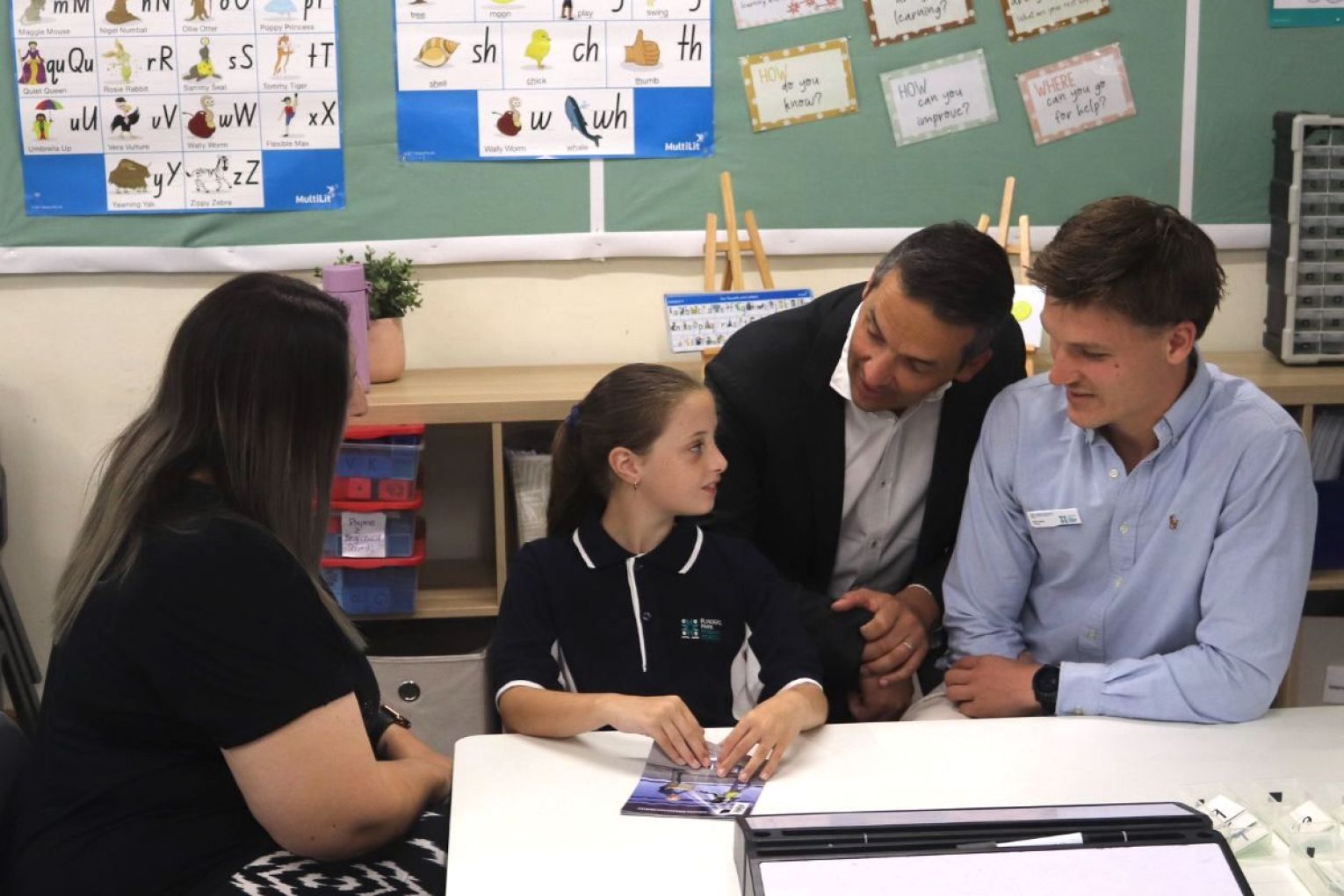
The Differentiated Not Different dyslexia project, which started in 2023, is being rolled out in all government schools after Education Minister Blair Boyer declared the trial involving teachers from 15 schools a success.
Flinders Park Primary School parent Melissa Cazzetta said the program that focused on inclusive teaching for students with learning disabilities like dyslexia – where people see written language differently – had “100 per cent” helped her daughter, Tiana, to improve her literacy skills.
“It’s really helped her, 100 per cent. She’s learning a lot more, and she’s got a lot more confidence. She has a lot of one-on-one if she needs it, and they give her extra time if she needs it for her learning,” she said.
Grade 4/5 teacher Will Clarke, who teaches Tiana, said the program had “absolutely” made a difference in the classroom.
“I just think it’s nice to see the confidence back in the children in the classroom and that it’s actually working and they’re not shying away from reading and writing now that it’s out there and we’re in this routine,” he said.
“It’s really making an impact for them in the classroom.”
Adelaide University academic Alisa Willis discovered she had dyslexia – which affects how a person reads, writes and spells – while in grade 10 at school, and said the program sounds “fantastic”.
You might like
Willis said that while she was at school in the 1980s, there was less awareness about learning disabilities, adding that she was put in a special class because she was late to read.
“I remember as a child, I was very self-conscious that it took me a long time to read, and I was really embarrassed,” she said.
“And then I had, when I was in Year 5, an amazing teacher who really moved mountains and really took a personal interest in helping me read and really encouraged me.
“Now I love reading. I’m a big reader. Now I’m an academic, and I’ve got a PhD. So, it’s possible to go from it being really difficult to read to completing a doctorate.”
Boyer said that the new project would identify and support students with dyslexia early on and set them up for a brighter future.
“It’s one of the things that I certainly hear quite a bit about from parents around, ‘What support is there for students with dyslexia?’, and I think sometimes they feel like they’re left out,” he said.
“That’s been, I think, the criticism in the past, and those students have fallen through the gaps, and then you don’t pick up on that issue until it’s much later and much harder to fix.
“I think that this program … will really support all our teachers to be able to play that role in identifying and then supporting students who might be at risk of dyslexia in a way that is far more successful than what we have done in the past.”
Stay informed, daily
Flinders Park Primary School principal Cassie McCaffrey said they learnt about cognitive load and quality literacy practices such as phonological awareness through the program.
“So, not overloading our brains too much so that we could learn short parts of information and build on what we knew,” she said.
“And then we went through some really good quality literacy practices and how you can do that with the whole, entire class, but then, how does that support students with dyslexia and then what extra support could be put into place for a student with dyslexia?”.
McCaffrey said there were many better screening tools to identify dyslexia and learning disabilities than in the past.
“I don’t think there’s as much of a stigma as there may have been in the past. So, now it’s just, ‘This is how our brain works and this is what we need to do to help us as we go along in life’,” she said.
In addition to expanding the Differentiated Not Different Dyslexia project, Boyer also announced the expansion of reading intervention lessons.
This would be available to all government primary schools using the Department for Education’s phonics and spelling scope for students from Reception to Year 2.
Boyer said the project had been successfully piloted in 49 schools last year and works alongside phonics and spelling program assessments.
The Department of Education has also collaborated with not-for-profit learning support organisation SPELD SA to distribute a set of decodable texts, which would support Reception students at 135 schools with phonics and spelling.
Work is now underway to develop texts suitable for Year 1 and Year 2 students as well.
SPELD SA CEO Laura McLachlan said the project’s expansion was “a significant step forward for students with dyslexia across Australia”.
“When teachers are equipped with evidence-based training and high-quality resources, children can be identified early and supported effectively,” she said.
In addition, Boyer has announced that, if re-elected at the March state election, a Malinauskas Labor government would introduce phonics screening for students in Year 2 from Term 3 of the school year.
Want to see more stories from InDaily SA in your Google search results?
- Click here to set InDaily SA as a preferred source.
- Tick the box next to "InDaily SA". That's it.