The world’s eyes on us: South Australian portrait featured in global wine photography exhibition
A striking portrait of proud Wirangu and Kokatha man Pauly Vandenbergh, founder of Munda Wines, is featured in an international photography exhibition now open to the public at world wine museum La Cité du Vin in Bordeaux, France.
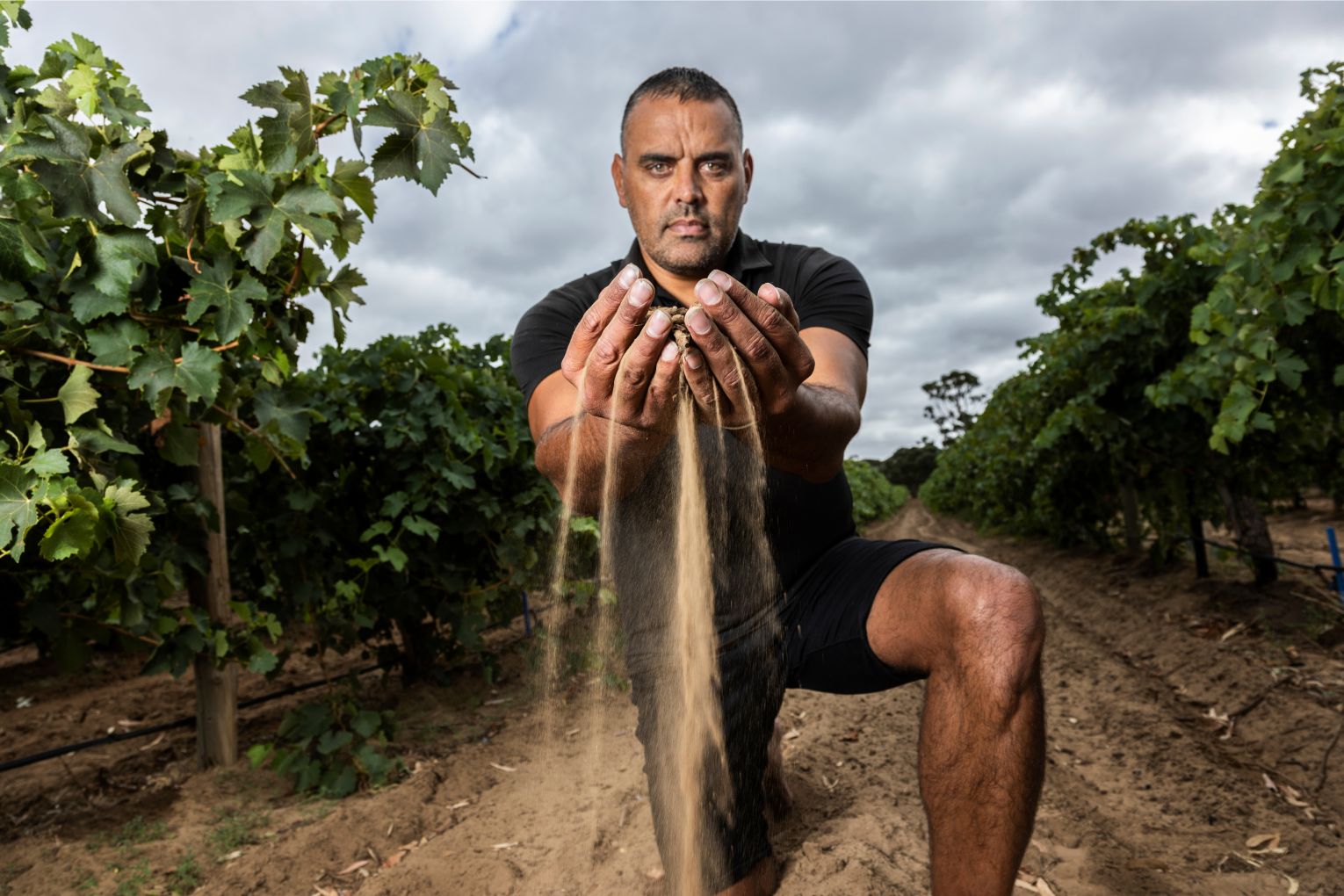
The exhibition celebrates the richness and diversity of vineyards from across the planet through powerful visual storytelling. Bringing together images of people and landscapes from 50 wine regions worldwide, the exhibition places South Australian and Aboriginal perspectives firmly on a global stage.
The photograph, captured by Barossa-based photographer Dragan Radocaj, depicts Vandenbergh among rows of vines in the Barossa vineyard which is responsible for Munda’s Ngadjuri-Peramangk Grenache wine. Displayed alongside portraits and landscape shots from renowned regions including Burgundy, South Africa and Argentina, the image offers viewers a contemporary South Australian wine story rooted in ancient traditions.
For Vandenbergh, seeing the photograph exhibited at one of the world’s most influential wine institutions – visited by 400,000 international travellers every year – carries deep meaning.
“For me, wine is a vessel: a way of sharing stories that stretch back more than 65,000 years – and forward into something more meaningful for the generations to come,” he says.
“When I look at this photo, I see a sense of responsibility and respect for Country. The vineyard shown in the image sits on land that has been cared for by Aboriginal people for tens of thousands of years.
You might like


“I hope that visitors to the exhibition are able to learn about South Australia’s commitment to viticulture that values sustainability, including careful water management and biodiversity. I’m really excited about this opportunity and honoured for the photo to be included.”
Munda Wines has gained recognition for embedding First Nations language and a deep connection between the grapes and Country into Australian winemaking. Wines are named after the Traditional Country on which the vineyards are located, such as the Kaurna Country Syrah. Munda, which is the Wirangu and Kokatha word for “land”, is the foundation of the label, and they partner with artisan winemakers to produce wines guided by respect for Country.
The philosophy strongly aligns with the exhibition’s broader theme, which explores the profound relationship between the vineyard and its environment: the link between people and vine, and the way in which the wine-growing landscape is shaped by nature, culture, and heritage.
Radocaj says the portrait’s power lies in its stillness. “I photographed Pauly holding the soil from this Barossa vineyard because, for him, the land is not just where wine is grown, it is part of who he is,” he explains.
“The soil in his hands represents connection, responsibility and continuity. For me, this image is about respect for Country and the quiet relationship between people, land and time.”
Great Wine Capitals Global Network president Jo Collins, who is also the deputy chief executive of the Department of Primary Industries and Regions (PIRSA), describes the presence of this South Australian image in the exhibition as a reflection of the regard in which the state is held by the wine sector around the world.
“Seeing such a captivating photograph from our very own state featured within an esteemed international wine institution underscores South Australia’s place in the global wine community,” she says.
“Our peers recognise our state’s exceptional wines as well as our deep commitment to sustainability and biosecurity. We’re proud to have Pauly as one of PIRSA’s Food, Wine and Agribusiness Ambassadors, all of whom champion South Australia’s food, wine and agricultural industries.”
South Australia is firmly established among the world’s leading wine regions. The state produces more than 50 per cent of Australia’s bottled wine and 80 per cent of its premium wine, and is one of only 11 wine regions accepted into the prestigious Great Wine Capitals Global Network.
Locally, the network is supported through a partnership between government, industry and education institutions, including PIRSA, the South Australian Tourism Commission, the South Australian Wine Industry Association and Adelaide University.
The exhibition opened on February 13 and will remain on display until December 31, 2026. South Australian participation is supported through a partnership between PIRSA and La Cité du Vin, which aims to raise the profile of South Australian wine producers internationally. For more information, visit La Cité du Vin website.
Want to see more stories from InDaily SA in your Google search results?
- Click here to set InDaily SA as a preferred source.
- Tick the box next to "InDaily SA". That's it.