First shipment of critical mineral after Port Pirie bailout
The 130-year-old Port Pirie smelter sent off its first shipment of a critical mineral, just over four months after a multimillion-dollar government bailout. Management remains tight-lipped about expansion plans.
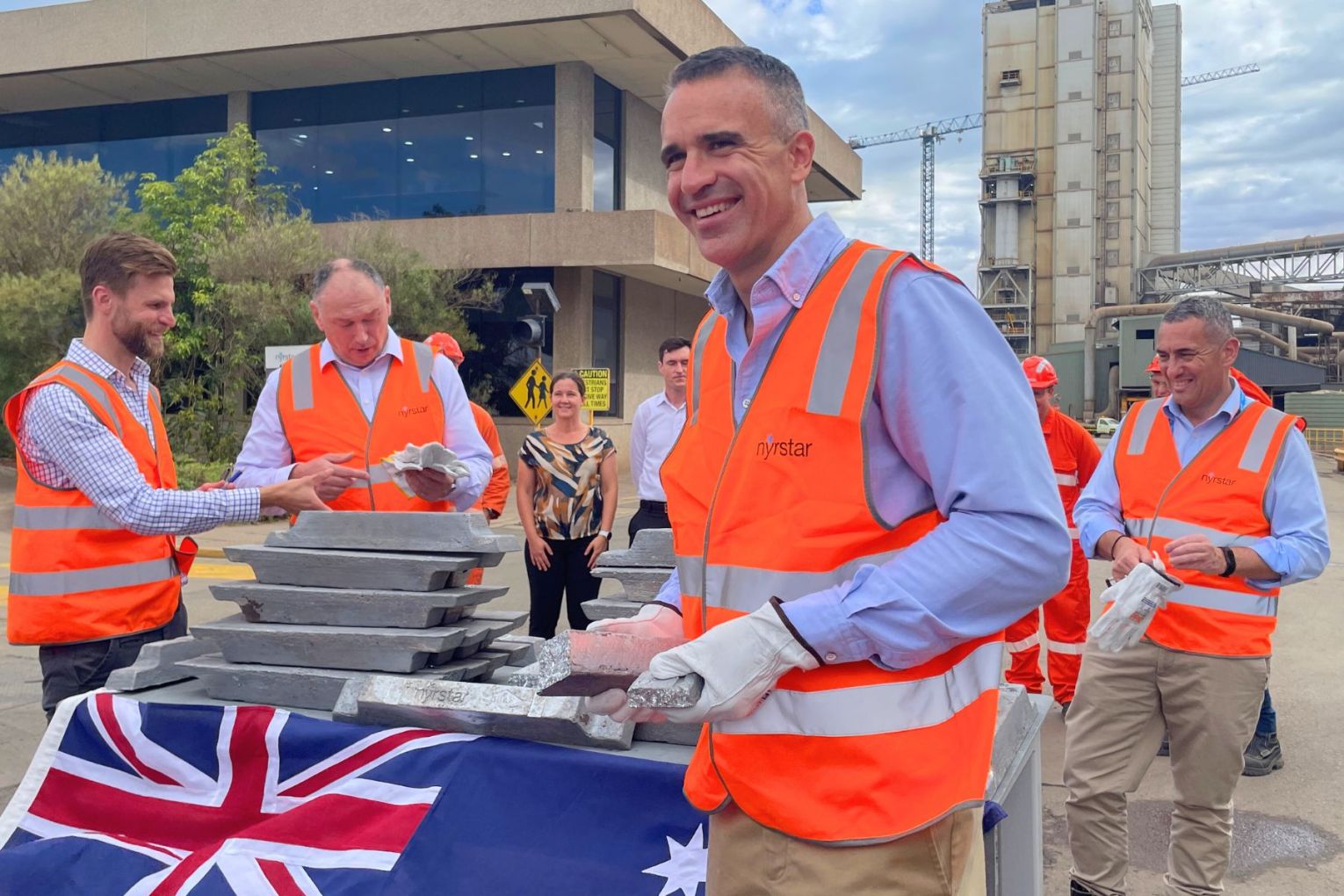
Nystar’s Port Pirie smelter is sending its first shipment of antimony to an east coast manufacturer in Australia this week, with plans to eventually export the sought-after metal to Europe, Asia and the United States.
Federal Industry and Innovation Minister Tim Ayres along with SA Premier Peter Malinauskas and Treasurer Tom Koutsantonis are all in Port Pirie today to mark the milestone after the smelter first poured antimony in its demonstration plant during November last year.
Nyrstar general manager Darin Cooper said, “depending on the day,” the mineral could fetch about $20,000 to $40,000.
It followed months of uncertainty for the struggling Nyrstar site, the state, federal and Tasmanian governments stepping in to pledge $135 million to a bail out of Port Pirie and Nyrstar’s zinc refinery in Hobart during August 2025.
Nyrstar has since started an $80 million upgrade of the SA facility that employs around 1050 people in the region and Malinauskas said the milestone shipment was the start of the previously financially challenged smelter reaching its export potential.
“This is South Australia pulling its weight in the global supply chain,” he said.
Port Pirie is the only place in Australia to produce antimony and Nyrstar was now producing 150 tonnes per year.
You might like
Malinauskas said the goal was to produce 2000 tonnes per year “in a commercially viable way”.
“We cannot live in a world where all strategic critical minerals and metals are produced only by a handful of countries,” Malinauskas said.
“That would be at the expense of our sovereign capabilities. That would be at the expense of our capacity as a nation to be able to defend ourselves in the future.
“That’s why we are going to be able to produce critical minerals like this and we have that opportunity at Port Pirie.”
Malinauskas flagged SA would soon produce other critical minerals like bismuth, tellurium, germanium and indium, which he says are “critical” to the clean energy transition, along with defence and technology industries.
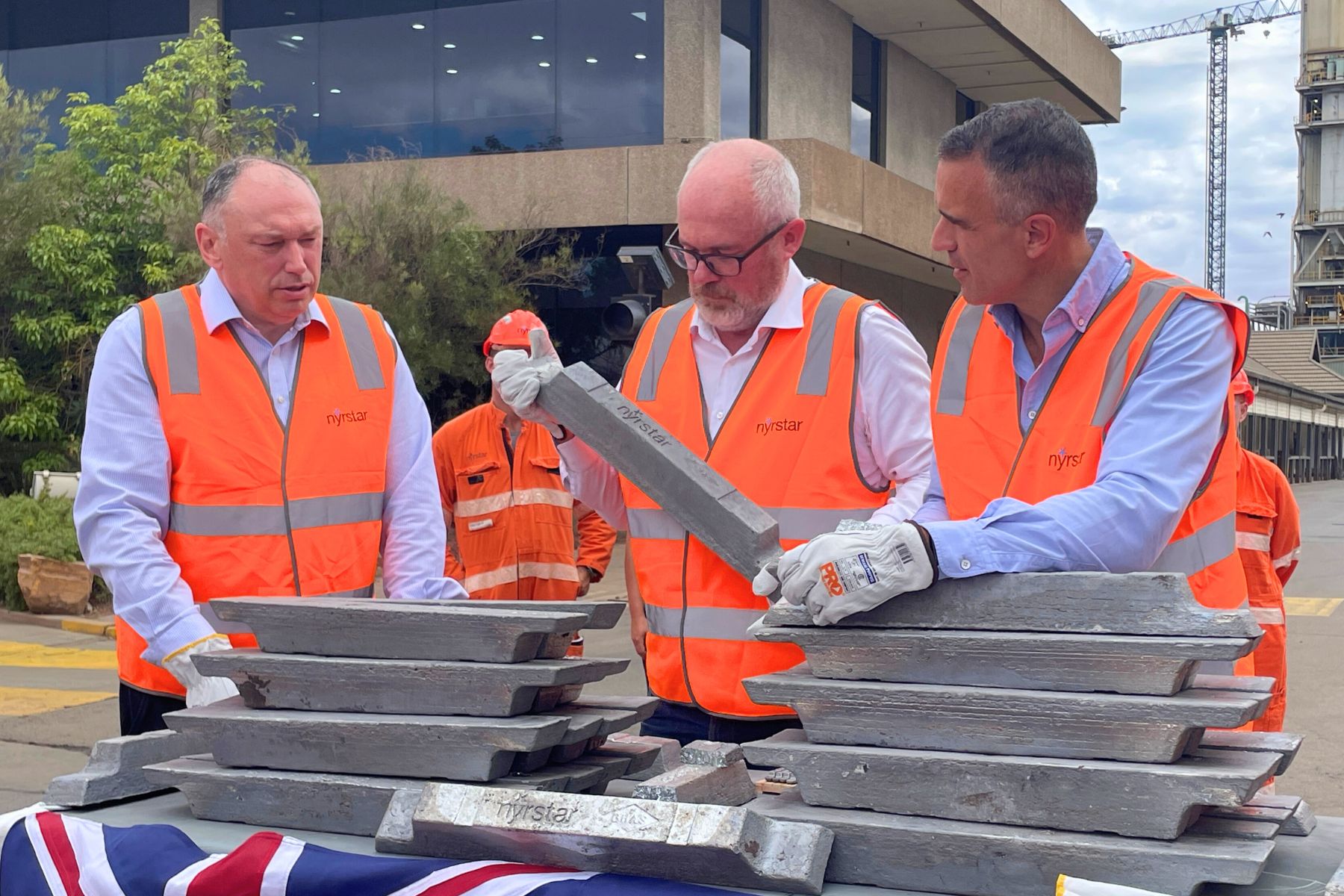
Antimony production began as a trial in late 2025, with Nystar expected to ramp up production to 2000 tonnes per year, and eventually 5000 tonnes per year by 2028.
The 130-year-old smelter at Port Pirie was struggling financially prior to the joint investment in 2025, with Nyrstar’s Singaporean owner Trafigura calling for government support in order to stay afloat.
Stay informed, daily
The government support is ongoing, and Nyrstar general manager Darin Cooper said the company has plans to expand further.
But the leaders remained tight-lipped about how much more an expansion would cost and how long it would take.
“We’ll take whatever is available, but we’ve already outlined exactly what’s needed for the next stage, so those discussions are very active,” Cooper said.

Federal Science, Industry and Innovation Minister Tim Ayres said it was “absolutely achievable to reach that 2000 tonne milestone”.
“We’ll work through those things really carefully,” Ayres said.
“Of course, I’m not going to signal ahead of these discussions the value of these future arrangements, but you can see from what we’ve done already, our commitment to Australian manufacturing.”
Ayres said the achievement “shows the value of government backing Aussie manufacturing and minerals processing capabilities to boost regional Australia’s role in the global critical mineral supply chain”.
“This is a great example of what can be achieved when we leverage Australia’s abundant natural resources, skilled workforce, existing facilities and innovative research to maximise opportunities,” Ayres said.
There has been global momentum building around critical minerals since the recently penned US-Australia Critical Minerals Framework – a joint $2 billion investment in 2025.
Ayres said the Port Pirie Nyrstar operation was “at the heart” of discussions he had with federal resources minister Madeline King and the Trump administration in 2025.
Want to see more stories from InDaily SA in your Google search results?
- Click here to set InDaily SA as a preferred source.
- Tick the box next to "InDaily SA". That's it.