‘Well, you outlasted me. Congratulations’: Former SA attorney-general shares his Parkinson’s battle
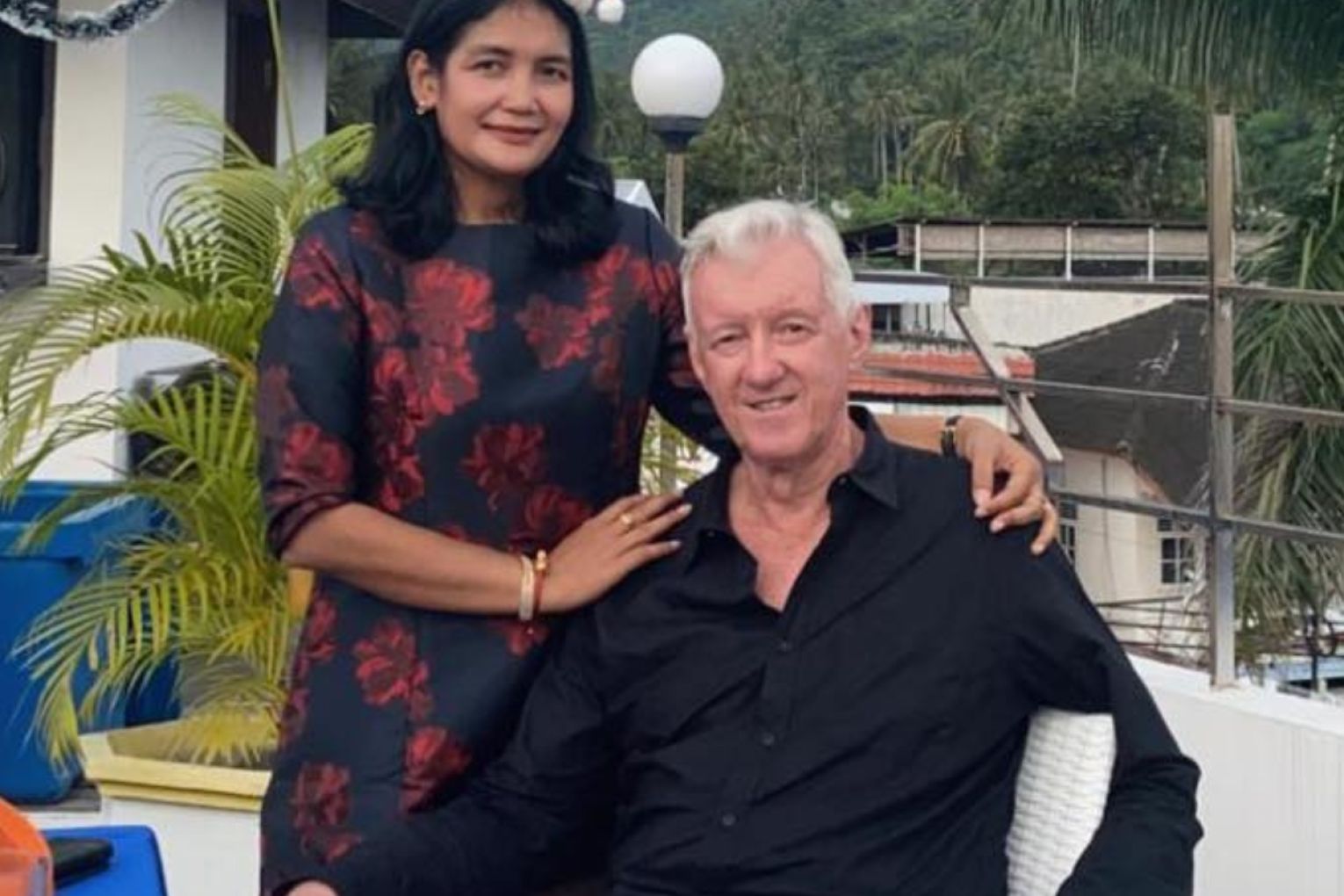
“I’ve told my daughter if I die climbing that hill don’t you dare say ‘My father died doing what he loved.’ I hate it.” Former SA Attorney-General and Health Minister Peter Duncan used two thumbs to type this story about his daily war with Parkinson’s.
In 2019, my original neurologist, Mr Ronald Joffe, the specialist who diagnosed me with Parkinson’s disease in 2013, sent me a note on his retirement “Well, you outlasted me. Congratulations.”
It was a kind, witty epitaph for our doctor-patient relationship. But his words also held a deeper truth.
In a very real sense, I had outlasted his prognosis, thanks to a daily ritual that began shortly after my diagnosis: A vigorous hill climb, which I adopted after reading a study that suggested exercise could be the most powerful medicine of all.
My next neurologist, however, saw my current, stable state not as a partial victory hard-won, but as simple good fortune.
His inability to connect my efforts to my outcome taught me a vital lesson about being the boss of your own health.
In 2019, before Covid, my new neurologist looked at my file, assessed my Parkinson’s condition, and delivered what he thought was reassuring news: “You are lucky, you appear to only have a mild dose.”
I sat there, five or six years into my Parkinson’s journey, and felt a wave of disbelief. Lucky? The word clanged against the memory of my diagnosis in 2013, against the thousands of sunrises I’d greeted since then by climbing the same steep hill, huffing and sweating in a personal, daily war against my own neurology.
I wasn’t lucky. I was stubborn.
And when I tried to explain that my ‘mild dose’ might be a direct result of that stubbornness, he offered a polite but firm reluctance to agree.
I paid his bill and never went back. It wasn’t anger, exactly. It was a profound sense of disconnect.
You might like

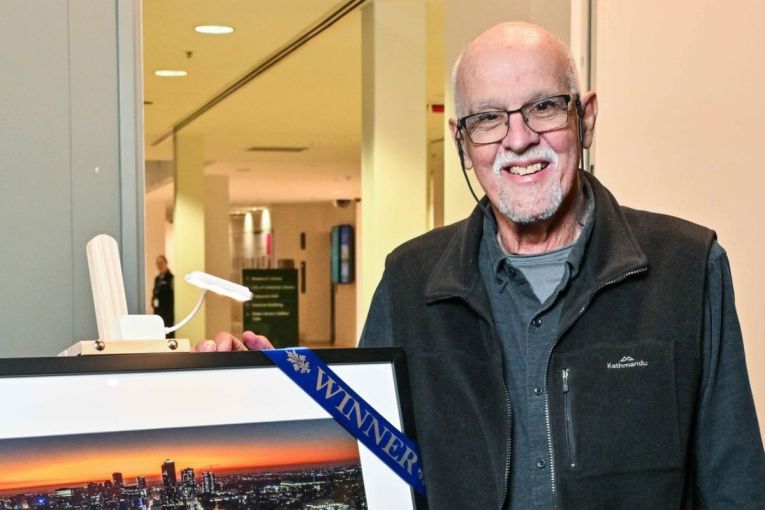
He saw a statistical outlier. I saw the result of thousands of mornings of climbing a hill. This is the story of why.
An Australian nurse friend of mine in Lombok, Angela Olifent, had motivated me to make an appointment with a neurologist after she detected my body shaking.
The moment I was diagnosed with Parkinson’s disease in 2013, a fog of uncertainty descended.
But within that fog, I found a single, clear data point: a study from the U.S. Neurology journal that tracked thousands of Parkinson’s patients and showed a stark link between vigorous exercise and slower cognitive decline.
That chart became my map.
The next week after returning to Indonesia, I started climbing the hill near my house in Senggigi Lombok.
I’ve climbed it nearly every morning since, mostly accompanied either by my wife Puspa, or our friend Maknah and our dogs Crowny and Wokey.
Twelve years later, I’m not on any Parkinson’s medication and the disease has only made minimal progress.
My day begins with a routine.
Ablutions, a cup of tea while watching ABC Asia news. I lace up the joggers, and we start the climb.
Half an hour up and maybe 20 minutes coming down.
I’ve told my daughter if I die climbing that hill don’t you dare say “My father died doing what he loved.”
I hate it. It’s my daily hill grind. It’s a steep hill, the kind that makes your lungs burn and your heart hammer against your ribs.
Stay informed, daily
For most people, it would be a workout. For me, with my diagnosis, it’s my prescription.
It’s the medicine I chose after reading a long-term study that proved what I now know in my bones: that moving with purpose can push back against the tide of this disease.
It’s been almost 13 years and I’m not on any Parkinson’s related medication.
Of course, the routine is easier now in relative terms.
Even though I’m 81, the fitness delivered over the past years of hill climbing has stood me in good stead even against the more general decline associated with ageing.
I laughingly declare that I plan to die of old age rather than Parkinson’s. My Australian GP worries that people of my age are one fall away from catastrophe and that hill climbing is a dangerous activity. I tell him not to worry.
I have become a devoted podcast listener. David Marr on Late Night Live is a wonderful diversion from the immediate pain of the hill grind four days a week.
My old former Adelaide friend Mark Kenny entertains me on his Democracy sausage podcast, amongst others.
On the way down, I watch the sunrise over the Balinese sacred mountain Gunung Agung. It has become a ritual.
Rain, hail (well, we’ve never had hail, but we have had a few, quite a few, earthquakes) or shine, or fatigue, the hill is my constant. It is no longer just about exercise; it’s become a daily declaration that I am still in charge.
Thirteen years later, as I mentioned, I am not on any Parkinson’s-related medication. Do I still have symptoms?
Yes. The stiffness is there in the morning. Cramps during the night. Almost perpetual tiredness, fine motor control in my right hand isn’t what it used to be. But the progress has been, in my experience, remarkably slow.
I can’t prove that the hill is the sole reason. Maybe it’s a combination of factors, including good genes and luck. But I can’t ignore the correlation. The data from that study promised a potential benefit, and my own 13-year experiment seems to have borne it out.
Now, I want to be very clear: I am not prescribing a hill for everyone. I know I am fortunate. I have a hill. I had the physical ability to start climbing it in 2013. I have the ‘intestinal fortitude,’ as my friends call it, to stick with a punishing routine. Not everyone does, and not being able to do what I did is not a personal failure.
My story isn’t a prescription; it’s a testament. It’s a testament to the idea that we can be active participants in our own health, not just passive recipients of a diagnosis and a prognosis. It’s about the power of looking at data and deciding to run an experiment on yourself.
My experiment is ongoing. Every morning, the hill is still there, waiting. And every morning, I choose to climb it. My new, now long-departed neurologist called me lucky. Maybe he was right. But I believe we make our own luck, one step at a time.
An additional note: I wrote this piece using two thumbs on an iPad.
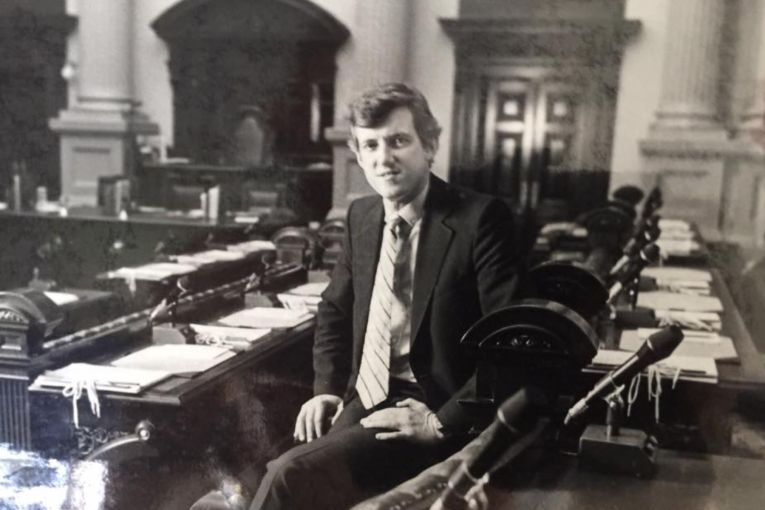
Peter Duncan served as the 41st Attorney-General of South Australia from 1975 until 1979, and then as Minister for Health until the defeat of the Corcoran Labor government at the 1979 state election. He resigned from state politics in 1984, to contest the federal seat of Makin winning his place in 1984 and retaining it every election until Labor’s federal defeat in 1996.
Want to see more stories from InDaily SA in your Google search results?
- Click here to set InDaily SA as a preferred source.
- Tick the box next to "InDaily SA". That's it.