AUKUS concerns brushed aside as SA’s mass job opps revealed
Labor’s latest promise of thousands of jobs as US Senator Tim Kaine lands at Osborne to give the Premier support.
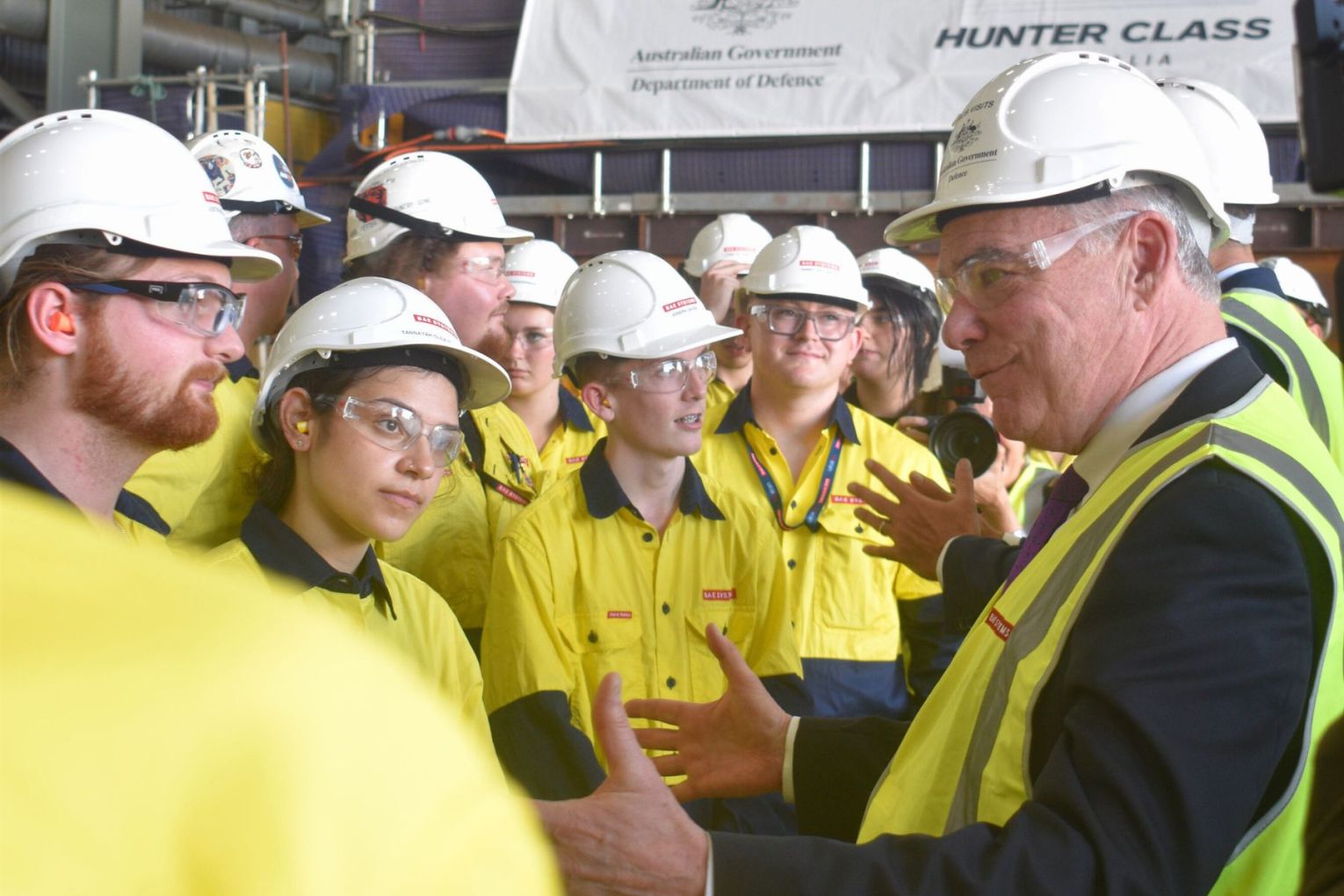
At least $30 billion will be spent on building a construction yard for the new nuclear submarines for Australia under the trilateral AUKUS agreement with the United Kingdom and the United States.
The federal government announced on Sunday it had pledged $3.9 billion as a down payment to secure the future of the Submarine Construction Yard in the northern Adelaide suburb of Osborne.
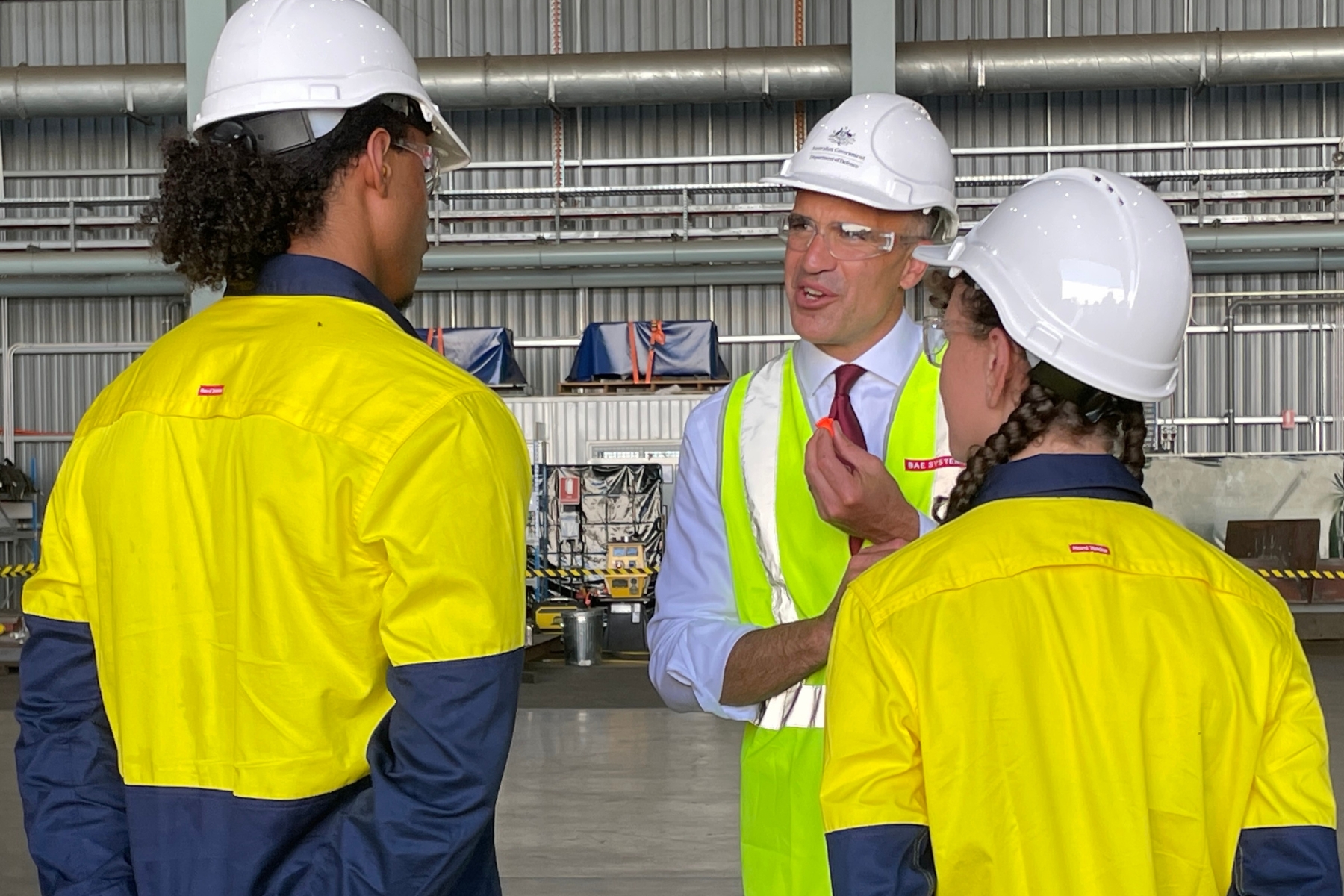
This morning, SA Premier Peter Malinauskas met with US Senator Tim Kaine at Osborne Naval Shipyard to announce a $20 million pre-election promise to support AUKUS-related trade apprentice activity.
A re-elected Labor government would spend the money on university scholarships, trade apprenticeships and places in entry-level courses.
Funds would also go to businesses to employ engineering graduates, while other investments would support veteran upskilling and schools to guide students into AUKUS-related training and jobs.
Malinauskas said the investments “present a massive opportunity for men and women across our state, from all ages and backgrounds to take part in a truly significant national endeavour”.
Both the state and federal governments said on the weekend that they hoped the project would create 10,000 jobs in design and construction as well as up to 1000 apprentices per year at an on-site training facility, with the first newly built submarines expected to be delivered to the Australian Navy in the 2040s.
You might like

The staggering cost of the facility was laid bare at a press conference in Osborne on the weekend with Prime Minister Anthony Albanese and SA Premier Peter Malinauskas describing the sheer size of the footprint being designed.
Enough steel to make 17 Eiffel Towers as well as 710,000 cubic metres of structural concrete will be used in the construction of the 420 metre-long fabrication hall.
The future of AUKUS has been under a cloud for months since the US announced it would review the terms of the agreement – the deal was made with the United States before Donald Trump won the presidency with the Australian Government already having made early payments to buy some of its Virginia-class submarines as part of the deal.
On the weekend, the prime minister dismissed concerns that the promised shipyard would never see an AUKUS vessel.
“This is in the interest of the United States, in the interests of the UK and in the interests of Australia,” Anthony Albanese told reporters on Sunday.
The price tag comes from an estimate provided by Australian Naval Infrastructure, the government’s hand-picked company tasked with delivering the AUKUS facility.
But concerns remain around the United States’ ability to deliver the five Virginia-class nuclear-powered submarines to Australia as ordered under the AUKUS pact.
The Premier today said that it was a “matter exclusively for the Federal Government”.
Kaine said the US was “getting to be a little bit victims of our own success”.
“Your Premier and I talked about a project of this magnitude will have twists and turns. Things will come up that we might not have predicted, but that’s the test of the friendship. This is a friendship that’s already been tested and survived,” Kaine said.
Stay informed, daily
“We will be able to work through whatever happens along the way to make sure we deliver Virginia-class subs and then eventually Australian-built subs over the course of this very transformative relationship.”
Today, SA Premier Peter Malinauskas was talking up the massive impact the project would have on SA, telling ABC radio that “this is a game-changing moment for the state”.
He said the AUKUS construction yard would take 66 million hours to build and would require 126,000 tonnes of structural steel works.
Malinauskas said it would take through to the beginning of the 2040s to build the yard.
“This is just to build the yard to build the submarine, right? $30 billion, all federal money, before you start contemplating the expenditure on the submarine itself, which is even more complex and requires even a higher degree of skill,” he said.
Asked about security and environmental concerns surrounding the existence of significant nuclear materials on site at Osborne as part of the submarines build, Malinauskas assured that “this will be the most secure place in the country”.
“Herein lies the value of the AUKUS tripartite relationship, is that we are calling on the experience and expertise of other countries that have been doing this for decades, which gives us the confidence that that’s the least of our concerns,” he said, adding that of greater concern is finding enough people to fill the jobs.
As well as construction, the new yard will include capability for the testing and commission of the submarines.
An estimate for how long the yard will take to complete or whether the $30 billion figure will increase was not confirmed.
Defence has become a boom industry for South Australia with the country’s first missile factory recently opening in Port Wakefield.
Osborne already hosts the existing facilities for Collins-class and Hunter-class frigates.
“There were 1200 people working at Holden when it closed, 4000 will be required to construct this facility,” Malinauskas said on the weekend.
“It is hard for South Australians to genuinely comprehend the amount of high-paid skilled work that has come our way.”
The announcement of a decades-long infrastructure commitment comes at a good time for the premier, who is a month away from the state election.
A poll on Wednesday showed Labor holding a 61-39 lead over the Liberals on two-party-preferred.
-with AAP
Want to see more stories from InDaily SA in your Google search results?
- Click here to set InDaily SA as a preferred source.
- Tick the box next to "InDaily SA". That's it.