SA’s scorching summer triggers spike in dropped tree branches
State Emergency Service volunteers were called to almost 900 incidents involving fallen trees and branches in January alone, including major damage to a home.
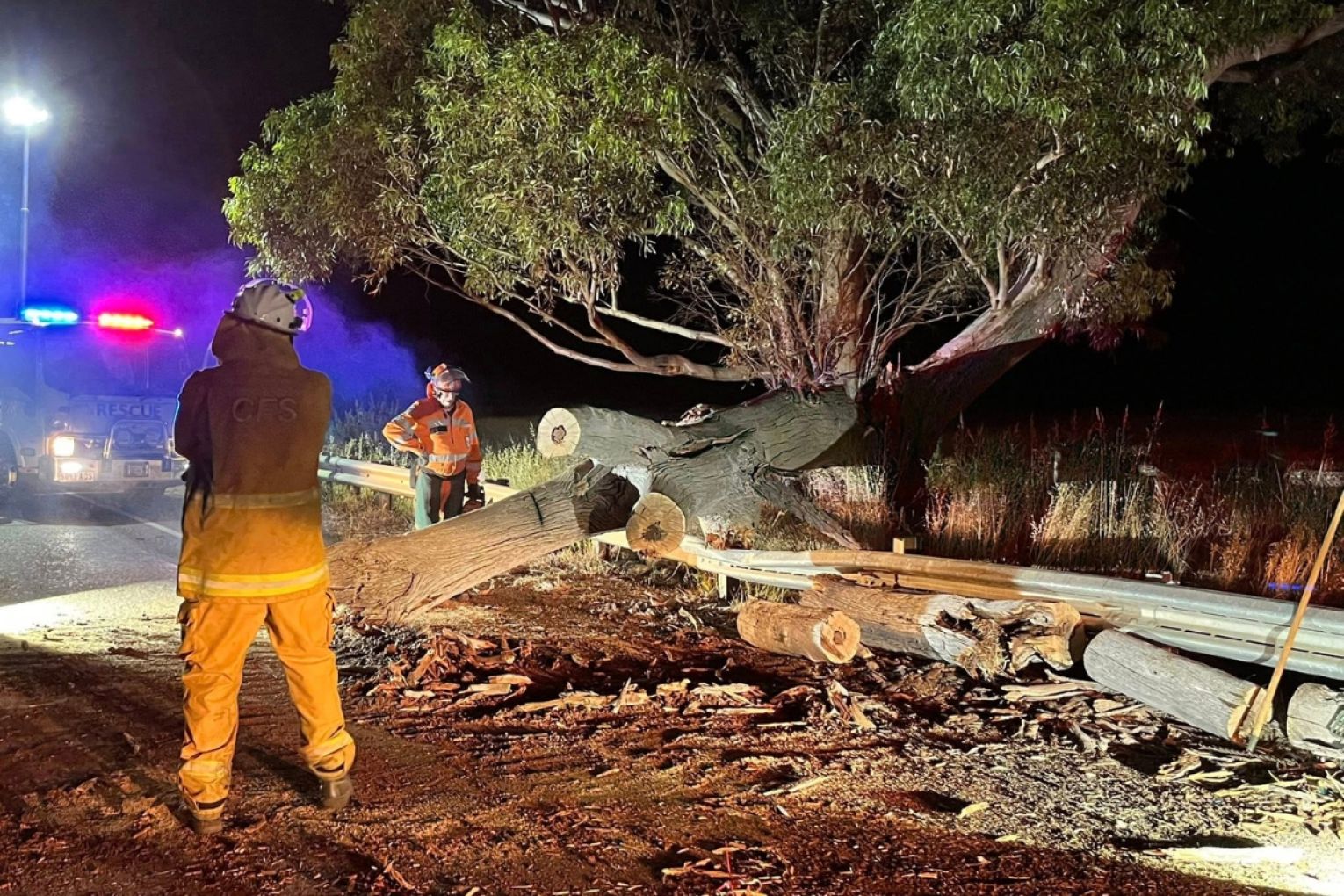
SA emergency services are facing increasing numbers of calls for help as the state experiences more fallen trees and dropped branches as a result of the hot weather, with almost 900 requests in January alone, state duty officer for State Emergency Services (SES) Scott Haynes said.
“Trees may drop branches for many reasons, but stress due to extended hot weather and strong winds are the two most common reasons,” he said, expecting more as high temperatures continued.
“Just like people, trees get heat-stressed. After so many days of hot and dry conditions, this increases the risk of trees dropping large branches or completely coming down.”
SES data showed that of the 9,223 requests for assistance across South Australia in 2025, 5,441, or 59 per cent, were related to fallen trees or branches.
Meanwhile, this January, SES volunteers responded to 1094 requests, with 878 related to trees, while in February, there have been 287 jobs so far, with 205 tree-related incidents.
In March 2025, InDaily reported that heat and lack of rainfall had taken a toll on South Australian trees, with SES responding to 1277 requests for assistance.
This included tree branches damaging homes, properties and vehicles across metropolitan Adelaide.
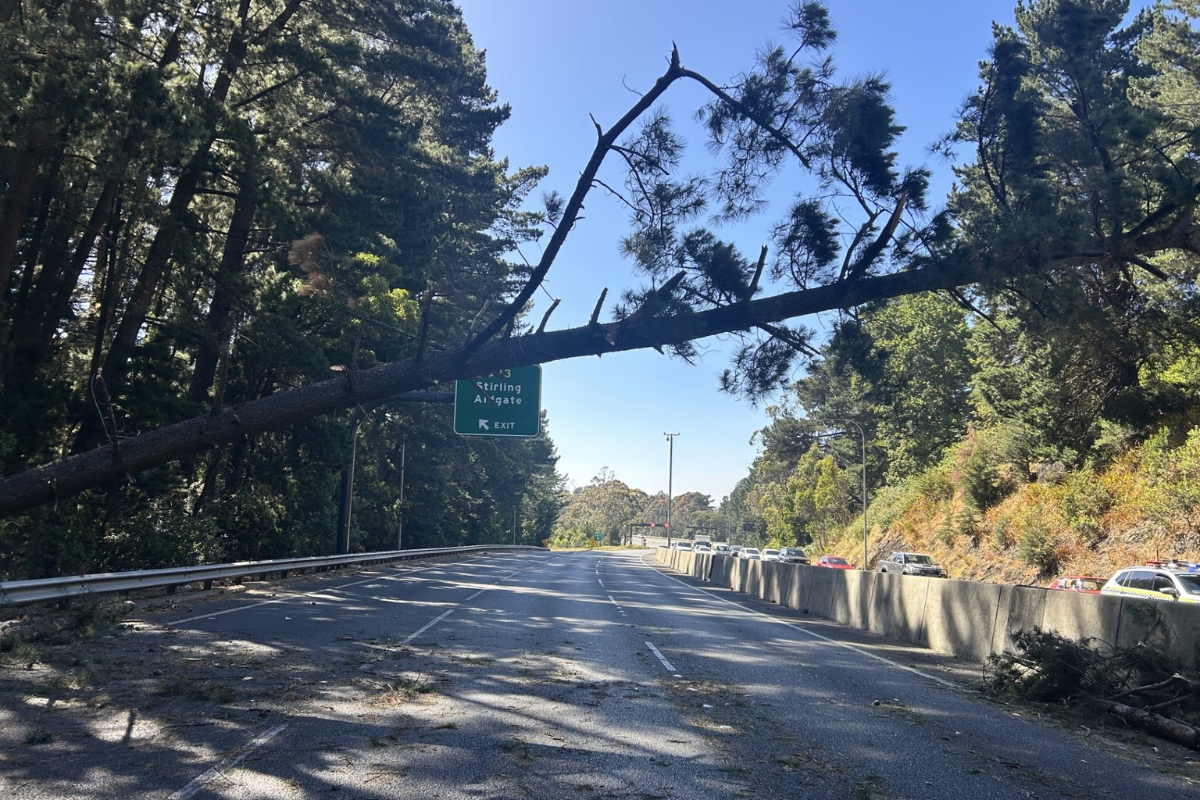
In one recent incident on Boxing Day, a massive pine tree fell down, blocking all three lanes of the South Eastern Freeway up-track before the Stirling exit.
Another December callout saw the Kapunda State Emergency Service and Kapunda CFS volunteers rushing to remove a fallen tree blocking Greenock Road.
You might like


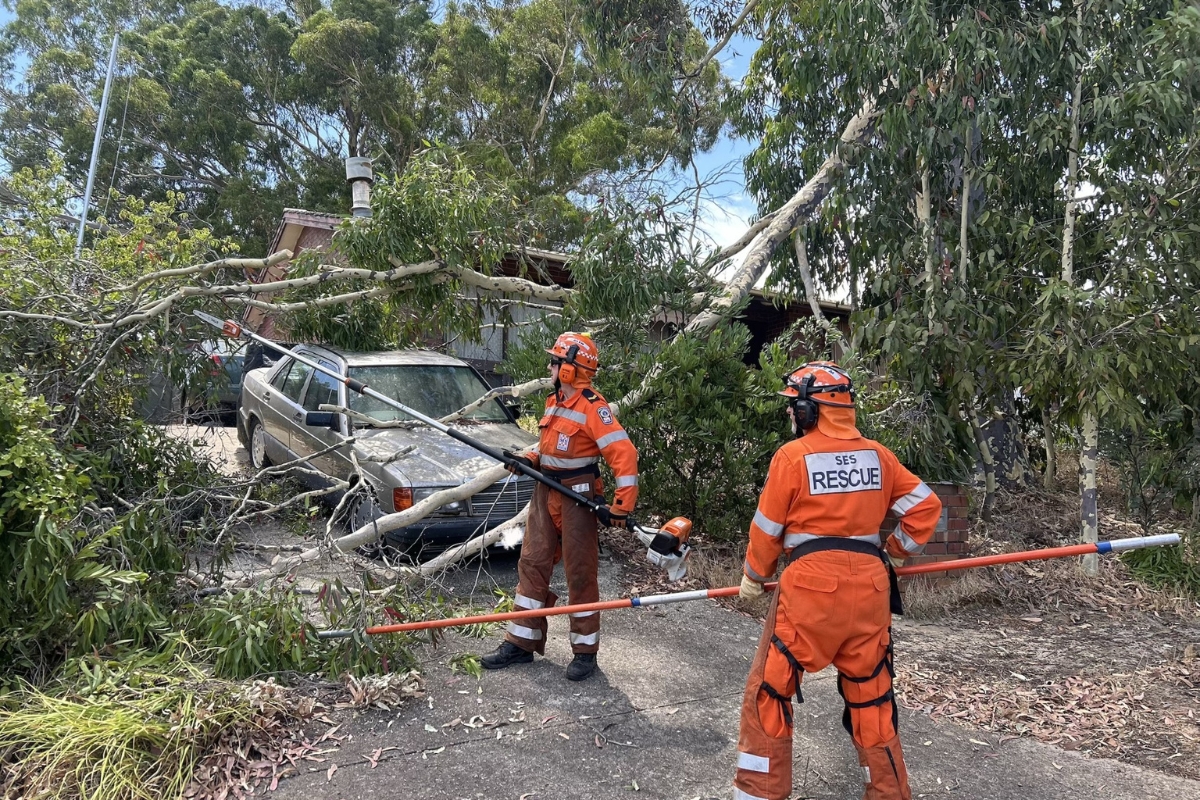
In January, the Sturt branch of SES responded to calls ranging from a branch falling on a house to one on a car.
Among numerous incidents of branches shedding was a large limb that fell from a gum tree near the intersection of Hackney Road and Botanic Road.
Haynes said that as hot conditions continue through the summer, SES anticipates more calls about fallen trees and branches.
“If you are in a location that is also susceptible to strong winds, it is important that people remember to look up before they set up,” he said.
“Take care when parking your car or vehicle, setting up a camp or picnic, seeking shade or sending your kids out to play.
“Be extra careful under larger mature trees such as gum trees that may have large branches reaching outwards – make sure you aren’t near where they may fall.”
Tree advocate Tom Morrison, who runs the 20 Metre Trees group and is a councillor at Mitcham, agreed that “it has been a very stressful couple of months for trees”.
He said the combination of low rainfall levels, hot conditions and heavy winds had created the perfect storm for falling branches.
“Essentially all trees drop branches as a bit of a survival mechanism, whether that’s to conserve water and energy during the hot and dry weather,” he said.
“When the weather cools off again, we should hopefully see the return of rain as a result of that, and it will make them a lot happier and less likely to drop branches as a result of it.”
Stay informed, daily
Several high-profile cases of limbs falling in the past include an international exchange university student dying after being struck by a gum tree branch in the Adelaide park lands in 2024 and a large branch dropping near hundreds of revellers at WOMADelaide in March last year.
However, Morrison warned against being alarmist about falling trees and branches.
He pointed to data from an Agriculture Australia report that showed there was a one in five million chance of being killed by a tree limb in public.
“Everybody always points the finger at eucalypts, but we’ve obviously got more eucalypts in the landscape than any other tree species,” he said.
“So, it would be a bit like saying that Toyota drivers are more dangerous on the road simply because we’ve got more Toyotas on the road.”
Arborist Dr Stefan Caddy-Retalic, who is an adjunct senior lecturer at the Waite Arboretum, said it was “quite possible” that climate change would lead to more trees shedding limbs in metropolitan Adelaide.
This would occur due to less moisture in the soil and increased storm events.
“Adelaide has historically been a warm Mediterranean climate, but we’re rapidly shifting into a semi-arid climate,” he said.
“It makes a harsher environment, so the trees that have grown up in that environment are more vulnerable to limbs dropping.”
Another potential issue was root plate failure in trees.
“This can be when we get a really extreme event, and it saturates the soil and that soil basically turns to mud,” Caddy-Retalic said.
“It’s quite windy, and the entire roots of that tree can lose cohesion in the soil profile, and a completely healthy tree can fall over.”
In response to threats from climate change, Caddy-Retalic said it was important we continue developing Adelaide’s urban tree canopy.
“As Adelaide’s climate becomes harsher, it’s going to be really, really important to try and build that canopy to try and mitigate the impacts of a rising climate,” he said.
Asked if there was a type of tree that was more vulnerable, Caddy-Retalic said that eucalypts have a reputation for dropping limbs, saying, “It’s undeniable that that does occur”.
However, he cast scepticism on the theory of “sudden limb drops”, where trees are said to shed without warning.
He said it was important to regularly care for large trees to reduce the risk of falling limbs, recommending that you have it checked by a professional arborist every three to five years.
“If you closely observe your tree, you will see signs that will indicate that a tree is more likely to drop a limb or have some kind of failure,” he said.
Want to see more stories from InDaily SA in your Google search results?
- Click here to set InDaily SA as a preferred source.
- Tick the box next to "InDaily SA". That's it.