Adelaide rent prices hit new record as regional pain exposes ‘concerning’ trend
It’s never been more expensive to rent in Adelaide, while in the state’s regions, the cost of a rental has spiked. Housing groups warn those in search of cheaper rents may face problems. See the new data.
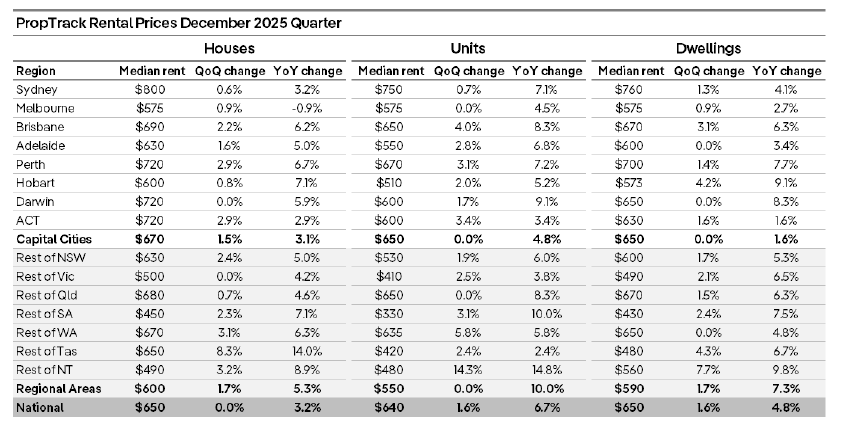
New data released on Tuesday shows the price of a rental in Adelaide grew 3.4 per cent over the course of 2025 to hit a new peak of $600 per week.
The latest Market Insight report from REA Group found Adelaide was a more expensive capital city for rentals than Melbourne and Hobart.
While it remains below the national median weekly rent of $650 in December 2025 there was a rise of 1.6 per cent compared to the year before.
But rent growth in most regional areas around the country outpaced their respective capital city counterparts, particularly in South Australia, where the median rent is now $430 per week on average, up 7.5 per cent over the year.
“The speed at which rents are rising in Australia’s capital cities has slowed from a year ago, though remains elevated in regional areas,” REA Group senior economist Anne Flaherty said.
Speaking to InDaily, Shelter SA executive director Alice Clarke said the average growth of the price of a rental in the state’s regions exposed a broader problem with the market.
You might like
“Not that long ago, an antidote to expensive rents was to move out of the city and go to country areas, but that’s not the case anymore because rents have risen so much that you really need an above-average income to have them deemed as affordable,” she said.
“It’s all very concerning.”
| Sponsored |
The data comes after housing peak body Shelter SA announced its planned February 6 closure. The organisation was forced to voluntarily wind up as a solvent incorporated association to ensure it could meet financial liabilities.
Clarke said the latest results “should” spur action from the state government on addressing climbing rents, which are driving a spike in homelessness in Adelaide, “but it doesn’t seem to be having any effect at all”.
“The state government knows well what the issues are that organisations working in the space are facing,” she said.
“In the meantime, you hear our members saying numbers have doubled – they’re getting twice as many people as they’ve ever had needing assistance.
Stay informed, daily
“Now there are people trying to access homelessness services who are on waiting lists, and more people are sleeping in cars, in tents and on the streets.
“I don’t know what else would need to happen to get the government to do better in this space.”
Asked previously about Shelter SA’s imminent collapse and how the government would support homelessness services, Housing Minister Nick Champion said the government was “focused on the delivery of houses for South Australians”.
“We’re the first government in living memory to turn around the public housing numbers,” the Minister said.
Asked last year whether the government would use its $18 million state budget surplus to fund homelessness and housing services, Premier Peter Malinauskas said the money would “allow us to continue in these critical services”.
“We absolutely turn our minds to how we can invest in the most vulnerable South Australians,” Malinauskas said at the time.
“This is a government that has been able to dramatically increase our investments in homelessness services, but also for other people in vulnerable circumstances, such as domestic violence.
“We’re able to invest in these things because of the discipline and the focus that we’ve had on growing the state’s economy to take us into a position this state’s never been in before. We want to maintain that.”
The new data also follows calls from SA Greens MLC Robert Simms to freeze rent increases to slow spiking prices.
But the “horse has bolted”, Clarke said.
“If we want to decrease the speed of any further increases, I think rent increases could be guided by the Consumer Price Index as they are in the ACT.”
Want to see more stories from InDaily SA in your Google search results?
- Click here to set InDaily SA as a preferred source.
- Tick the box next to "InDaily SA". That's it.