No more unpacking at airport security – changes coming to all major Aussie airports
Travelling over the festive season? Be aware of these changes to Australian airports as security is upgraded across the country.
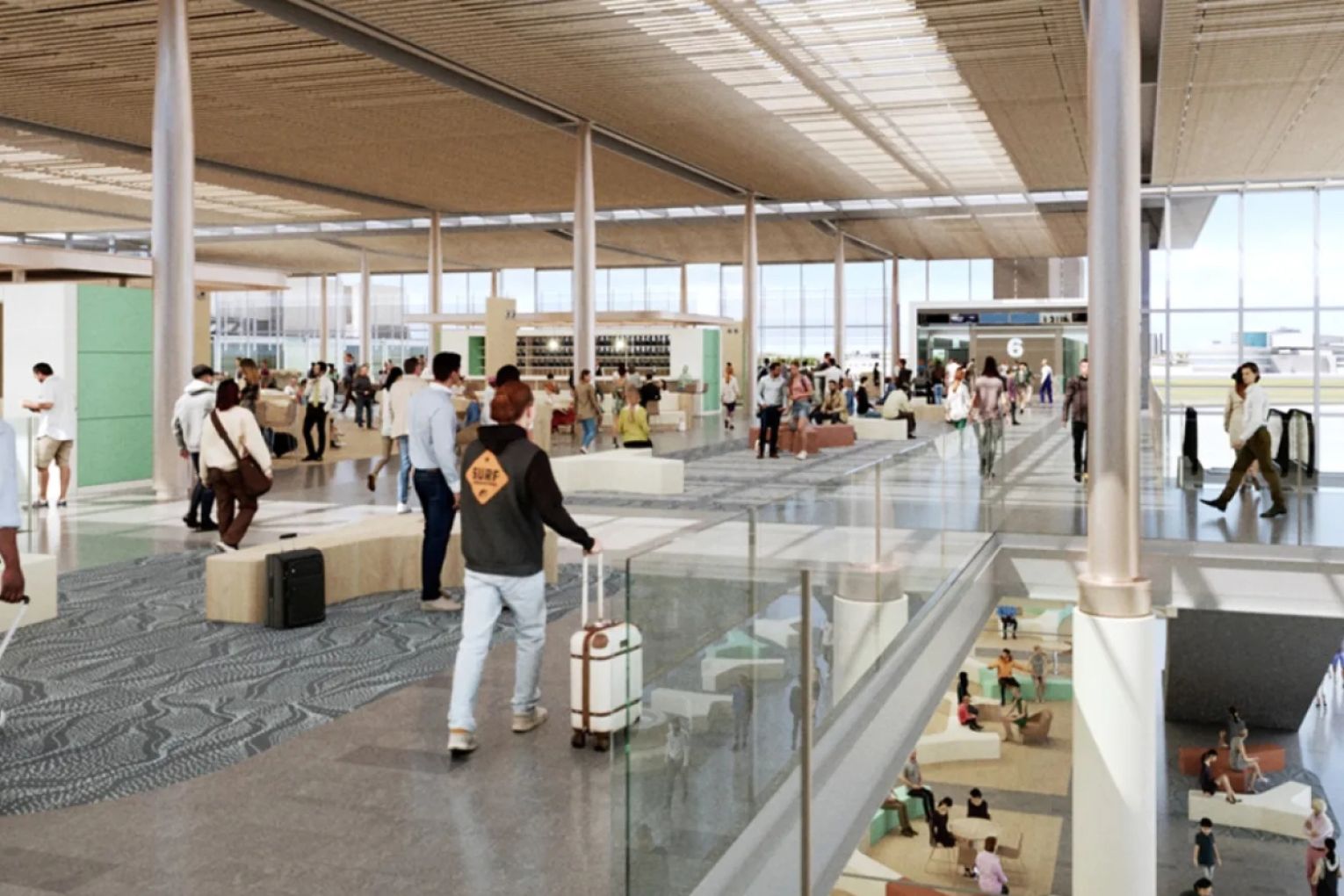
Forget fumbling for laptops, liquids and aerosols – a smoother, smarter airport experience is on its way.
Australian travellers will soon glide through airport security without removing laptops or liquids, as part of a $2 billion national upgrade already transforming major Australian airports.
The federal government’s $2 billion national airport security upgrade is rolling out across the country, with Sydney Airport leading the charge. Eleven of 15 new high-tech security lanes at Sydney’s T1 International Terminal are already online, doubling passenger throughput and allowing travellers to leave their devices and toiletries in their bags.
When completed, the overhaul will boost screening capacity by nearly 30 per cent, cutting queues and congestion for millions of domestic and international flyers.
The upgrade marks a major milestone in the way Australians move through airports. Advanced CT scanners and millimetre-wave body scanners will replace traditional X-ray systems, meaning no more unpacking electronics and less stop-and-start screening.
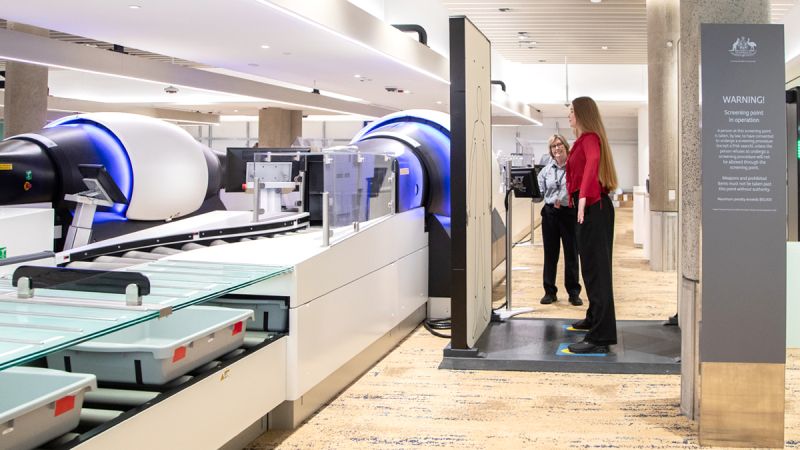
Brisbane has opened five new CT security lanes. Photo: Brisbane Airport
You might like
Adelaide Airport announced another expansion in August, part of a $600 million upgrade that includes the replacement of all existing check-in equipment with the latest technology like body scanners and 3D x-ray scanners.
There will also be an upgraded checked baggage security system expected to be in place by the end of the year.
Brisbane Airport is following suit as part of its Domestic Terminal Transformation program. Five new CT lanes, which allow the items to remain in travellers’ bags, opened on October 28. The same technology will be introduced to Brisbane’s international terminal by the end of 2025.
“The fact that passengers will be able to leave laptops and aerosols in their bags will make a real difference and remove one of the biggest frustrations for frequent travellers,” Brisbane Airport head of terminal operations Stacey Pollard said.
Sydney’s $200 million Terminal 2 redevelopment also includes seven new screening lanes (two of which are already open), self-service bag drop, and ticketless check-ins designed to shrink the kerb-to-gate journey to just 15 minutes.
A major redevelopment of the T3 domestic terminal is also underway, with 14 new dining venues opening from late 2025.
Stay informed, daily
Behind the scenes, the NSW government also confirmed a two-year trial of capped taxi fares between Sydney Airport and the CBD from November 3, promising a seamless flow from arrival to departure.
Sydney Airport CEO Scott Charlton said the transformation would deliver more efficient and seamless passenger journeys.
“The investments we are making in screening technology, terminal upgrades and digital services are improving the travel experience across all terminals,” Charlton said.
At Melbourne Airport, security screening is now the same across all terminals, with state-of-the-art body scanners and CT X-ray technology lanes introduced at Terminal 1.
With passenger numbers surging and international capacity expanding – led by new services from Turkish Airlines, Etihad and Virgin Australia-Qatar Airways – Australian airports are racing to modernise their systems before 2026.
The federal upgrade aligns with new national security standards and aims to future-proof airports for a projected 72 million passengers a year by 2045, according to Sydney Airport’s recently released preliminary draft master plan 2045.
Travellers can expect a noticeable difference by 2026. Less unpacking. Less waiting. More time to grab a coffee before boarding.
In short, the future of air travel in Australia is faster, simpler, and finally, hassle-free.
Republished from Australian Traveller
Want to see more stories from InDaily SA in your Google search results?
- Click here to set InDaily SA as a preferred source.
- Tick the box next to "InDaily SA". That's it.