No beach closures as algal bloom clears up
SA’s public health chief is ruling out closing beaches impacted by the algal bloom over summer as it clears up from metro sites. Read the latest algal bloom update.
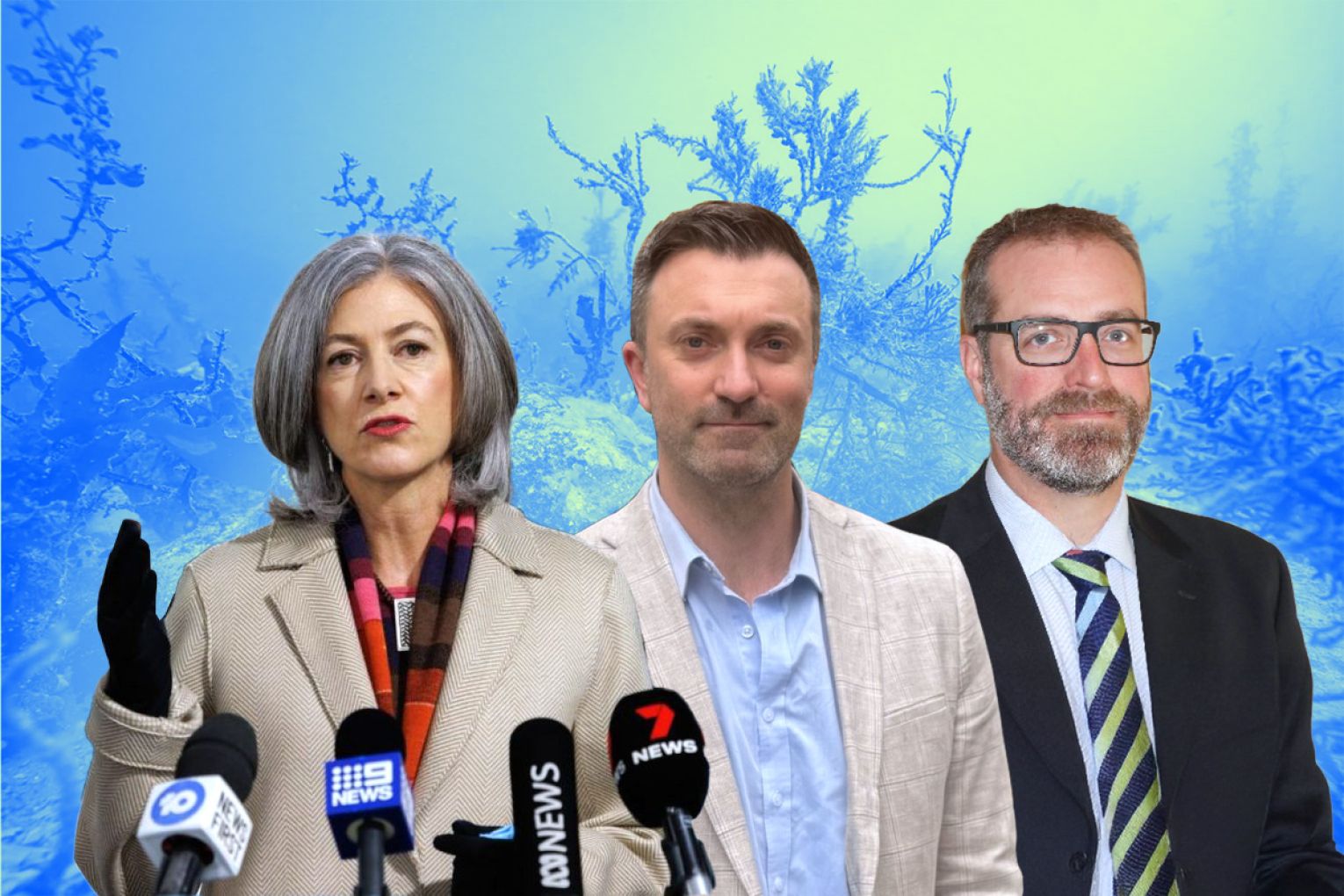
SA Health’s chief public health officer Professor Nicola Spurrier yesterday said there were no circumstances under which she would recommend the closure of South Australian beaches in response to the harmful algal bloom.
It comes as the latest Algal Bloom Update shows the algal bloom clearing up from a majority of Adelaide beaches.
The latest testing results from the week beginning on November 30 show that 20 of 21 metropolitan onshore sites show no or low levels of Karenia.
Only one metropolitan onshore site, Port River North Haven Boat Ramp, recorded elevated levels of Karenia, with 115,000 cells per litre.
The results also showed low levels of Karenia across the Eyre Peninsula, Yorke Peninsula and much of the Fleurieu Peninsula.
Waitpinga Beach on the Fleurieu Peninsula recorded elevated levels of 12,000 cells per litre, while 27,140 cells per litre were recorded at American River on Kangaroo Island.
South Australian Research and Development Institute (SARDI) executive director Professor Mike Steer said he was “cautiously optimistic” about the latest results but that SARDI would continue to monitor Karenia levels throughout summer and into autumn.
“So, this gives us an indication that the marine ecosystem is sort of balancing out. It’s coming back to natural levels, which is a real positive sign,” Steer said.
“We do know that this particular algal bloom can turn the corner relatively quickly, and we do understand there is a range of different species that sit in the mix.”
You might like


Fronting the Joint Committee on Harmful Algal Blooms in South Australia, Spurrier said beach closures would be a disproportionate response to the ecological crisis that has been ravaging the state’s sea life since mid-March.
“If we put it in the context of this algal bloom, I have no intention of closing a beach, because I don’t think it’s proportionate,” she said.
“As I have said in other forums, I am very good at closing things, and I would close it if I needed to, if I thought it was necessary.
“It is not necessary, because these things can be managed. We can give the information to people that if they get symptoms, it is self-limiting and it goes away and doesn’t have long-term consequences.”
Spurrier gave evidence to the joint committee chaired by SA Greens leader Robert Simms in Old Parliament House on Wednesday alongside Dr Chris Lease, who is SA Health’s executive director of health protection and licensing services.
“One thing I would add is that we still want people to go to the beach for all the other public health benefits that come from it,” Lease said.
“So, a lot of the advice is actually triggered into trying to enable people to do that and give them the information they need to make those assessments, because there are so many other public health benefits both from a physical activity perspective as well as a mental health and wellbeing perspective.”
During the hearing, Spurrier reiterated that the harmful algal bloom was only known to cause short-term health effects, such as an itchy throat, watery eyes, shortness of breath and a cough, which would disappear when you left the area.
“If I can just put the broader context of this: this has been an absolute ecological disaster,” Spurrier said.
“The main impact is on our marine animals – the fish and that food chain. For us humans, we are impacted, but fortunately for us, the impacts tend to be more of an irritant nature and short-lived.”
She said that SA Health has been working with Preventive Health SA to respond to the mental health impacts of the algal bloom.
“As I said, it is a grief response when you are walking along, and you are seeing dead fish – it is just horrible,” she said.
Stay informed, daily
Lease said that health advice had not changed since the identification of Karenia cristata as the likely cause of toxic brevetoxins within the algal bloom.
“I think our advice has largely stayed consistent, but we have had to modify depending on what evidence we’ve got in front of us at the time,” Lease said.
Spurrier said SA Health had looked at hospitalisation statistics and that it largely followed usual patterns for respiratory infections, but said the data still needed to be analysed further.
“We also know that we have a lot of respiratory infections coming in over the winter period. We do have peaks and troughs of all of those conditions. Mainly, it is following our usual pattern of the respiratory infections,” she said.
Spurrier said that the Summer Plan would allow SA Health to employ additional staff, including a medical practitioner, to interrogate the data in more detail. She said widespread, systematic research into harmful algal blooms had not been done anywhere else in the world.
SA Health was also working alongside Surf Life Saving SA to set up a questionnaire to create a symptom database, which would be correlated with cell counts and wind conditions.
“It is not that I want to have another increase in the bloom so that we have increased symptoms. It may well be that as people are not experiencing the symptoms, but it will be there for the future – that ability to do that scientific research,” she said.
Yesterday’s hearing comes after experts recently launched the Bloomin’ Algae website, which includes a community research portal in response to what they say is a lack of data on the health impacts of the algal bloom.
Medical anthropologist Dr Amy McLennan, who was a driving force behind the project, said “health data was one of the things that we found was less available to us”.
“We’ve got tourism data, and we can find some interesting proxies for the impact on businesses and ecology and ecosystems, but there’s a real gap around health data and health impact,” she said.
It also comes as South Australians report experiencing a deluge of health concerns from the harmful algal bloom.
Coastal resident Audrey Darrell previously told InDaily that she experienced asthma-like symptoms while taking a walk at the beach, as well as effects on her mental health.
“It was like a dry cough, and it was really hard to breathe in your chest. It was more like an asthmatic type thing that came on really quickly,” she said.
“I was walking along the beach, I was coughing, and by the time I got back to the car, it was quite prevalent, and it was just a bit of a shock.
“We have friends here who live near the beach and don’t go to the beach anymore. They said it got to March, April, and they stopped going because it’s too devastating for them to see the impact.”
A damning federal inquiry into algal blooms in South Australia also showed gaps and delays in health advice over respiratory risks caused by the algal bloom.

Want to see more stories from InDaily SA in your Google search results?
- Click here to set InDaily SA as a preferred source.
- Tick the box next to "InDaily SA". That's it.