SA tech giant’s journey to the top is paved with gold and drones
One SA company’s tech can be found on the front lines of war and at the Winter Olympics. A gold rush and drones are driving its massive growth as it claims a top spot on this year’s South Australian Business Index.
It has always been hard to describe ASX-listed Codan.
Truncating its many arms into a slick descriptor for readers to easily understand is a challenge.
In the past InDaily has gone with ‘communications and metal detector business’, which is accurate, but fails to capture the scale of what the almost 70-year-old business actually accomplishes.
Now it can also be described as taking out the coveted second spot on the InDaily South Australian Business Index – a list of the top 100 public and private companies in the state.
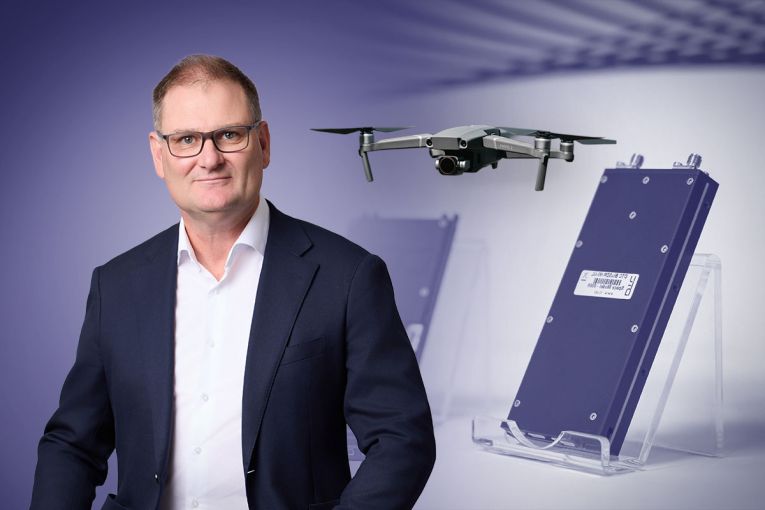
Sitting in CEO Alf Ianniello’s Mawson Lakes-based office, where he oversees the work of the business’s more than 300 Adelaide staff (a quarter of the global headcount), InDaily asks how he would describe Codan’s identity.
“We’re a diversified tech business,” Ianniello says without missing a beat.
“We’re in detection. We’re in communications. We’re in unmanned systems. Diversification is our strength. Technology is our strength.”
Ianniello’s description is laden with corporate jargon, but undeniably accurate.
Since its founding as a radio maker in 1959 by three friends – Alastair Wood, Ian Wall (the late husband of SA philanthropist Pamela Wall) and Jim Bettison – the company has expanded its lineup of products in interesting ways.
Those interested in amateur gold hunting might know the company as a metal detector maker. Its products are known globally as some of the best, and are even counterfeited by China then sold into Africa.
You might like


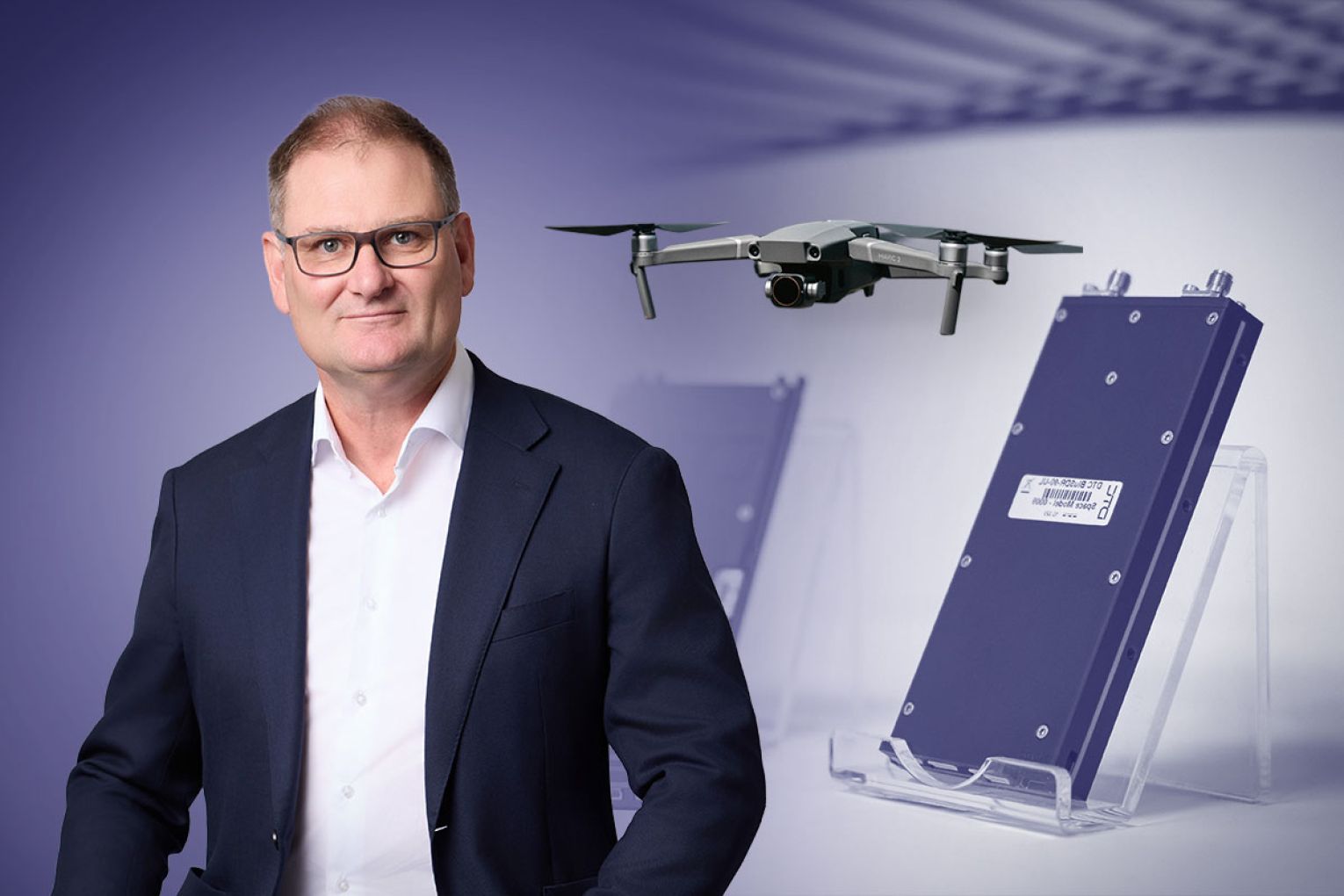
Others on the front line of warfare would know the company for its tiny ‘software-defined radio’ systems that plug into drones and can pass video, information and sound back to pilots.
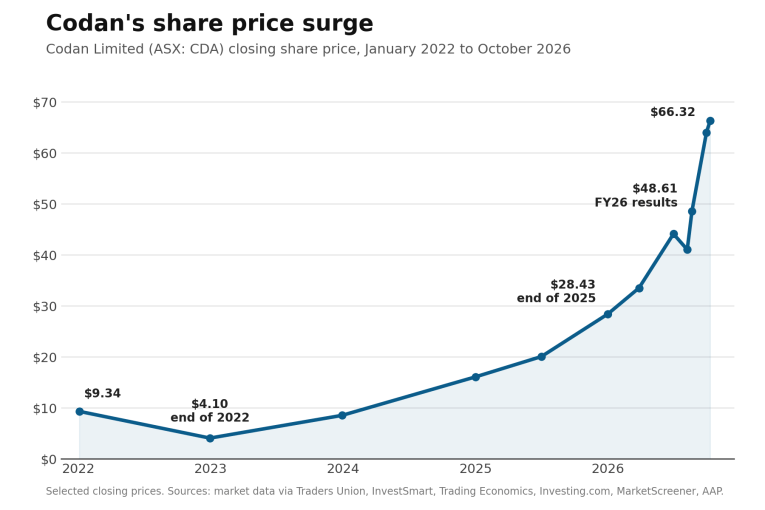
Both products are in high demand, a metric reflected in the company’s booming market capitalisation. In just the past year, the business’s valuation more than doubled from about $3.7 billion on June 30, 2025, to $8 billion on June 30, 2026.
It sits nearly $20 billion behind Santos in terms of market capitalisation, but it will be interesting to see what is possiblein the future. Codan today is worth more than Santos was in 2017.
Macro trends around the surging gold price and ongoing conflict across the globe could very well continue driving demand for Codan’s niche but valuable products.
There is also the man behind the business – Ianniello – who humbly refuses to accept the lion’s share of praise for the business’s growth.
But zoom out on the company’s share price chart to when the CEO started his tenure (January 2022), and it shows shares in the business are up by more than 600 per cent.
“We’ve been consistently growing organically, and we’ve done some pretty smart acquisitions,” said Ianniello, who previously led Adelaide packaging company Detmold.
“Over the last two-and a-bit years, our credibility in market has grown significantly, and once you get credibility in the ASX, people know that you fundamentally will deliver on your commitments.”
Just last month, Codan cracked a new milestone, joining a rarefied few SA businesses in the S&P/ASX 100 Index – a list of the top 100 companies trading on the Australian Securities Exchange.
Ianniello does not feel any extra pressure now that Codan is in the big league. Instead, he is using it as a chance to “keep the momentum going”.
The CEO said the big drivers of the business’ growth were the rising gold price – making their gold detectors a solid buy for amateur and professional metal detectorists – and ongoing conflicts across the globe.
“The adoption of our tactical comms products and the evolution of those products in the market have been fantastic,” he said.
“I think the release of our new products in MineLab (the metal detector branch of the business) has been fantastic.”
Stay informed, daily
‘The battlefield has changed’
The changing face of war is a big driver of Codan’s success.
Its radio systems – that plug into a drone – are enabling faster, clearer communication between pilots and their systems.
While Ianniello could not name where his products are being used, he said Codan sold directly to drone manufacturers.
“People need to really understand that the battlefield has changed,” he said.
“We’re not deploying thousands of soldiers anymore. We’re deploying thousands of drones or unmanned vehicles.
“We’re right at the start of our journey with our product.”
While the company is “right at the start of our journey”, Ianniello said there are tens of thousands of DTC-branded systems in the market right now.
Asked how he feels about making money from war, Ianniello said: “I think about it the opposite way”.
“We’re keeping people safe,” he said.
“We are actually making people have a better life. That’s the technology we supply.”
But drones are not exclusively used on the front lines; they are also used to film sporting moments.
One of Codan’s businesses – Wave Central – won an Emmy earlier this year in the Technology and Engineering category, the live broadcast of the Winter Olympics given as an example of how it is changing the game.
It is these macro trends driving the company forward, Ianniello said.
“If I went forward five years and looked there, Codan would be double the size and worth $20 billion – I think that would be great,” he said.
“There’s a lot that goes into market capitalisation, and we don’t control that. All we control is great product development, ensuring that we’re organically growing consistently, and every now and then buying some great companies.
“If we keep doing that, and our people are happy, then that’s the main thing.”
Want to see more stories from InDaily SA in your Google search results?
- Click here to set InDaily SA as a preferred source.
- Tick the box next to "InDaily SA". That's it.