New billion-dollar fund for defence but SA industry sounds warning
The federal government will establish a $1bn fund alongside venture capitalists to back Australian defence companies, but industry leaders say more work needs to be done before AUKUS shipbuilding begins in earnest.
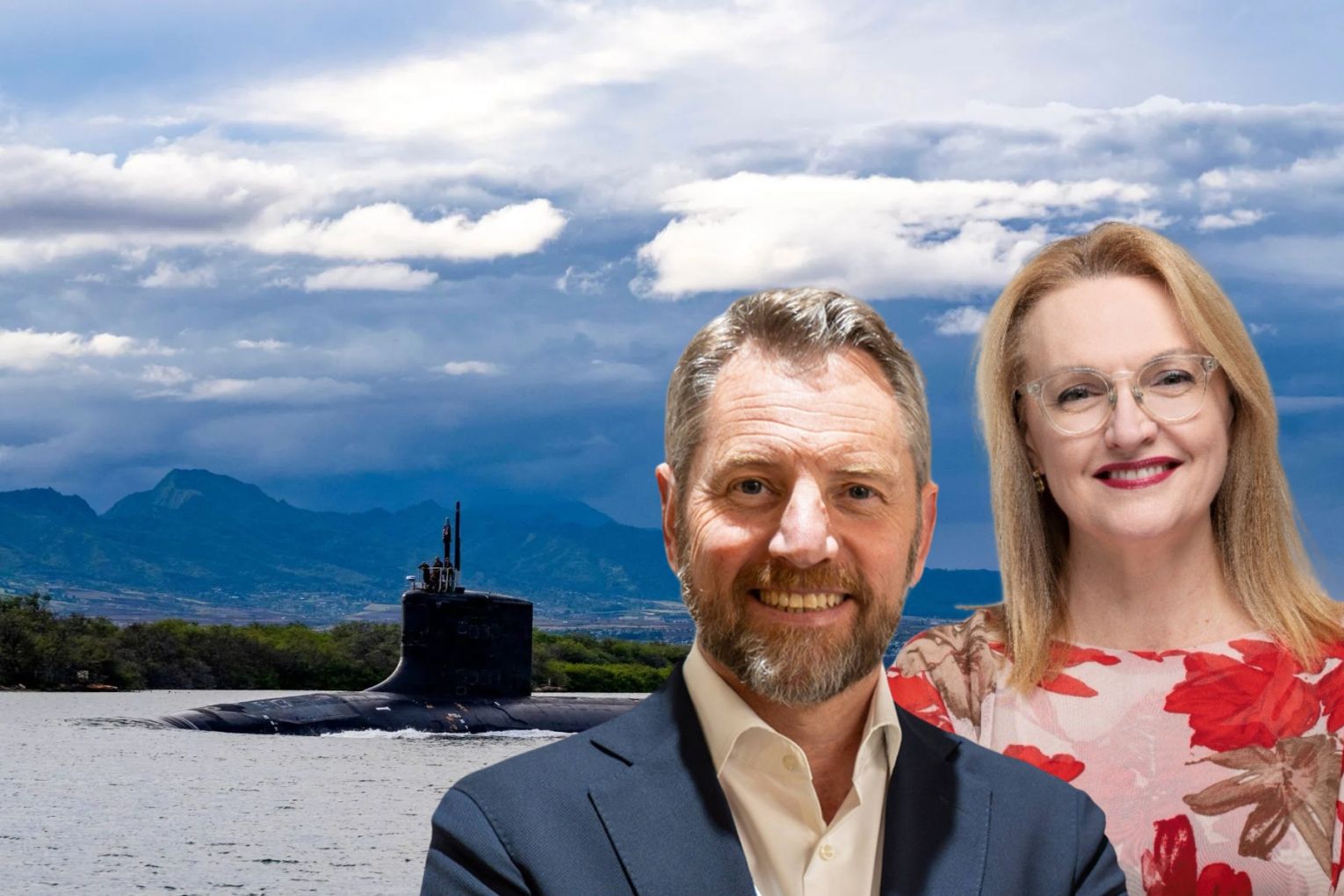
A $1 billion investment pool co-funded by the federal government and venture capitalists for defence investments — announced today — has been welcomed by the CEO of one of South Australia’s top defence companies.
But the boss of the state’s peak industry body the Defence Teaming Centre has raised concerns over contracts binding the state’s industry to the global supply chain.
Nova Systems CEO Dean Rosenfield said SME companies were rapidly developing capabilities “which are of vital interest to national security, but they need the money, they need orders to actually survive through this period”.
“We’ve got lots of skills… we’re developing new capabilities all the time, and to be able to do that we need to make sure that we’ve got some financial backing,” he said.
And he welcomed the $1 billion fund – half supported by the venture capital market – for investments in high-tech military hardware.
The government is now seeking co-investments from venture capitalists to back Australian businesses developing defence and dual-use advanced capabilities, targeting cyber, artificial inteligence and autonomy, electronic warfare, quantum technologies and undersea warfare.
“Joint investment between the government and private sector has enormous potential to further unlock Australian jobs and innovation,” Federal Defence Industry Minister Pat Conroy said.
You might like

Rosenfield said it was a “positive thing… to make sure it’s not just public spending”.
“We’re always getting a lot of venture capitalists and private equity coming to us wanting to invest in defence. They can see the sovereign need.
“From our perspective, having other availabilities to actually tap into other capital – that’s a great one for SMEs in particular.”
Defence Teaming Centre CEO Libby Day said SA’s defence industry is “at the envy of a lot of other states”, and the state is at the precipice of a “once-in-a-generation” opportunity.
On Sunday, it was announced that $30 billion would be spent on building a construction yard for the new nuclear submarines under the trilateral AUKUS agreement, while the federal government pledged $3.9 billion as a down payment on the Osborne facility.
These were “very positive announcements”, Day said, but “it needs to be backed up with decisions and contracts for Australian companies”.
“A contracted supply chain will see us be able to build our own submarines into the future, and this really is the holy grail: an already-skilled workforce and continuous local contracts,” she said.
“Contracts are needed for the development of a smart, sovereign industry, which will drive generations of high-value jobs here in South Australia.”
Stay informed, daily
Day raised this with US Senator Tim Kaine on Monday when he was in town supporting the Premier’s pre-election promise for extra investment in defence skills and scholarships.
South Australian businesses know who the supply chain partners are for the AUKUS program – the UK’s BAE Systems and Australian Submarine Company in South Australia. But “there’s a whole ecosystem of local suppliers, and we’re advocating that they need certainty… to be part of the main SSN AUKUS game,” she said.
Day asked the Democrat Senator who was a former candidate for vice president and is in the US senate committee on armed services, about how Australian companies can forge pathways and remove barriers to secure supply chain contracts in the United States.
There were “cultural” issues to overcome — US companies have always used their local supply chain — but “unless something changes… then we’re not going to see that shift that’s so badly needed”.
“But the fact that he’s here now is an incredibly strong sign to government and to local industry that the US is absolutely serious about AUKUS,” she said.
“The timing of him coming is also important because he and his team now go back and start to work on the bills and the new round of funding in the US system.
“He’s coming here at a time when he’s gathering local insights and knowledge. He’s here with an open mind and listening intently to what’s needed here, and that’s a great sign.”
But with AUKUS shipbuilding in South Australia still some years off, Day said the industry needed to carefully manage the growing number of STEM graduates so they don’t “cannibalise each other”.
“The Department of Premier and Cabinet… is looking at this very closely,” she said.
“They know there is a major coordination effort required and as the peak body for defence industry here we welcome that and we are working with them to help identify some of the potential bottlenecks and working on some of the solutions to these cross-sector or allied-sector skills shortages that we know we’re facing.
“We need the contracts – being the flow of the money in Australia – and we need the assuredness and the certainty for those looking to enter supply chains.”
Want to see more stories from InDaily SA in your Google search results?
- Click here to set InDaily SA as a preferred source.
- Tick the box next to "InDaily SA". That's it.