Unearthing a fashion legend
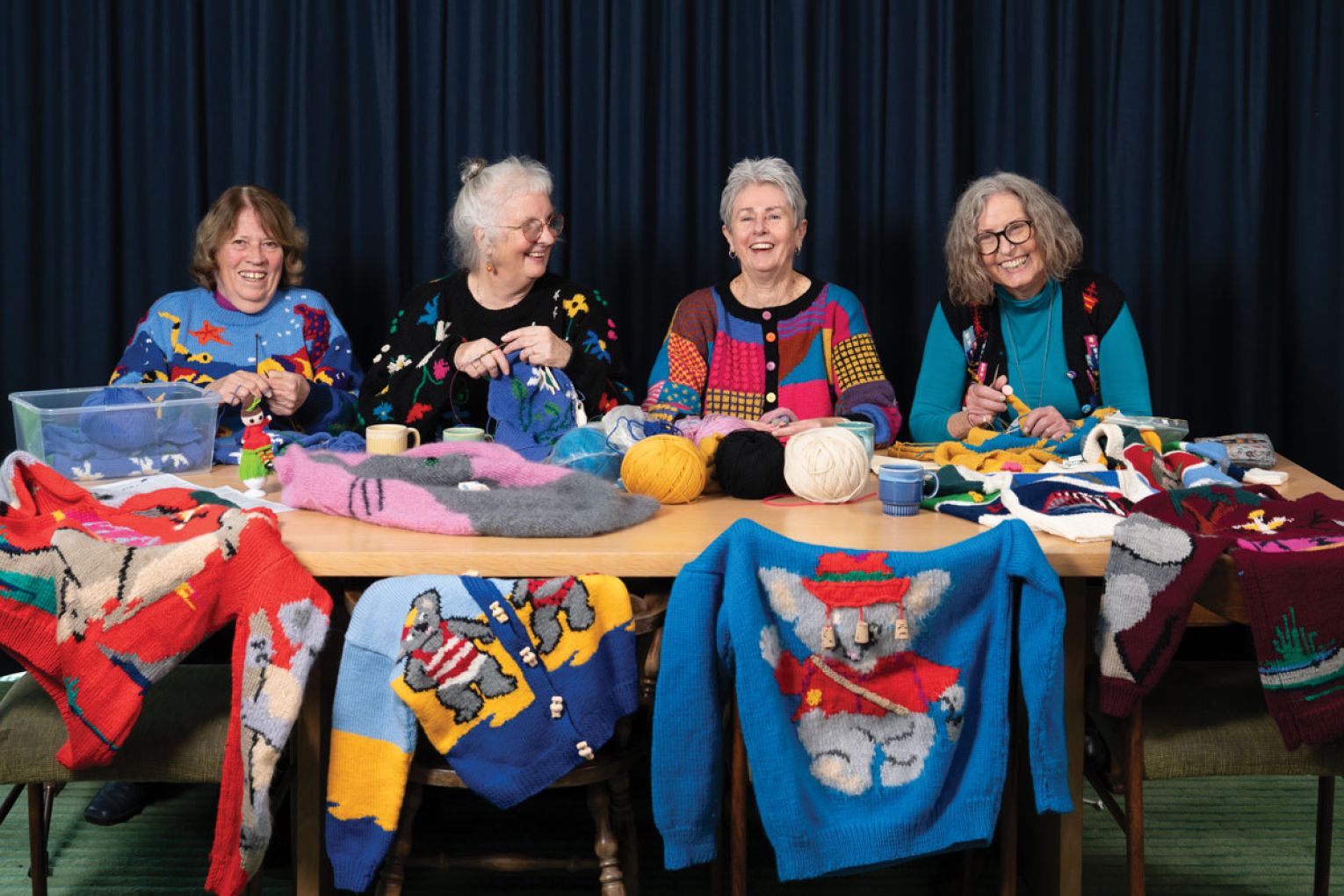
Designer Liz Newman found fame in the 1980s with her iconic knitted jumpers – before it all unravelled. Now, her remarkable legacy has been saved and is on show for at FABRIK during SALA Festival.
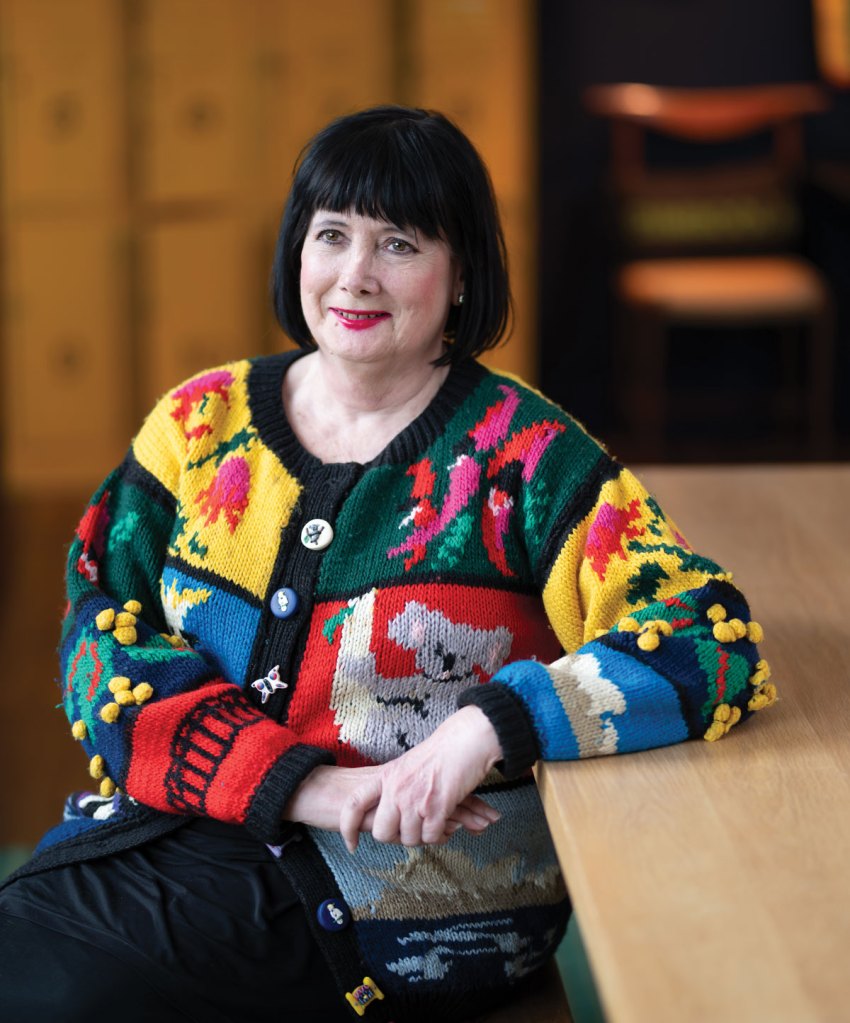
Vintage clothing lover Amanda Blair is wearing a hand knitted jumper featuring a grey wombat with a cork hat – with real corks knitted into the design.
“What’s not to love?” says Amanda, showing off the “Walkabout Wombat” creation.
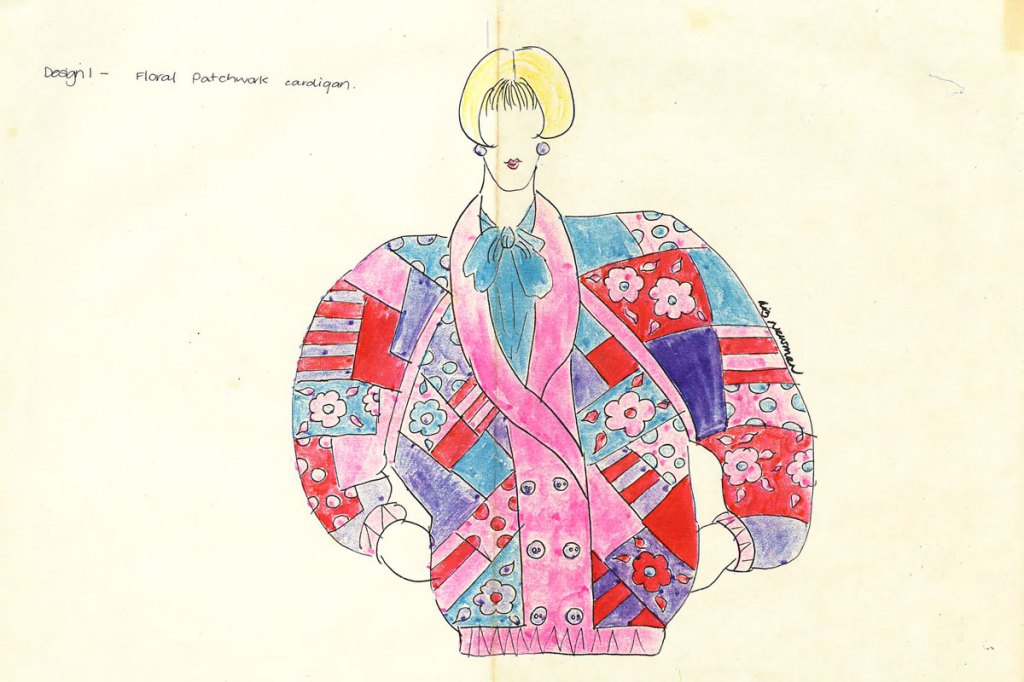
This distinctive pattern was designed by South Australian Liz Newman, who rose to fame in the 1980s and ’90s thanks to her colourful and quirky knitwear.
Liz’s business began when she opened her first store, Mod Image, on King William Road in 1980 with a $3000 loan from her father, John.
The idea was to sell punk clothing, but Liz also decided to stock a selection of her hand knitted designs, made by herself, her mother Kathie and her grandmother Eva Constantine, who taught Liz how to knit.
Things began slowly until the shop moved to Twin Street in the Adelaide CBD. The punk clothing failed but the knitwear took off, with mohair jumpers featuring geometric designs leaning into the “punk” aesthetic of the day.
Back then, a Liz Newman knit fetched between $190 and $350.
“My brother Conrad designed some Mondrian knitwear, and my grandmother and my mum would knit the fronts and backs, and I’d do the sleeves,” Liz says.
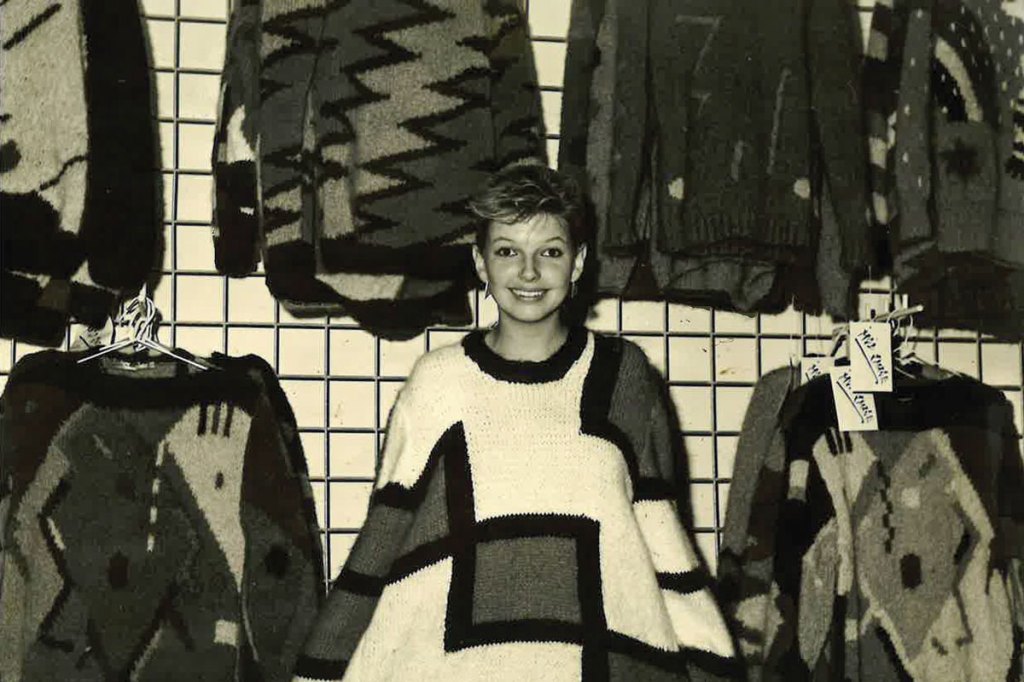
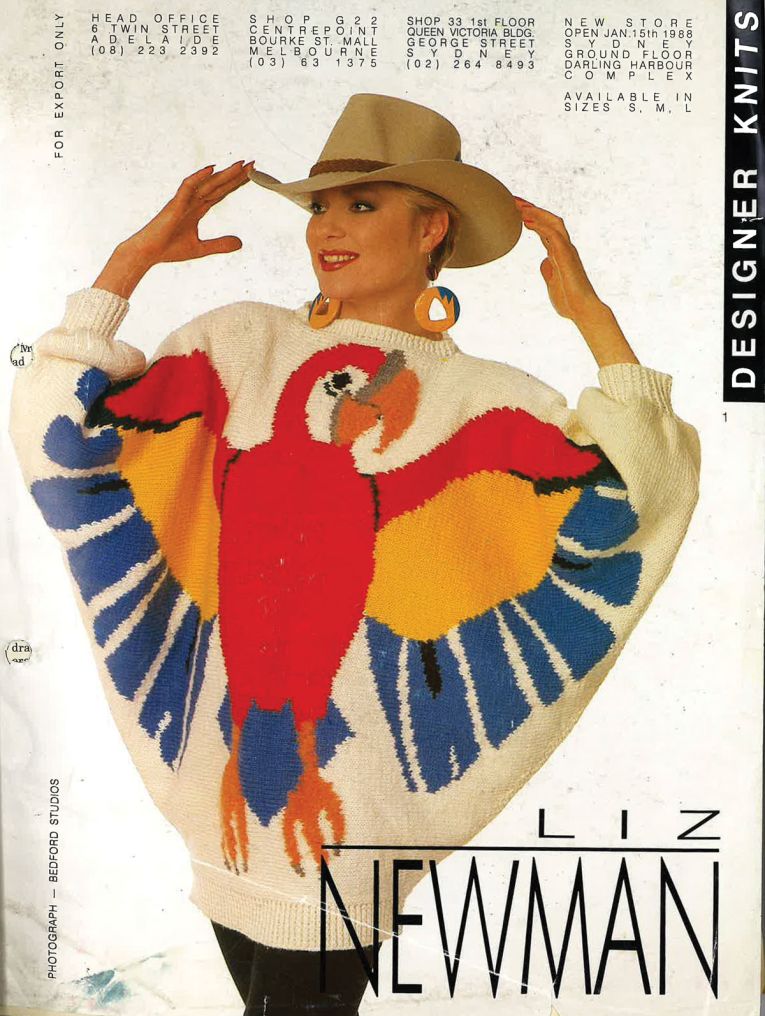
The business expanded quickly, and Liz opened two stores in Sydney, one in the prestigious Queen Victoria Building and one in Darling Harbour, plus stores in Melbourne and Surfers Paradise.
“In that first year in Sydney that little shop in the QVB turned over almost $900,000,” Liz says. “We had people queuing out the door and we used to let people in two at a time. Mum had to come over and help me run that shop.
“I remember Barry Humphries filmed an ad in that store to launch the American Express platinum card for the US market. So, that boosted customers from America, and we’d get a lot of tourists coming in.
“We also had the Saudi Arabian royal family come in and we’d have to close off the shop for them. At one point, one of the wives of the Sultan of Brunei came in and spent $14,000 in 30 minutes on jumpers.”
Television and entertainment celebrities, such as Jacki MacDonald (Hey Hey! It’s Saturday), performer Rhonda Burchmore and comedian Garry McDonald were all regular customers, keen to get their hands on an original Liz Newman design.
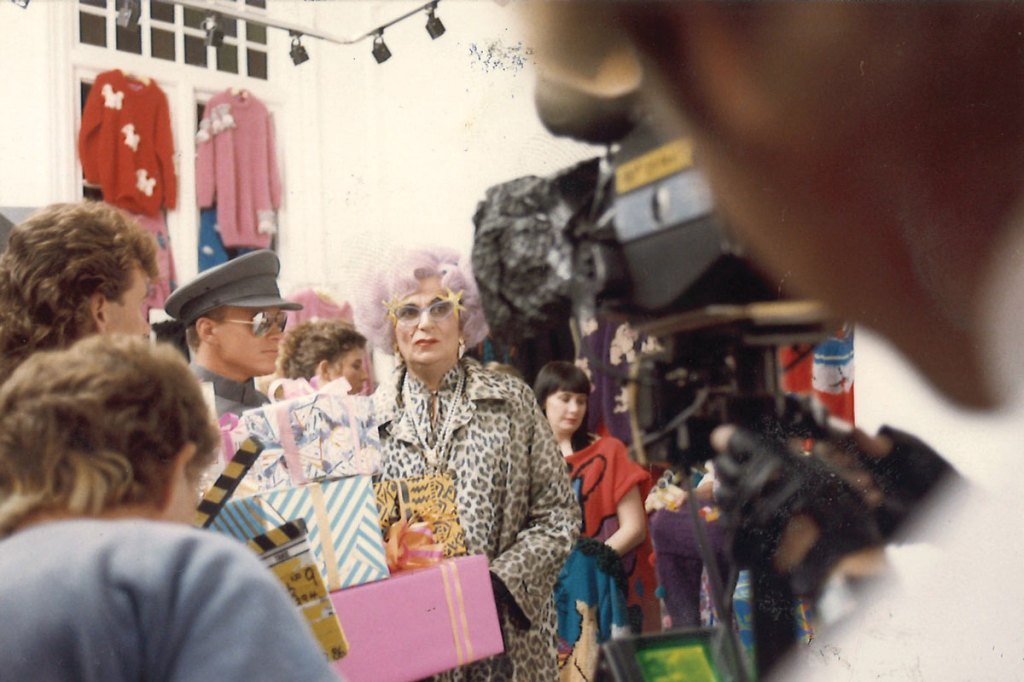
High-profile international customers included American country singer John Denver and his wife Cassandra, and Olympic ice-skating stars Jayne Torvill and Christopher Dean.
You might like
Liz says she didn’t necessarily want to go down the “Australiana” design path, but the demand was there thanks to her international clientele. The jumpers then began featuring more intricate 3D elements and distinctively Australian motifs, such as koalas, cockatoos, kangaroos, flora, fauna and ocean life.
Other designs drew inspiration from Liz’s time as an early primary school teacher in Adelaide, with patterns showcasing nursery rhymes such as Hickory Dickory Dock. Having her own children, Alexander and Rebecca, also provided inspiration for Liz’s children’s line.
Liz’s then-husband also worked in the business as did her siblings, Paul and Andrea (now Andrea Heading, CEO of the Real Estate Institute South Australia).
In 1987, Liz received an Advance Australia Award for fashion design and business acumen, and her international profile was on the rise.
“Macy’s in New York sold my designs and at one stage they had a whole window of my jumpers,” she says.
“My designs were stocked in stores globally and I had a gold American Express card and a nice BMW.”
Liz’s patterns were also regularly featured in the fashion pages of national magazines such as The Australian Women’s Weekly, and worn by the models on popular television quiz show of the day Sale of the Century.
At the height of her success, Liz says she had 700 people knitting for her around the country, and the business was turning over almost $2 million annually. She owned a 16-room bluestone mansion in Myrtle Bank, and the future looked bright.
Then, almost overnight, the business took a downturn thanks to a series of events. They included interest rates sitting at 21 per cent, the collapse of the State Bank of SA, a pilots’ dispute which affected product distribution, and sadly Liz’s father passing away.
“It was just an absolute mess,” she says.
Eventually, Liz was forced to close the stores in 1991 and the company, trading as Knitwear Australia, wound up in 1997.
“There were about 300 patterns, and I wanted to keep them because that’s all I had left, but I couldn’t,” Liz says. “So, I lost everything, including the family home which I had bought in the ’80s. I went bankrupt, lost it all.”
The business was bought by an Adelaide couple who took ownership of the hundreds of patterns created by Liz.
After that, life for Liz was tough. She struggled financially and her health began to deteriorate. Eventually the once-vivacious designer was diagnosed with a rare brain mass called arteriovenous malformation.
“I had been very ill for a long time with crippling headaches, balance issues and having falls,” she says.
Liz underwent brain surgery followed by months of rehabilitation.
It was after the surgery that Liz also decided to leave her marriage, after years of unhappiness.
“I made a promise to myself that after that surgery my life was going to be completely different, but it’s been hard,” she says.
At her lowest, Liz was financially, emotionally and physically depleted, and she ended up moving into public housing in Adelaide.
“I’m going to write a book called ‘From Millionaire to Houso’,” she laughs. “I’m now on a disability pension and still suffer the effects of my illness, problems with my short-term memory and mobility and fatigue. They are just things I live with.”
It was after her brain surgery that Liz began volunteering at Brain Injury SA, and it was at one of their events that she met Amanda Blair, a huge fan of her vintage jumpers.
“Amanda had posted something on social media a couple of weeks prior with her friend [media identity] Monique Bowley wearing one of my jumpers, I think it was the ‘jazzercise bear’,” Liz says.
“So, I introduced myself and said, ‘I created that knitwear’, and she was so shocked.
“She has been such a big supporter of me and my jumpers I think because they’re unusual and they’re South Australian.”
The duo got chatting and Amanda then learnt about Liz’s dramatic rise and fall, as well as her personal struggles.
Amanda says she then went down a “Liz Newman rabbit hole”, trawling the net for the vintage jumpers, and any information around Liz and her life. Then luck intervened.
“I saw an ad that said, ‘vintage jumpers for sale – deadstock’,” Amanda says. “So, I zoomed in on the photo and recognised the patterns as being Liz Newman.”
Subscribe for updates
Amanda immediately contacted the seller, and bought the 20 jumpers, mostly kids’ sizes.
“It turns out the woman selling them was friends with Jon and Margot Radford, who purchased the business from Liz all those years ago,” Amanda says. “They are elderly now and retired and were cleaning out their cellar. Hence, there were all these jumpers to sell – the last remaining stock of Liz Newman jumpers.”
Amanda then set about contacting Jon and Margot and, together with Monique Bowley, drove to their Adelaide Hills home a week later.
“They took us down to the basement and there in a nondescript filing cabinet lay fashion history – all of Liz Newman’s patterns,” Amanda says. “We just gazed at pattern after pattern for about an hour. It was the stuff of dreams.
“Finally, Jon and Margot returned and asked why we were interested, and I told them that I was interested in fashion history, and that I wanted to preserve these patterns.”
The Radfords were supportive and generously agreed on a figure for Amanda to buy all the patterns, including the copyright for the jumpers.
“I just love ’80s fashion, I’m obsessed with it and I’m obsessed with history and I feel like it’s such a privilege and joy of my life to be able to rescue these patterns from obscurity and breathe life into them again,” Amanda says. “But this is also about honouring Liz Newman, who is one of Australia’s unsung fashion heroes.
“These patterns belong to her; they are her history. They were never mine. I just happen to be the right person at the right time to make all this come together.”
As the patron of The Handknitters Guild of SA, Amanda then went a step further, organising several knitters to recreate some of Liz’s iconic jumpers.
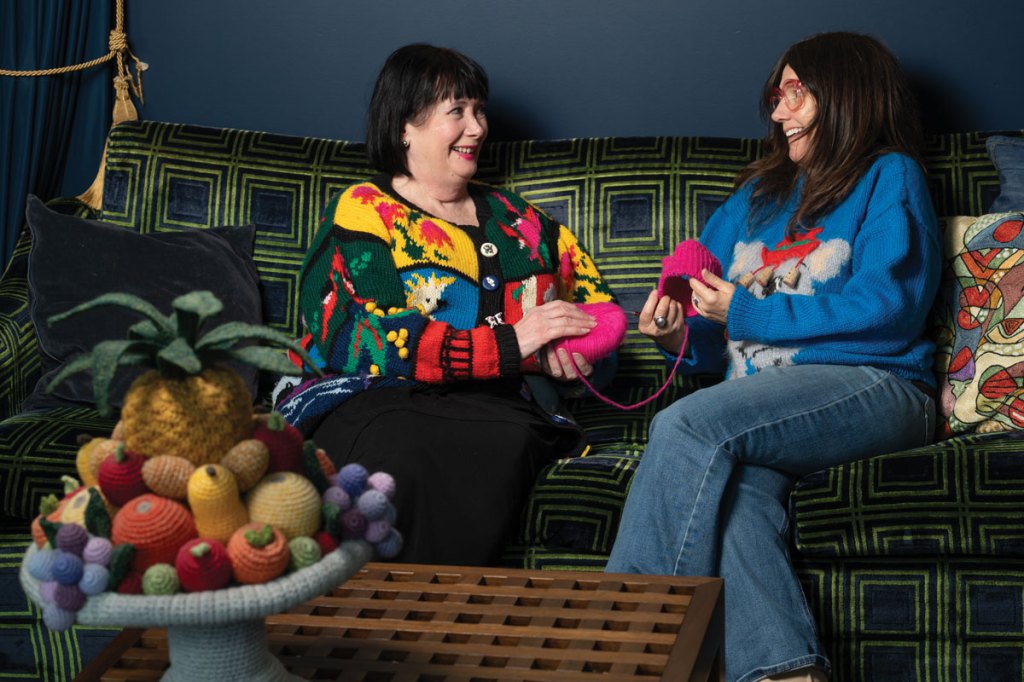
These jumpers will be on display at Fabrik, in Lobethal’s historic Onkaparinga Woollen Mill, to form an exhibition as part of this year’s SALA Festival.
The exhibition, Liz Newman: Back to the Future, features 34 of Liz’s iconic designs.
“The exhibition is an immersive ’80s experience so feel free to wear your own ’80s gear,” Amanda says.
Liz’s jumpers are now considered collectible and sell online for upwards of $1000, but the designer herself receives no financial benefit. So, to help raise some revenue, Amanda is planning to release some of the patterns to the public for the first time.
“We’re going to have some downloadable patterns where you can just QR code it, and go straight through to a site,” Amanda says. “But we’re modifying the designs slightly so that they’re not quite as ’80s, because really, a lot of people don’t need those big puffy sleeve jumpers anymore.”
Liz says she “just can’t believe” Amanda’s interest and kindness but it has clearly brought a renewed sense of happiness to this humble 66-year-old designer.
“It has given me a bit of validation for my work because I’ve lost a lot of self-confidence over the years,” she says.
“It feels like something good has come out of some pretty hard times, and this could be a little legacy. I’m incredibly grateful. I feel very humbled by it.”
More recently, Liz has been able to move out of public housing and now lives with her son Alexander, who has just bought his first home.
Knitting still brings her great joy and today Liz creates baby booties and matching beanies, as well as knitted dolls, dolls’ clothes and egg cup holders. She has also recently joined The Handknitters Guild thanks to her connection to Amanda and the women now knitting her jumpers.
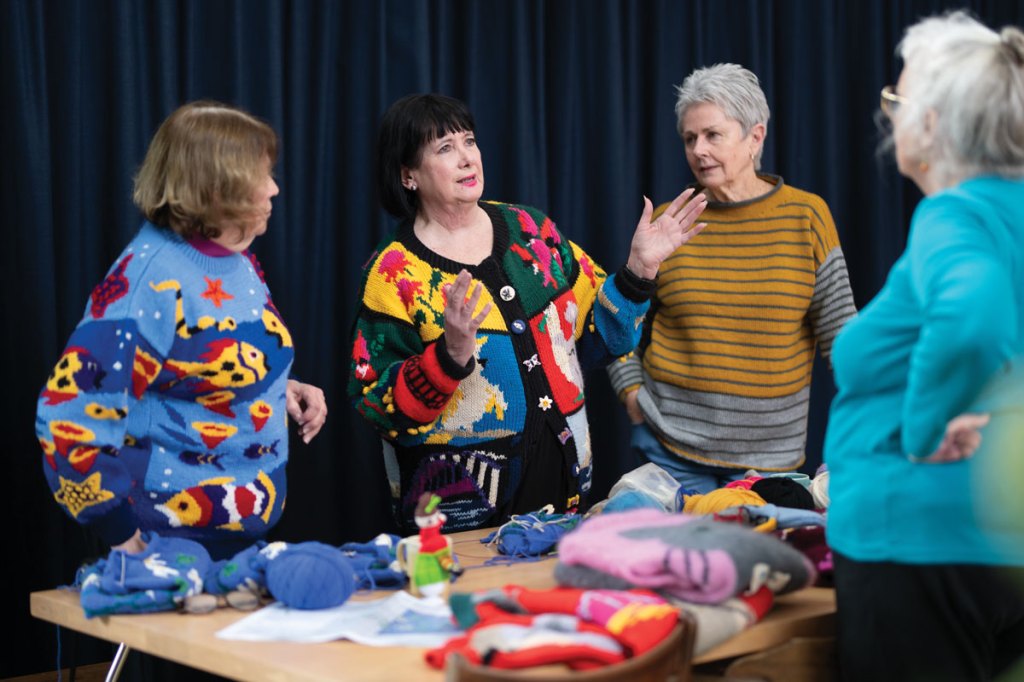
“It’s still my outlet, particularly these days with my anxiety,” she says. “It’s what I do to relax, like meditation and mindfulness. But I haven’t made any money out of knitting in years, I’m not sure how I’d do that. I find using computers and even my phone a bit challenging, but I can cope with just knitting on a small scale.”
These days Liz, who owns just six of the hundreds of jumpers she created, says she often reflects on the highs and lows of her fascinating life.
“I was very young when the business started and I was thrust into a world that I had no knowledge of,” she says. “Then I went from those heights to living in Housing Trust and having trouble making ends meet as well as being unwell. It’s been a challenging life in many ways.”
Having her designs back in the spotlight, and more importantly being recognised for her achievements, has been a boost Liz never expected.
“If this exhibition helps sell a few jumpers and gives me a bit of financial security that would be great,” she says. “It means an awful lot to me what Amanda has done.
“Life is still challenging in many ways, I still have word-finding difficulty and mobility issues, but I suppose I have a sense of peace now, and perhaps an inner strength that I didn’t know I had.
“But that’s life, I guess. Everyone has challenges and nobody knows what’s coming from one day to the next. Life is precious.”
For her part, Amanda estimates she has spent “a few thousand dollars” to buy the wool for the exhibition, plus buying the patterns, which she will give to Liz, and the exhibition costs.
“If I get a jumper out of this it will be the most expensive jumper I’ve ever bought,” she laughs.
“But this isn’t about money or thanks, it’s just a joy to help. Liz Newman is an Australia fashion icon, and she needs to be celebrated.”
Liz Newman: Back to the Future is on at Fabrik as part of the SALA Festival from August 1-31.
This article first appeared in the July 2026 issue of SALIFE magazine.
Want to see more stories from InDaily SA in your Google search results?
- Click here to set InDaily SA as a preferred source.
- Tick the box next to "InDaily SA". That's it.