The luxe Flinders Ranges trek to put on your bucket list
No phone signal, elevated swag camping and a billion-star dining experience. As Ben Kelly discovers, the inspiring three-day Arkaba Walk will awaken one’s soul, while shining a spotlight on a jewel of the Flinders Ranges that is being brought back from the brink.
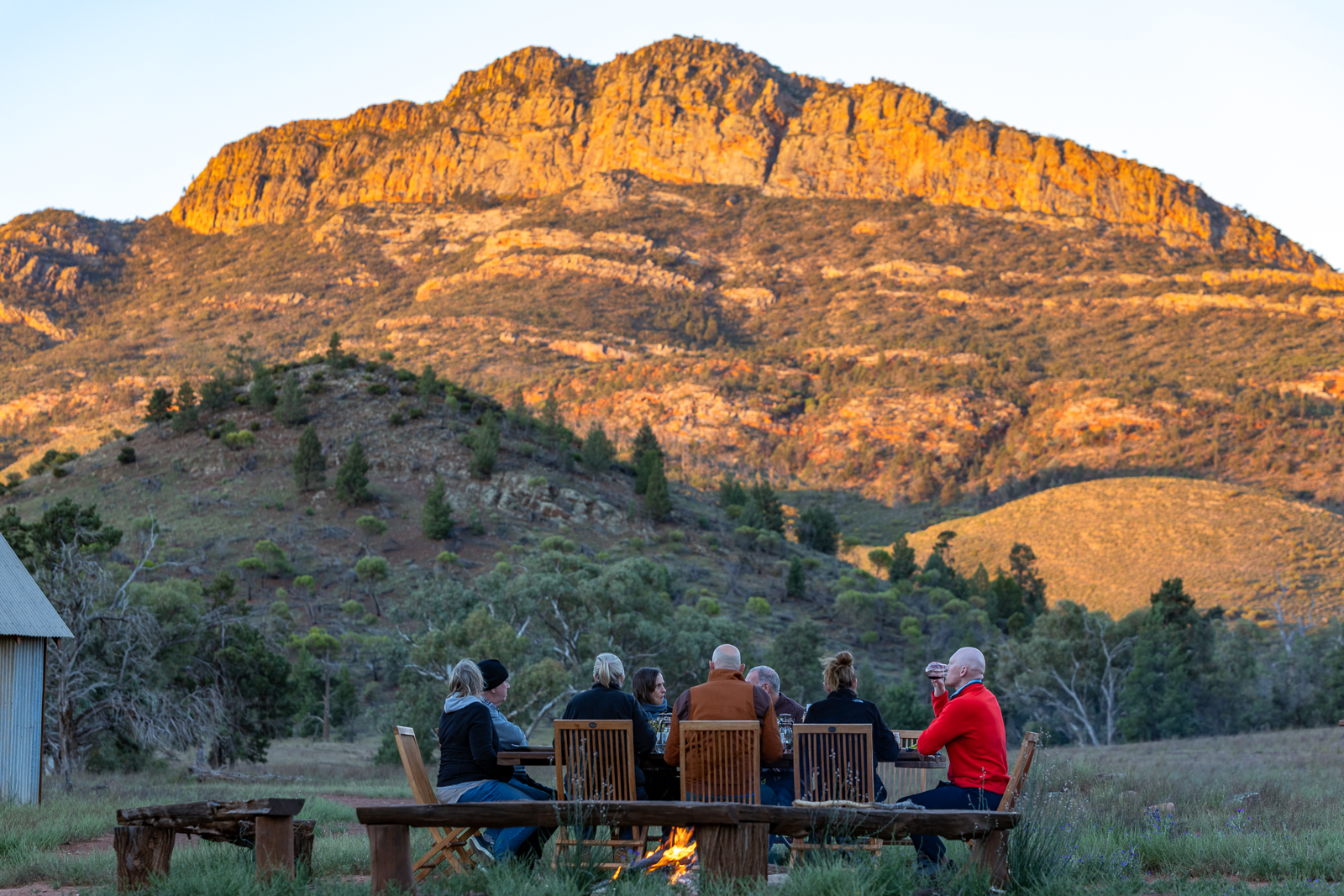
There are so many things about the majestic Flinders Ranges that cannot be fully grasped without being immersed in them.
How prehistoric mountain ranges fan out to the horizon like ripples in a giant pond, their mercurial moods stirring at sunrise and sunset. The way the sounds of nature lull you to sleep under a ceiling of stars. Utter silence.
Then there is being made to feel small by the sheer vastness of the landscape, which is best appreciated on your own two feet. That’s exactly what I’ve come here to do: the three-day, 45-kilometre Arkaba Walk.
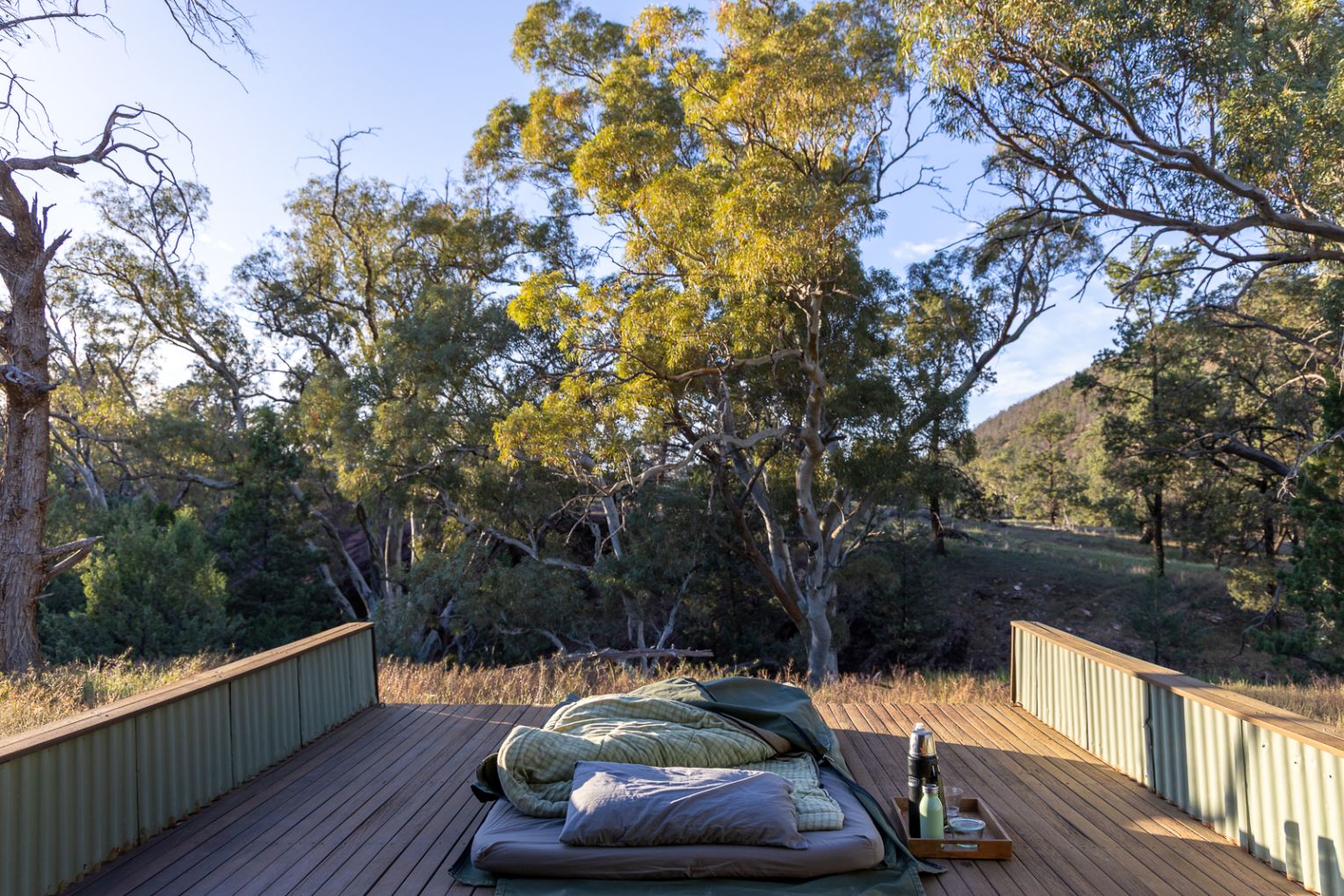
This all-inclusive guided hike through Arkaba – a 25,000-hectare private wildlife conservancy – includes luxury trimmings, but in rugged outback style. There’s deluxe swag camping, dining under the stars, outback aperitifs, picnics in creek-beds and unforgettable open-air bush showers.

It’s one of the most immersive ways to experience a region that Lonely Planet named among the world’s best places to visit in 2026. It is the only Australian location to make the list alongside the likes of Sardinia and British Colombia.
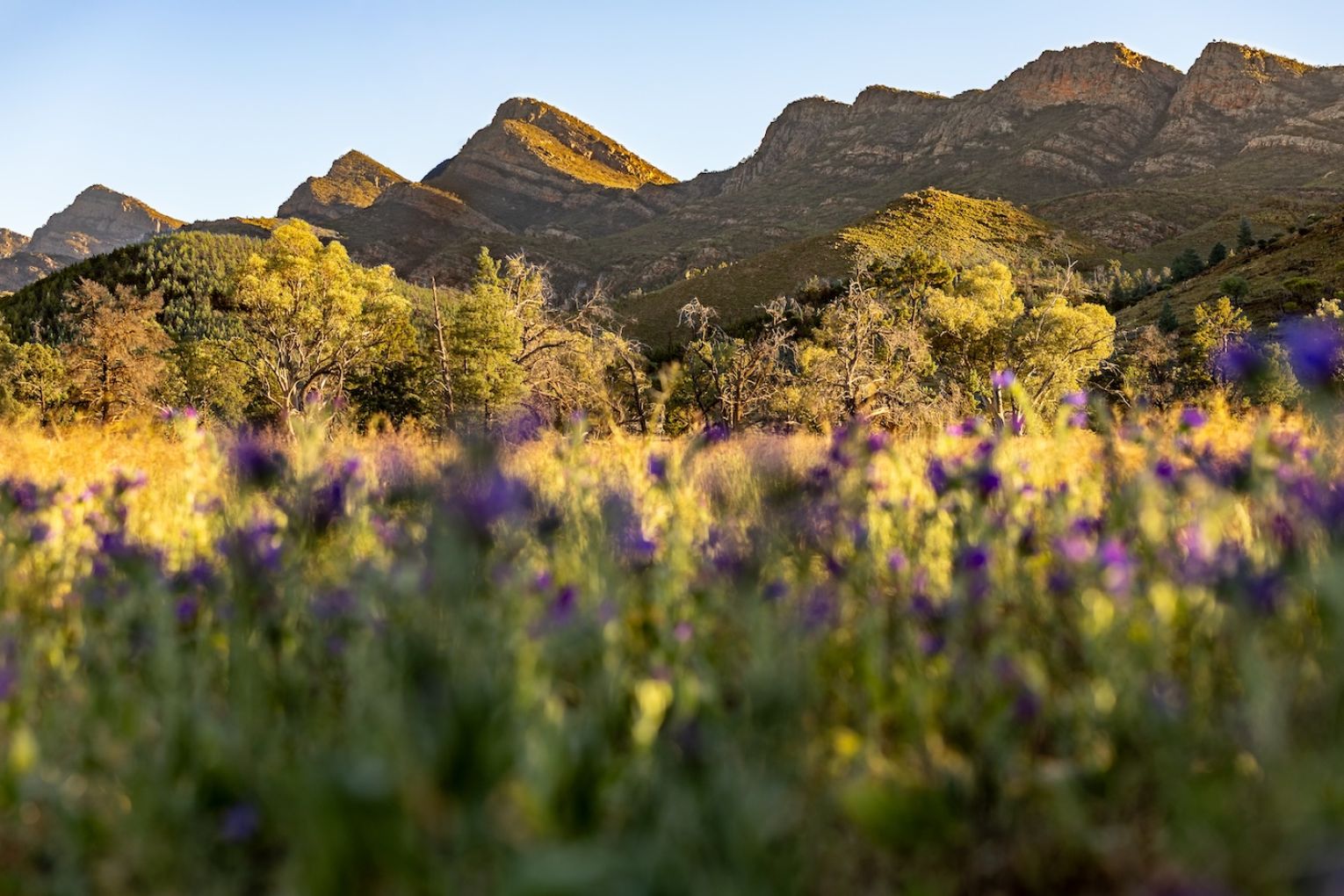
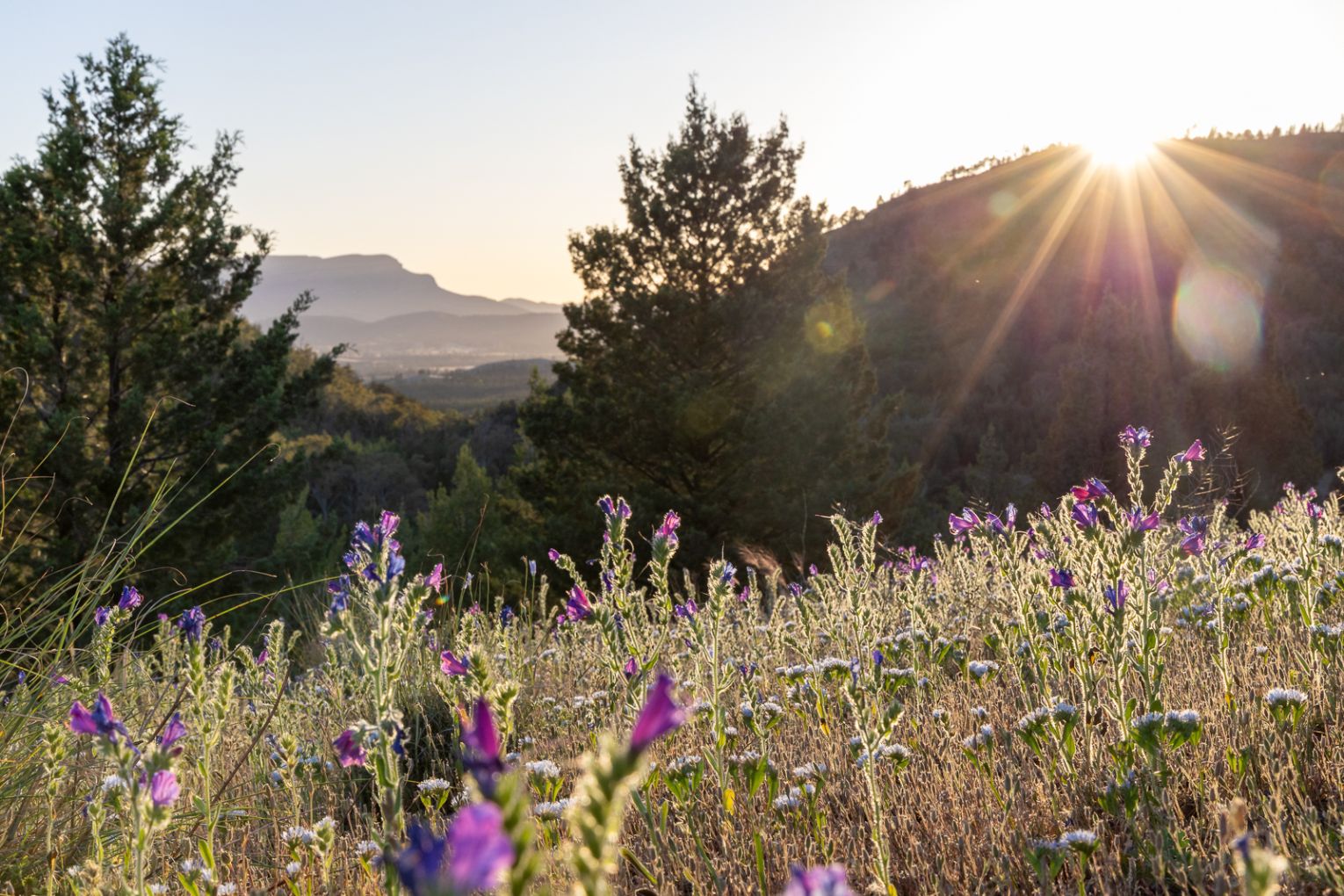
But this world-renowned beauty hides an ecosystem irrevocably altered by 150 years of colonial agriculture. Pretty spring flowers are, in fact, weeds. Rabbit warrens scar hillsides. Amid these challenges, the Arkaba Walk provides a first-hand perspective of dedicated conservation efforts underway – a glimmer of hope.
The price is premium, but with that comes exclusivity. Each walk hosts a maximum of 10 guests, traversing a property the size of 35,000 soccer fields.
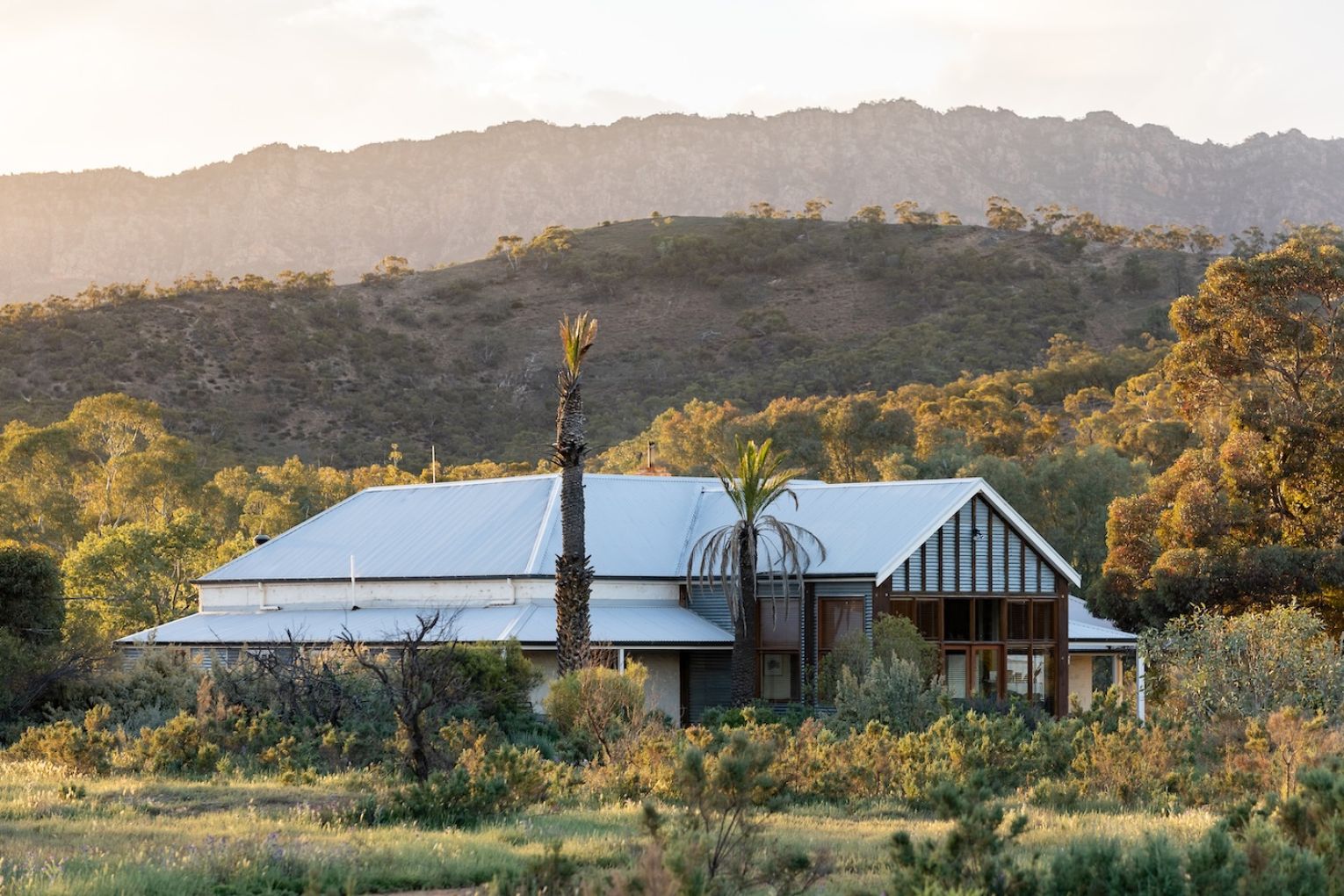
For my foray into the wild, I’m joining four couples, each from interstate. After our five-hour drive from Adelaide – with a stop for a picnic lunch catered by the Watervale Hotel – Arkaba’s stately 1856 homestead looms into view.
We disembark the minivan into a powerful silence, the still outback air rich from earlier rain.
The historic homestead was the heart of a working sheep station for 150 years.
In 2009, tourism company Wild Bush Luxury purchased the property and set about transforming it into a wildlife conservancy, fully de-stocking it of sheep in 2013.
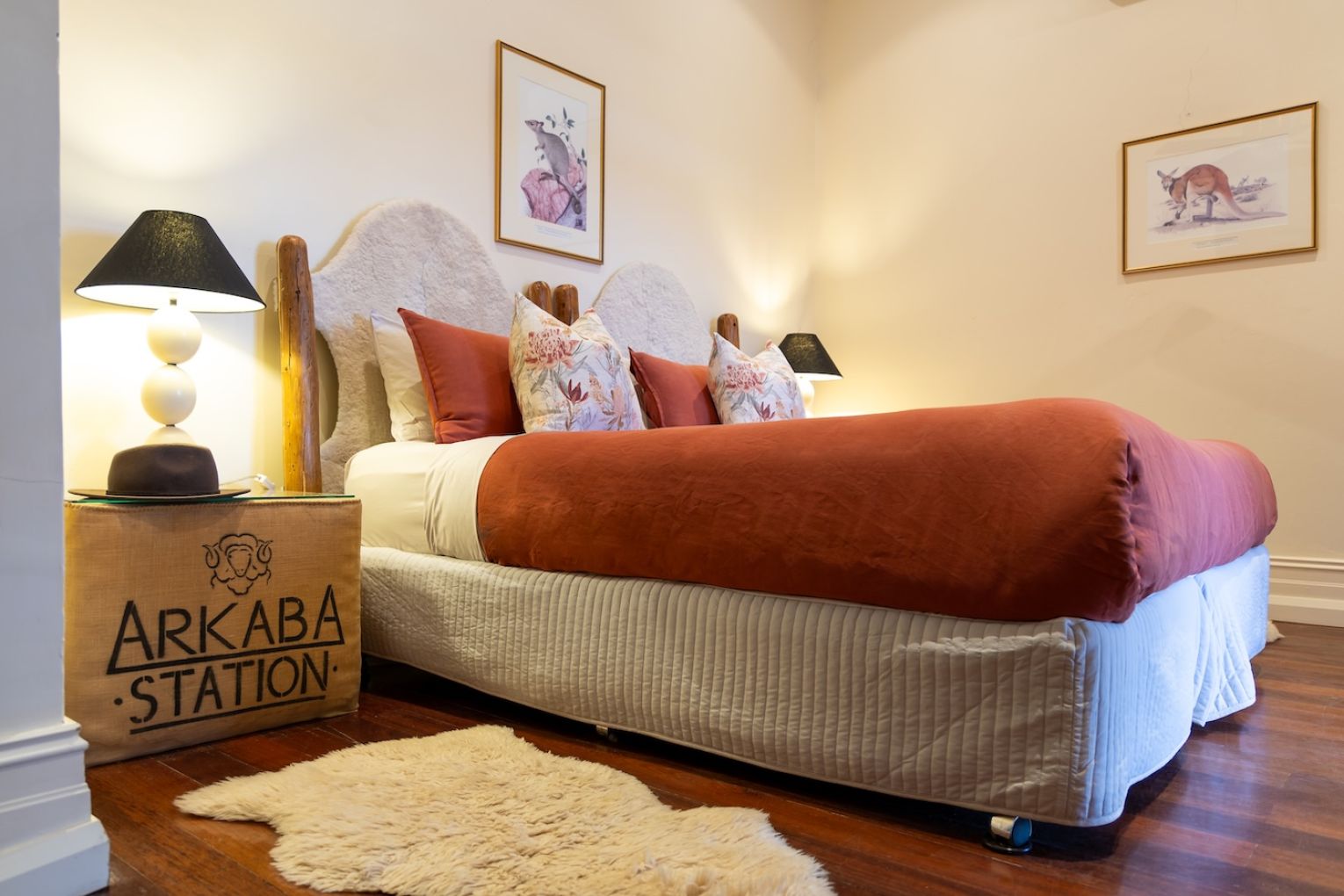
The homestead is an outback oasis with a swimming pool and five exclusive guest rooms with en suites, restored in tune with the property’s pioneering history. We are spending one night here before setting out on the three-day walk, which includes two nights at Arkaba’s bush camps.
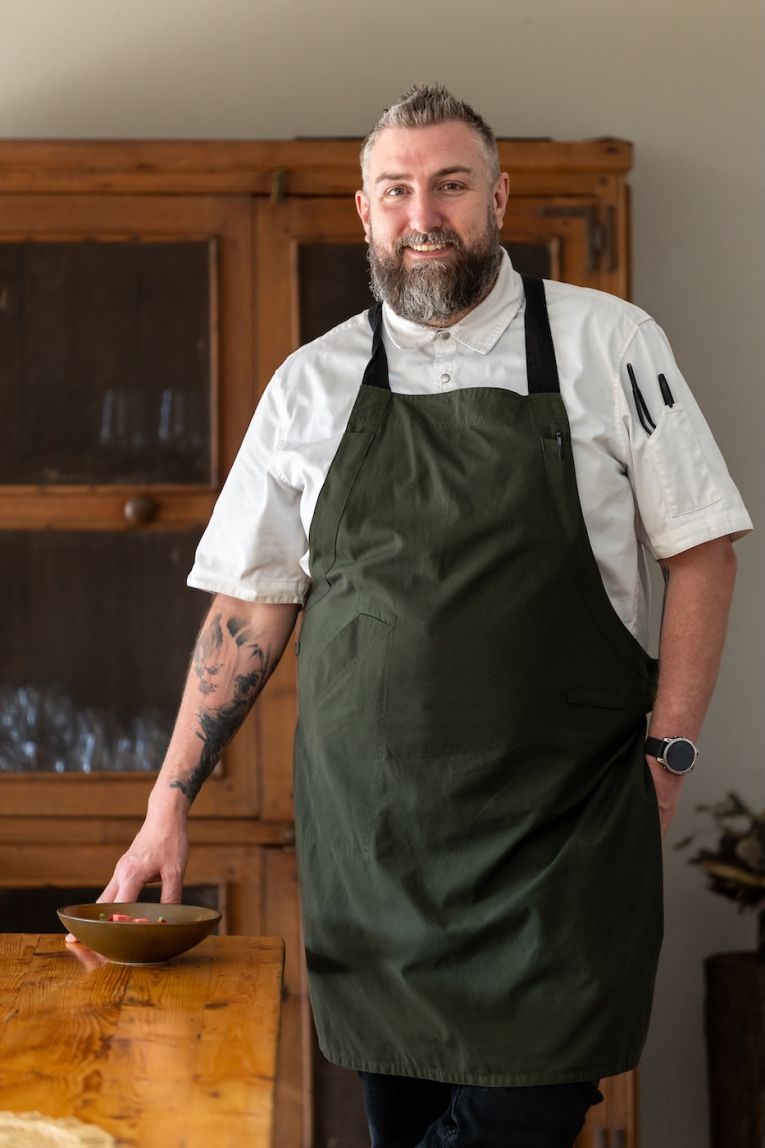
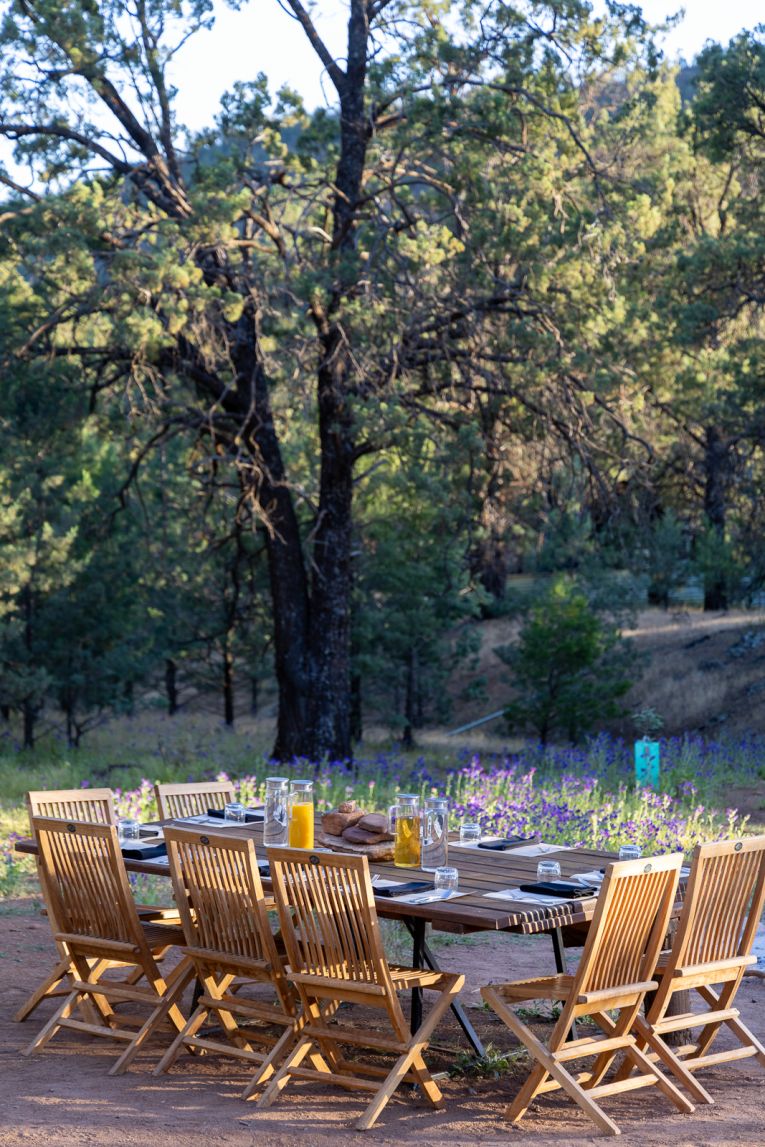
As guests settle under the verandah with Clare Valley wines in hand, head chef Joel Cugley provides insight into the unique food offering at Arkaba, where native ingredients tell a story. It is spring and the landscape is full of life.
“Over the next three days, you will see plenty of vegetation that we use here in the kitchen,” Joel says.
The property’s overpopulation of kangaroos and stubborn feral goats means there is no shortage of local meat, while non-meat-eaters are well catered for, too.
Joel’s tempura saltbush canape is a surprisingly delicious introduction to Arkaba cuisine.
Joel advises the group to surrender to the absence of phone signal – a digital detox.
“You’ve done the hard work by getting here; now turn your brain off, sit back and relax,” he says.
“It’s our guides’ job to get you to your next destination. Take the slow road, look around and take it in – that’s our ethos out here.”
Dinner at the homestead is the perfect icebreaker to start building camaraderie with fellow hikers, who are already getting on like old friends.
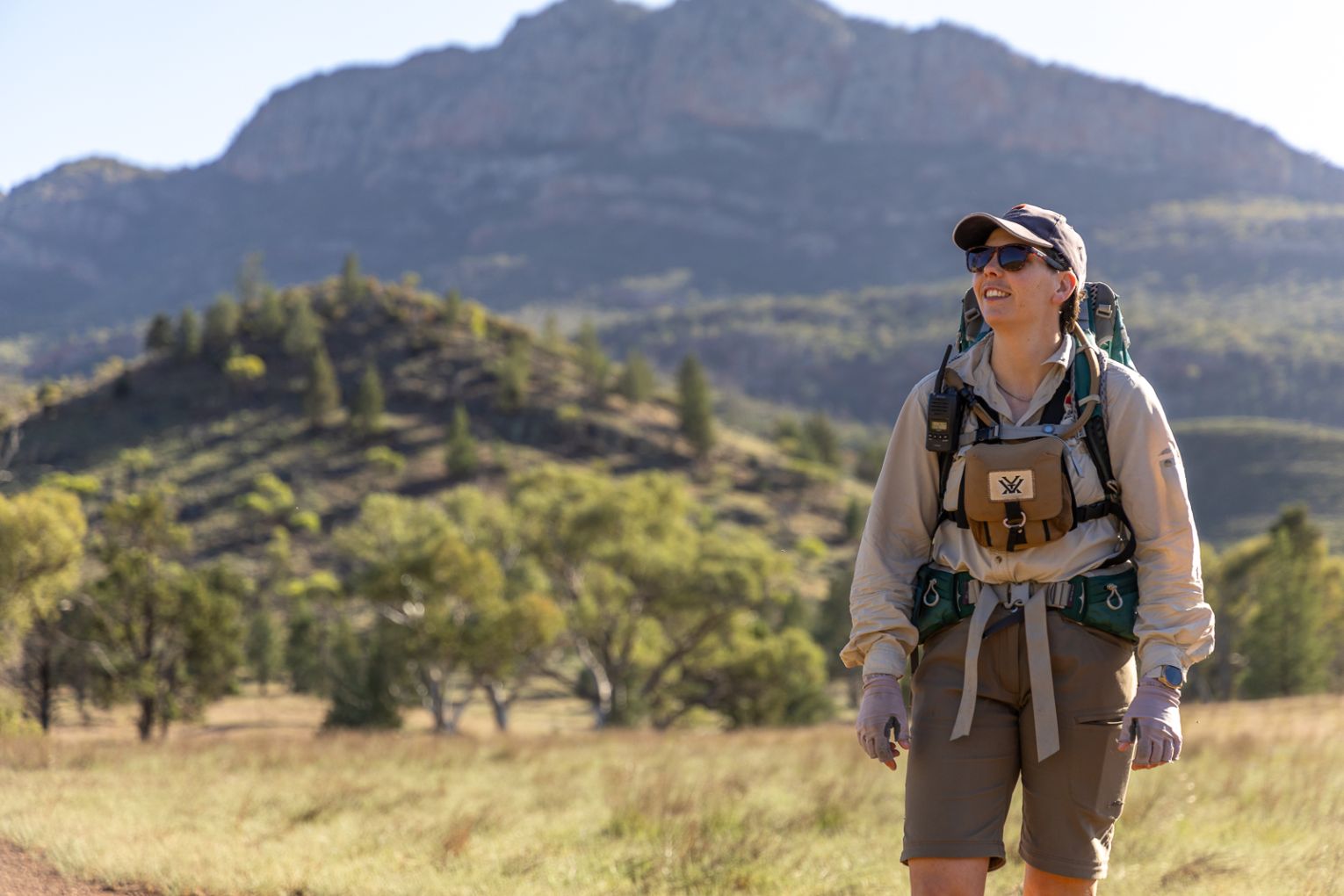
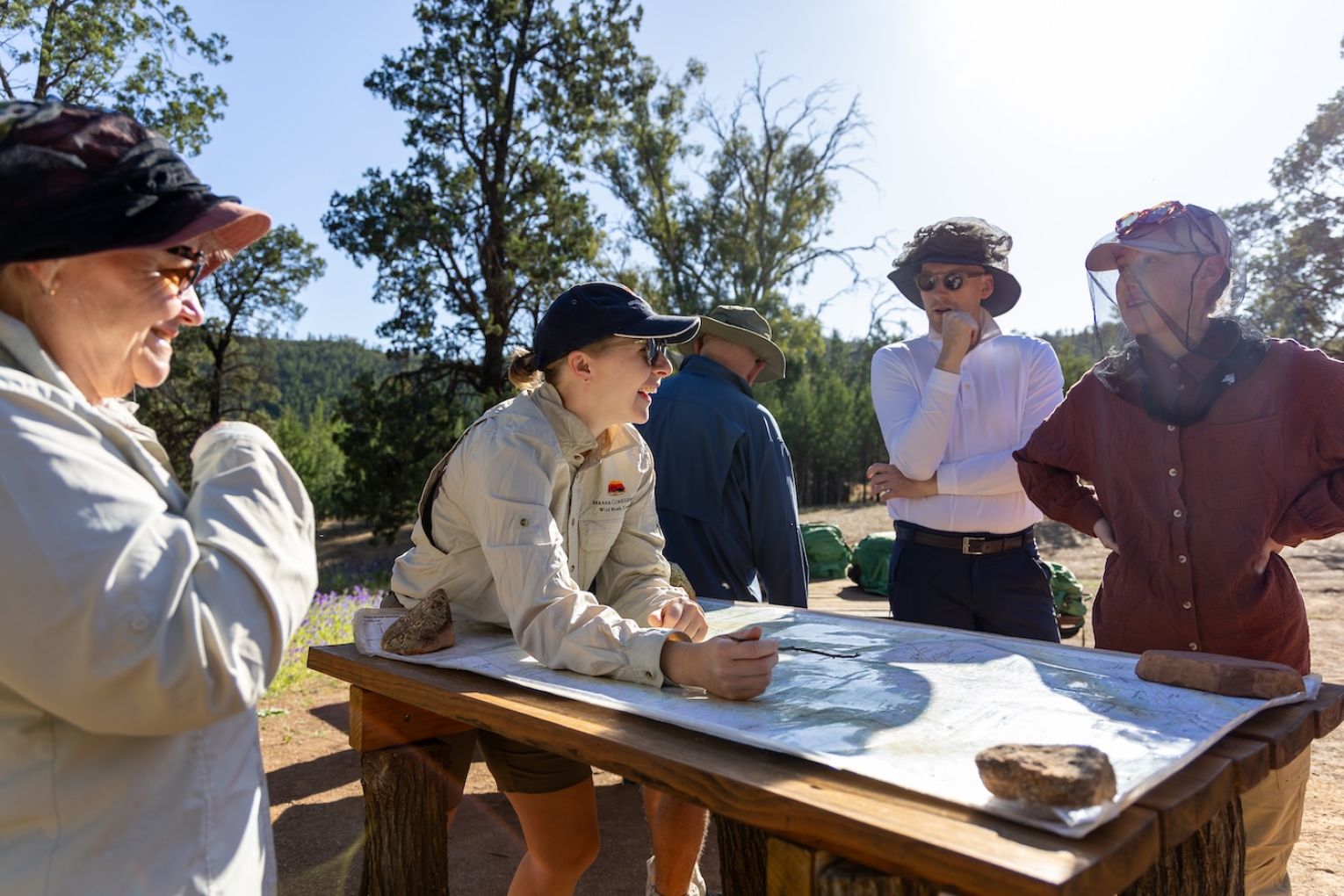
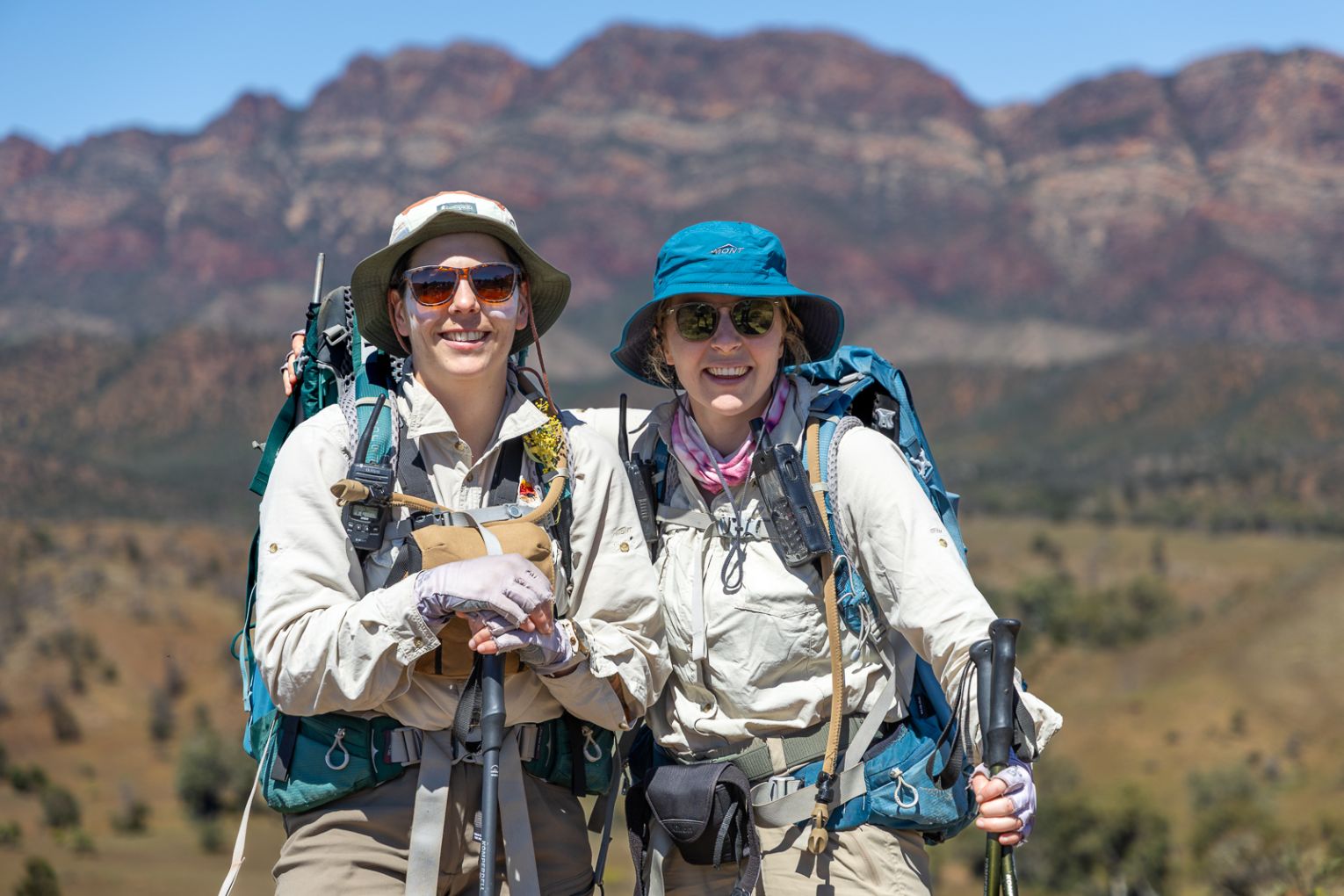
The next morning, we meet field guides Natalie Gruhl and Sari Lehmann who will be with us for the next three days.
“We love connecting with people who are keen to be immersed in our little world for three days with no technology, seeing everything around us and listening to the birds,” says Nat.
“We love inspiring enthusiasm for the natural world, helping folks overcome the physical challenge of the walk and making genuine connections.
“There is no other place like the Flinders Ranges and that makes the walk unique.”
We’re dropped at the Wilpena Pound Visitor Centre where Sari and Nat provide a briefing before the walk begins.
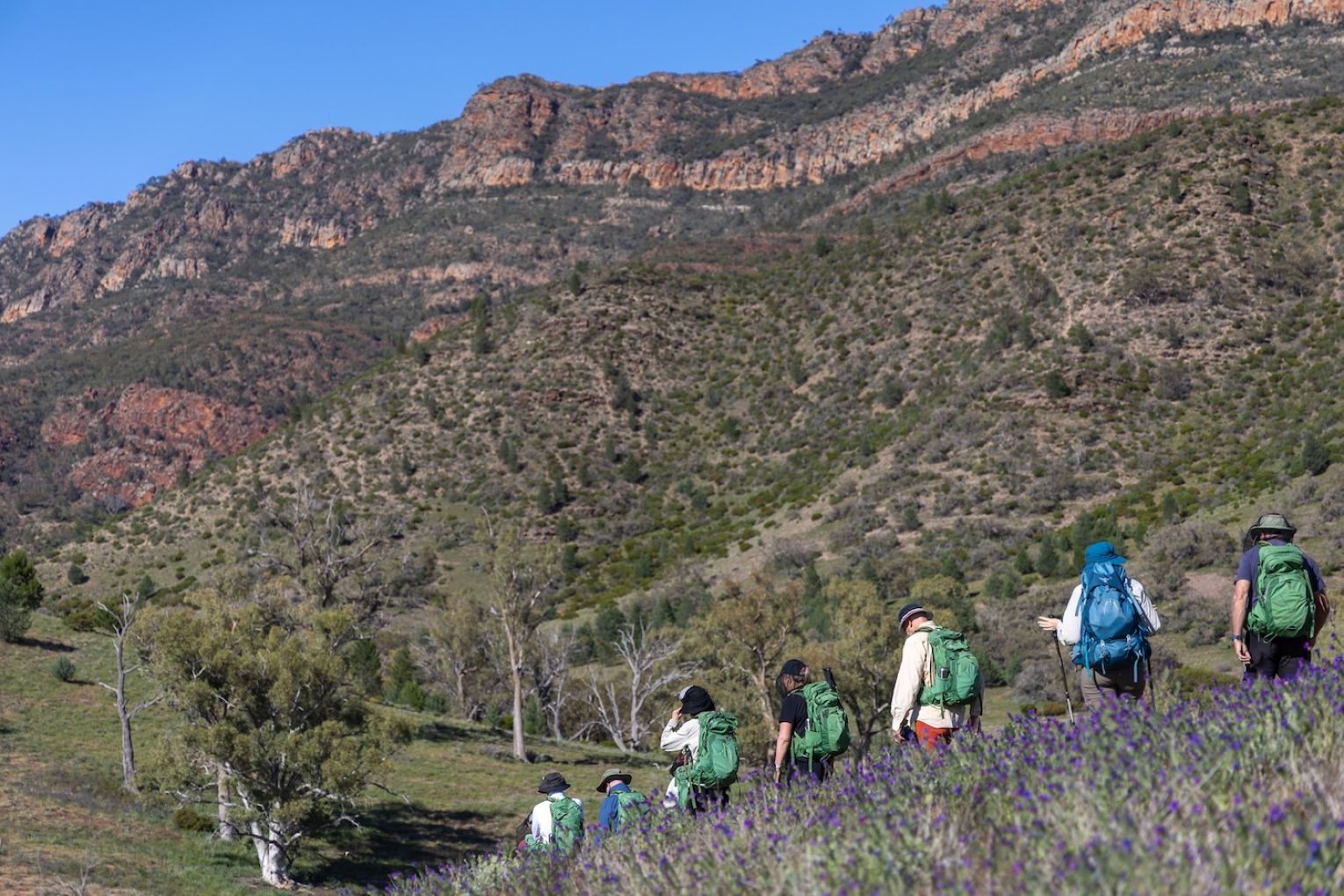
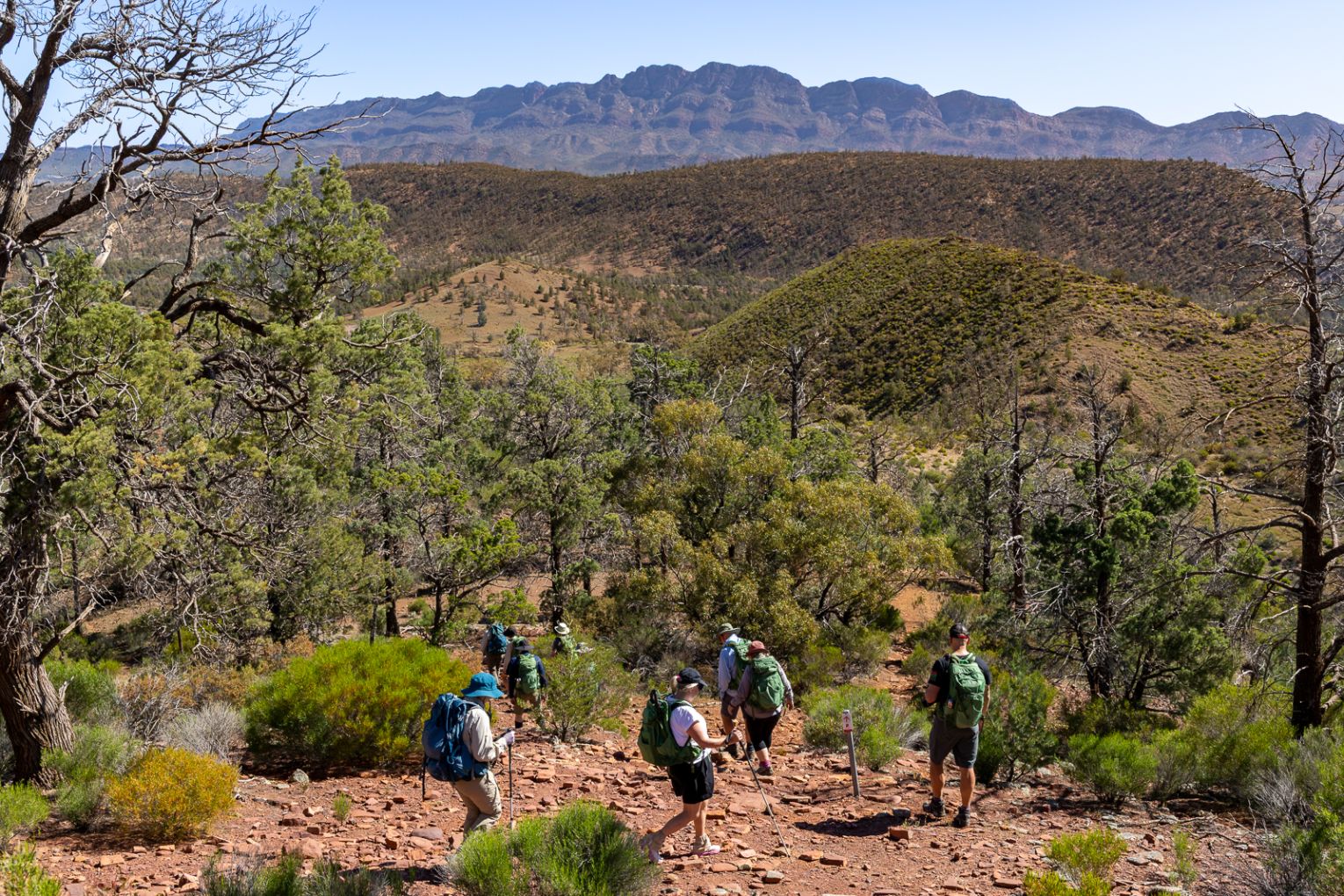
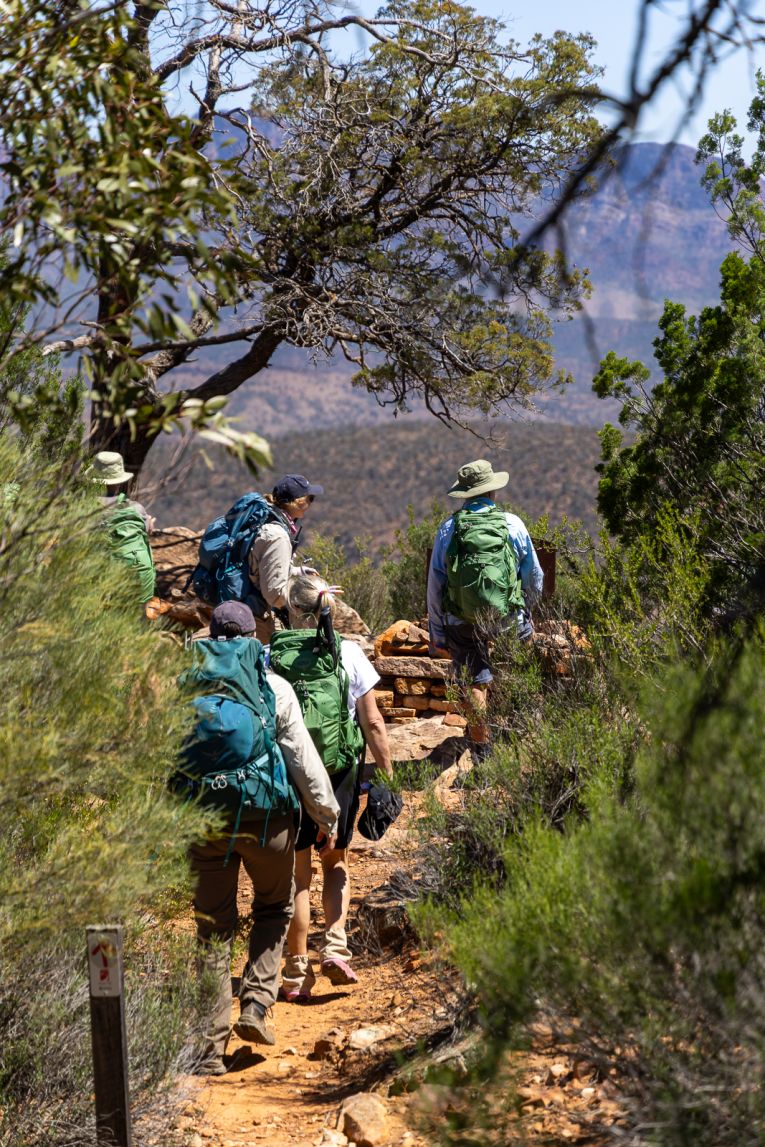
We start out on a trail that will eventually take us more than 40 kilometres through creeks and over soaring ridgelines, all the way back to Arkaba Homestead.
We’re instantly immersed in wildlife: singing red-capped robins hop around the undergrowth, vibrant green ringneck parrots shoot through the tree canopies, and kookaburras laugh down from above.
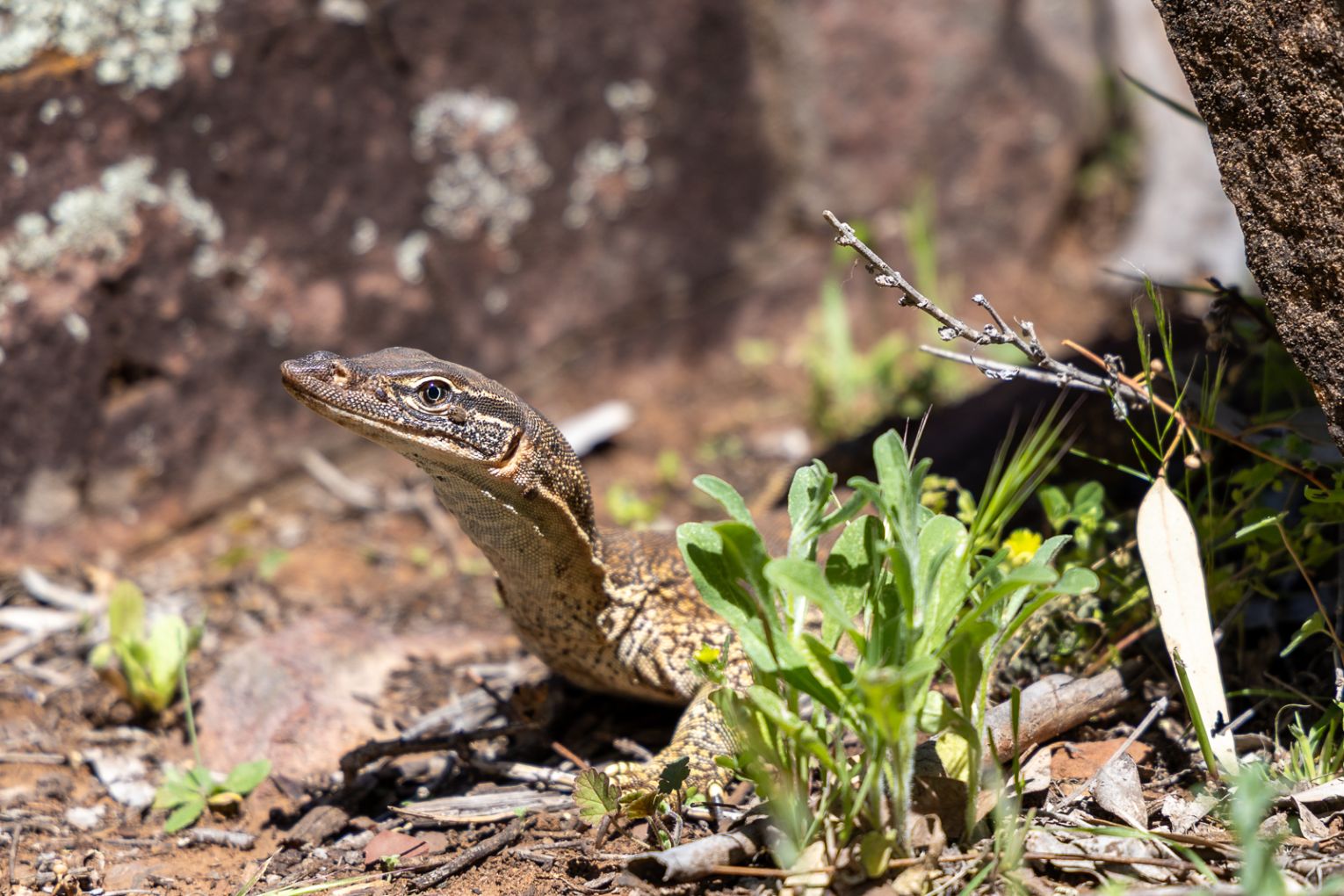
Just before morning tea, a prehistoric sand goanna crosses the path. Sari stops the group to point out quoll scat on the trail.
“Quolls have been re-introduced to Ikara-Wilpena Pound since 2014,” Sari says.
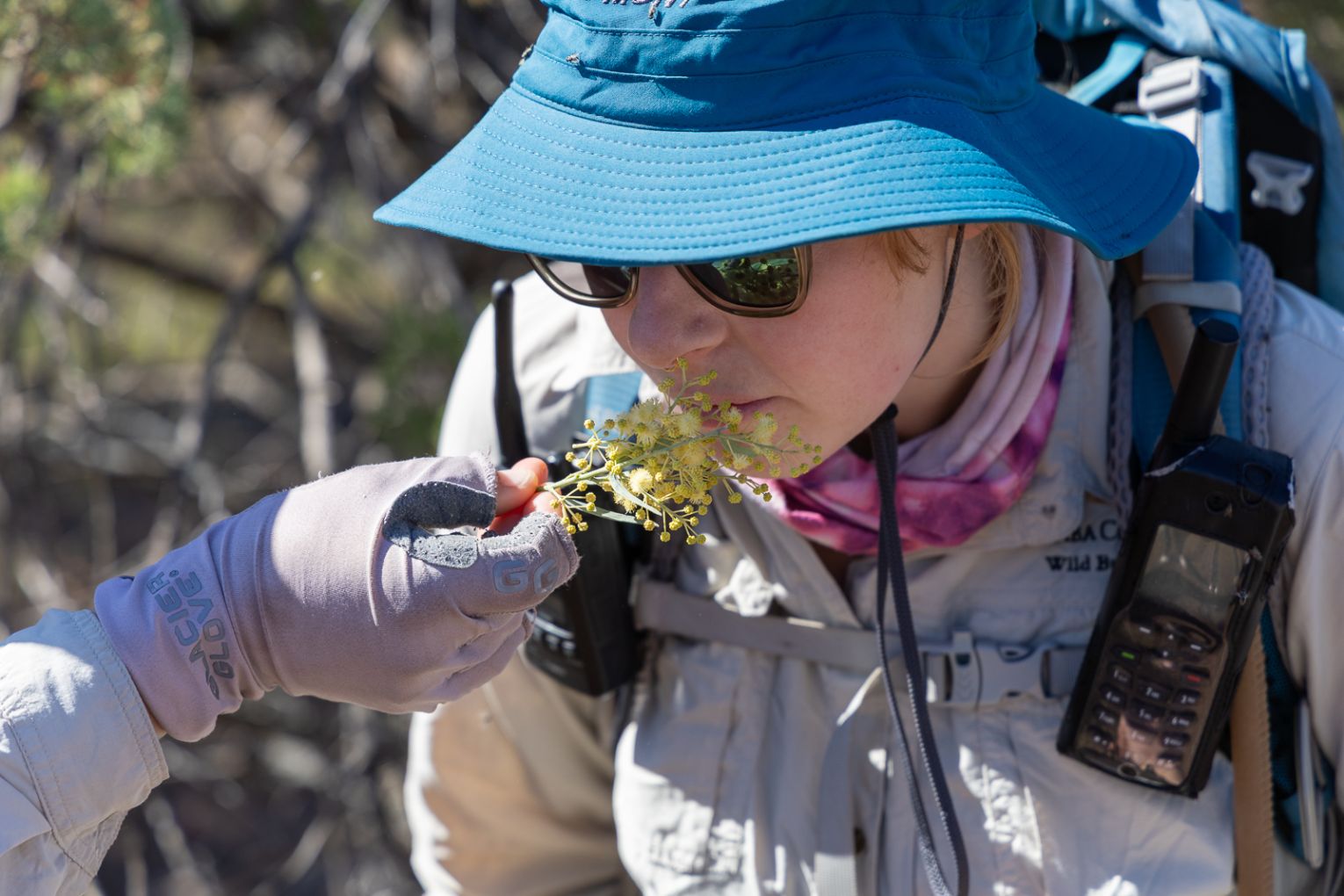
“One of our big conservation projects is to encourage them to come across into Arkaba and we are having some success.
“Yellow-footed rock wallabies have been conserved here for the past 50 years as part of Operation Bounceback, as have the brushtailed possums, which are also doing well.”
We walk from one side of Wilpena Pound to the other, traversing a pleasant trail through woodlands of acacias and river red gums.
The terrain transitions to mallee forest and then thick swathes of cypress pine as we gradually ascend the far ridgeline.
We stop for lunch at the scenic lookout Bridal Gap – a ridge in Wilpena’s south-eastern wall that forms the border to the privately-owned Arkaba. In addition to our three-litre water reservoirs, our hiking packs contain sandwiches and snacks.
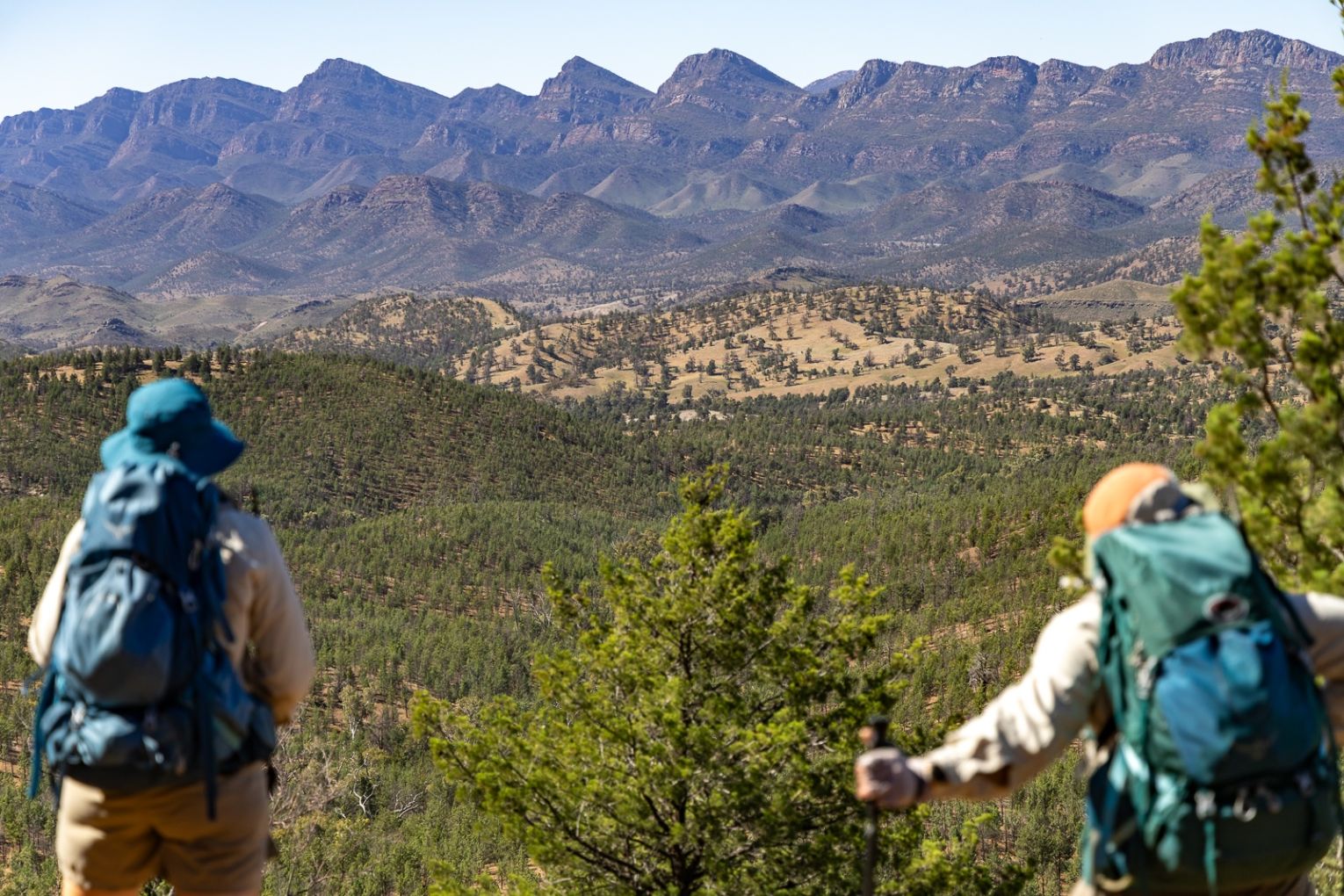
From the panoramic lookout we can almost see tonight’s destination of Black’s Gap Camp. Swathes of golden wattles punctuate the vista, alive with the lush green of spring in the outback. After lunch comes a long, steep and winding descent.
Finally, we arrive to find smiling camp host Sandy Fitzgerald waiting with drinks and warm flannels to wipe away the dust, sweat and sunscreen.
Cold beverages await in the off-grid solar-powered fridges.
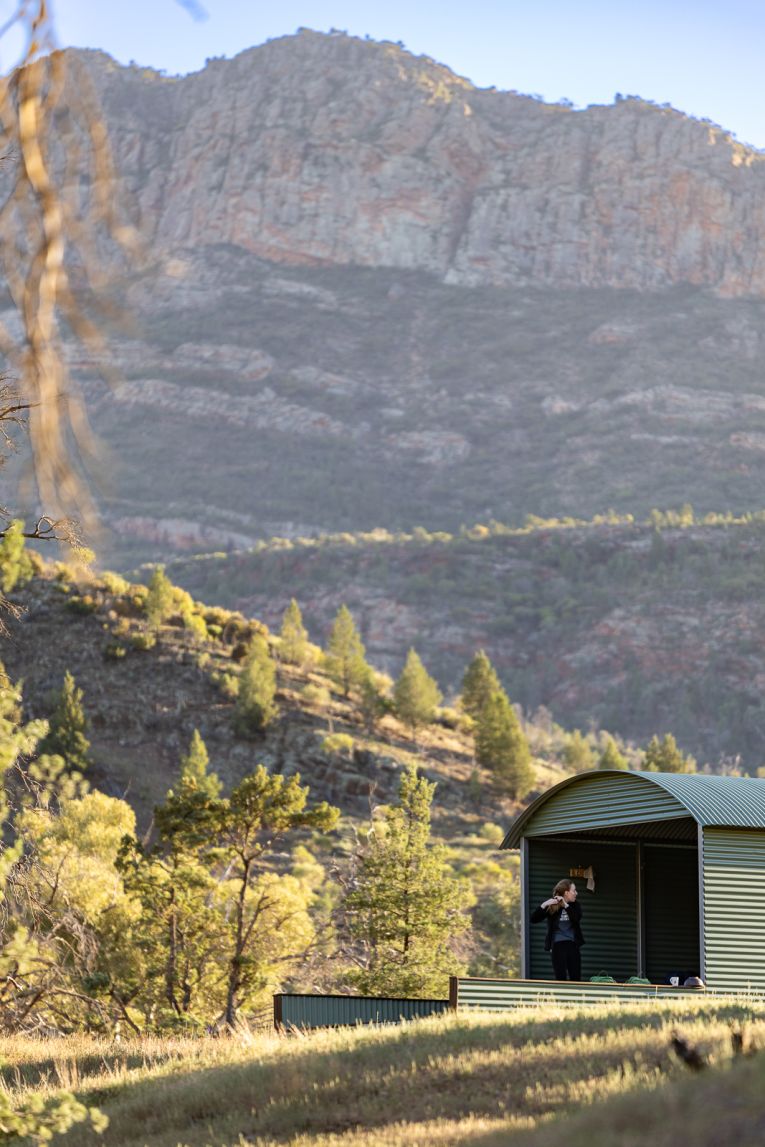
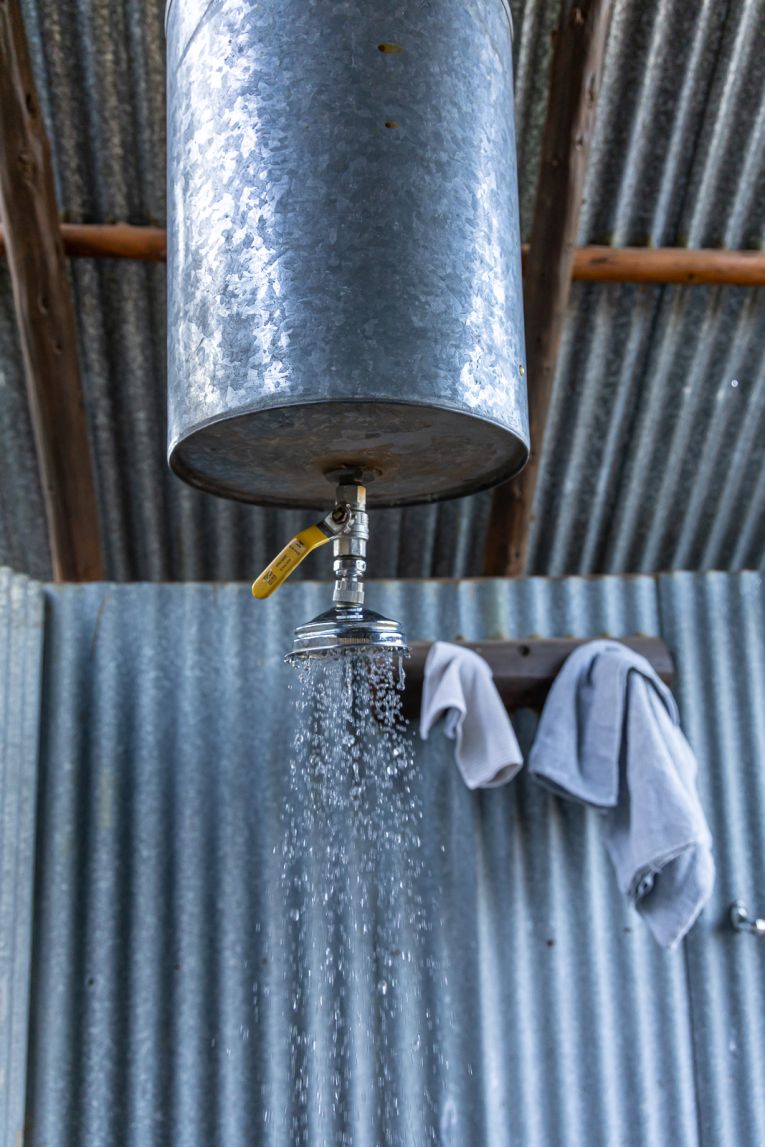
It’s time to wash up for dinner. Corrugated-iron shower booths have one open side, facing away from camp, giving uninterrupted views of the mountain ranges.
First, there’s a fun procedure of filling up a bucket and winching it to the top of the rustic alcove.
Thankfully the off-grid camp has hot water for the showers, because the warm day quickly becomes a cool evening. It might not seem five-star, but the showers become a favourite talking point of the camp.
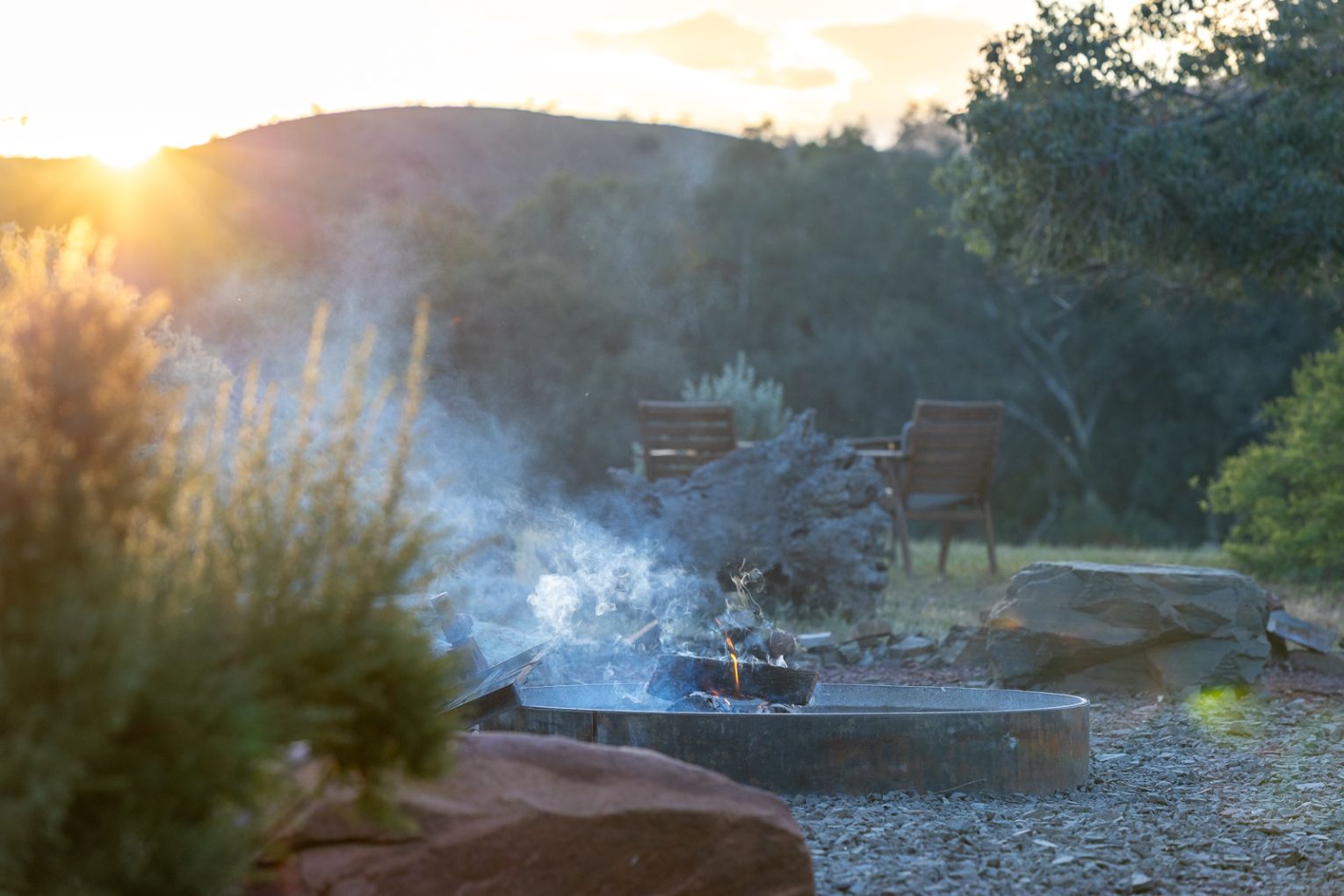
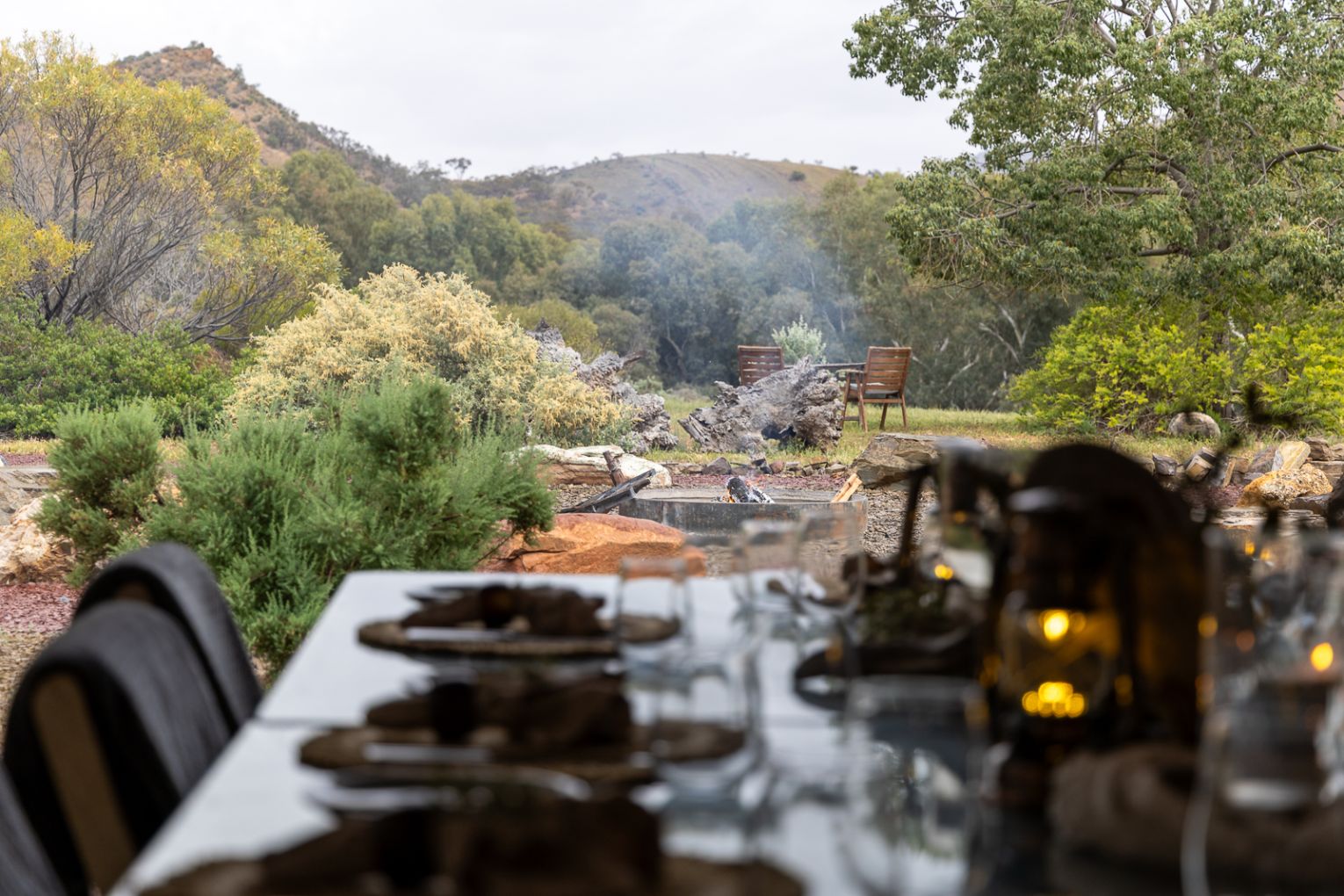
The fire crackles away as hikers regale stories from the day. The mountainous backdrop glows orange and then red; a giant painting in an infinite dining room.
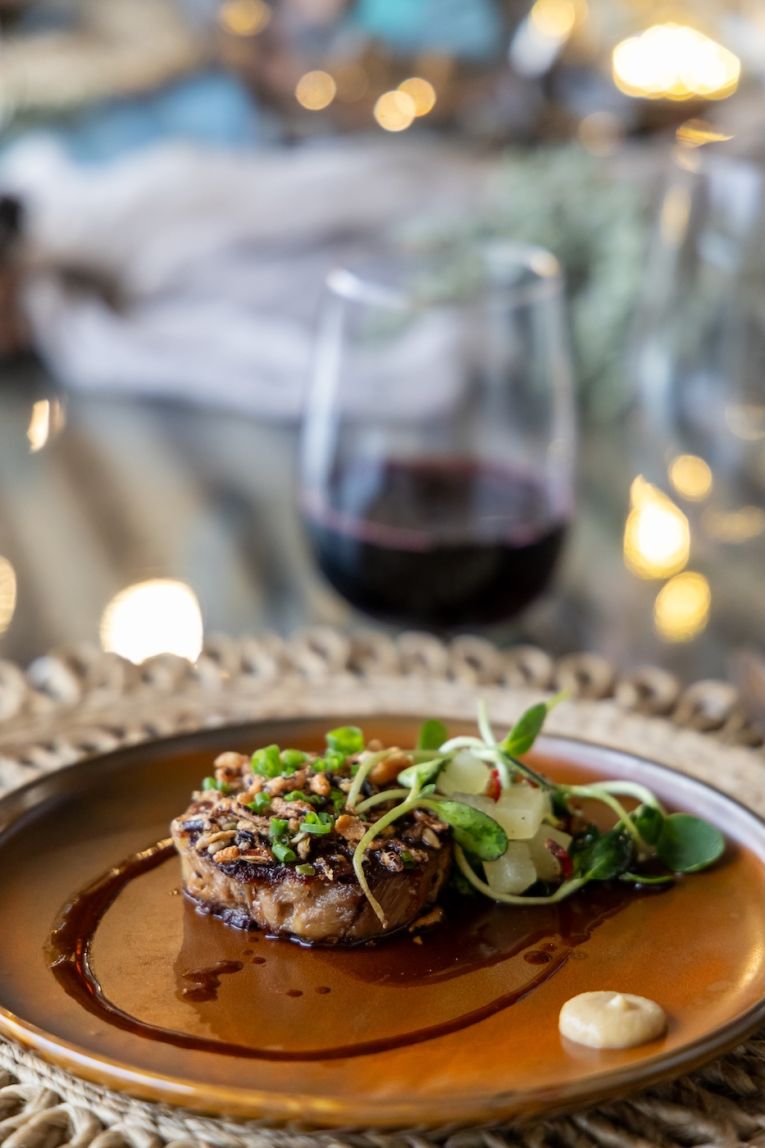
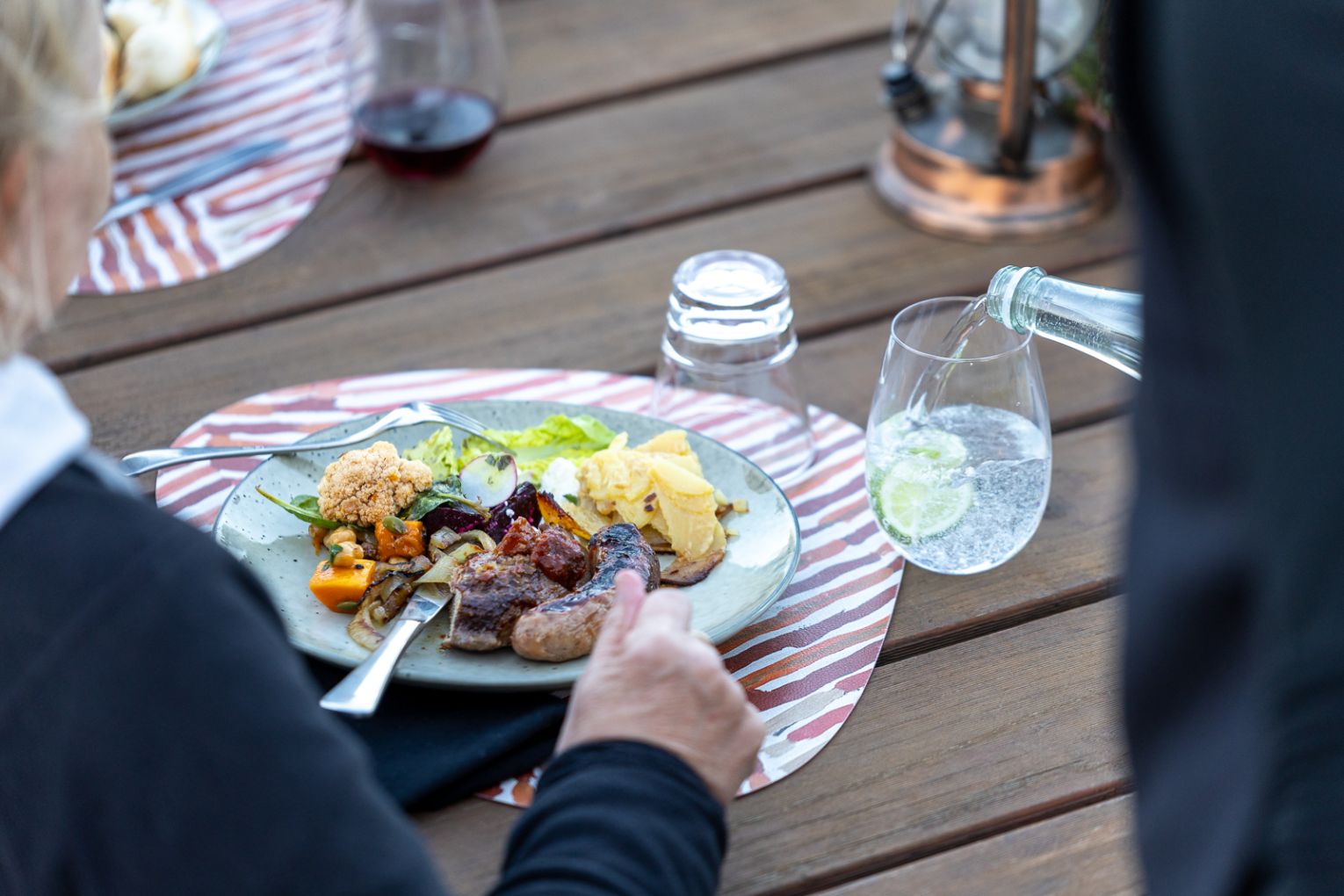
Then, it’s as if Uber Eats has delivered dinner from some unseen restaurant: an outback barbecue of saltbush lamb sirloin with pork sausages, native thyme chutney, camp potato and salads.
Everything is prepared at the homestead for Sandy, the outback sous chef, to skilfully finish on-site using only a barbecue.
After dessert, Sari gives a stargazing session. Fittingly, the Indigenous calendars are based on food.
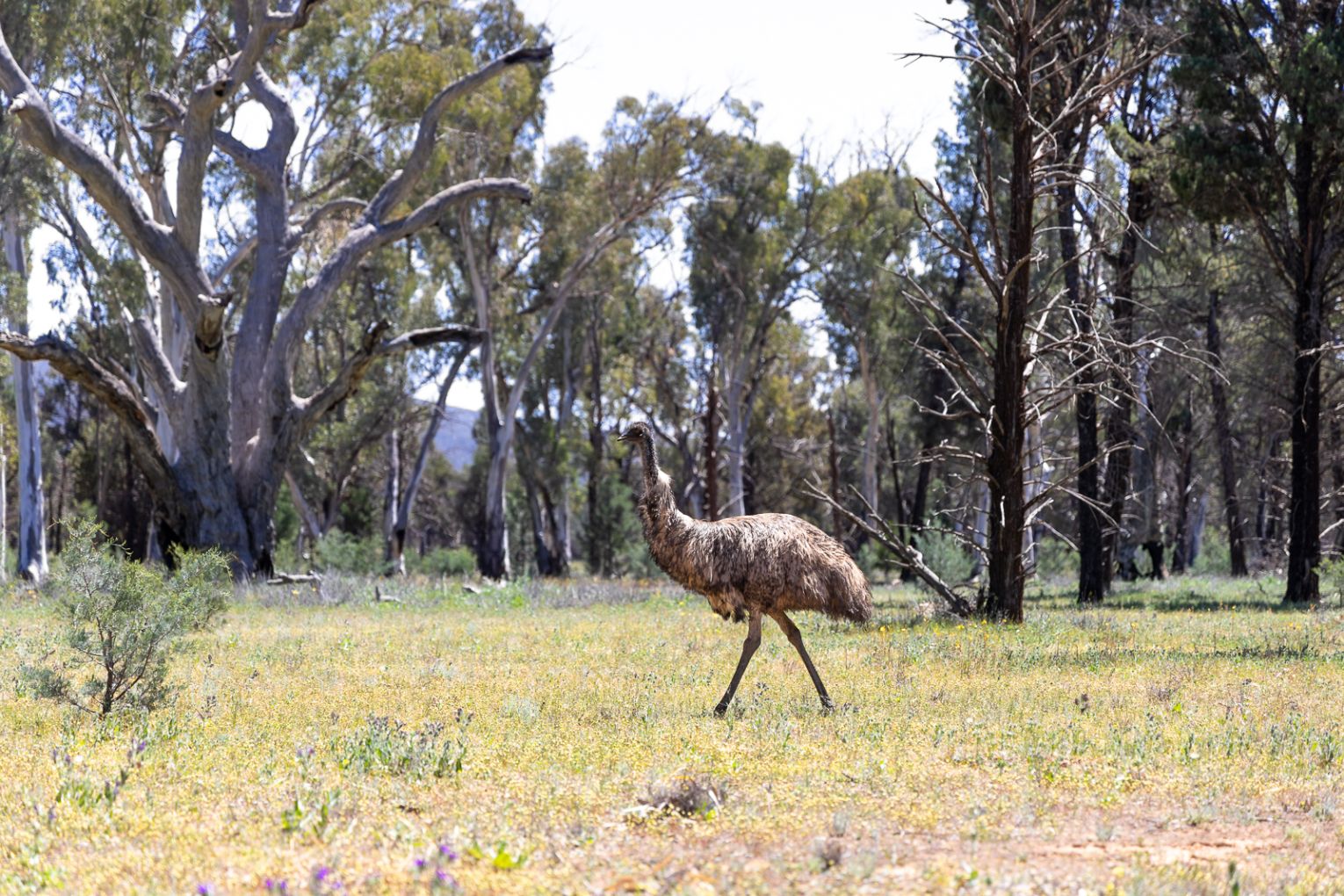
“At the right time of year and on the perfect night, the dark emu is spectacular,” Sari says.
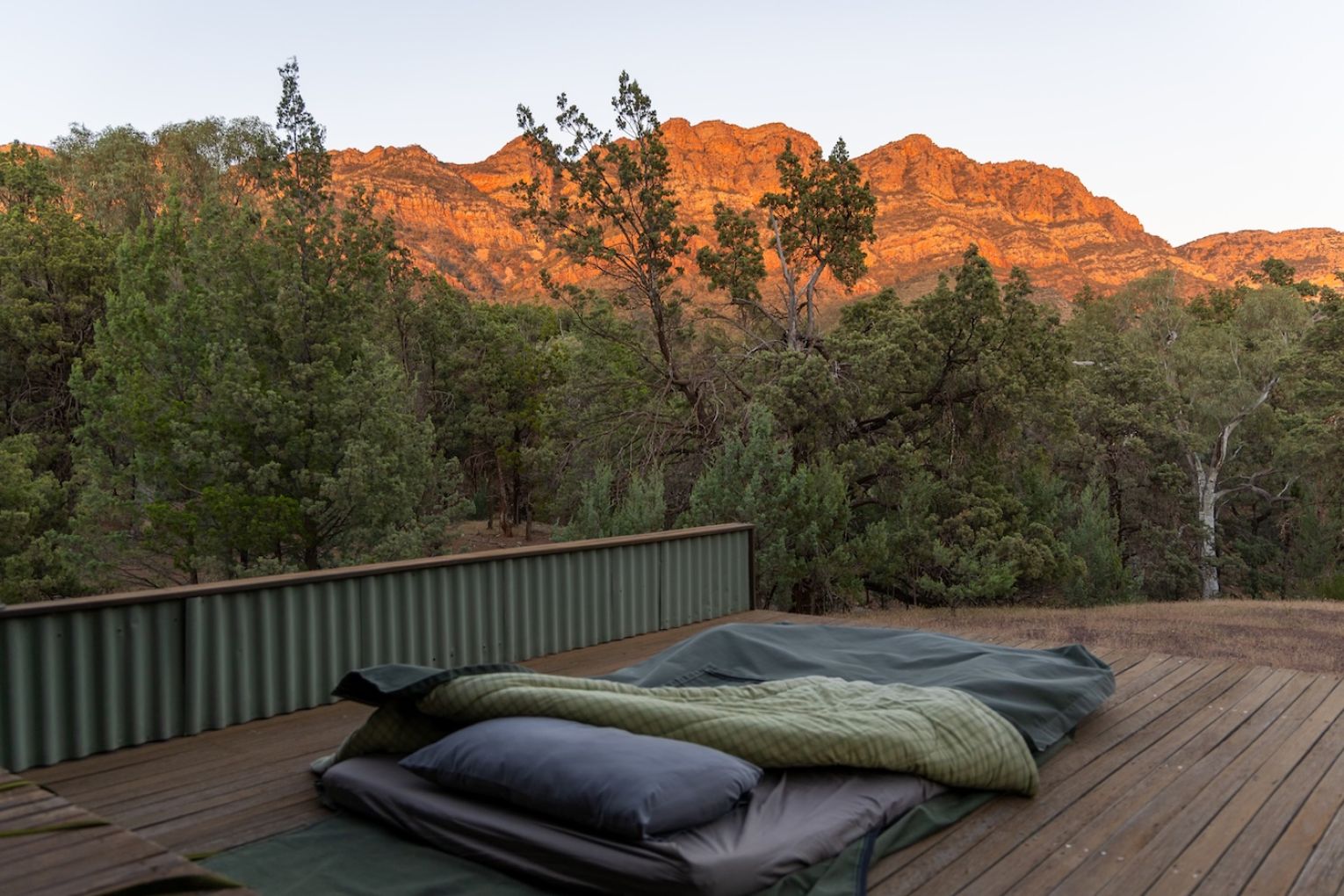
Private camp shelters have swags laid out for guests to decide whether to sleep under shelter or under the stars. You should opt for the latter.
Early risers spot rock wallabies. After a hearty cooked breakfast, coffee and healthy lathering of sunscreen, we set off along the Heysen Trail which for much of the day follows shady creek beds.
Nankeen kestrels hover above us as Natalie stops to explain how the ripples in rockfaces provide a history book of a long-gone ancient sea.
Today’s lunch stop is in a shady creek bed under giant river red gums, with a delicious Aldinga smoked turkey wrap. It’s important fuel for the afternoon’s leg-burning ascent of the Red Range, the most challenging section of the walk. Each time we stop to catch our breath and hydrate, we soak in the views.
Sari and Nat’s keen eyes spot the occasional kangaroo; their fat tails show that they are much healthier than they were during the drought of a couple of years ago.
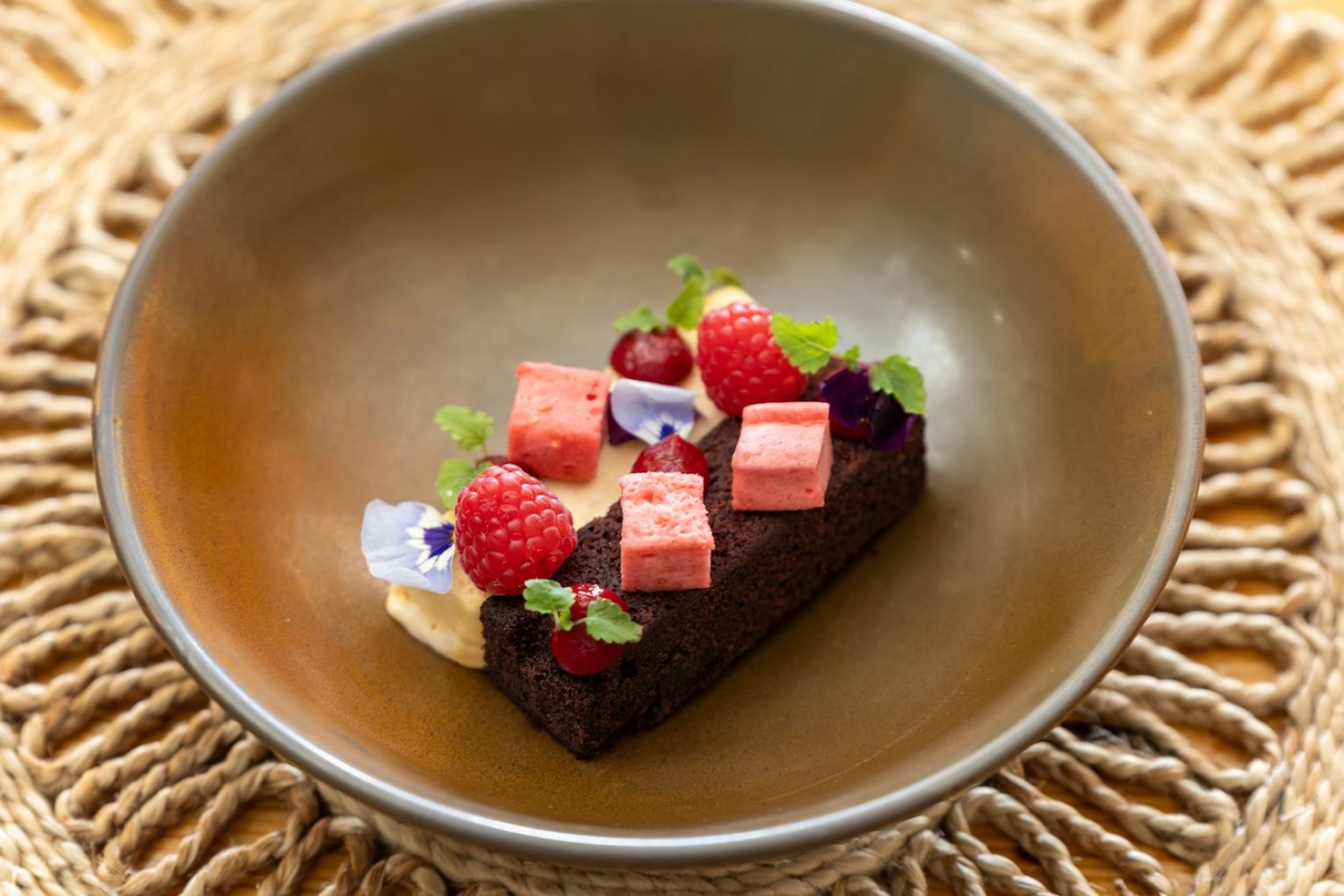
After the most challenging and hottest day of the walk, reaching our campsite at the foot of the Elder Range heralds a victorious sense of shared achievement, cheered over a cold beer or two. Or three. Dinner tonight is special: slow-cooked wagyu beef cheeks, followed by sticky date pudding with wattle seed butterscotch and dark chocolate ice cream.
The night is perfectly still and an ideal temperature for sleeping al fresco. Lying under the vibrant night sky with the pulsating of crickets and a light rustling of the trees is something you don’t forget quickly. Nor is waking up to sunrise across Elder Range; they saved the best for last.
The final day’s walk yields some of the most spectacular views. We come across wedge-tailed eagle nests, and spot two wedgies circling high above.
Nat explains that Arkaba’s guests are often in their 60s and 70s, with the occasional younger couple celebrating a milestone. “The walk is particularly popular with women. Often, they’re friends who’ve met through walking groups, and when we have a solo guest, it is almost always a woman,” says Nat.
Our final lunch stop features a zesty native tamarind chicken salad with rice noodles. In the afternoon we traverse steep and narrow goat tracks, before finally cresting a ridge to glimpse a mirage-like view of the homestead in the distance. Thankfully, it wasn’t a mirage after all, and our head chef Joel is waiting with home-made quandong and elderflower cordial.
Despite the exertion, the completion of the walk heralds a lightness of spirit. Three days of mindful wilderness immersion.
Not once scrolling social media. Most importantly, a freedom that only the Flinders can instil.
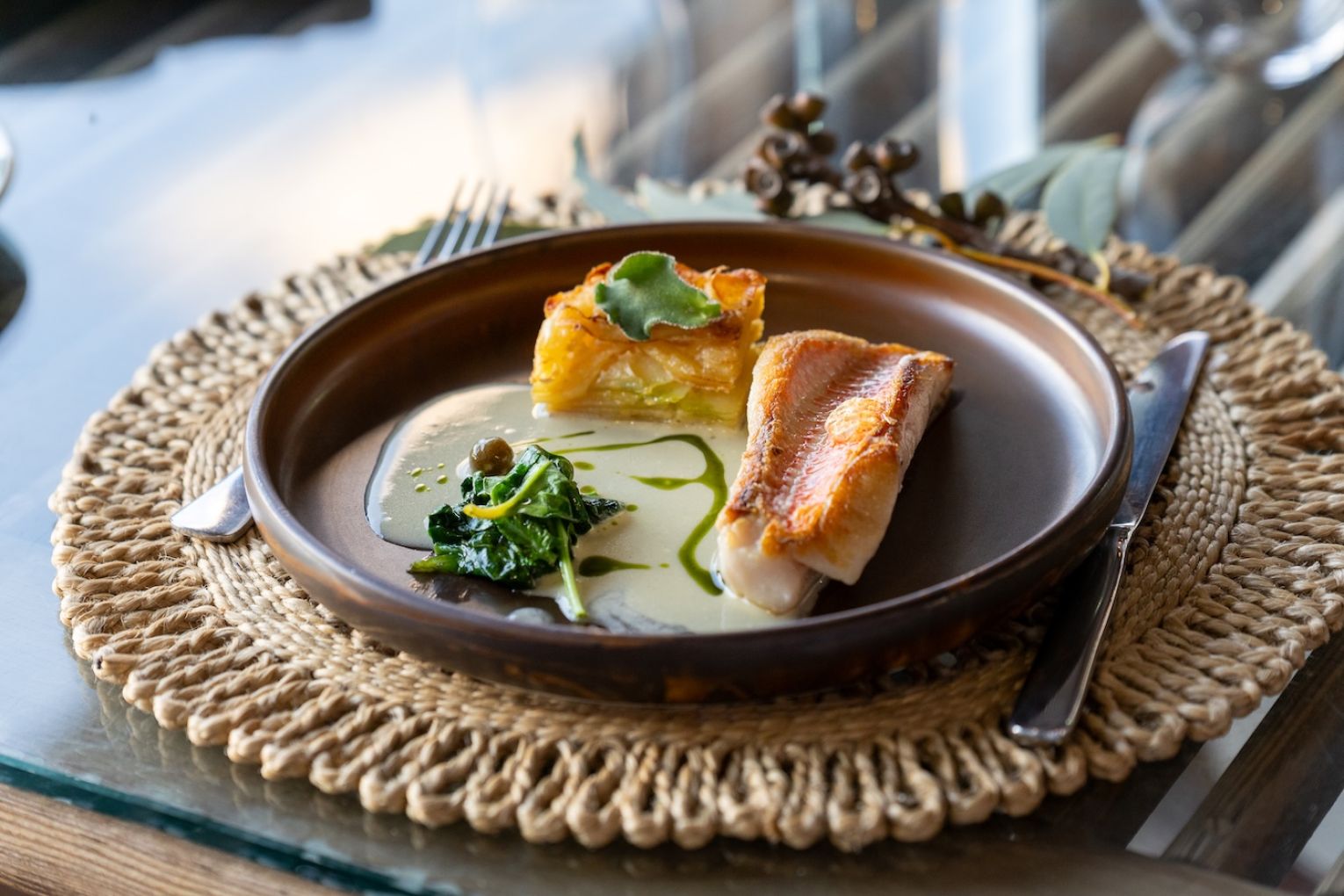
The final night’s feast is exceptional; a mouthwatering main of nannygai followed by Joel’s signature rocky road-inspired dessert, Arkaba Road. Then, a deep night’s sleep in pillowy-soft beds.
After a casual morning of cooked breakfast, coffee and reflection with new friends, we return to Adelaide via the Watervale Hotel for a shared lunch. Here, proprietor Warrick Duthy provides a tour of the historic hotel and insight into the region’s history.
Warrick says that before it was cleared for agriculture, the Mid North was blanketed in a temperate forest that created its own microclimate. Much like the Flinders, it is a sad story of a landscape permanently altered.
Yet all is not lost, having seen first-hand Arkaba’s inspiring efforts to rewild an ancient land. Perhaps one day, future generations may be able to immerse themselves in a landscape as it was 150 years ago.
In Adnyamathanha, the word Arkaba means abundance; something The Walk delivers in spades. And that includes hope.
SALIFE was a guest of Arkaba. The Arkaba Walk rates start at $4500 per person, twin share, with part-proceeds contributing to conservation work.
This story first appeared in the April 2026 print issue of SALIFE Magazine.
Want to see more stories from InDaily SA in your Google search results?
- Click here to set InDaily SA as a preferred source.
- Tick the box next to "InDaily SA". That's it.