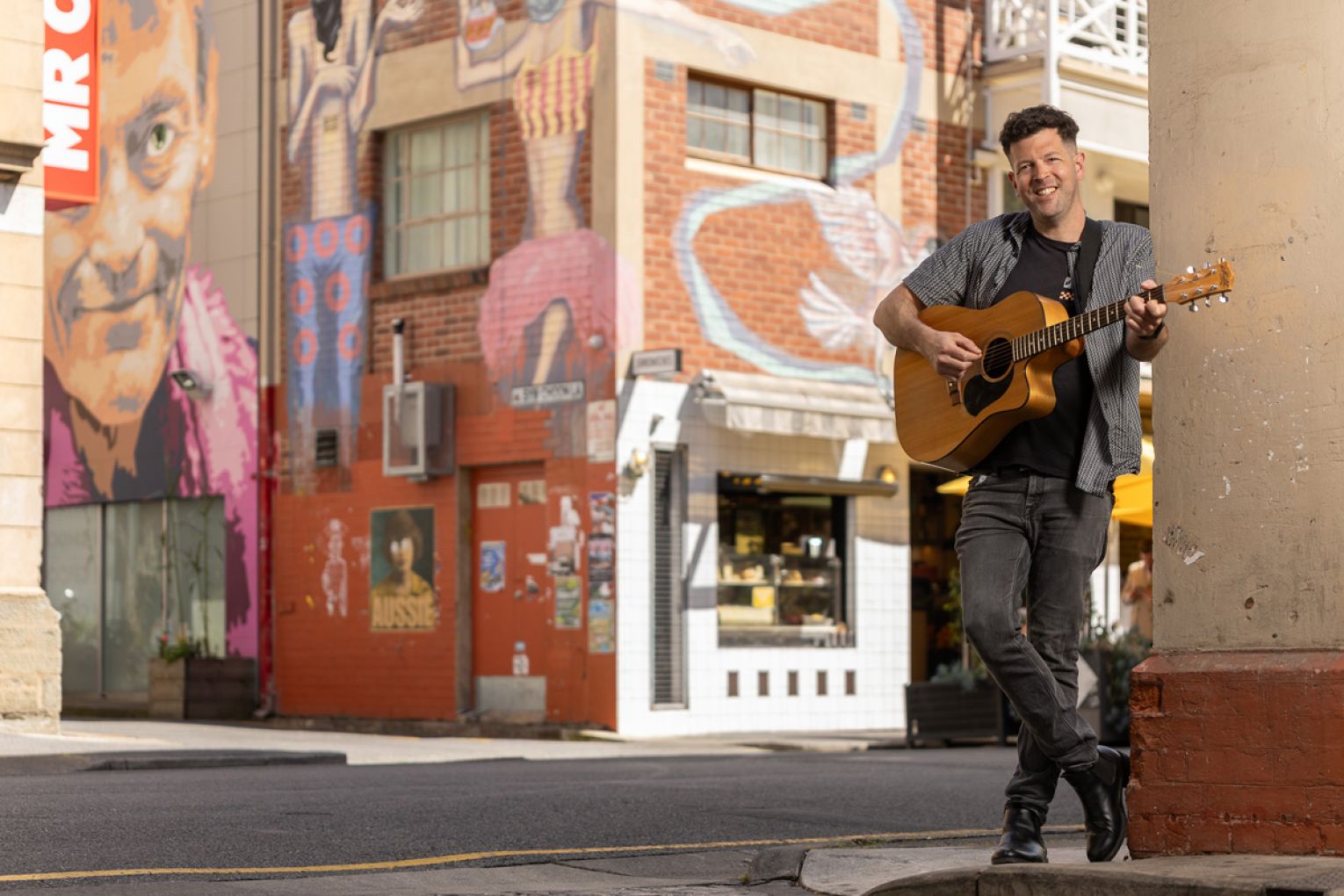
Singer-songwriter Benjamin Roberts hit the pavement with a mission to perform on every Adelaide city street, all in the name of mental health.
Even for an accomplished musician, setting your guitar case down on a street corner and striking up a tune can test one’s bravery. It’s something that Adelaide musician Benjamin Roberts is sharply aware of having spent 18 months busking in hundreds of weird and wonderful spots all around Adelaide.
“Sometimes you get to a spot and think: ‘I want to play this corner but there’s 20 tradies rendering a wall over there – I won’t bother’,” laughs Ben. “Sometimes they ignore you and sometimes they love it.”
The Concrete Connection Project was a solo tour which saw Ben perform on every street of the City of Adelaide – 577 in total – to break down the stigma that surrounds talking about mental health, while raising funds for local mental health charities. In December, Ben announced that he had reached his target of raising $10,000 for the cause.
Ben set out with the goal to spend at least 20 minutes performing on every street, laneway and alley, interview other local musicians on his Concrete Connection Project podcast and write new music along the way.
“The idea is to shed light on charities, organisations, and not-for-profits that perhaps don’t get the light that they deserve, might be running on a shoestring budget or need a little bit of help and awareness to continue the great work they’re doing,” says Ben.
The idea for the project came about in 2023 when Ben made the tough decision to step down from touring with the Ukulele Death Squad, a band he was a founding member of, as international shows were at odds with the commitment to his young family.
“Around that time of leaving the band, I wasn’t in the best place mentally, so I was exploring ways to benefit my own mental health, do some good for the community and play more music,” he says.
“You hear about people who have run the length of Australia or skateboarded across America, and I’m just not that good or fit enough, but I could follow that concept in a way that suits me. I don’t think anyone’s ever performed on every street of the Adelaide CBD … and that’s how the idea started.”
You might like
Despite all the work being done in the mental health space, Ben saw that there was a stigma attached to discussing mental health.
“I have many friends and extended family members who have struggled with mental health and things like addiction and suicidal ideation. And then I’ve struggled with things like depression, anxiety and self-worth. And now, I’m thinking about my children’s generation.”
Also a founding member of The Timbers, Ben has plenty of experience playing to large festival crowds and packed venues.
Yet despite his experience as a performer, the project has proven to be a great personal challenge. Sometimes his busking goes unnoticed, and at other times it has created beautiful connections.
“These days, people are on their phones and mightn’t even notice you’re there. So, it can be lonely, and it can be hard work, but in those moments where people do ask what you’re up to, conversations start happening about the bigger picture of mental health, and those connections are what this is all about.
“Sometimes people tell me about their struggles, or those of someone close to them. It’s in those moments – those spots of the city where no one else is around – that you get special one-on-one interactions.”
Ben has performed outside people’s homes, in quiet residential laneways and on busy main roads. The project has also incorporated the entire suburb of North Adelaide.
“There have been highs and lows; lots of rain and lots of heat. Early on, it felt like a very big project to undertake, and there were moments where it felt too big for a one-man show,” he says.
“It’s been a roller coaster of emotions, but I’ve become very good at finding a car park around the city and I’ve discovered some incredible street art around Adelaide, both legal and illegal.”
Subscribe for updates
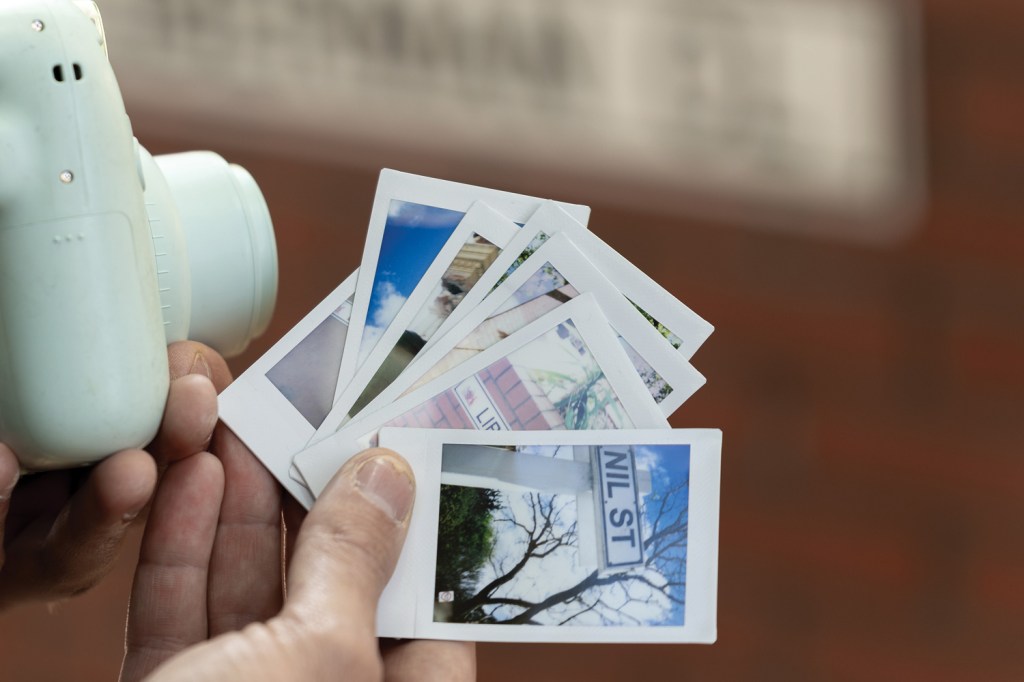
Ben has captured polaroid photographs of every street sign to create a catalogue of images that will form an exhibition to raise extra funds for the project. While Ben has given so much of his own time, it has in turn rewarded him with an opportunity to develop new skills while growing personally.
“It’s given me many hours to hone my craft. I’ve never done a podcast before so I’m getting better at interviewing people, listening to people, getting better at my instruments and my voice. I’ve been able to level myself up as well as being able to donate proceeds to worthy causes,” says Ben, who has donated to eight charities so far.
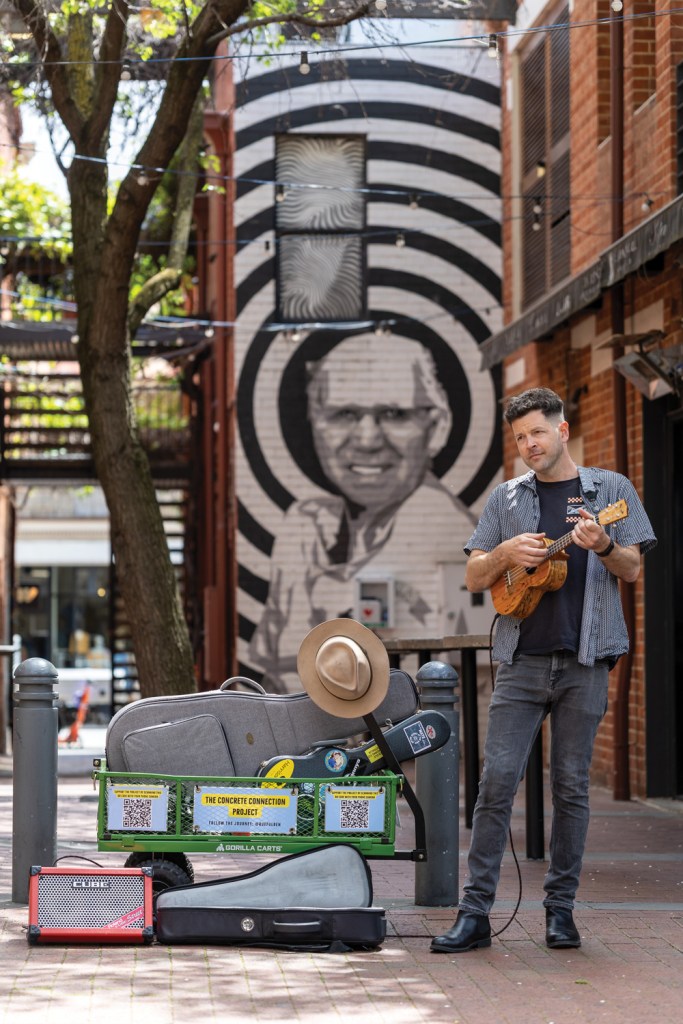
“It’s a great thing for a musician to get out on the streets and realise that you’re not always going to be showered with adoration and applause. It makes you brave and less worried about what people think.”
A skilled player of the guitar, ukulele and banjo, Ben has written a new catalogue of music which he hopes will form an album that will be an homage to the project. “Often you are just out there jamming and experimenting, so a lot of live writing happens, which is my favourite part about it.”
For the podcast, local musos and identities have joined Ben on park benches to talk about mental health. Lighthouse Youth Projects mentor Jamie Moore explained that people have no trouble reaching out for help with a physical injury, but there is still a stigma attached to asking for help with healing your mind.
Musician Jen Lush spoke about the phrase “mining for joy” – finding the specific things that bring one to a place of peace. And for musician Courtney Robb, success lies in the everyday connections she makes with people.
Musician Adam Blesing provided one of Ben’s favourite pieces of advice. “One of his favourite quotes is: ‘a problem shared is a problem halved’, and that really rings true for me,” says Ben.
“We all know that it’s good to get things off your chest, but the big thing is learning how to listen. Some people just need to be heard, and that can really help the person who’s struggling,” he says.
“Sometimes it’s easy for us to offer up advice, but to sit and listen is sometimes the best way to help that person to navigate their own path. No one’s ever walked in your shoes, so no one can offer you the correct advice.”
Ben thanks all those people who have stopped, listened and applauded a song over the past 18 months and hopes he has inspired them in some small way.
“There are so many great memories from the project. I knocked on the door of an old building in North Adelaide that I thought looked pretty cool and I ended up becoming a model for a live portrait drawing class,” he says.
“Sometimes you’ve got to knock on doors that you don’t know what’s on the other side and that has become a big part of the project. Every time I’ve found the guts to do that, good things have happened.”
This article first appeared in the December 2025 issue of SALIFE magazine.
Want to see more stories from InDaily SA in your Google search results?
- Click here to set InDaily SA as a preferred source.
- Tick the box next to "InDaily SA". That's it.