Meet the man behind this dying artform
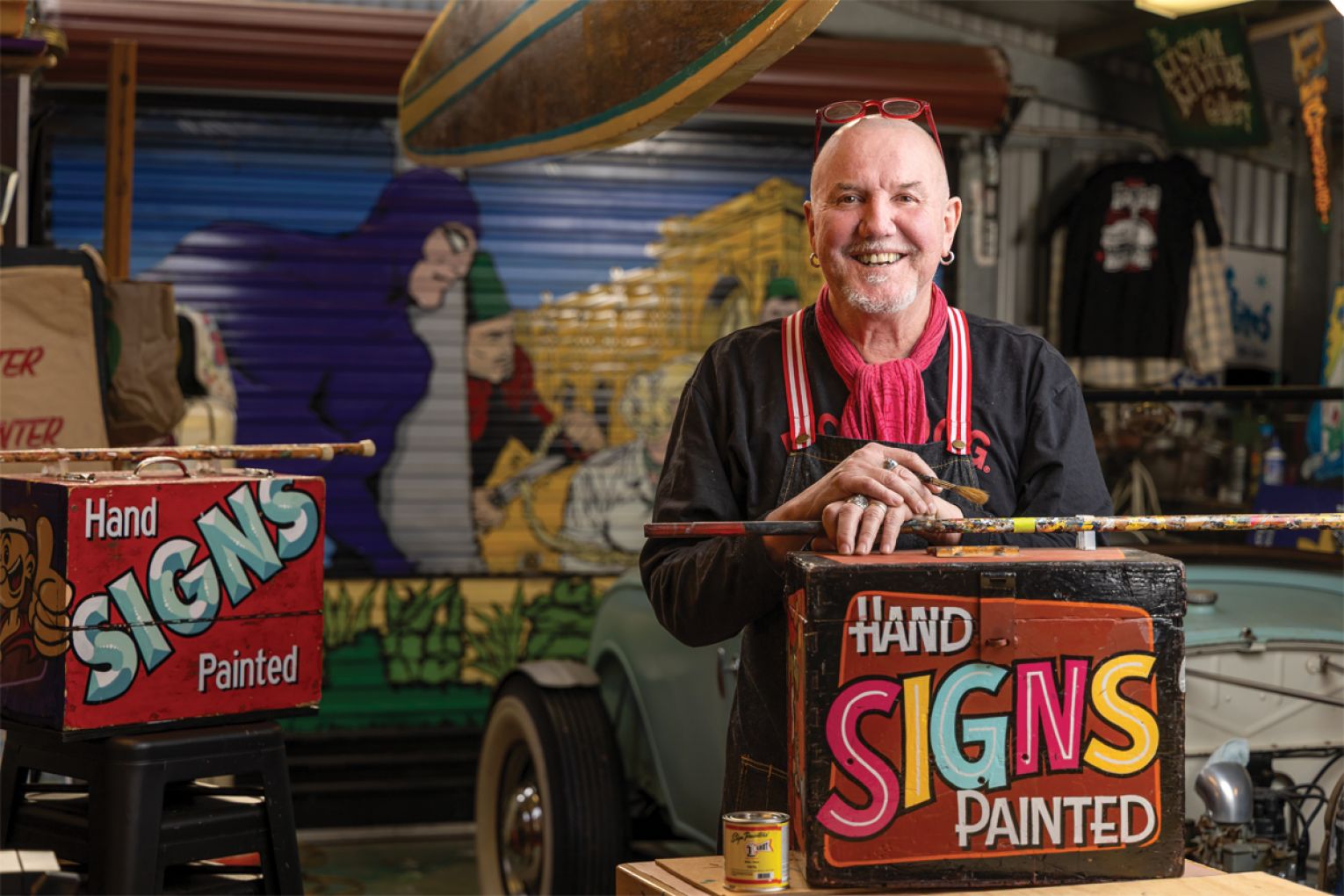
In-demand brush signwriter Ray “MoonDog” Polotnianka is championing the renaissance of a nostalgic artform that was nearly lost to the digital world.
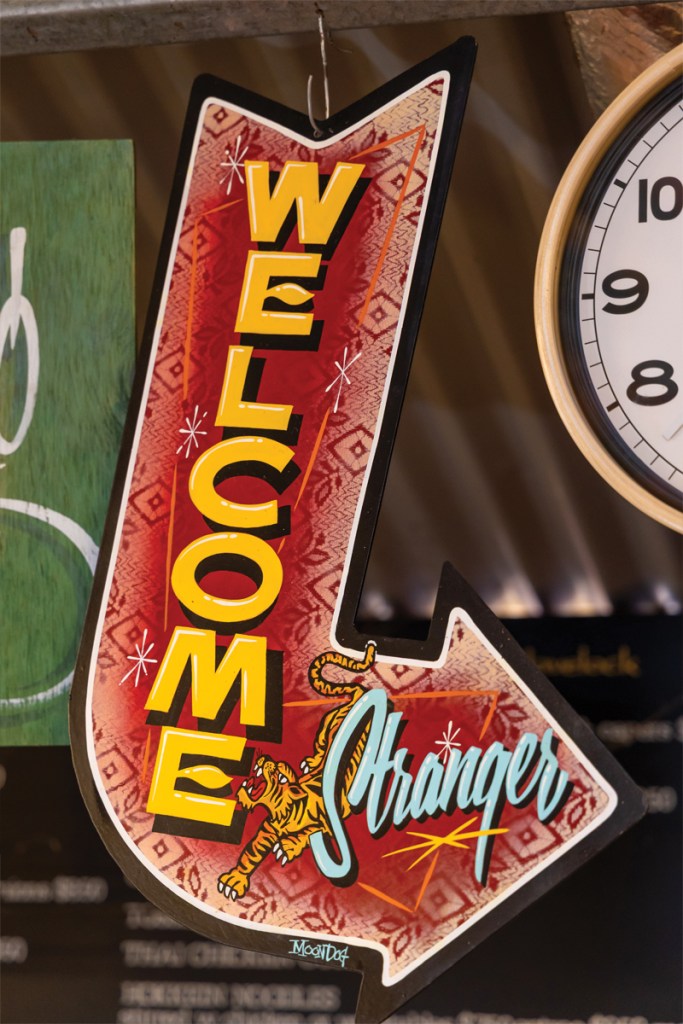
When Ray Polotnianka’s unmistakable 1955 Chevrolet Panel Truck is parked out front of a city restaurant, bar or tattoo parlour, it’s a sure sign that the master signwriter is at work. Ray – known to most as MoonDog – is one of a kind, just like every one of the custom signs he’s hand-painted over his 40-year career.
Although he humbly identifies as a tradie, Ray is indeed an artist – a practitioner of a trade that was nearly rendered extinct by the introduction of digital printing and stick-on vinyl lettering.
Despite modern technology, Ray has never been busier. His clients range from the trendiest new restaurants to barbers and even Fringe performers. Each sign carries an important responsibility of drawing the eyes of customers.
“I’m the tradie of the family,” jokes Ray, whose sister Renata became a genetic scientist and brother Alex a headmaster. Ray showed promise as an artist in primary school, but when he didn’t get the marks needed to study art, he took up a signwriting apprenticeship with the Highways Department.
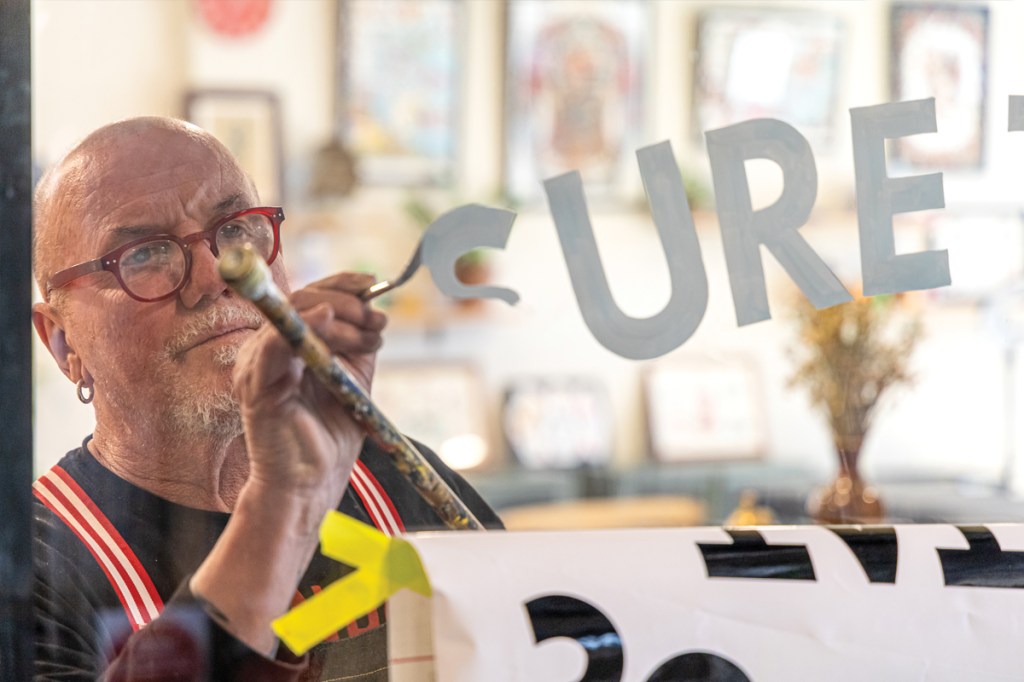
Painting road signs was “a drag”, but the strict discipline gave Ray the technical foundations for a career in signwriting – particularly his ability to paint the uppercase Highway Gothic font by hand. “The end of every letter has what’s called a terminus, and the interesting thing about road signs is that Highway Gothic has a terminus on an angle, which is tricky to paint,” says Ray.
You might like

“When I went to TAFE during my apprenticeship, everyone else was working for advertising companies and I was doing strict block lettering which I found boring. But now, I’m so happy that I followed that discipline, because it taught me so much. If I was a doctor, I’d be a doctor in the construction of a letter.”
After painting road signs for several years, Ray was employed to paint Glenelg’s iconic H-type trams. In 1984, while still working on the trams, he registered his business, MoonDog, and took on side-gigs painting shopfront signs for local businesses.
But it was an era when signwriting was beginning to be replaced by digital typography and vinyl lettering. “In the 1980s, everyone put down their brush to feed vinyl into machines to make sticky letters from digital designs. It cut out the signwriter. But my vocation kept me brush signwriting at least three days a week, because that’s what was needed for the trams,” says Ray.
And yet, when his job with the trams finished, Ray’s business MoonDog had so much interest, he easily transitioned to full-time signwriting. After painting a sign for Leigh Street restaurant Bread & Bone in 2014, his reputation spread to other CBD bars and eateries. Most recently he’s completed the sign for Tarantino’s Italian restaurant on East Terrace.
“There has been a renaissance in brush signwriting, and it’s become popular again,” he says.
Subscribe for updates
“I quite dig it when young men with their big beards and stovepipe trousers take interest in what I’m doing and share photos and videos of me to social media.”
While an untrained eye mightn’t tell the difference between digital lettering and a hand-painted sign, Ray says they are chalk and cheese. For one, his enamel paint will last for years. Then, there’s the bespoke value in the work of the artist.
“There’s something organic about traditional brush signwriting that can’t be derived from digital print or vinyl-cut letters,” says Ray. “Digitally printed signs can fade in sunlight; the longevity isn’t there. But I can drive past a sign I painted several years ago, and it looks like it was painted last month.”
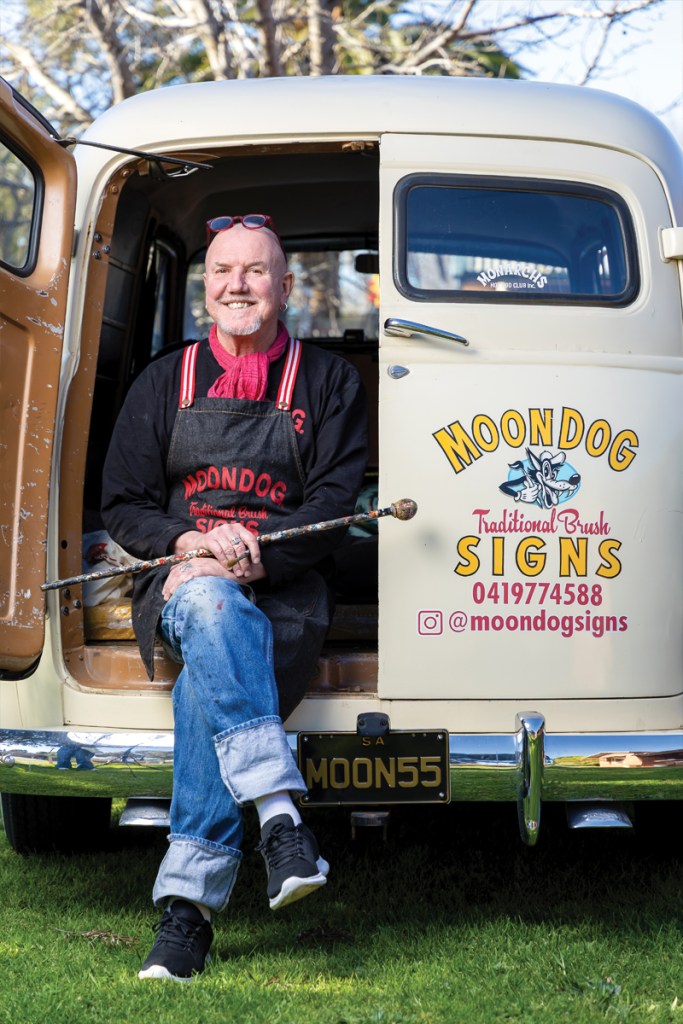
A key tool of the trade is a piece of wooden dowel with a rubber stopper at the end, which Ray uses to give his brush hand an anchor point. The stick is referred to as a Mahl – a Dutch word for “rest”. His imported brushes are made with sable and ox hair and he paints with oil-based enamel paint.
MoonDog has also garnered a following for his work on vintage cars. “I have painted many vehicles from racing cars to commercial vehicles, and an array of vintage motorcycles,” he says.
Ray’s favourite piece of work is always his most recent, as he challenges himself to produce better work each time. After so many years, it’s this pursuit of perfection that keeps him going.

For the past decade, Ray has been hosting signwriting classes in his home workshop. “Given that there are few places to learn brush signwriting, the only people I can employ are students who have attended my classes,” he says.
“Teaching people my craft is what I’m most proud of. I derive much pleasure from imparting knowledge of my trade and the joy I receive from seeing my students’ work warms my heart.”
Ray isn’t looking to retire any time soon, even at the age of 60. “People that do physical trades get to a point they need to retire, but with brush signwriting, I feel that I’m as good as I’ve ever been. I’ll probably need some stronger glasses, but I don’t have to endure the stress of physical work,” he says.
“Sooner or later, I’m going to have to hand the reins over to someone. But for now, if you don’t call me, who else can you call? So, I am working to train up the next generation of signwriters to continue the legacy and that’s what I enjoy the most.”
This article first appeared in the October 2025 issue of SALIFE magazine.
Want to see more stories from InDaily SA in your Google search results?
- Click here to set InDaily SA as a preferred source.
- Tick the box next to "InDaily SA". That's it.