A love letter to the state’s health system
“I believe our health system is just about our finest moment as a society.” Simon Royal shares his deeply personal story about battling cancer in South Australia.
Developing two completely unrelated types of cancer in as many years was never on my bucket list. Nor anyone else’s, I imagine. Nonetheless, here we are. In April 2024, I was diagnosed with prostate cancer, which was then successfully treated with surgery.
In August of this year, a colonoscopy revealed the newcomer. It’s an achievement of sorts, I guess. But this latest deep dive into the health system has revealed something that’s become important to me: a jarring disconnect between my experience – one of extraordinary care – versus the daily parade of stories of failure and disarray that largely characterises health discussions.
In these cranky times, we need nuance and perspective more than ever.
Unfortunately, our politics, and to a lesser extent our journalism, aren’t providing them. Reports of the health system’s shortcomings are always in the public interest, but a diet solely of failure only ever serves vested interests.
At the fruitcake end of the political spectrum, conspiracy theorists undermine confidence in proven treatments. But the so called responsible end of politics has done just as much in its way to shred trust.
Retail politicians spend years in opposition noisily proclaiming a crisis, only to spend years in government dodging responsibility for not fixing what they promised. It’s hardly confidence building.
The fact is ‘the health system’ is such a vast, rambling thing that it’s a snapshot of the human condition where brilliance and failure will always sit side by side. What worries me is our lopsided discourse obscures what we have.
"For Australians to lose sight of that would be both dangerous and a shame. Because for all the well deserved publicising of its shortcomings, I believe our health system is just about our finest moment as a society."
This is my love letter to that achievement.
The new cancer’s tale begins in much the same way as the prostate cancer did two years ago – with a trip to my GP, Dr Andrew Linn. Back in 2024, Dr Linn was suspicious the indicator for prostate cancer, PSA, or prostate specific antigen, was being coy about my true situation.
You might like

He was proved correct. When the cancer was removed, it was far more aggressive than the relatively mild levels of PSA had indicated. It was also about to set off on a grand tour of the rest of my body. Surgery thwarted the disease’s plans.
Now, history has repeated itself, though in this episode Dr Linn had a little diagnostic help from an unexpected source: a backside stinging chilli pizza. The morning after the pizza brought an explosive aftermath, including blood in the toilet. I knew my old nemesis, haemorrhoids, had returned, which Dr Linn confirmed. But he also ordered a colonoscopy and endoscopy for a precautionary look around.
“Let’s just be sure…not all that bleeds are haemorrhoids”, he said. A few weeks later, colorectal surgeon, Dr Matt Kozman, didn’t need a long look to see something far more serious had also set up shop down there. As I recovered from the anaesthetic, Dr Kozman told me he’d taken a biopsy. He suspected I had a carcinoma.
There are two things to be said. Firstly, I never thought I’d be grateful for haemorrhoids. Secondly, and more importantly, I really hope Andrew Linn doesn’t get weary of saving my life.
Anyone who’s had cancer knows the limbo between initial diagnosis and the subsequent scans showing prognosis. No matter how good the health system, you wander this wilderness alone. Then, one way or another, it’s resolved.
Matt Kozman called me a couple of days after the last scan. “Good news”, he said. “It hasn’t spread, and as I mentioned earlier, what you have is highly responsive to treatment.”
I heard him but didn’t quite understand. When I asked, “so if I’m not having palliative treatment, what am I having”, he replied, “we are treating you to cure you.” There are no guarantees but it’s the best news possible. Dr Kozman added I needn’t bother planning a funeral on his watch.
I then asked what I’d have to do to organise treatment. The surgeon answered, “nothing.” At that moment I knew there’d be no more wandering alone. What I didn’t realise was how much company I’d have on my way.
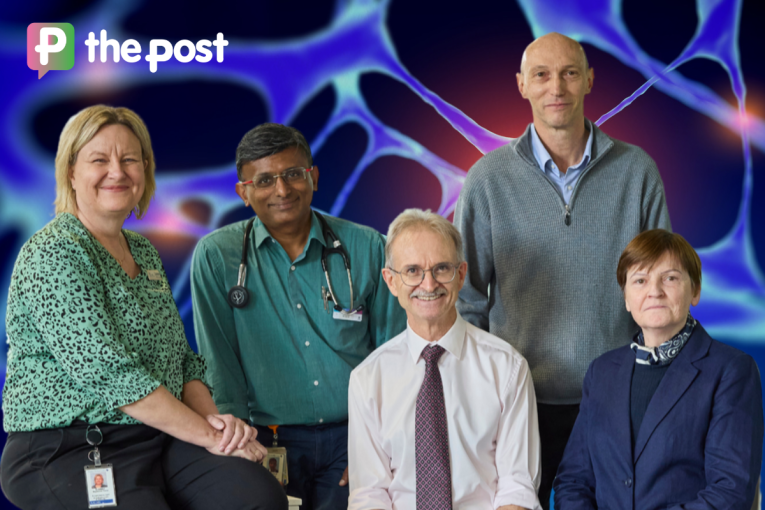
Together with radiation oncologist, Dr Scott Carruthers, and medical oncologist, Dr Dainik Patel, Dr Kozman told me a treatment plan had already been hatched. The necessary appointments, tests and mapping scans were being booked as we spoke.
Later, Drs Patel and Carruthers outlined I’d have one session of intravenous chemotherapy, then on to a course of tablets. The regime would be three tablets in the morning, followed by a radiation session, then another three tablets in the evening. Rinse and repeat daily, Monday to Friday, for six weeks.
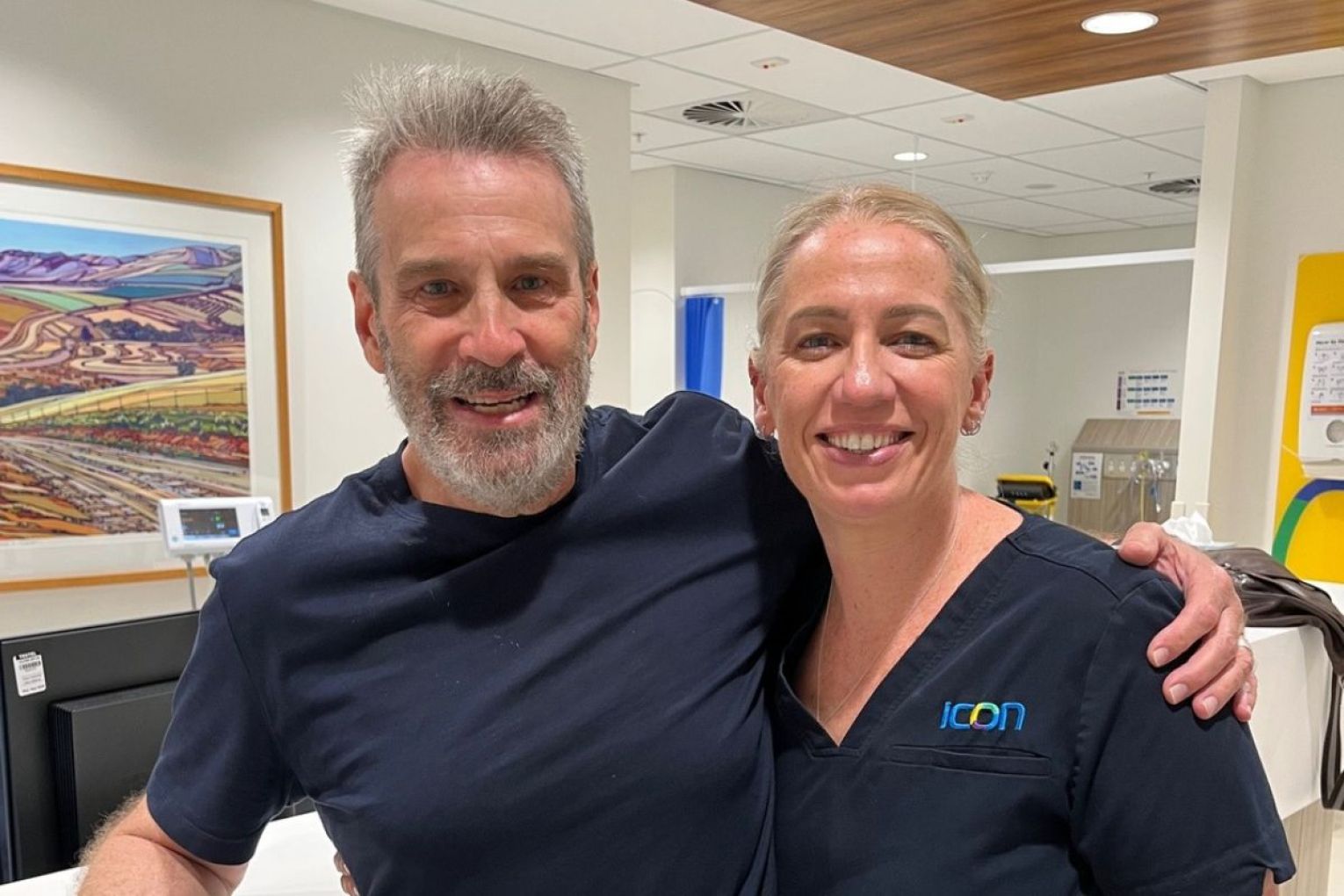
I’d be treated as a private patient at the new Icon Cancer centre on O’Connell street. The financial reality of that wasn’t what might be expected. I still have no idea of what the chemotherapy cost. All I had to pay was a few dollars in incidentals. I know the cost of radiation was well over $40,000. My out of pocket contribution was about a cattle class airfare to Europe, if that. Dear old Medicare. The scheme effectively took care of everything.
With the scaffolding of my treatment in place, it was time to meet the rest of the people delivering it. My relationship with them – the young radiation therapists, nurses, and front desk staff – is the heart and soul of what I experienced.
Strangely, at first, I found it an elusive thing to describe. On one level it was absolutely a professional relationship. I’m their patient, who also happens to be a 63 year old man dropping his pants in front of mostly young women in their early to mid twenties, before hopping under the linear accelerator. Professionalism kept that comfortable. Yet the relationship can’t help but become personal – pants up or down, they were helping me stay alive.
Over six weeks, the Icon people became my foster family. Outside of the dog, the cat, and my partner, I was seeing more of them face to face than my actual family and friends. Even as the treatment grew more fatiguing and painful, I looked forward to seeing them each and every time. I made sure to tell them, though the words felt inadequate.
Stay informed, daily
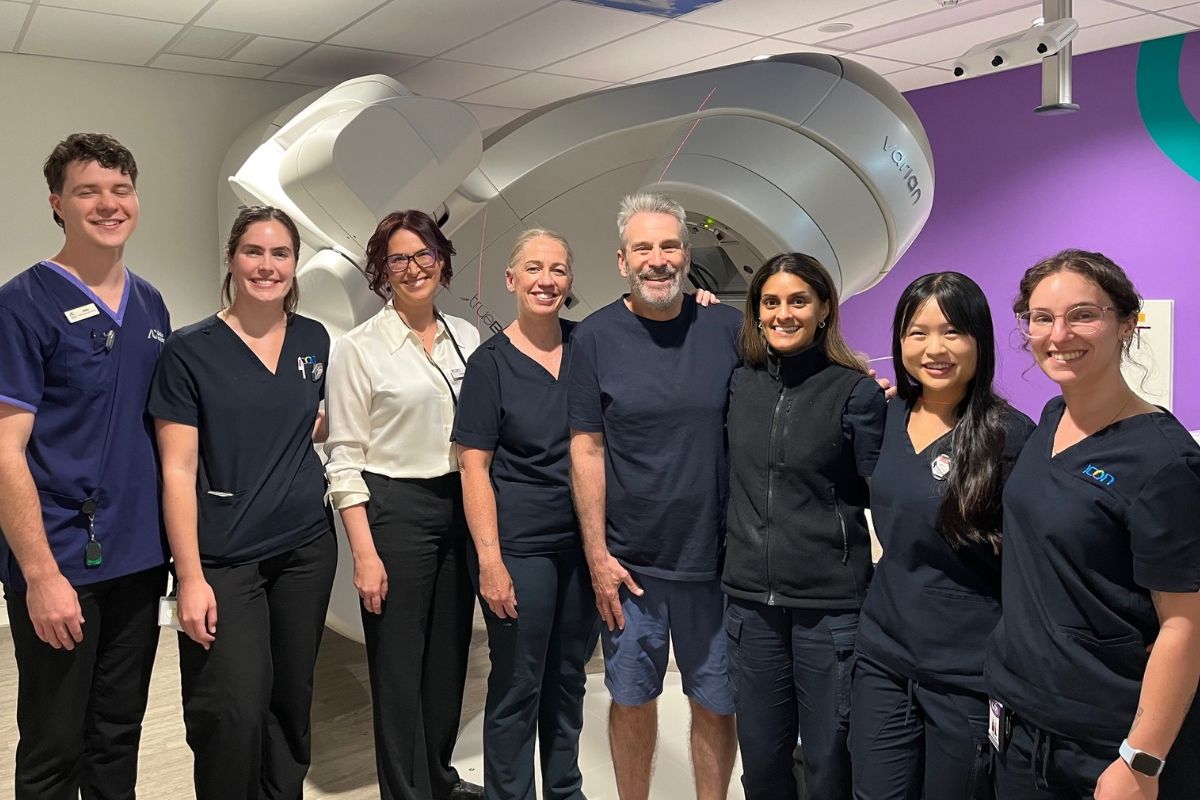
One Saturday morning, the right word describing this relationship turned up. On my first day of treatment, oncology nurse, Ange Blair, gave me her after hours number. “If something goes wrong, if you need to talk, you call me, anytime…I mean it”, she said. “Sure”, I replied. We then showed one another our dog photos. I didn’t give the phone number or instructions another thought.
The chemo tablet box is plastered with various warnings about cytotoxicity ( whatever that is) along with instructions to take them only on days of radiation treatment, i.e. not Saturday or Sunday. When I realised I’d downed a batch without thinking, I panic phoned Ange. It was 8 am and she answered. “Buddy, don’t worry about it”, she said. “You are not the first, you won’t be the last.”
Having talked me off the ledge, Ange added, “just promise me you won’t stick your fingers down your throat…have a good weekend and I’ll see you on Monday!” There’s a distinction between treatment and care. The latter is what makes our health system exceptional. I now had my word.
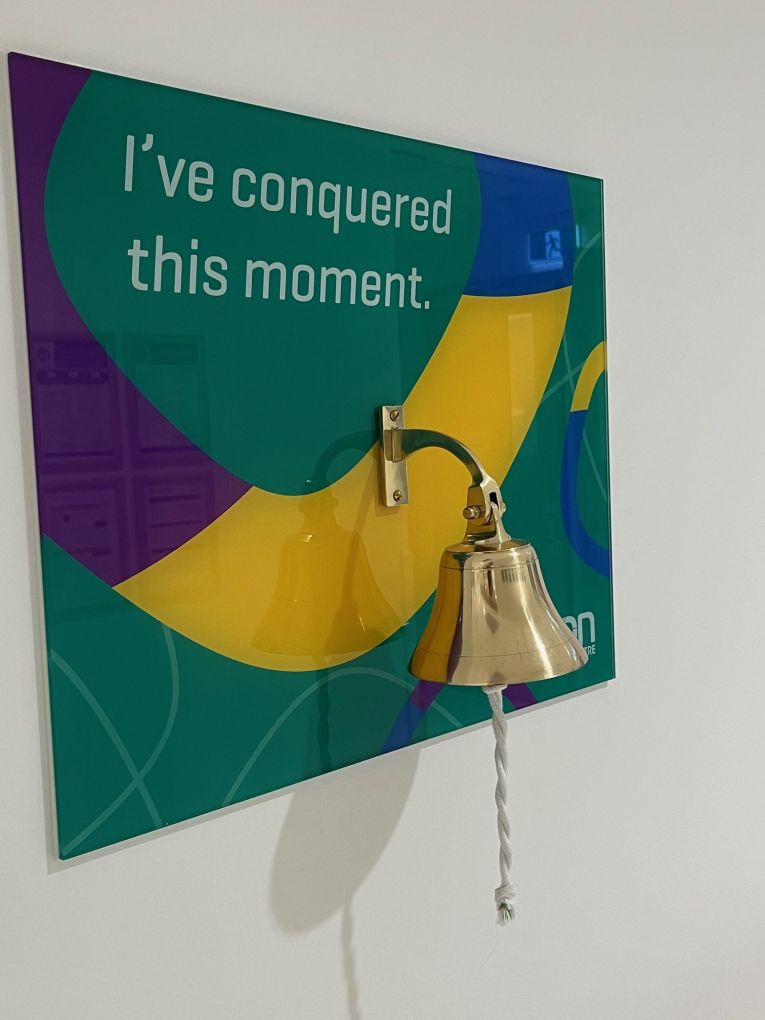
Time passed much quicker than I thought it would. Thirty radiation sessions and 177 tablets later, it was over. One of the rituals of radiation treatment is when a patient finishes their course, they ring a brass bell marking the occasion – a bit like the microwave going “ding” once dinner is cooked.
My foster family gathered around – Ange, Shay, Hannah, Laura, Kristen, Quynh, Bethany, Austin – to name a few. Co-incidentally, my friend Amanda, who’s being treated for breast cancer was also there. I told them how humbled and thankful I was to be in their care, that I would never quite grasp why I’d been so fortunate to been born in this time and place. I rang the bell and I cried a few tears of gratitude.
 There’s a part of this story I’ve left out so far. It’s the most personal, perhaps most confronting bit. But it deserves and needs to be spoken of, as well.
My cancer’s location is awkward, to put it delicately. Drugging and zapping the damn thing are the keys to its destruction, but they also risk causing a blockage. Too big a risk, the specialists decided. Before treatment began I went into hospital for a bowel deactivation. As a result, I have a stoma. People will be most familiar with what sits on the end of it – a colostomy bag.
My favourite joke from a less genteel age, i.e. the 1980s, goes ‘what’s the hardest thing about having a colostomy bag?’ The punchline being, ‘finding hats, shoes, and gloves to match!’ I’ve yet to go shopping, but I do know the hardest thing about having a colostomy bag is quelling the stuff rattling around inside your head.
Colostomy bags, indeed stoma bags in general, are the one place where nuance has no place. If they work, life continues pretty much as normal. If they leak, your self esteem is immediately crushed. Two days after leaving Calvary, I had three bag leaks in a row. By far it’s been the single worst day of the past four months.
To add perspective, consider the competition. By day 25 of chemo and radiation I was bone tired, yet lucky to manage an hour or two of sleep at a time. My bum ached so badly, it reminded me of the crazy American colonel who during the Vietnam war said, ‘in order to save the village we had to burn it down.’
There have been other physical changes, too. Weight exercises have been out the question. My glutes resemble a set of broken venetian blinds. Or an old lady’s string shopping bag. My arms have been replaced with bingo wings. I haven’t escaped emotionally, either. I’m snappier than usual with my family. Even my beloved dog, Connor, has noticed. His great joy is bounding up the hallway, barking at nothing in particular. I’m yelling “shut up”at him on top note. Being an Irish terrier, Connor couldn’t give a tinker’s cuss – dealing with shrieking Banshees is in the blood.
But I care. It would be disappointing to survive this cancer only to morph into another beetroot faced old man, bellowing at his dog. All of these things, however, are nothing compared to a leaky poo bag.
Yet despite the initial shame and humiliation, finding a fix proved easy. It’s because – again – I’m not alone. Calvary has a specialist stoma nurse team on call, so I rang the wonderful Luna Song.
“Hmm,” she said. “You know once you smell poop, you can’t unsmell it…it’ll ruin the day… come in and we’ll get it sorted.” Forget the right hat and shoes, colostomy bags are not a matter of one size fits all. Luna simply found a better fit for me.
That was near on three months ago. So far, so good – no more problems. I see Luna every four weeks to keep an eye on things. The hospital funds the service, as I understand it, from a conviction people like me are better functioning in the community, rather than clogging up hospital beds or sitting at home, too afraid to go out.
One sure sign of a growing comfort with my new reality is I’ve considered naming the bag. Local, national, and international affairs provide an Aladdin’s cave of candidates who not only could, but really should, have a bag of manure named for them. The hard thing would be choosing.
But I think a more useful name can be put to this – my own. It seems to me cancers of the bowel, rectum, and anus attract an ick factor other forms of the disease do not. Adding a stoma bag to the mix ramps the volume way up. But every time someone steps forward, that volume notches down. Things become a little easier. So here we go.
My name is Simon Royal. On the 25th of August this year, I was given a stoma and colostomy bag. I’m not living with it, I’m living because of it. How long for, who knows.
The plan is at some stage I’ll have a bowel reconnection, then go back to pooping the traditional way. But there are no guarantees. The cancer treatment that saves my life may leave too much scarring for reconnection to be possible, or desirable.
I won’t know until well into next year what the next step will be. But I do know this now. There’s enough broken on me already without me breaking myself with disappointment. When decision time comes, I’ll be so wrapped up in the life I have that whether it continues with, or without a stoma, won’t matter.
Want to see more stories from InDaily SA in your Google search results?
- Click here to set InDaily SA as a preferred source.
- Tick the box next to "InDaily SA". That's it.