‘When fear finds a face’: Why our politicians are using immigrants as a weapon
My daughter heard “A word used to remind her she didn’t belong. In her own driveway. Her own country.” Scapegoating migrants relocates fear so while we are busy fighting each other the actual problems go unsolved, argues Adelaide’s Serafina Maiorano.
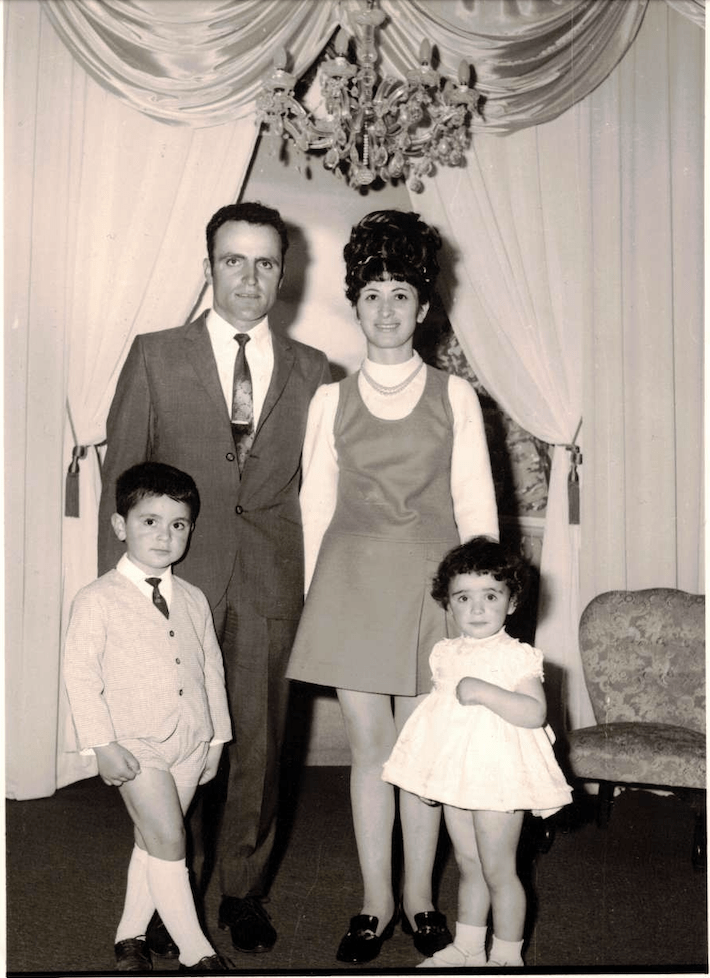
I remember vividly being eight years old. My father was sitting beside the small fountain in our garden at the front of our home in suburban Adelaide. He was cleaning it with such care.
My father had migrated from Italy at the age of 15 after the war. A teenager cycled past shouting a word at him insinuating migrants didn’t belong here.
I didn’t know the word’s meaning, but I turned to look at my dad. He stopped. Just for a moment. There were tears in his eyes. Then he returned to cleaning the fountain.
Decades later, I stood in my driveway with my daughter when a young adult walking past did the same thing to her. Same method. Different face. A word used to remind her she didn’t belong. In her own driveway. Her own country.
While us-versus-them thinking is complex, political psychologist Karen Stenner’s research and that of others shows that uncertainty, not hatred, is often one of the primary triggers. When people feel the world is out of control, the instinct to find someone to blame becomes almost automatic. But uncertainty doesn’t work alone.
Economic threat, the feeling of lost status, and the sense that your culture and way of life are disappearing, all deepen that hate instinct. Together they create conditions that make scapegoating not just possible, but predictable. It is a stress response. In the wrong hands, it is a weapon.
Listen to the language now embedded in Australian political discourse: “swamped,” “invasion,” “our way of life,” “they.” These are not policy words. They are fear words, chosen to make the circle of who counts as Australian as small as possible.
You might like


When politicians reach for this rhetoric to chase votes, they don’t just reflect fear, they manufacture it, without evidence. There is no data supporting the narrative that immigration causes housing unaffordability, that refugees take jobs, or that multiculturalism has weakened this country. The evidence points the other way.
Yet in the recent South Australian election, a party running on exactly this platform won more than 22 per cent of the primary vote. That is not a fringe result. It is what happens when people in genuine pain, facing rising housing costs, job insecurity, cost of living, climate anxiety and geopolitical uncertainty, are offered an enemy instead of an answer.
Words do damage whether we notice or not. Dr. Mahzarin Banaji, Harvard psychologist and co-author of Blindspot, calls this “the thumbprint of culture on our brain.” Not a moral failing, but what happens to all of us immersed in the same language, the same media, the same messages.
Every “swamped,” every “invasion,” every “they” leaves its mark, quietly shaping who we trust and who we decide belongs, long before we are aware of it.
But this moment is not uniquely Australian. Across democracies, we are watching the same playbook: genuine economic pain and cultural anxiety, the frightening feeling that the world we knew is changing faster than we can make sense of it. Othering words redirect our fear toward a target. The immigrant. The refugee. LGBTQ+ communities. The “other.” What has changed is the speed. What used to take years to build can now be built in weeks.
"Scapegoating doesn’t reduce fear. It relocates it. And while we are busy fighting each other, the actual problems, housing, energy bills, petrol prices and grocery costs, go unsolved."
People are not wrong to be anxious. They are misled about who caused their anxiety. The pain is real and demands a meaningful response. Our politicians have an obligation to lead with integrity and fix what is broken, rather than blame who is different. When mainstream politics fails to address what people are genuinely asking for, the fringes fill the gap. Until then, people will keep looking elsewhere, and the loudest voices will keep filling the silence.
Dr. Brené Brown, research professor and author of Braving the Wilderness, warns that when fear dominates, “we will give our power to anyone who can promise easy answers and give us an enemy to blame.” The question is whether we are willing to offer something better.
Stay informed, daily
All of us have a role to play. Our action can be as simple as smiling at the barista when buying our morning coffee, helping an elderly woman outside the post office, stopping for a man in workwear asking for directions in halting English, or offering a hand to a woman in a headscarf struggling with her shopping. In each moment, we can choose to look away or look toward. When we stop, something real happens. We see each other. Not as a type, not as a threat. As a person.
When we witness discrimination or hear the language of fear and blame, we have choices. We can name it calmly: “That’s not okay.” We can ask: “What do you mean by that?” Both invite reflection. Doing nothing is also a choice, and silence signals acceptance. Welcome the person who feels merely tolerated.
In our neighbourhoods, our workplaces and everyday moments, these small acts of courage and kindness are how the tide turns.
Dr. Pamela Ryan OAM, psychologist and founder of Issues Deliberation Australia/America, demonstrated this in her team’s 2007 landmark national research program. IDA’s deliberative poll brought over 1,700 Australians together across difference, and found that after genuine deliberation, the proportion willing to welcome and respect people from different cultures rose from 42 to 71 per cent.
One act of seeing each other ripples outward. This is how culture shifts, not in big gestures, but in waves of ordinary humanity.
Leaders set the temperature. When leaders acknowledge what we share and approach our differences with curiosity, recognising that both our similarities and our differences build a longer table for all of us, they give everyone else permission to do the same. That permission travels, becomes a tide. Right now, we need leaders willing to turn it.
"My father kept cleaning that fountain that day. With care. He didn’t have a platform or a title. But he modelled something I carry with me: dignity in the face of diminishment, and reassurance that the world is bigger, and kinder, than fear would have us believe."
This country was built on the dispossession of First Nations peoples who were here long before any of us arrived. Setting a longer table means reckoning honestly with that history, not glossing over it.
It means sitting down together, sharing food, stories and the weight of hard times. It means being there for our neighbours, not just the ones who look like us.
True belonging for all Australians begins with truth and with each other. And from that honest place, something genuinely shared becomes possible. A table long enough, finally, for everyone to join.
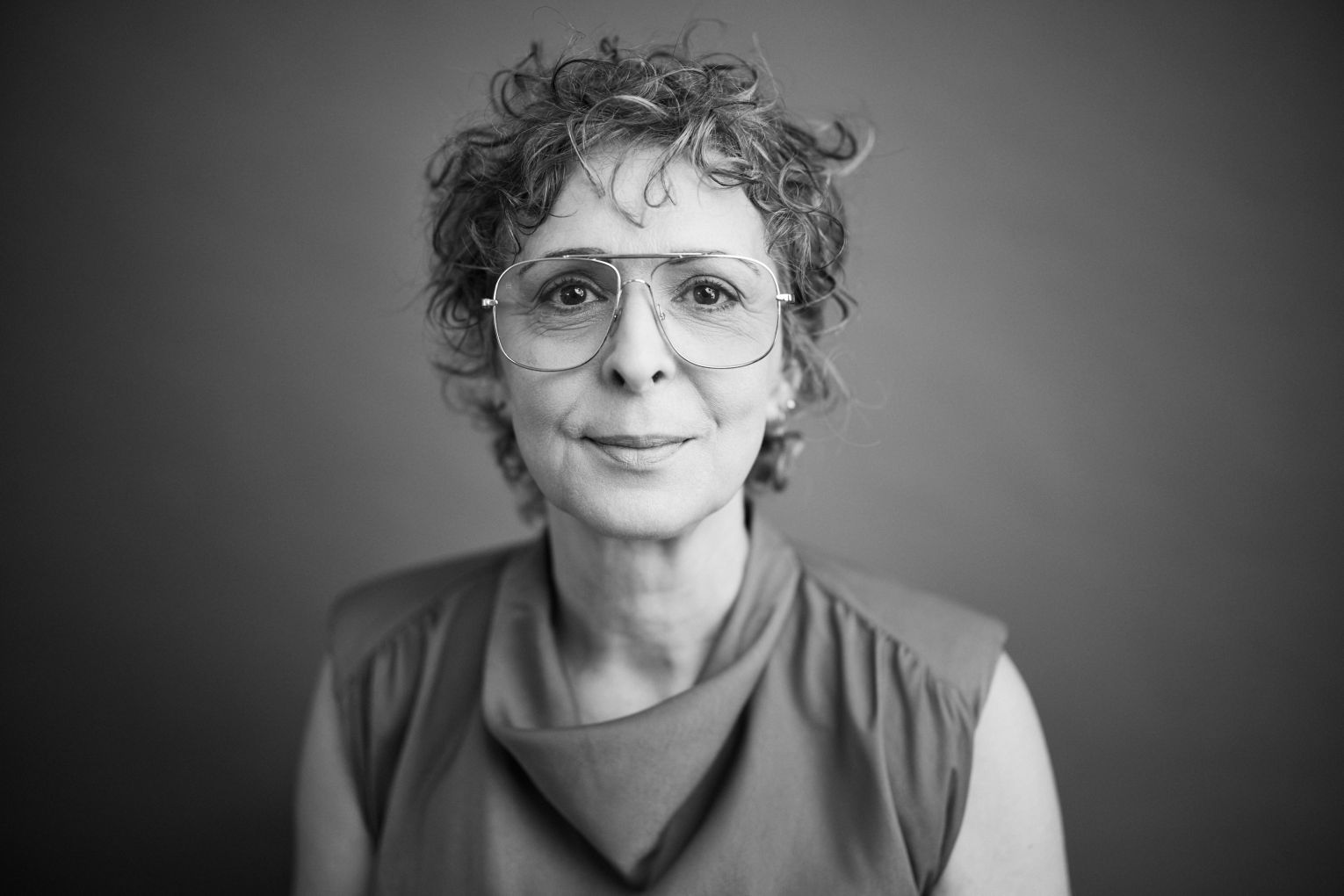
Serafina Maiorano is Founder of Our Global Table, Adjunct Senior Industry Fellow at RMIT University, Forward Centre for Future Skills and Workforce Transformation. A Cultural Intelligence and Unconscious Bias strategist, she has spent her career working across cultures, from the US, Middle East, Asia and Europe, and is now based in Adelaide.
Want to see more stories from InDaily SA in your Google search results?
- Click here to set InDaily SA as a preferred source.
- Tick the box next to "InDaily SA". That's it.