Stop asking young SA people to ‘wait their turn’
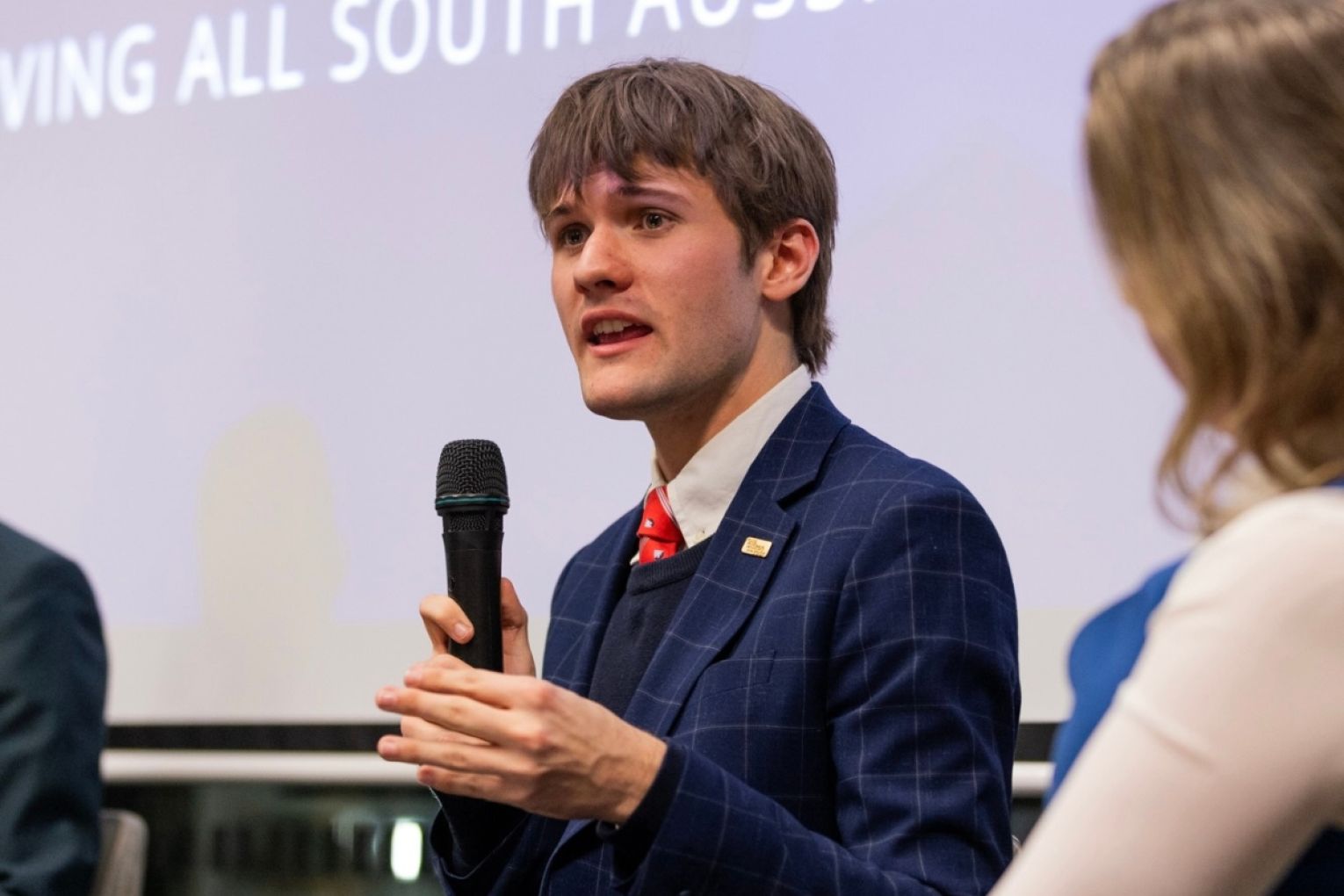
There are over 277,000 young people aged 12 to 24 across South Australia, just over a quarter of a million people making up 15 per cent of our state’s population.
But this figure is more than just a convenient statistic for a spreadsheet; it is a visualisation of the immense potential, impact, and diverse stories of our generation.
Young South Australians come from all walks of life.
We don’t all come from Australia; we don’t all speak the same language or come from the same social circumstances. We possess vastly different skills, abilities, and personal identities.
Yet, despite these differences, we share a singular, driving aspiration: that one day, we will play a defining role in determining our state’s future.
We want to be the architects of a South Australia that is more resilient, inclusive, and forward-thinking, not just for ourselves, but for the generations yet to emerge.
We aren’t looking for a handout, but rather a level playing field where our hard work translates into the same security enjoyed by those who came before us.
As we enter SA Youth Week 2026, it is time for us, as a community, to be bold.
You might like


We must advocate for South Australia to become a national leader in supporting young people’s development, shifting the narrative from “managing” youth issues to investing in youth potential.
The data suggests we are at a tipping point.
Mission Australia’s 2025 survey of the top concerns of young people found that issues such as the cost-of-living crisis, mental health, climate change, and housing instability are having a profound impact on our collective wellbeing.
In South Australia specifically, the anxiety over the cost of living has skyrocketed. Concerns jumped from 31 per cent in 2023 to a staggering 61 per cent in 2025.
These aren’t abstract concepts or distant worries; they are the daily anxieties that keep us up at night and dictate the choices we make about our education and careers.
Consequently, young people are increasingly unsure about their financial, educational, and housing futures.
For many, the pressures of daily living reinforce a harsh, existential question: Will I be worse off than my parents?
When over half of our generation is worried about how they will afford the basics, it stifles the creativity and risk-taking that a growing state like ours desperately needs.
The reality is that young people today incur significantly higher costs than previous generations.
We are navigating the triple threat of inflated social living costs, costlier university degrees, and exorbitant rental prices, all while facing job insecurity and the disruptive onset of AI in the workforce.
Stay informed, daily
Recent polling suggests as many as 70 per cent of young people believe they will never be able to buy a home.
This isn’t a result of being “lazy” or “spoilt” as tired misconceptions often suggest; it is the result of a shifting economic landscape that has moved the goalposts mid-game.
To suggest that our struggles are a matter of personal discipline rather than systemic economic shifts is not only insulting, but it also ignores the data staring us in the face.
The stark truth is that young people face one of the greatest generational burdens in modern history.
We were born too late to catch the peak of the ‘Australian Dream’ and just in time to inherit entrenched economic inequalities and the complex consequences of an ageing society.
In a state like South Australia, where our demographic lean has traditionally skewed older, the risk of brain drain is real. If young people do not feel they have a stake in this state, or a path to prosperity within it, they will look elsewhere.
This isn’t just a youth issue; it is a fundamental threat to the long-term viability of our workforce, our tax base, and our community vibrancy.
To ensure policy actually works, the government must move beyond tokenistic consultation.
We don’t just need a seat at the table; we need to ensure that the table itself is built to support the next fifty years, not just the next election cycle.
When we support young people, we aren’t just doing a favour for the 15 per cent; we are securing the future of the 100 per cent.
True advocacy means recognising that our challenges today are the state’s challenges tomorrow.
As we celebrate Youth Week, let’s stop asking young people to “wait their turn” and start asking them to help lead the way.
Want to see more stories from InDaily SA in your Google search results?
- Click here to set InDaily SA as a preferred source.
- Tick the box next to "InDaily SA". That's it.