Leadership Lens: Why leadership demands a new story
Leadership that can draw from hopeful narrative is vital, writes South Australian leadership educator Joanna Giannes.
“If I am not for myself, who will be for me?
If I am only for myself, what am I?
If not now, when?”
—Rabbi Hillel
Marshall Ganz, Senior Lecturer at Harvard’s Kennedy School, begins his course Public Narrative: Leadership, Storytelling, and Action with these ancient questions. Their power lies not in offering answers, but in opening us to uncertainty. To lead, he teaches, is to stand in the unpredictable . The real question is not whether we can control what happens, but whether we can learn to embrace it. In such moments, ‘our hands must learn new skills, our heads must discover fresh strategies, and our hearts must summon the courage, hopefulness, and forbearance to act’.
These three faculties—head, heart and hands are not just poetic metaphors. They form the backbone of Ganz’s Public Narrative framework. The Story of Self asks who we are and what calls us to lead. The Story of Us builds a shared identity and reminds us we are not alone. The Story of Now invites urgent, collective action grounded in meaning, not fear.
In South Australia, we are witnessing this need unfold through the ongoing coastal algal bloom. What first seemed an environmental concern is now emerging as a multilayered crisis—ecological, economic, emotional, communal. People are grieving, there is anxiety, uncertainty, and loss. Complex adaptive issues like these do not stay confined to policies or departments, they ripple through lives, livelihoods and our identities.
In such moments, leadership that can draw from hopeful narrative is vital. Public Narrative is more than a leadership technique; it is a practice of meaning-making. It aligns purpose with action and belonging with responsibility. In a world increasingly fractured by speed and ambiguity, it invites us to lead in ways that are relational, reflective, and regenerative.
We also face a convergence of additional complex issues such as social cohesion, cybersecurity and misinformation now part of our everyday shared reality. These are not technical problems, they are complex and require us to think systemically, feel deeply, and act with integrity and our full humanity.
You might like

This is where leaders who know how to connect with the hearts and minds of people become a healing balm in a storm of difficulty and this is where strategic narratives and storytelling can become useful. After decades of designing and facilitating leadership programs, one truth endures: storytelling transforms. The most resonant feedback from program participants rarely mentions content or frameworks. It speaks more of the moments when someone was truly seen, or when a shared story softened the edge of separation, or when a story activated our deeper way of knowing a truth.
Storytelling is a path to wisdom, through it we awaken multiple ways of knowing—intellectual, emotional, and spiritual and in that awakening, we find the clarity that strong leadership demands. Mythologist Dr Martin Shaw is clear, the business of storytelling is ‘not enchantment, nor entertainment, rather the business of storytelling is to wake us up’.
Cultivating the right conditions for transformative storytelling must be right. Psychological safety is not a luxury—it is essential. Truth flourishes in places of trust, where people feel safe enough to speak with honesty and to listen with care. My role as a leadership educator is not to offer answers, but to create environments where this truth can emerge.
When storytelling is embraced in this way, it becomes more than personal expression. It becomes a collective practice that supports healing systems. I often say division is easy, it’s healing that is hard. Healing people, systems and societies calls for leadership that is relational, courageous and willing to sit in the discomfort of not knowing. It asks us to reweave what has frayed, to humanise one another and to fiercely lead with integrity.
Stay informed, daily
These are not an abstract set of ideals; across communities, storytelling has helped people confront homelessness, racism, trauma and displacement. It has built empathy, belonging and helped us name grief, imagine new futures, and offer restoration where systems fall short.
Globally, institutions like Harvard and Stanford now teach storytelling as core to leadership. Paired with frameworks like Adaptive Leadership, it centres meaning-making as essential to leading in complexity.
But we do not need to look only to distant places for wisdom. In our nation, we walk alongside the oldest continuous culture of storytelling in the world. For over 60,000 years, First Nations peoples have carried knowledge of Country, kinship, and survival through story. Their leadership is relational, ecological, and rooted in the sacred. Imagine if our leadership education listened more deeply to this wisdom. If we taught our leaders to be the keepers of the old stories and the authors of the right ‘new stories’. What kind of ancestors might we become? What beacons of hope might we offer?
The late Joanna Macy, in her work of Active Hope, reminds us that hope is not passive. It is not the naive belief that things will get better. It is the decision to face reality as it is and still act from vision and values. Active Hope is the courage to respond, even when outcomes are unknown.
In our complex world, perhaps the most radical story we can tell is this: That we still belong to one another. That we can meet these times not with despair, but with courage and hope. That the story is not over; it is still being written.
Leadership, at its deepest, is the holding open of that possibility.
So I return to Ganz’s invitation:
If I am not for myself—my story, my truth, my inner work—who will be?
If I am only for myself—without attention to the stories of others and the wellbeing of my community—what am I?
And if not now—when?
The new story is ours to tell. And it begins not with a map, but with a question.
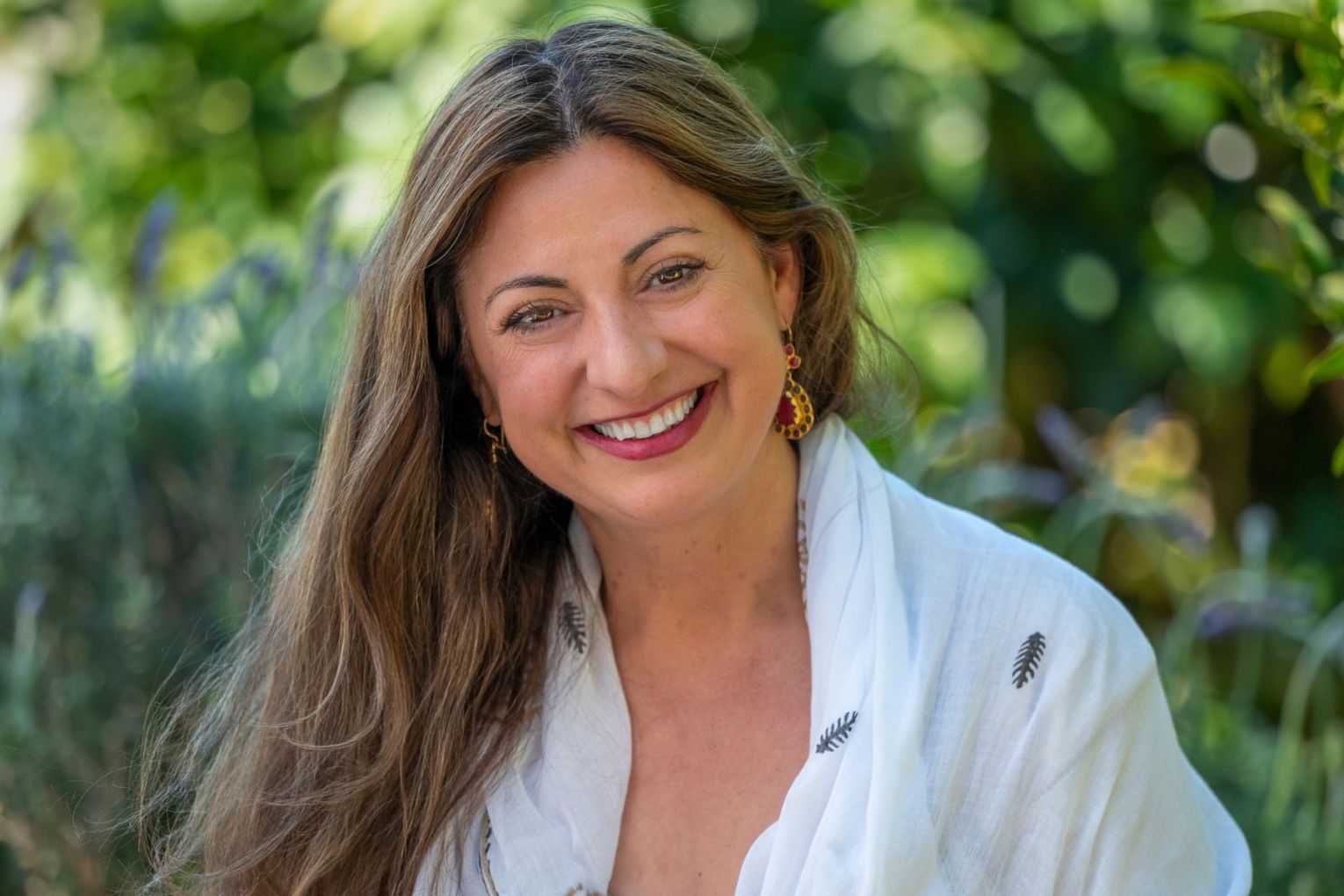
Joanna Giannes is a leadership educator, narrative specialist, and award-winning leadership program designer with decades of experience across community and corporate sectors. She facilitates and serves on several boards and in diverse settings, including the Governor’s Leadership Foundation Program, and acts as Wellbeing Advisor for the United Nations Association of Australia – SA Division. Her work bridges personal story and systemic change, creating spaces where meaning, identity, and leadership can flourish.
Leadership Lens is a monthly column produced alongside the Leaders Institute of South Australia. Click here to read the series.
Want to see more stories from InDaily SA in your Google search results?
- Click here to set InDaily SA as a preferred source.
- Tick the box next to "InDaily SA". That's it.