‘RIP’ Writers’ Week: Political celebrity takes Malinauskas for a spin
Former chief UK spin doctor Alastair Campbell threw some contentious questions Premier Malinauskas’s way last night at a one-off event in Adelaide.
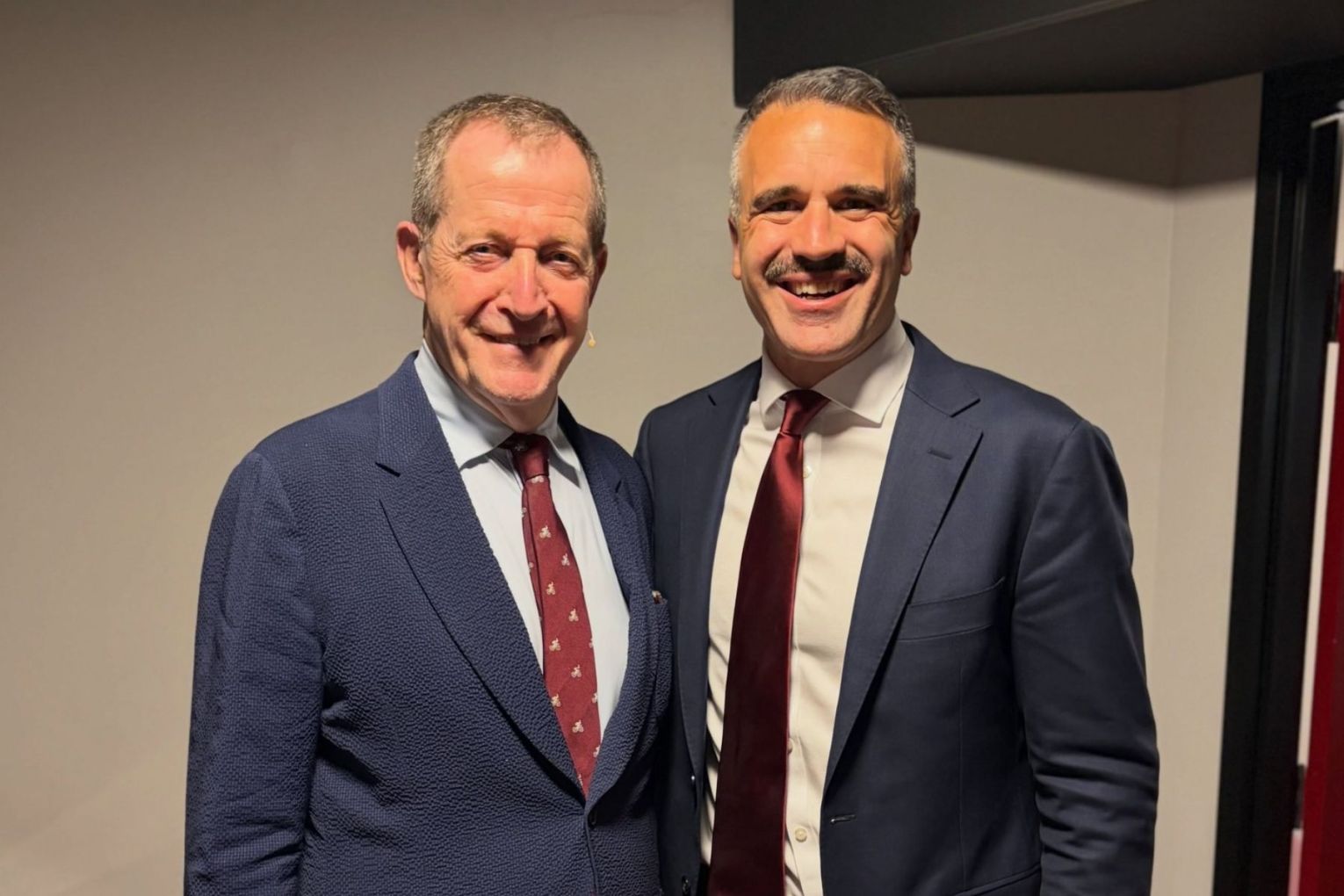
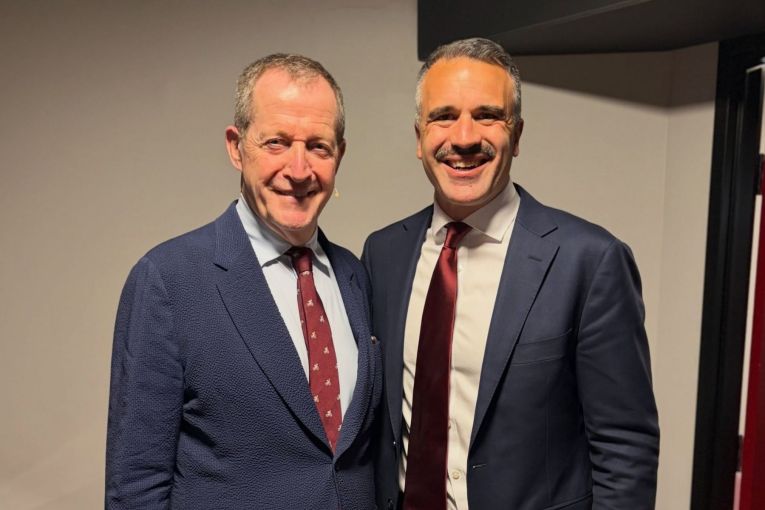
Alastair Campbell first met Premier Peter Malinauskas at Adelaide Writers’ Week 2024. He acknowledged the 2026 festival’s implosion up front at an event with the Premier at the Festival Theatre last night, saying, “RIP, not very happy about that” in his opening remarks.
But it turned out that would be the only mention of the festival’s demise following Malinauskas’ commentary earlier this year on the inclusion of Palestinian Australian author Randa Abdel-Fattah.
Malinauskas is the only politician invited onto Campbell’s Australian tour lineup that kicked off with his one-time appearance in Adelaide. Other high-profile journalists and social commentators will join Campbell in other capital cities, including former Adelaide Writers’ Week Director Louise Adler, who will appear in Melbourne next week.
Campbell, who was the press secretary and campaign director for UK Prime Minister Tony Blair from 1994 to 2003, has authored 19 books, including The Blair Years, Winners and How They Succeed, and his latest book, Persevilience: The Word the World Needs Now, which was released in October.
He has not spoken publicly about Adelaide Writers’ Week 2026, given he was not in the lineup.
But Campbell’s opening remarks set the tone for the evening, as he quizzed Malinauskas on issues plaguing his second term in government, Malinauskas receiving a small chorus of booing amid applause from the crowd that Campbell called “a warm reception with cold edges”.
You might like

His first line of questioning focused on tree felling for MotoGP. There were 10 people outside the event protesting the development with placards, it followed a tense week resulting in an arrest of a protester in the eastern park lands during the day.
“I can’t tell you how many emails people have sent me about this tree thing,” Campbell, who posts a ‘tree of the day’ on his Instagram account, said.
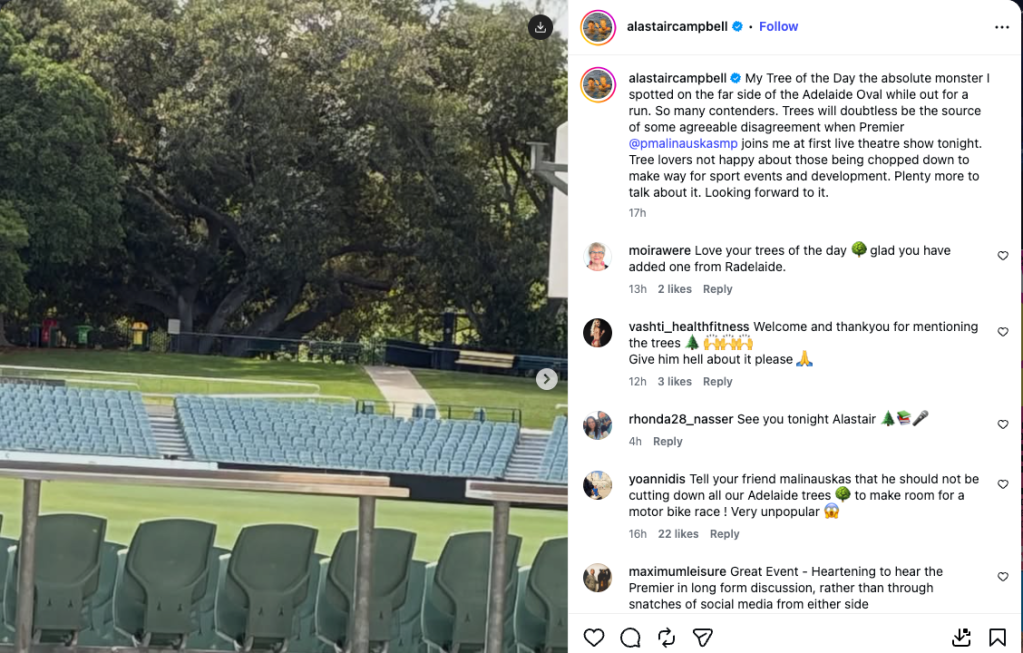
Campbell said he read a 150-page analysis sent by protester Ali Reed on the plane to Adelaide, last night reading an excerpt of concerns about “the now doomed Liv Golf, the MotoGP race…the festival tower…no democratic accountability”.
Asked about why he was pursuing contentious development projects, Malinauskas said “the best answer I can give is we’ve got to have a pro-development agenda for the state”.
“I absolutely accept that there are legitimate concerns that people have around removing some trees, there are some trees that are native that are significant, the majority aren’t, but there are some that absolutely are, and that’s not nice.
Stay informed, daily
“I accept that, but we have sought to work collaboratively with people who represent the environment sector that aren’t from government to make sure we do this and do it well.”
The Premier said the MotoGP plans were among the policy agenda the Labor Party campaigned on during the March state election – one heckler calling out “what about ramping?”
“If you actually look at where the government is spending most of our time and effort, it isn’t in these areas of policy,” Malinauskas said.
“It’s taking up a lot of political noise; it’s sucking the oxygen out of the air politically in many respects, which brings separate worries for me.”
The two went on to discuss populism, similarities between One Nation leader Pauline Hanson and Reform UK’s controversial right-wing leader Nigel Farage, Australia being “rock solid” on backing Ukraine, and the 2003 invasion of Iraq.
Like any good spin doctor, Campbell interjected at points, telling Malinauskas, “don’t insult the protesters” and suggesting Malinauskas “sit like a statue” while Campbell called out Putin, Trump and Xi Jinping, saying this he could now do as “I’m no longer active in politics”.
“I’m just somebody who’s morphed from being a war criminal to a national treasure, whereas Peter has to just sit quietly,” Campbell said.
Campbell has faced war crime allegations from a Reform UK politician and the general public relating to his role as Blair’s communications director at the time that intelligence cited by the Blair and United States administrations – that the country was producing weapons of mass destruction – was the driver of the 2003 Iraq war. A UK public inquiry later found that the claim was based on “questionable single source intelligence”.
Campbell repeatedly rejected those allegations at the time, and in 2016 wrote that “many mistakes” were made at that time, “but no lies”; he was cleared of “sexing up” evidence but accused of raising the temperature, according to The Guardian newspaper.
In front of a packed festival theatre, Malinauskas told Campbell he marched against the Iraq war in Adelaide in 2003 – one of the points the two “disagreed on, agreeably”, a cornerstone of Campbell’s podcast The Rest is Politics UK, which draws six million monthly listeners.
“It was an extraordinary period, and I can take criticisms, I can take all sorts of stuff that gets thrown at us,” Campbell said.
“But I think, you know this, when we talk about the trees and the protests, in my view, I can remember being with Tony Blair in the corner of Downing Street, looking out on that Saturday with all these protesters, hundreds and hundreds of thousands of them.
“I remember saying, ‘God, no Prime Minister is going to make a decision knowing that all of these people are against it unless he actually thinks he is doing the right thing.”
Want to see more stories from InDaily SA in your Google search results?
- Click here to set InDaily SA as a preferred source.
- Tick the box next to "InDaily SA". That's it.