SA research uncovers climate impact on world-renowned Coorong
A new Flinders University study has linked changes in South Australia’s Coorong with the effects of climate change.
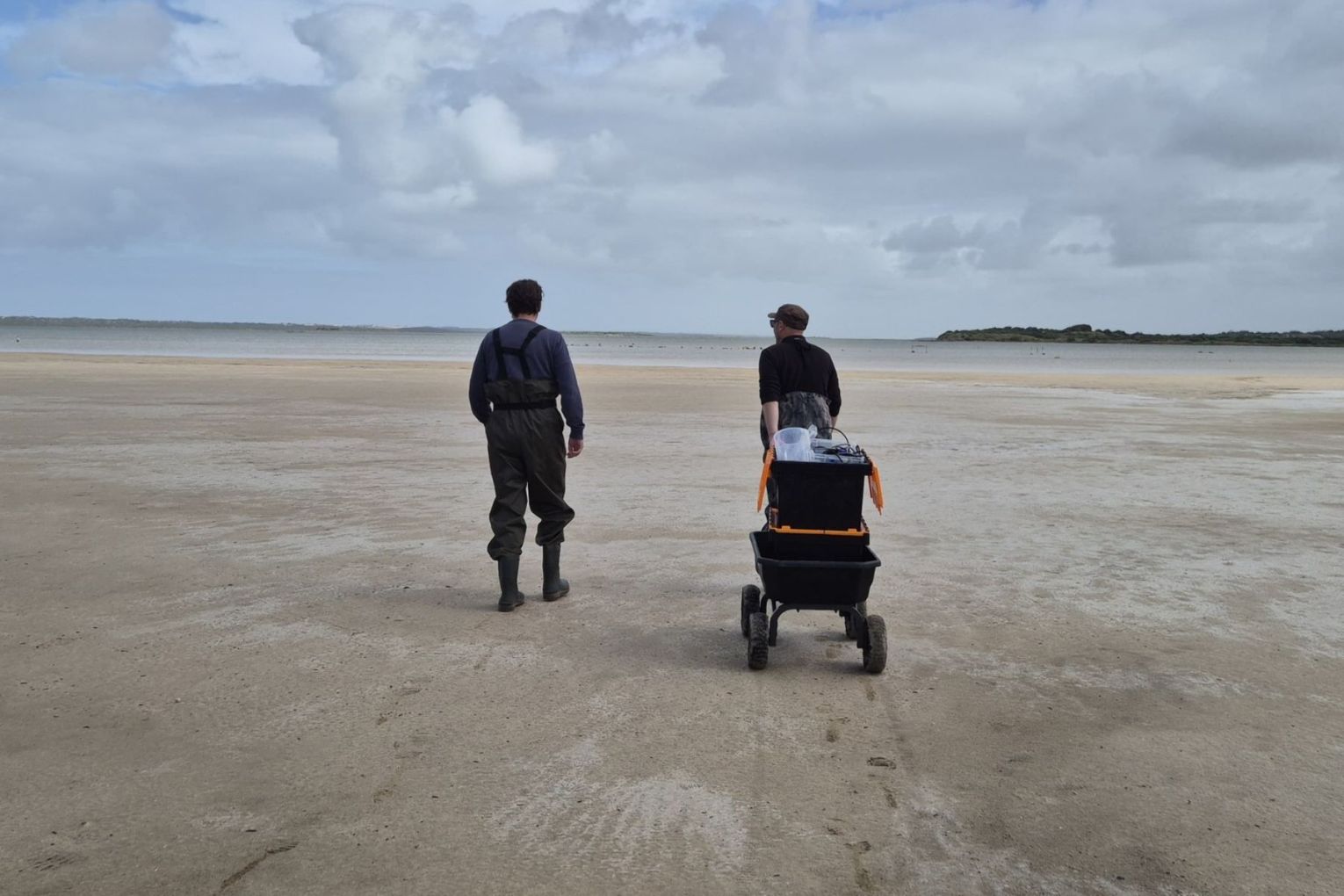
Flinders University researchers have investigated how food chains, environmental systems and salinity levels were affected by the amount of freshwater entering the Coorong.
Research paper lead author and postdoctoral researcher Dr Daniel Chilton said that the amount of salinity in the Coorong had a direct impact on the entire food chain within the ecosystem.
“If you have more freshwater coming into the system, you have lower salinity, and then if you don’t have a lot coming in, you have higher salinity,” he said.
“What we saw within the drought, we had some really high salinities and you tend to get fewer overall species and a lower overall abundance.
“Phytoplankton are quite important; they’re at the base of the food web, so a lot of organisms will eat them, and then other organisms consume them.
“During the drought it means fewer resources for other species.”
You might like


The study, led by Flinders Professor in Earth Sciences Sophie Leterme, used data collected across sixteen years and phytoplankton samples taken from the Coorong to explore how changes in freshwater flows affect environmental conditions and the phytoplankton community in the wetland.
Human activity, such as agriculture and other land use, was found to have impacts on freshwater flow and the amount of nutrients entering the Coorong due to changes in climate.
While phytoplankton are a critical part of the Coorong ecosystem, the study found there are up to eighty species that can produce toxins and harmful algal blooms.
The type of species present varies depending on salinity levels, with lower and higher salinity levels encouraging different types of bacteria.
“The Coorong’s quite unique because you do have really large variations that tend to go way beyond what we have with seawater,” Chilton said.
“In freshwater systems, you tend to get a dominance of cyanobacteria, which produce toxins and we see a lot of those issues in the lower lakes; Lake Alexandrina and Lake Albert tend to have cyanobacteria blooms regularly.
Stay informed, daily
“The one we’re seeing off the coast and the one we’re seeing in karenia (a dinoflagellate), they tend to better in higher salinity conditions.
“We do have karenia in the Coorong in our data set in very low numbers, so it hasn’t been an issue until recently where they probably would have migrated in through the mouth from the bloom in the ocean.
“I think it’s important to note that [based on] what we’ve seen in the Coorong, the risk of algal blooms is pretty low.”
Federal government data has found that more than 20,000 waterbirds call the wetland their home each year and that it is an important corridor in the East Asian Australasian Flyway for migratory waterbirds.
The Coorong, which has been Ramsar-listed since 1985, meaning it is a wetland of international importance, was found to be at risk of having less freshwater coming in as a result of climate change and was listed as critically endangered at the start of the year.
Plants were also found to be at risk because of the changing conditions, with a decline in water quality potentially affecting plant growth and reproduction due to lower light levels.
Chilton said that further research and funding was needed to better understand what causes algal blooms and appropriate responses to them.
“There’s a whole range of different factors [that cause algal blooms] and these algal blooms can be so devastating, but we don’t really understand what can be drivers of them, particularly as some systems can be different to others and we have a different future climate,” he said.
“I think its important for these studies to understand what’s shaping our phytoplankton communities, which harmful algae are there and how they might proliferate.
“We need more monitoring and more funding for this monitoring, more research into these areas to better understand how our world is changing and what is shaping these really important species for both positive and negative reasons.”
Want to see more stories from InDaily SA in your Google search results?
- Click here to set InDaily SA as a preferred source.
- Tick the box next to "InDaily SA". That's it.