Shock findings: Glitch adds months to SA prisoner’s sentence
A damning new report found it took five years for a prisoner to be told he was behind bars months after his release date, while another “administrative error” denied a prisoner a pregnancy termination.
An SA prisoner was held in custody for months beyond his release date and was not told he had served extra time until five years later – one of hundreds of complaints investigated by the SA Ombudsman, a new report revealed.
“The department’s contact with the prisoner did not offer an apology or clearly explain that the prisoner may have had a legal basis to make a claim against the state,” the SA Ombudsman Annual Report said, attributing it to a “system deficiency”.
“It appeared to place the onus on the prisoner to seek compensation, despite the department being well aware of its mistake.”
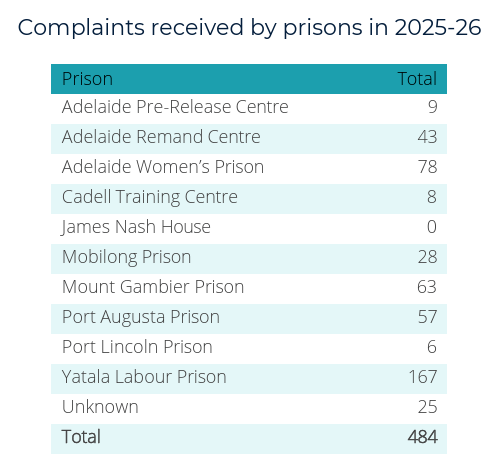
The SA Ombudsman report released this week found SA’s Correctional Services Department received 629 complaints in 2025-26, second to the SA Housing Trust which received the most complaints.
Among those investigated by the Ombudsman was the case where a male prisoner discovered he was detained beyond his sentence. The Ombudsman’s office did not say what prison was responsible for the mistake.
You might like

In an investigation completed in July 2026, the Ombudsman found a “system error” failed to inform prison staff that the prisoner was due to be released.
“When the department identified the error, the prisoner was released that day,” the report found.
But it took the Ombudsman’s intervention for the department to formally tell the prisoner five years later that he had served extra time.
The Ombudsman found “South Australian government agencies are required to take accountability for errors when they have an impact on people”.
SA’s Correctional Services Department acknowledged the error and agreed to review its systems and “formally implement a change to its procedures” to advise any affected prisoners “verbally and in writing as soon as possible” if another incident occurred.
As of July 2026, the Correctional Services Department was still considering making an ex gratia payment to the prisoner. The department is not legally required to make the payment.
Stay informed, daily
Today, the department said it “acknowledges” the Ombudsman’s comments, saying the incident occurred six years ago and since then “the Department and G4S have implemented new processes to manage prisoner release dates.”
Of the 629 corrections complaints made to the Ombudsman, about 77 per cent were from prisoners, about 25 per cent less than last financial year, according to the report.
The most common complaints were about custodial services, such as health, communications through phones and mail, and cell conditions.
Yatala Labour Prison received the most complaints, followed by the Adelaide Women’s Prison.
One complaint from a pregnant inmate at Adelaide Women’s Prison alleged she was denied access to a non-surgical termination.
The Ombudsman investigation found this was true, with prison health staff blaming the issue on there being a lack of overnight medical funding at the prison.
“South Australia is currently the only state without a 24-hour staffed health facility for women in prison,” the Ombudsman said.
An apology was issued to the prisoner by the state government in April.
The Ombudsman found the failure to consider options to support the termination “amounted to an administrative error under the Ombudsman Act 1972”.
The Central Adelaide Health Network Chief Executive said overnight medical monitoring cannot be facilitated at the prison but “this should not have precluded the prisoner from undergoing a medication termination of pregnancy”.
The Chief Executive told the Ombudsman that SA Prison Health Services would offer the following options to female prisoners moving forward:
- Transferring to Yatala Labour Prison for overnight medical monitoring with the understanding they may been seen by male prisoners
- To remain at the Women’s Prison where there is no overnight health services but SA ambulances can be contacted if needed
- Depending on bed availability, the option to be admitted to hospital overnight with restraint and observation by prison officers
The Corrections Department said prison officers are trained in first aid and can “therefore, to a certain extent, respond to medical concerns overnight if necessary”.
Want to see more stories from InDaily SA in your Google search results?
- Click here to set InDaily SA as a preferred source.
- Tick the box next to "InDaily SA". That's it.