Australia’s trillion-dollar debt pile: How we got here and its cost
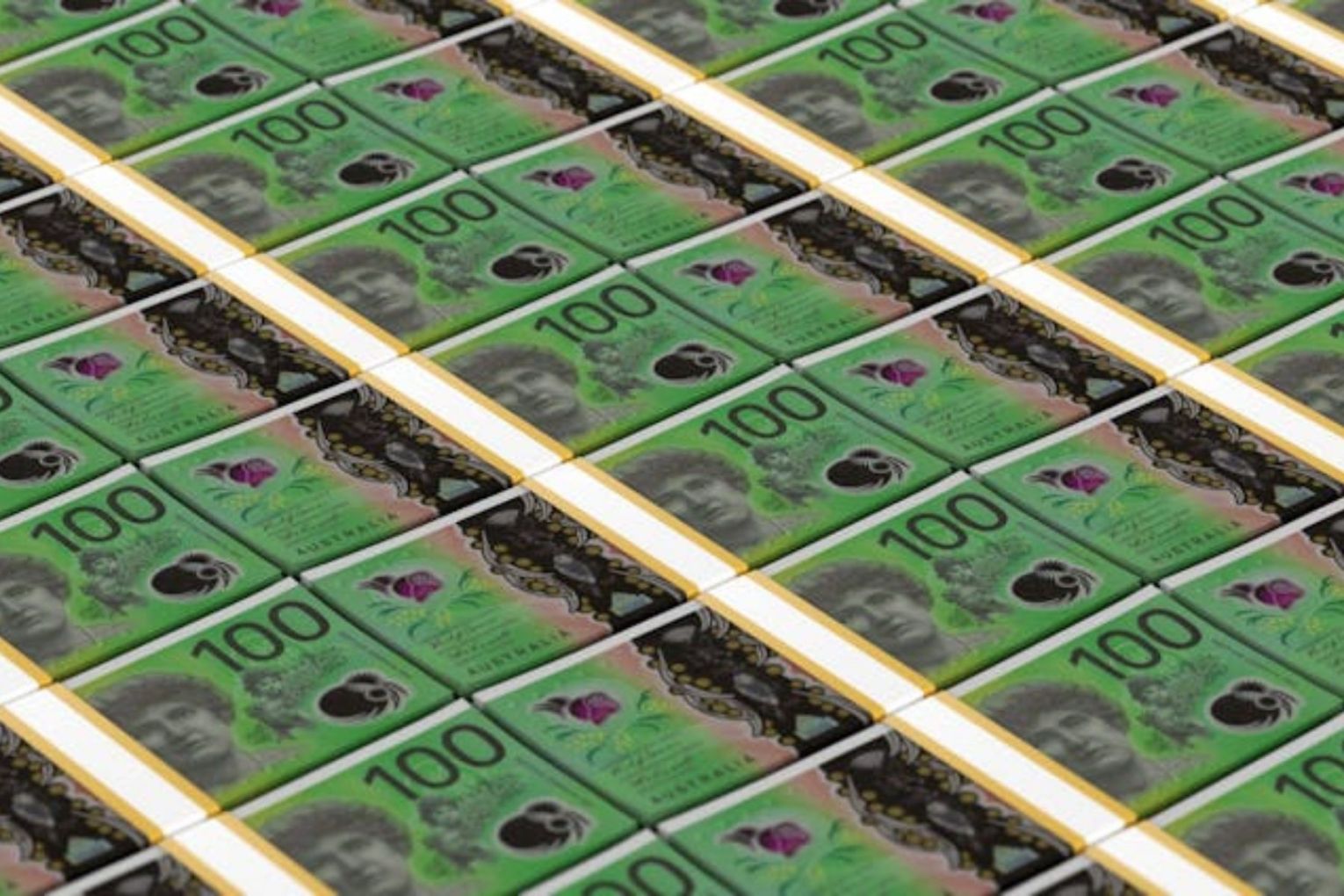
The Australian government’s debt has just hit A$1 trillion again. And, unlike when it briefly hit that mark for the first time in mid-August, this time it’s set to stay above $1 trillion and keep climbing.
The federal government expects it to rise above $1.2 trillion by 2030, the equivalent of 35 per cent of Australia’s gross domestic product (GDP) – seven times higher than it was a generation ago.
If you also add in the debt from state and territory governments, the total is already above 50 per cent of Australia’s GDP.
How did we get here? And what does it cost us in growing interest bills?
How debt rose over a generation
In 2002 under the Howard government, net debt was about 5 per cent of GDP, down from around 19 per cent in 1996-1997.
For consecutive years, the federal government collected more money than it spent and did not issue debt – that is, it didn’t need to borrow more money because the federal budget was in surplus. This was widely celebrated.
But financial markets raised concerns that if the government stopped selling government bonds, it would risk financial instability. So the Howard government continued to issue government bonds.
With the global financial crisis (2008-09) and COVID-19 pandemic (2020-21) demanding governments spend more than they could collect in revenue, successive Labor and Coalition governments sold bonds to meet this shortfall.
What does it cost us in interest?
Apart from promising to repay any borrowed money, the federal government makes interest payments on its outstanding debt.
The 2026 budget showed public debt interest payments have been the fastest growing area of federal spending.
How do we compare globally?
Australian government debt relative to the economy is similar to New Zealand (56.7 per cent of its GDP) and South Korea (54.4 per cent). And it’s lower than the average for advanced economies (108.2 per cent).
Is there a debt limit?
In theory, yes. In practice, no.
In 2008, a law was passed to limit the federal government’s debt to no more than $75 billion without parliamentary approval – but it didn’t last long. In 2013, that hard debt ceiling was scrapped, under a deal between the Coalition government and the Greens. Instead, the treasurer can now update the debt limit.
Since 2008, both Labor and Coalition governments have increased the limit multiple times. Today it’s set to $1.2 trillion.
Looking ahead
The federal budget is projected to return to balance in 2034–35, with a surplus of 0.8 per cent of GDP in 2036–37. However, the independent Parliamentary Budget Office cautioned in July that that forecast was built on an “unrealistic” assumption that future governments wouldn’t provide more personal income tax cuts for a decade.
Since 2003, under both Coalition and Labor governments, Australia has maintained a triple-A credit rating with the world’s three big credit ratings agencies. This means Australia is perceived to be at the lowest risk of defaulting on its debts.
We should take comfort knowing that since 1911 there has been a law that guarantees the federal government will repay its debt.
The size of the government’s debt is monumental. And the interest repayments are large, and still growing.
But our debt is more manageable than many other comparable developed countries. And the federal government has never missed a repayment on its debts, no matter who’s been in charge.
There is little reason to think that will ever change in future.
Matthew Crocker, Graduate Researcher Teaching Fellow, Deakin University
This article is republished from The Conversation under a Creative Commons license. Read the original article.
You might like


Want to see more stories from InDaily SA in your Google search results?
- Click here to set InDaily SA as a preferred source.
- Tick the box next to "InDaily SA". That's it.